


No misuse of funds by IRF, every penny accounted for: Dr Zakir Naik

November 27, 2016

Mumbai, Nov 27: Internationally acclaimed orator Dr Zakir Naik has clarified that there has been no misuse of funds by his banned NGO and rejected all allegations of involvement in terror-related activities.
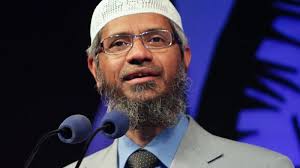
zakirRemaining non-committal on returning to India, where he has been booked for allegedhate speech' and under anti-terror law UAPA, the 51-year-old physician-turned-preacher, who is currently abroad, said he has repeatedly offered his cooperation to NIA.

Facing heat over charge of inspiring some of the Dhaka attackers through his speeches, he said the moment someone resorts to violence, he ceases to be Islamic and loses his support.

"It is wrong to imply that a few miscreants who joined terror groups were influenced by me. So if I was really spreading terror, wouldn't I have made a few lakh terrorists by now? Not just a handful.

"In a fan following of millions, there may be a handful of anti-social elements who will go astray and take up violence. But they are surely not following what I've told them. The moment they pick up senseless violence, they cease to be Islamic and they surely lose my support," Dr Naik told PTI in an e-mail interview.

Asked about the legal steps he would take to challenge the ban on his NGO Islamic Research Foundation (IRF), he said his legal teams in Mumbai and Delhi were looking into the issue and would move the Court soon.

The Centre recently banned the IRF for five years and declared it as an unlawful association. Dr Naik said the ban on IRF was politically motivated.

On allegations of money laundering by IRF in the funds received from abroad, he said the Rs 47 crore in question came from his personal account in Dubai to his personal account in Mumbai in the last six plus years.

"It was duly declared by me in the returns and used for lawful activities, including giving gifts and loans to my family members. I don't know where is the problem in that.

"IRF received about Rs 14 crore in the FCRA account over the past 15 years. Of this, about Rs 4 crore was from NRIs living abroad. Only about Rs 10 crore was received from foreign donors in the last about 15 years. All of this was duly declared to the MHA, including the amounts, the names and the addresses of the donors. So, where is the question of money laundering?" Naik asked.

Asked why was he not returning to India, Dr Naik said he has repeatedly offered his co-operation to government agencies in their investigations but till date, no agency bothered to contact him, ask him questions, or send him any notice.

The physician-turned-preacher claimed he was invited twice before May 2014 to address IPS trainees at the National Police Academy in Hyderabad.

"Do you mean to say that this prestigious Institution invited a person who promotes terrorism to address the IPS officers?" he asked.

Naik said he was positive the NIA and other agencies, after doing thorough research for more than four months would have surely realised he was far away from promoting terrorism, but they have no choice but to give in to political pressures.

"More unfortunately, it is also indicative of the grim state of affairs existing in my beloved homeland since the Modi government took over two-and-a-half years ago," he said.

"Till date there's been no contact and only an FIR has been lodged against me. They (agencies) have not provided a single proof to substantiate their claims. That's because none exist, and all that agencies are claiming are chatter and nothing else.

"What I'm doing now is the same work I've been doing for 25 years. Do you really think my so called "terrorist activities" would have been hidden from multiple intelligence agencies for so long?" he said.

Early this week, Naik released an open letter in which he said ban on his NGO was timed with the demonetisation move to avert resistance to action against the outfit and divert media attention, and alleged it was "an attack on Muslims, peace, democracy and justice".

Comments

ONE
 - 
Monday, 28 Nov 2016

Laks

Do U know what is NA TASYA PRATIMA ASTI in VEDAS,...
Your VEDAS is asking U to recognize your ONE LORD and worshiping HIM ALONE and not created things...
Use your God Given intellect and recognize the TRUTH .

ZN is enlightening YOUR intellect with the TRUTH and the FACT which U cannot deny and those who deny the reality of oneness of GOD will never be content in their hearts....

Always jealously envy hatred are hounding them to do evil acts... when people are far from true God... REcognize your lord and worship him alone...

ZN is not worried, the World knows who is deceivers and who is on the TRUTH... still U dont understand even after our country is made to beg their own money. to benefit the cheddis corporate world.

Althaf
 - 
Monday, 28 Nov 2016

In sha allah everything will be okay soon. Allah and our prayers are with you. You are doing a great job by spreading the message of islam and peace.
Dushman laak bura chahe tho kya hota hai.
Hota wahi jo manzoore khuda hota hai..

We are with you bro zakir.

laks
 - 
Monday, 28 Nov 2016

One more joke by Z N.... Hahahaha

Add new comment

  • Coastaldigest.com reserves the right to delete or block any comments.
  • Coastaldigset.com is not responsible for its readers’ comments.
  • Comments that are abusive, incendiary or irrelevant are strictly prohibited.
  • Please use a genuine email ID and provide your name to avoid reject.
News Network
July 28,2020

Hounde, Jul 28: Coronavirus and its restrictions are pushing already hungry communities over the edge, killing an estimated 10,000 more young children a month as meager farms are cut off from markets and villages are isolated from food and medical aid, the United Nations warned Monday.

In the call to action shared with The Associated Press ahead of publication, four UN agencies warned that growing malnutrition would have long-term consequences, transforming individual tragedies into a generational catastrophe.

Hunger is already stalking Haboue Solange Boue, an infant from Burkina Faso who lost half her former body weight of 5.5 pounds (2.5 kilograms) in just a month. Coronavirus restrictions closed the markets, and her family sold fewer vegetables. Her mother was too malnourished to nurse.

“My child,” Danssanin Lanizou whispered, choking back tears as she unwrapped a blanket to reveal her baby's protruding ribs.

More than 550,000 additional children each month are being struck by what is called wasting, according to the UN — malnutrition that manifests in spindly limbs and distended bellies. Over a year, that's up 6.7 million from last year's total of 47 million. Wasting and stunting can permanently damage children physically and mentally.

“The food security effects of the COVID crisis are going to reflect many years from now,” said Dr. Francesco Branca, the WHO head of nutrition. “There is going to be a societal effect.”

From Latin America to South Asia to sub-Saharan Africa, more poor families than ever are staring down a future without enough food.

In April, World Food Program head David Beasley warned that the coronavirus economy would cause global famines “of biblical proportions” this year. There are different stages of what is known as food insecurity; famine is officially declared when, along with other measures, 30% of the population suffers from wasting.

The World Food Program estimated in February that one Venezuelan in three was already going hungry, as inflation rendered salaries nearly worthless and forced millions to flee abroad. Then the virus arrived.

“Every day we receive a malnourished child,” said Dr. Francisco Nieto, who works in a hospital in the border state of Tachira.

In May, Nieto recalled, after two months of quarantine, 18-month-old twins arrived with bodies bloated from malnutrition. The children's mother was jobless and living with her own mother. She told the doctor she fed them only a simple drink made with boiled bananas.

“Not even a cracker? Some chicken?” he asked.

“Nothing,” the children's grandmother responded. By the time the doctor saw them, it was too late: One boy died eight days later.

The leaders of four international agencies — the World Health Organization, UNICEF, the World Food Program and the Food and Agriculture Organization — have called for at least dollar 2.4 billion immediately to address global hunger.

But even more than lack of money, restrictions on movement have prevented families from seeking treatment, said Victor Aguayo, the head of UNICEF's nutrition program.

“By having schools closed, by having primary health care services disrupted, by having nutritional programs dysfunctional, we are also creating harm,” Aguayo said. He cited as an example the near-global suspension of Vitamin A supplements, which are a crucial way to bolster developing immune systems.

In Afghanistan, movement restrictions prevent families from bringing their malnourished children to hospitals for food and aid just when they need it most. The Indira Gandhi hospital in the capital, Kabul, has seen only three or four malnourished children, said specialist Nematullah Amiri. Last year, there were 10 times as many.

Because the children don't come in, there's no way to know for certain the scale of the problem, but a recent study by Johns Hopkins University indicated an additional 13,000 Afghans younger than 5 could die.

Afghanistan is now in a red zone of hunger, with severe childhood malnutrition spiking from 690,000 in January to 780,000 — a 13% increase, according to UNICEF.

In Yemen, restrictions on movement have blocked aid distribution, along with the stalling of salaries and price hikes. The Arab world's poorest country is suffering further from a fall in remittances and a drop in funding from humanitarian agencies.

Yemen is now on the brink of famine, according to the Famine Early Warning Systems Network, which uses surveys, satellite data and weather mapping to pinpoint places most in need.

Some of the worst hunger still occurs in sub-Saharan Africa. In Sudan, 9.6 million people live from one meal to the next — a 65% increase from the same time last year.

Lockdowns across Sudanese provinces, as around the world, have dried up work and incomes for millions. With inflation hitting 136%, prices for basic goods have more than tripled.

“It has never been easy but now we are starving, eating grass, weeds, just plants from the earth,” said Ibrahim Youssef, director of the Kalma camp for internally displaced people in war-ravaged south Darfur.

Adam Haroun, an official in the Krinding camp in west Darfur, recorded nine deaths linked with malnutrition, otherwise a rare occurrence, over the past two months — five newborns and four older adults, he said.

Before the pandemic and lockdown, the Abdullah family ate three meals a day, sometimes with bread, or they'd add butter to porridge. Now they are down to just one meal of “millet porridge” — water mixed with grain. Zakaria Yehia Abdullah, a farmer now at Krinding, said the hunger is showing “in my children's faces.”

“I don't have the basics I need to survive,” said the 67-year-old, who who hasn't worked the fields since April. “That means the 10 people counting on me can't survive either.”

Comments

Add new comment

  • Coastaldigest.com reserves the right to delete or block any comments.
  • Coastaldigset.com is not responsible for its readers’ comments.
  • Comments that are abusive, incendiary or irrelevant are strictly prohibited.
  • Please use a genuine email ID and provide your name to avoid reject.
News Network
January 7,2020

Bengaluru, Jan 7: Karnataka Chief Minister BS Yediyurappa on Monday said the much-awaited cabinet expansion will take place in about a week to 10 days and that he wants to complete the exercise before his proposed visit to Davos to attend the World Economic Forum meet later this month.

"Cabinet expansion has to be done in a week or 8-10 days. There is also information that Amit Shah will be coming to Bengaluru on January 16 or 18. Before that I will go to Delhi and get things cleared and will expand the cabinet at the earliest," Mr Yediyurappa said.

Speaking to reporters in Bengaluru, he said he wanted to complete the exercise before his Davos visit.

"I will make all efforts to expand the cabinet before that," he said.

With Mr Yediyurappa making it clear that 11 of the disqualified JDS-Congress MLAs who got re-elected in the December 5 bypolls on BJP tickets will be made ministers, lobbying has been on within the party for the remaining ministerial berths.

Currently, there are 18 ministers, including the Chief Minister, in the cabinet that has a sanctioned strength of 34.

Cabinet expansion will not be an easy task for the Chief Minister as he will have to strike a balance by accommodating the victorious disqualified legislators as promised and also make space for the old guards, upset at being "neglected" in the first round of the induction exercise.

He also has to give adequate representation to various castes and regions in his cabinet and also deal with the allocation of key portfolios.

The Chief Minister, who has indicated that the ministry expansion may take place any time after Sankranti, is likely to travel to Davos on January 20, according to sources.

BS Yediyurappa, along with Union ministers Piyush Goyal and Mansukh Mandaviya, as well as Chief Ministers Amarinder Singh, Kamal Nath, are expected to join over 100 Indian CEOs at Davos in Switzerland later this month for the WEF's 50th annual meeting, which will be attended by thousands from across the globe.

Comments

Add new comment

  • Coastaldigest.com reserves the right to delete or block any comments.
  • Coastaldigset.com is not responsible for its readers’ comments.
  • Comments that are abusive, incendiary or irrelevant are strictly prohibited.
  • Please use a genuine email ID and provide your name to avoid reject.
News Network
February 5,2020

Bengaluru, Feb 5: Despite installing a BJP government in Karnataka through disguised operation Kamala, the Prime Minister Narendra Modi-led union government has continued its step motherly attitude towards this south Indian state.

Under the new formula adopted to share central taxes among states Karnataka will be the worst-affected. Though the 15th Finance Commission has recommended a special grant of Rs 5,495 crore for the state for 2020-21, the Centre appears reluctant to pay up and instead has asked for the proposal to be reviewed.

During the Union budget, the report of the 14th Finance Commission headed by NK Singh for 2020-21 was tabled in Lok Sabha. It shows besides Karnataka, Telangana, Mizoram and Kerala saw their central tax share decrease, while Uttar Pradesh, Bihar and Maharashtra were top gainers.

Karnataka's share has decreased from 4.7% provided by the previous finance commission, to 3.6%. Acknowledging there is a steep decline in Karnataka's share from 2019-20, the finance commission has recommended a special grant of Rs 5,495 crore for the state.

Its share in 2019-20 was Rs 36,675 crore, but under the new formula, Karnataka will get only Rs 31,180 crore in 2020-21 from the divisible pool of Rs 8.5 lakh crore - a decline of 22.5%.

Also, the decrease for Karnataka comes on the back of a shortfall in 2019-20. While the state was entitled to Rs 39,806 crore from the divisible pool, it got only Rs 36,675 crore as the Centre suffered a tax revenue shortfall of Rs 1.5 lakh crore.

What is more disheartening though is the Centre's refusal to pay the special grant. Instead, the Union finance ministry has asked the finance commission to reconsider the recommendation. This has prompted the state to take up the issue with the Centre.

"The decline in central taxes devolution comes at a time when the state is going through a tough financial situation. Steps are being taken to ensure Karnataka gets justice," said chief secretary TM Vijay Bhaskar.

Officials said besides corrective measures for 2020-21, the focus will be on ensuring a fair share in subsequent years. However, Karnataka has little chance of getting its dues as the Centre is known to be prudent when distributing tax proceeds among states.

"The Centre has certain views on devolution. We have done our duty by submitting the interim report. It's up to the states to convince the Centre," said Ravi Kota, joint secretary of 15th Finance Commission.

Under the new formula, the commission changed the weightage for some of the six criteria it considers - population, area, forest cover, income distance, demographic performance and tax effort.

Comments

Add new comment

  • Coastaldigest.com reserves the right to delete or block any comments.
  • Coastaldigset.com is not responsible for its readers’ comments.
  • Comments that are abusive, incendiary or irrelevant are strictly prohibited.
  • Please use a genuine email ID and provide your name to avoid reject.