



US allows UN denounce Israeli settlements

December 24, 2016

United Nations, Dec 24: Defying heavy pressure, the US today allowed the UN Security Council to pass a resolution demanding Israel to halt settlements in Palestinian territory as it abstained from wielding its veto in the powerful world body.
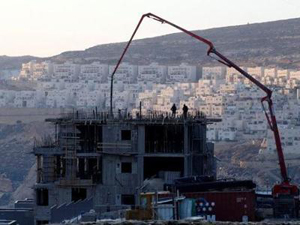
israelThe 15-nation Council adopted yesterday the resolution by a vote of 14 in favour and with one abstention from the US.

In a rare step, the United States instead abstained, enabling the adoption of the first UN resolution since 1979 to condemn Israel over its settlement policy.

The resolution had been put forward by Malaysia, New Zealand, Senegal and Venezuela.

In the resolution, the Council reiterated its demand that Israel "immediately and completely cease all settlement activities in the occupied Palestinian territory, including East Jerusalem, and that it fully respect all of its legal obligations in this regard".

As the resolution, which had more symbolic value and is unlikely to change the situation on ground between Israel and Palestine, was adopted, the Council broke into a huge round of applause as envoys of the permanent and non-permanent members lauded the decision.

The adoption of the resolution and Washington's abstention was seen as a huge rebuke to Israel, which has traditionally been a staunch US ally.

Trump had put pressure on the Obama administration to veto the UN resolution critical of Israel.

A day before the vote, Trump said in a post on social network Facebook that the resolution being considered at the UN Security Council regarding Israel should be vetoed.

"As the United States has long maintained, peace between the Israelis and the Palestinians will only come through direct negotiations between the parties, and not through the imposition of terms by the United Nations. This puts Israel in a very poor negotiating position and is extremely unfair to all Israelis," he had said.

Following the adoption of the resolution, Trump made his displeasure clear, tweeting "As to the UN, things will be different after January 20," referring to the day when he is sworn in as the next US President.

"There is one president at a time," Ben Rhodes, White House deputy national security adviser, told reporters, dismissing Trump's criticism.

US Ambassador to the UN Samantha Power, in Washington's explanation of vote on the resolution, said the vote for US was "not straightforward" because of "for as long as Israel has been a member" of the UN, Israel has been treated differently from other nations at the United Nations.

She said it is America's commitment to Israel's security that makes the United States believe it cannot stand in the way of this resolution as it seeks to preserve a chance of attaining the long-standing objective: two states living side-by-side in peace and security.

"The settlement problem has gotten so much worse that it is now putting at risk the very viability of that two-state solution. The number of settlers in the roughly 150 authorized Israeli settlements east of the 1967 lines has increased dramatically.

Yet rather than dismantling these and other settler outposts, which are illegal even under Israeli law, now there is new legislation advancing in the Israeli Knesset that would legalize most of the outposts – a factor that propelled the decision by this resolution's sponsors to bring it before the Council," she said.

Power added the US did not veto the resolution because it reflects the facts on the ground and is consistent with US policy across Republican and Democratic administration throughout the history of the State of Israel.

Outgoing UN Secretary-General Ban Ki-moon welcomed the adoption of the resolution which stated that the establishment of Israeli settlements in Palestinian territory occupied since 1967, have "no legal validity", constitute a "flagrant violation" under international law and are a "major obstacle" to a two-State solution and a just, lasting and comprehensive peace.

"The resolution is a significant step, demonstrating the Council's much needed leadership and the international community's collective efforts to reconfirm that the vision of two States is still achievable," the UN chief's spokesperson said in a statement.

"The Secretary-General takes this opportunity to encourage Israeli and Palestinian leaders to work with the international community to create a conducive environment for a return to meaningful negotiations," the spokesperson added.

Israel's Ambassador to the UN Danny Danon responded harshly to the American decision not to veto the UN Security Council resolution: "Neither the Security Council nor UNESCO can sever the tie between the people of Israel and the land of Israel".

Danon added that it was "expected" that Israel's greatest ally would act in accordance with the values that "we share and that they would have vetoed this disgraceful resolution".

"I have no doubt that the new US administration and the incoming UN Secretary General will usher in a new era in terms of the UN's relationship with Israel," he said.

Leading human rights group Human Rights Watch lauded the adoption of the resolution saying the US abstention is a welcome shift away from past practice of "using its Security Council veto to shield Israel from criticism despite longstanding US policy opposing settlements".

The Council vote "rebukes" those seeking to reverse universally accepted international law on the illegality of Israeli settlements in the West Bank.

UN Director at Human Rights Watch Louis Charbonneau said indications that Trump may change US policy on settlements "reinforces" the need for a steadfast Security Council position, adding that Malaysia, New Zealand, Senegal and Venezuela should be commended for pushing this resolution forward after Egypt "balked under political pressure before voting in favour of the final resolution".

The Council also underlined that it will not recognize any changes to the June 1967 lines, including with regard to Jerusalem, other than those agreed by the parties through negotiations.

The resolution called for immediate steps to prevent all acts of violence against civilians, including acts of terror, as well as all acts of provocation and destruction, and for accountability in that regard, as well as for both parties to act on the basis of international law, including international humanitarian law, and previous agreements and obligations, "to observe calm and restraint, and to refrain from provocative actions, incitement and inflammatory rhetoric".


Comments

shaji
 - 
Sunday, 25 Dec 2016

UN should also levy penalty on israel and make them pay for allt he losses they did to palestinians since 1967. Israel should withdraw from all the ocupied land.

shaji
 - 
Sunday, 25 Dec 2016

UN should pass a bill to curb and halt terorists state of Israel from occupying palestine land and withdraw immedaitely. As there is no chance that terror israel state will give any attention to US Resolution, i reqeust UN to pass on a resolution to isolate Israel and ban all flight servicdes to and from this terror state. However, even if this terrorits state do not honour UN resolution, UN should give freedom to Nato forces to attack israel. Isolation will definately work. Let this terrorist state suffer. Any country supporting Israel should also be given warning.

Add new comment

  • Coastaldigest.com reserves the right to delete or block any comments.
  • Coastaldigset.com is not responsible for its readers’ comments.
  • Comments that are abusive, incendiary or irrelevant are strictly prohibited.
  • Please use a genuine email ID and provide your name to avoid reject.
Agencies
August 3,2020

New York, Aug 3: The number of coronavirus cases confirmed all over the world has surpassed 18 million, while the global COVID-19 death toll stands at over 687,000 according to data from the Johns Hopkins University's Coronavirus Resource Center.

As of 06:00 Moscow time on Monday (03:00 GMT), there are 18,017,556 confirmed coronavirus cases in the world. The global death toll from COVID-19 stands at 687,930. The number of recovered individuals stands at 10,649,108.

The United States remains the country with the largest number of cases (4,665,932) and the highest COVID-19 death toll (154,841), according to the latest data from the Johns Hopkins University.

Comments

Add new comment

  • Coastaldigest.com reserves the right to delete or block any comments.
  • Coastaldigset.com is not responsible for its readers’ comments.
  • Comments that are abusive, incendiary or irrelevant are strictly prohibited.
  • Please use a genuine email ID and provide your name to avoid reject.
News Network
March 3,2020

Mar 3: Just hours after the ending of a week-long “reduction” in violence that was crucial for Donald Trump’s peace deal in Afghanistan, the Taliban struck again: On Monday, they killed three people and injured about a dozen at a football match in Khost province. This resumption of violence will not surprise anyone actually invested in peace for that troubled country. The point of the U.S.-Taliban deal was never peace. It was to try and cover up an ignominious exit for the U.S., driven by an election-bound president who feels no responsibility toward that country or to the broader region.

Seen from South Asia, every point we know about in the agreement is a concession by Trump to the Taliban. Most importantly, it completes a long-term effort by the U.S. to delegitimize the elected government in Kabul — and, by extension, Afghanistan’s constitution. Afghanistan’s president is already balking at releasing 5,000 Taliban prisoners before intra-Afghan talks can begin — a provision that his government did not approve.

One particularly cringe-worthy aspect: The agreement refers to the Taliban throughout  as “the Islamic Emirate of Afghanistan that is not recognized by the United States as a state and is known as the Taliban.” This unwieldy nomenclature validates the Taliban’s claim to be a government equivalent to the one in Kabul, just not the one recognised at the moment by the U.S. When read together with the second part of the agreement, which binds the U.S. to not “intervene in [Afghanistan’s] domestic affairs,” the point is obvious: The Taliban is not interested in peace, but in ensuring that support for its rivals is forbidden, and its path to Kabul is cleared.

All that the U.S. has effectively gotten in return is the Taliban’s assurance that it will not allow the soil of Afghanistan to be used against the “U.S. and its allies.” True, the U.S. under Trump has shown a disturbing willingness to trust solemn assurances from autocrats; but its apparent belief in promises made by a murderous theocratic movement is even more ridiculous. Especially as the Taliban made much the same promise to an Assistant Secretary of State about Osama bin Laden while he was in the country plotting 9/11.

Nobody in the region is pleased with this agreement except for the Taliban and their backers in the Pakistani military. India has consistently held that the legitimate government in Kabul must be the basic anchor of any peace plan. Ordinary Afghans, unsurprisingly, long for peace — but they are, by all accounts, deeply skeptical about how this deal will get them there. The brave activists of the Afghan Women’s Network are worried that intra-Afghan talks will take place without adequate representation of the country’s women — who have, after all, the most to lose from a return to Taliban rule.

But the Pakistani military establishment is not hiding its glee. One retired general tweeted: “Big victory for Afghan Taliban as historic accord signed… Forced Americans to negotiate an accord from the position of parity. Setback for India.” Pakistan’s army, the Taliban’s biggest backer, longs to re-install a friendly Islamist regime in Kabul — and it has correctly estimated that, after being abandoned by Trump, the Afghan government will have sharply reduced bargaining power in any intra-Afghan peace talks. A deal with the Taliban that fails also to include its backers in the Pakistani military is meaningless.

India, meanwhile, will not see this deal as a positive for regional peace or its relationship with the U.S. It comes barely a week after Trump’s India visit, which made it painfully clear that shared strategic concerns are the only thing keeping the countries together. New Delhi remembers that India is not, on paper, a U.S. “ally.” In that respect, an intensification of terrorism targeting India, as happened the last time the U.S. withdrew from the region, would not even be a violation of Trump’s agreement. One possible outcome: Over time the government in New Delhi, which has resolutely sought to keep its ties with Kabul primarily political, may have to step up security cooperation. Nobody knows where that would lead.

The irresponsible concessions made by the U.S. in this agreement will likely disrupt South Asia for years to come, and endanger its own relationship with India going forward. But worst of all, this deal abandons those in Afghanistan who, under the shadow of war, tried to develop, for the first time, institutions that work for all Afghans. No amount of sanctimony about “ending America’s longest war” should obscure the danger and immorality of this sort of exit.

Comments

Add new comment

  • Coastaldigest.com reserves the right to delete or block any comments.
  • Coastaldigset.com is not responsible for its readers’ comments.
  • Comments that are abusive, incendiary or irrelevant are strictly prohibited.
  • Please use a genuine email ID and provide your name to avoid reject.
Agencies
February 12,2020

London, Feb 12: Fugitive liquor baron Vijay Mallya returned to the courtroom here on Wednesday, the second day of hearing at the UK High Court, where the former billionaire has appealed against the extradition decision of Westminster Magistrates Court in December 2018.

On being asked about his expectations from the lengthy appeals process against the extradition order as today is the last day for Mallya to present his defence, the embattled former Kingfisher Airlines boss replied, "I have no clue. You see. I'll also see it. Let's not get into a speculative game."

When asked on what would happen if Mallya loses the case and has to return to India, the liquor baron responded: "We do have arguments."

The UK High Court, on Tuesday, had also heard Mallya's appeal against the Westminster Magistrates' Court order extraditing him to India to face alleged fraud and money laundering charges amounting to Rs 9,000 crore.

Mallya was present in the court along with his counsel Clare Montgomery during the hearing. Officials from Enforcement Directorate (ED) and Central Bureau of Investigation (CBI) along with counsel Mark Summers representing the Indian government were also present.

When the judge asked if there was a timeline in the case, Clare said," This is a very dense case," involving multiple individuals and organisations and that not everything had been taken into account by the magistrate Emma Arbuthnot in her ruling against Mallya.

Montgomery contended that the magistrate's ruling had been riddled with "multiple errors". She also brought into question the admissibility of documents submitted by the Indian government - including witness statements and emails that proved crucial in the ruling by judge Arbuthnot, who found "clear evidence of misapplication of loan funds" and that there was a prima facie case of fraud against Mallya.

As she had done throughout the trial, Montgomery continued to assert that Mallya had not acted in a fraudulent manner or run a pyramid and that the collapse of Kingfisher Airlines was, in fact, the failure of a business in difficult economic circumstances.

She also reiterated concerns about the conduct of the Central Bureau of Investigation (CBI) in bringing charges against Mallya, claiming that the tycoon had been made a scapegoat.

Montgomery also stated that the Indian government had presented the loan taken out by Kingfisher Airlines, not as a simple business loan but was part of a larger and elaborate attempt at defrauding the banks by Mallya and Kingfisher Airlines management.

This, Montgomery contended, was but one example of a wider misinterpretation of the case by judge Arbuthnot.

The High Court justices reprimanded Montgomery for concentrating on the evidence - in essence rehashing the case presented at the lower court - rather than the apparent "mistakes" made by judge Arbuthnot in her ruling.

Mallya remains on bail of £650,000 as he has done throughout this legal process.

The Crown Prosecution Service which is representing the Government of India will present its case for the extradition of Mallya on Wednesday.

The 63-year-old businessman fled India in March 2016 and has been living in the UK since then.

Comments

Add new comment

  • Coastaldigest.com reserves the right to delete or block any comments.
  • Coastaldigset.com is not responsible for its readers’ comments.
  • Comments that are abusive, incendiary or irrelevant are strictly prohibited.
  • Please use a genuine email ID and provide your name to avoid reject.