


I-T unearths Rs 871 crore scam in Rajkot bank

January 9, 2017

New Delhi, Jan 9: The income tax (I-T) department has detected huge alleged discrepancies in the transactions of a Rajkotbased cooperative bank where Rs 871 crore deposits were made, over 4,500 new accounts opened and more than five dozen accounts having same mobile number initiated, making it one of the biggest cases of black fund generation post November 8.
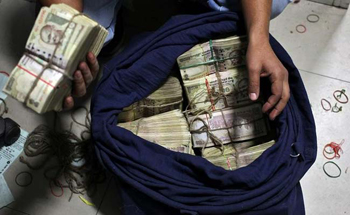
rajkotThe department's Ahmedabad probe wing has now initiated action under tax laws and has sought full details from the bank after it conducted survey operations against it sometime back and found large irregularities.

Officials said the department's investigation till now has found that cash deposits of Rs 871 crore, majorly using the old notes of Rs 500 and Rs 1000, was made in this bank between November 9-December 30 last year while Rs 108 crore was withdrawn during the same period in a highly suspicious manner not commensurate with the bank's activities during the same period in 2015 or at other times.

The sleuths have identified at least 25 high value cash deposits post demonetization where Rs 30 crore monies have been transacted in an alleged suspicious and unsatisfactory manner and in accounts with purported weak KYC norms in place. An I-T analysis report prepared in this regard states that Rs 10 crore funds were deposited in a number of "dormant" accounts post the currency scrap, including in that of a petroleum firm where Rs 2.53 crore was deposited.

What has startled the taxman has been the fact that a total of "4,551 new accounts were opened in the bank post demonetization as against the average 5,000 of such accounts usually opened in the full year while 62 of these were opened using one mobile number." It was detected, they said, that there were blatant discrepancies in the pay-in slips filled to make the deposits as none of them had PAN numbers quoted, many had no signatures of the depositor even as none had any documents to reflect the source of these amounts.

"It was found that the son of bank's ex-director has received Rs 1 crore through cash deposits in 30 bank accounts. All the pay-in slips were filled by the same person. "Also, the mother of the vice-chairman of the bank has received 64 lakh of cash deposits which have ultimately been transferred to a jeweller," the report alleged and added the funds moved through RTGS and other banking transfer channels.

Comments

Skazi
 - 
Monday, 9 Jan 2017

Shaji, even the role of notorious BJP leaders can not be ruled out ....

Let the justice prevail, and INDIA be CLEAN ....

shaji
 - 
Monday, 9 Jan 2017

I hope investigation will lead to involvement of anti social, anti national and terrorist organisation in this huge currency deal.

Add new comment

  • Coastaldigest.com reserves the right to delete or block any comments.
  • Coastaldigset.com is not responsible for its readers’ comments.
  • Comments that are abusive, incendiary or irrelevant are strictly prohibited.
  • Please use a genuine email ID and provide your name to avoid reject.
News Network
April 1,2020

Bengaluru, Apr 1: Karnataka government along with BBMP has asked project contractors, builders and developers in the city not to send their labourers to their native place and instead provide them with amenities like food and shelter in this lockdown period.

It was also warned with legal action would be taken against them if they violating the instructions from the government .

Comments

Add new comment

  • Coastaldigest.com reserves the right to delete or block any comments.
  • Coastaldigset.com is not responsible for its readers’ comments.
  • Comments that are abusive, incendiary or irrelevant are strictly prohibited.
  • Please use a genuine email ID and provide your name to avoid reject.
News Network
July 21,2020

Bengaluru, Jul 21: The total number of Covid-19 cases in Karnataka breached the 70,000 mark on Tuesday as the state reported 3,649 fresh infections, while 61 fatalities took the death toll to 1,464, the health department said.

The day also saw 1,664 patients getting discharged after recovery. Out of 3,649 fresh cases reported on Tuesday, a whopping 1,714 were from Bengaluru urban alone. As of July 21 evening, cumulatively 71,069 Covid-19 cases have been confirmed in Karnataka, which includes 1,464 deaths and 25,459 discharges, the health department said in its bulletin.

It said that out of the 44,140 active cases, 43,557 patients are in isolation at designated hospitals and are stable, while 583 are in Intensive Care Units.

Twenty-two out of 61 deaths reported on Tuesday are from Bengaluru urban, followed by five each from Dakshina Kannada, Mysuru and Dharwad, four each from Kolar and Belagavi, three each from Hassan, Tumakuru and Haveri, Bidar 2, and one each from Chikkaballapura, Chikkamagaluru, Chamarajanagara, Gadag and Vijayapura.

Most of the deceased either had a history of Severe Acute Respiratory Infection (SARI) or Influenza-like illness (ILI). Out of 3,649 cases tested positive on Tuesday, contacts of the large number of the cases are still under tracing.

Among the districts where new cases were reported, Bengaluru urban accounted for 1,714, Ballari 193, Dakshina Kannada 149, Mysuru 135, Yadgir 117, Uttara Kannada 109, Hassan 107, Kolar 103, followed by others.

Bengaluru urban district topped the list of positive cases, with 34,943 infections, followed by Dakshina Kannada 3,829 and Kalaburagi 2,966. Among discharges Bengaluru urban was on top with 7,476 discharges, followed by Kalabuagi 1,834 and Udupi 1,731.

A total of 10,64,734 samples were tested so far, out of which 43,904 were tested on Tuesday alone, the bulletin said. It said that 19,328 of the 43,904 samples tested today were rapid antigen tests.

Comments

Add new comment

  • Coastaldigest.com reserves the right to delete or block any comments.
  • Coastaldigset.com is not responsible for its readers’ comments.
  • Comments that are abusive, incendiary or irrelevant are strictly prohibited.
  • Please use a genuine email ID and provide your name to avoid reject.
Ram Puniyani
January 14,2020

In the beginning of January 2020 two very disturbing events were reported from Pakistan. One was the attack on Nankana Sahib, the holy shrine where Sant Guru Nanak was born. While one report said that the place has been desecrated, the other stated that it was a fight between two Muslim groups. Prime Minister of Pakistan Imran Khan condemned the incident and the main accused Imran Chisti was arrested. The matter related to abduction and conversion of a Sikh girl Jagjit Kaur, daughter of Pathi (One who reads Holy Guru Granth Sahib in Gurudwara) of the Gurudwara. In another incident one Sikh youth Ravinder Singh, who was out on shopping for his marriage, was shot dead in Peshawar.

While these condemnable attacks took place on the Sikh minority in Pakistan, BJP was quick enough to jump to state that it is events like this which justify the Citizenship Amendment Act (CAA). Incidentally CAA is the Act which is discriminatory and relates to citizenship with Religion, which is not as per the norms of Indian constitution. There are constant debates and propaganda that population of Hindus has come down drastically in Pakistan and Bangla Desh. Amit Shah, the Home minister stated that in Pakistan the population of Hindus has come down from 23% at the time of partition to 3.7% at present. And in Bangla Desh it has come down from 22% to present 8%.

While not denying the fact that the religious minorities are getting a rough deal in both these countries, the figures which are presented are totally off the mark. These figures don’t take into consideration the painful migrations, which took place at the time of partition and formation of Bangla Desh later. Pakistan census figures tell a different tale. Their first census was held in 1951. As per this census the overall percentage of Non Muslim in Pakistan (East and West together) was 14.2%, of this in West Pakistan (Now Pakistan) it was 3.44 and in Eat Pakistan it was 23.2. In the census held in Pakistan 1998 it became 3.72%. As far as Bangla Desh is concerned the share of Non Muslims has gone down from 23.2 (1951) to 9.6% in 2011.

The largest minority of Pakistan is Ahmadis, (https://minorityrights.org/country/pakistan/) who are close to 4 Million and are not recognised as Muslims in Pakistan. In Bangla Desh the major migrations of Hindus from Bangla Desh took place in the backdrop of Pakistan army’s atrocities in the then East Pakistan.

As far as UN data on refugees in India it went up by 17% between 2016-2019 and largest numbers were from Tibet and Sri Lanka.  (https://www.un.org/en/development/desa/population/migration/publication…)

The state of minorities is in a way the index of strength of democracy. Most South Asian Countries have not been able to sustain democratic values properly. In Pakistan, the Republic began with Jinnah’s classic speech where secularism was to be central credo of Pakistan. This 11th August speech was in a way what the state policy should be, as per which people of all faiths are free to practice their religion. Soon enough the logic of ‘Two Nation theory” and formation of Pakistan, a separate state for Muslim took over. Army stepped in and dictatorship was to reign there intermittently. Democratic elements were suppressed and the worst came when Zia Ul Haq Islamized the state in collusion with Maulanas. The army was already a strong presence in Pakistan. The popular formulation for Pakistan was that it is ruled by three A’s, Army, America and Allah (Mullah).

Bangla Desh had a different trajectory. Its very formation was a nail in the coffin of ‘two nation theory’; that religion can be the basis of a state. Bangla Desh did begin as a secular republic but communal forces and secular forces kept struggling for their dominance and in 1988 it also became Islamic republic. At another level Myanmar, in the grip of military dictatorship, with democratic elements trying to retain their presence is also seeing a hard battle. Democracy or not, the army and Sanghas (Buddhist Sang has) are strong, in Myanmar as well. The most visible result is persecution of Rohingya Muslims.

Similar phenomenon is dominating in Sri Lanka also where Budhhist Sanghas and army have strong say in the political affairs, irrespective of which Government is ruling. Muslim and Christian minorities are a big victim there, while Tamils (Hindus, Christians etc.) suffered the biggest damage as ethnic and religious minorities. India had the best prospect of democracy, pluralism and secularism flourishing here. The secular constitution, the outcome of India’s freedom struggle, the leadership of Gandhi and Nehru did ensure the rooting of democracy and secularism in a strong way.

India so far had best democratic credentials amongst all the south Asian countries. Despite that though the population of minorities rose mainly due to poverty and illiteracy, their overall marginalisation was order of the day, it went on worsening with the rise of communal forces, with communal forces resorting to identity issues, and indulging in propaganda against minorities.

While other South Asian countries should had followed India to focus more on infrastructure and political culture of liberalism, today India is following the footsteps of Pakistan. The retrograde march of India is most visible in the issues which have dominated the political space during last few years. Issues like Ram Temple, Ghar Wapasi, Love Jihad, Beef-Cow are now finding their peak in CAA.

India’s reversal towards a polity with religion’s identity dominating the political scene was nicely presented by the late Pakistani poetess Fahmida Riaz in her poem, Tum bhi Hum Jaise Nikle (You also turned out to be like us). While trying to resist communal forces has been an arduous task, it is becoming more difficult by the day. This phenomenon has been variously called, Fundamentalism, Communalism or religious nationalism among others. Surely it has nothing to do with the religion as practiced by the great Saint and Sufi traditions of India; it resorts mainly to political mobilization by using religion as a tool.

Comments

Ashi
 - 
Tuesday, 14 Jan 2020

If Malaysia implement similar NRC/CAA, India and China are the loser.

Add new comment

  • Coastaldigest.com reserves the right to delete or block any comments.
  • Coastaldigset.com is not responsible for its readers’ comments.
  • Comments that are abusive, incendiary or irrelevant are strictly prohibited.
  • Please use a genuine email ID and provide your name to avoid reject.