


I-T unearths Rs 871 crore scam in Rajkot bank

January 9, 2017

New Delhi, Jan 9: The income tax (I-T) department has detected huge alleged discrepancies in the transactions of a Rajkotbased cooperative bank where Rs 871 crore deposits were made, over 4,500 new accounts opened and more than five dozen accounts having same mobile number initiated, making it one of the biggest cases of black fund generation post November 8.
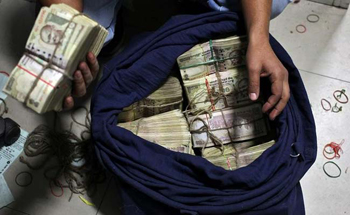
rajkotThe department's Ahmedabad probe wing has now initiated action under tax laws and has sought full details from the bank after it conducted survey operations against it sometime back and found large irregularities.

Officials said the department's investigation till now has found that cash deposits of Rs 871 crore, majorly using the old notes of Rs 500 and Rs 1000, was made in this bank between November 9-December 30 last year while Rs 108 crore was withdrawn during the same period in a highly suspicious manner not commensurate with the bank's activities during the same period in 2015 or at other times.

The sleuths have identified at least 25 high value cash deposits post demonetization where Rs 30 crore monies have been transacted in an alleged suspicious and unsatisfactory manner and in accounts with purported weak KYC norms in place. An I-T analysis report prepared in this regard states that Rs 10 crore funds were deposited in a number of "dormant" accounts post the currency scrap, including in that of a petroleum firm where Rs 2.53 crore was deposited.

What has startled the taxman has been the fact that a total of "4,551 new accounts were opened in the bank post demonetization as against the average 5,000 of such accounts usually opened in the full year while 62 of these were opened using one mobile number." It was detected, they said, that there were blatant discrepancies in the pay-in slips filled to make the deposits as none of them had PAN numbers quoted, many had no signatures of the depositor even as none had any documents to reflect the source of these amounts.

"It was found that the son of bank's ex-director has received Rs 1 crore through cash deposits in 30 bank accounts. All the pay-in slips were filled by the same person. "Also, the mother of the vice-chairman of the bank has received 64 lakh of cash deposits which have ultimately been transferred to a jeweller," the report alleged and added the funds moved through RTGS and other banking transfer channels.

Comments

Skazi
 - 
Monday, 9 Jan 2017

Shaji, even the role of notorious BJP leaders can not be ruled out ....

Let the justice prevail, and INDIA be CLEAN ....

shaji
 - 
Monday, 9 Jan 2017

I hope investigation will lead to involvement of anti social, anti national and terrorist organisation in this huge currency deal.

Add new comment

  • Coastaldigest.com reserves the right to delete or block any comments.
  • Coastaldigset.com is not responsible for its readers’ comments.
  • Comments that are abusive, incendiary or irrelevant are strictly prohibited.
  • Please use a genuine email ID and provide your name to avoid reject.
News Network
March 28,2020

Bengaluru, Mar 28: Sun Tsu, in 'The Art of War' speaks of a skilful general who can subdue his enemy without any fighting. This constitutes the ultimate triumph which is referred to as stratagem. Today, we would need one such when we are faced with the '21-day corona challenge' for India.
Nearly four weeks back, Dr Jyothsna Rao, Dr Gururaj Rao and I sat across the OPD in the afternoon at HCG Bengaluru discussing our ongoing cancer immunology research. While on this topic, we drifted into the discussion on the coronavirus. During this engaging discussion, we wondered the similarity of the enigma between the virus and cancer. I paused to ask Dr Jyothsna and Dr Guru - how we wish we could do something against this virus.
Dr Jyothsna is a PhD from NCBS and had worked under Dr Ralph Steinman, physician and researcher from Rockefeller University, who won the Nobel Prize for his discovery of the dendritic cell and its role in adaptive immunity in 2011. Dr Gururaj is a molecular and cell biologist who did his PhD at the Chapel Hill, University of North Carolina and is the Director of iCrest.
Jyothsna while hearing our perplexing conversation on the covid intervened, "Yes, surely. I think we should take a break from cancer and focus on the innate and adaptive immunity role in COVID-19."
Thus began this sincere attempt to relook the human immune system from the eyes of the COVID-19.
We have 10 types of immune cells at the least which are widely dispersed in millions across the body. When our body is invaded by a foreign organism (bacteria, fungi or virus), these cells work with each other to destroy the invader.
Now, the question is - how do the immune cells talk to each other? They use small-molecule substances called cytokines (cyto means cells; kine means movement). There are many cytokines that are involved in work on the immune system. The most relevant for viruses are interferons.
Interferons (IFN) as the name reflects have an ability to interfere with the viral activity and stop their multiplication. These specialised signal proteins are released by our cells in response to a viral attack to forewarn other cells. They help build the antiviral proteins within the cells to kill the virus as it tries to invade the new cells.
Historically, interferons are a group of cytokines known to be potent antiviral agents against viruses and a hallmark cytokine induced by the host upon viral infections. Interferons possess unique immunoregulatory activities and are signature cytokines released by (TH1) T immune cells, which are crucial in viral infections.
As the outbreak of COVID-19 grapples us, an urgent need for finding strategies to combat the virus is growing. Coronaviruses (CoVs) are a group of RNA viruses. In patients infected with coronavirus, it was indicated that the activation of the IFN does not occur until 48 hours post-infection. Thus the delayed IFN-related antiviral response by the healthy cells leads to coronavirus evade the immune response.
Numerous studies have presented the success in defeating CoVs by the direct administration of IFNs. In a combination as a concoction, it was shown to synergistically inhibit the virus replication in vitro.
Moreover, it is understood that the earlier induction of IFNs in children although they have a less developed immune system could be the reason behind the children being least affected.
The key to success in reducing the disease fatality might be the stimulation of the immune responses to trigger IFN production at the very early stages of the disease, which might be done through the administration of IFN. Despite the evidence for the efficacy of IFNs in treating CoV-induced infections, the proper dosing and ideal timing for such interventions needs to be verified in clinical trials.
For the later stages of the diseases in advance stages where patients are on ventilator and have developed respiratory distress, we propose to utilise the mesenchymal cells derived from donor bone marrow that have been known to treat acute respiratory syndrome. Mesenchymal cells are known to possess anti-inflammatory activity and thus used often in autoimmune diseases.
With this scientific background, we have activated T cells from healthy donors, in a cGMP facility at iCrest - HCG hospital with an enriched cocktail of cytokines rich in Interferons. Injections of this cocktail we believe will result in a surge of cytokines in the body of the infected person and will boost his ability to fight the virus in the early phases. We are in the initial phases of this study and hope to be ready in the coming weeks with meaningful data on its potential utility.
Currently, it awaits government approvals (Union and state) and we have applied to central drugs authority for their initial evaluation and further directions.
As my Guru often expounded the philosophy of 'Seva' - the goal of education is knowledge, the end goal of knowledge is service. In this attempt to serve our fellow humans at this brink of unprecedented crisis, medical fraternity stands with you and promises to do our best for your safety.
We assure to exhaust every bit of our spirit in this fight against coronavirus. We have lost the sight of shores and travelled thus far, but that is the mandatory first step to cross the ocean. Are we going to succeed in this battle, is something only time will answer. 

Comments

Add new comment

  • Coastaldigest.com reserves the right to delete or block any comments.
  • Coastaldigset.com is not responsible for its readers’ comments.
  • Comments that are abusive, incendiary or irrelevant are strictly prohibited.
  • Please use a genuine email ID and provide your name to avoid reject.
News Network
February 5,2020

Tightening control over companies misleading advertisements of medicines and products, the Indian government could soon slap a fine of up to Rs10 lakh and up to two years' imprisonment. While repeat offender could be fined up to Rs50 and imprisonment up to five years.

The Ministry of Health and Family Welfare's new draft of the Drugs and Magic Remedies (Objectionable Advertisements) (Amendment) Bill, 2020, provides extremely stringent penalties compared to the current law.

Under the new Act, companies advertising medicines and products falsely claiming to make a person fairer, improve height and memory or cure issues like hair loss or greying and premature ageing, among several others, may attract more stringent fines and jail time.

The current Act, 1954, leaves scope for companies to create deceptive advertisements as first time offender can be jailed for six months while repeat offender can be up to one year in prison, reported The Indian Express.

Under the Bill, deceptive advertisements will cover digital advertising, notice, circular, label, wrapper, invoice, banner and poster, among others. The government also plans to expand the scope of the law under the proposed amendments to cover 24 more deceptive claims not included in the current law, like medicines that can cure AIDS, change the sex of a foetus, among others, reported Livemint.

Comments

Add new comment

  • Coastaldigest.com reserves the right to delete or block any comments.
  • Coastaldigset.com is not responsible for its readers’ comments.
  • Comments that are abusive, incendiary or irrelevant are strictly prohibited.
  • Please use a genuine email ID and provide your name to avoid reject.
News Network
April 20,2020

Kalaburagi, Apr 20: With no COVID-19 case reported here on Sunday, the total number of virus-infected people in the district stood at 22.

While three persons have succumbed to the infection in the district so far, three others have been cured and discharged.

"No COVID-19 case was reported in Kalaburagi district today. Total 22 positive cases and 3 deaths have been reported in the district till date. Three persons have been cured," said District Magistrate B. Sharat.

Karnataka's total count of coronavirus patients has surged to 390, said the State Health Department on Sunday.

"Six new cases have been confirmed for COVID-19 in the State from 5 pm on Saturday till 5 pm on Sunday. Cumulatively, 390 COVID-19 positive cases have been confirmed in the state," it said.

Comments

Add new comment

  • Coastaldigest.com reserves the right to delete or block any comments.
  • Coastaldigset.com is not responsible for its readers’ comments.
  • Comments that are abusive, incendiary or irrelevant are strictly prohibited.
  • Please use a genuine email ID and provide your name to avoid reject.