


Murdered techie laid to rest; Infosys promises Rs 1 cr, job for her family

February 1, 2017

Kozhikode, Feb 1: The body of slain software engineer Rasila Raju, 25, was cremated on the premises of her house at Payimbra, near Kuruvattoor, Kozhikode, on Tuesday.
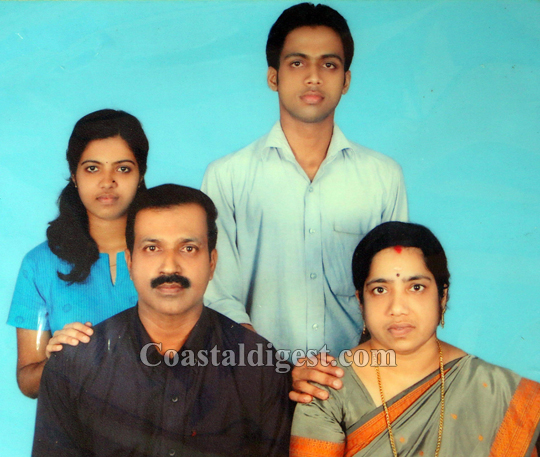
Rasila3

She was found murdered at the Infosys office in Pune on Sunday and the police had arrested security guard Bhaben Saikia from Assam for the crime.

Infosys offered the Rasila family a compensation of Rs 1 crore and a job for one of her relatives.

"In the tragic event of the demise of any employee under unfortunate circumstances, as happened in this instance with our employee, OP Rasila, in Pune, Infosys ensures that the next of kin of the deceased employee does not suffer financially in any way," Infosys said in a statement issued tonight.

The statement said that towards ensuring financial stability for the family, Infosys takes into account the statutory payments to be made as per the company policy.

"The company also considers ex-gratia payments based on the circumstances. Infosys also endeavours to make every effort at a suitable employment opportunity for the next of kin who qualify its recruitment criteria," it said.

Meanwhile, a senior office-bearer of the 'Pune Kerala Samaj' has claimed Infosys has issued a letter to the family of Rasila, agreeing to pay "Rs one crore as ex-gratia" to her nominee.

Repeated calls to Infosys officials for reaction on the claims regarding issuance of the letter remained unanswered.

Rasila's father Raju OP along with Malyali community members had visited Infosys officials on Pune campus on Monday night.

Her mortal remains were cremated today at her village in Kozhikode district in presence of a large number of people.

Meanwhile, Congress in Kerala on Tuesday demanded a comprehensive probe into the techie's murder.

In a letter to Maharashtra Chief Minister Devandra Fadnavis, Leader of the Opposition in the Kerala assembly, Ramesh Chennithala, said he had visited the relatives of Rasila at Kozhikode this morning.

"There is some mystery in the murder and some others had a role in her death, Rasila's relatives informed me. Besides, the family also complained that there was a serious lapse on the part of the company," he said.

Police had on Monday arrested Bhaben Saikia, a security guard from a private security services firm deployed at the Infosys campus, in connection with the murder.

According to police, Rasila had chided Saikia for "staring" at her and threatened to complain against him.

Comments

Rikaz
 - 
Wednesday, 1 Feb 2017

Money cannot bring back that soul....but still it was Infosys did not provide security for that lone employee...disgusting...need to take care while working for this type of big companies...they just don't care.....

Skazi
 - 
Wednesday, 1 Feb 2017

RIP..... Condolences to the family ..... well done Infosys... May Allah shower his blessings on the company for such noble acts .....

Add new comment

  • Coastaldigest.com reserves the right to delete or block any comments.
  • Coastaldigset.com is not responsible for its readers’ comments.
  • Comments that are abusive, incendiary or irrelevant are strictly prohibited.
  • Please use a genuine email ID and provide your name to avoid reject.
Agencies
May 8,2020

Washington D.C., May 8: The prime time for brain development in a child's life is the first year, where the infant spends most of the time asleep. It is the time when neural connections form and sensory memories are encoded.

However, when sleep is disrupted, as occurs more often among children with autism, brain development may be affected, too.

New research led by the University of Washington finds that sleep problems in a baby's first 12 months may not only precede an autism diagnosis but also may be associated with altered growth trajectory in a key part of the brain, the hippocampus.

The study, which was published in the American Journal of Psychiatry, researchers report that in a sample of more than 400 taken of 6- to 12-month-old infants, those who were later diagnosed with autism were more likely to have had difficulty falling asleep.

It also states that this sleep difficulty was associated with altered growth trajectories in the hippocampus.

"The hippocampus is critical for learning and memory, and changes in the size of the hippocampus have been associated with poor sleep in adults and older children.

As many as 80 per cent of the children with autism spectrum disorder have sleep problems," said Annette Estes, director of the UW Autism Center and senior author of the study.

"In our clinical experience, parents have a lot of concerns about their children's sleep, and in our work on early autism intervention, we observed that sleep problems were holding children and families back," added Estes, who is also a UW professor of speech and hearing sciences.

"It could be that altered sleep is part-and-parcel of autism for some children. One clue is that behavioural interventions to improve sleep don't work for all children with autism, even when their parents are doing everything just right. This suggests that there may be a biological component to sleep problems for some children with autism," said Estes.

To consider links among sleep, brain development, and autism, researchers at the IBIS Network looked at MRI scans of 432 infants, surveyed parents about sleep patterns, and measured cognitive functioning using a standardized assessment.

At the outset of the study, infants were classified according to their risk for developing autism: Those who were at higher risk of developing autism -- about two-thirds of the study sample -- had an older sibling who had already been diagnosed.

Infant siblings of children with autism have a 20 per cent chance of developing autism spectrum disorder -- a much higher risk than children in the general population.

In the current study, 127 of the 432 infants were identified as "low risk" at the time the MRI scans were taken because they had no family history of autism.

They later evaluated all the participants at 24 months of age to determine whether they had developed autism. Of the roughly 300 children originally considered "high familial risk," 71 were diagnosed with autism spectrum disorder at that age.

Problems with sleep were more common among the infants later diagnosed with an autism spectrum disorder, as were larger hippocampi. No other subcortical brain structures were affected, including the amygdala, which is responsible for certain emotions and aspects of memory, or the thalamus, a signal transmitter from the spinal cord to the cerebral cortex.

The authors note that while parents reported more sleep difficulties among infants who developed autism compared to those who did not, the differences were very subtle and only observed when looking at group averages across hundreds of infants.

Sleep patterns in the first years of life change rapidly as infants transition from sleeping around the clock to a more adult-like sleep/wake cycle. Until further research is completed, Estes said, it is not possible to interpret challenges with sleep as an early sign of increased risk for autism.

Comments

Add new comment

  • Coastaldigest.com reserves the right to delete or block any comments.
  • Coastaldigset.com is not responsible for its readers’ comments.
  • Comments that are abusive, incendiary or irrelevant are strictly prohibited.
  • Please use a genuine email ID and provide your name to avoid reject.
coastaldigest.com news network
May 22,2020

Mangaluru, May 22: An elderly cardiac patient from Dakshina Kannada, who was stranded in Saudi Arabia due to covid-19 lock-down, has finally reached his homeland thanks to the timely intervention by Humanity Forum Jubail and Indian Social Forum.

The elderly man hailing from Kadaba area of Dakshina Kannada was admitted to a hospital in Madinah. However, his condition continued to worsen due to lack of proper treatment. The efforts by his family members to bring him back home had not yielded results.

Meanwhile, one of the relatives of the patient, Ansari Suratkal, who happens to be a DKSC activist, brought the issue to the notice of the Karnataka unit of the Indian Social Forum in Dammam. ISF contacted Humanity Forum president Zakariya Jokatte, who helped the patient to speak directly union minister D V Sadananda Gowda in a video conference organised by coastaldigest.com.

Humanity Forum also persuaded the Indian Embassy to allow the stranded cardiac patient to fly back to India through Dammam-Bengaluru repatriation flight on May 20. 

However, it was not easy for the patient to travel from Madinah to Dammam International Airport due to lock-down and curfew. ISF not only obtained travel permission for him but also arranged vehicle. Jeddah and Riyadh units of ISF helped in obtaining permission letter in their respective places in spite of travel ban imposed by the police. Madinah unit of ISF arranged vehicle for transportation. Zakariya Jokatte bore the air ticket and other expenses of the patient.

Comments

Add new comment

  • Coastaldigest.com reserves the right to delete or block any comments.
  • Coastaldigset.com is not responsible for its readers’ comments.
  • Comments that are abusive, incendiary or irrelevant are strictly prohibited.
  • Please use a genuine email ID and provide your name to avoid reject.
News Network
March 6,2020

Bengaluru, Mar 6: School children in Karnataka will have 'bag-free' days on two Saturdays in a month as part of efforts to create a joyful learning experience, Chief Minister B S Yediyurappa announced on Thursday. By making two Saturdays in a month as bag-free days, "Sambhrama Shanivara" will be observed with the objective of creating a joyful learning experience by reducing the burden of text books, he said, presenting the 2020-21 budget in the state assembly.

"The main purpose of such days is to create awareness, by means of activities, on topics that are necessary for students to be ideal citizens," he added.

He also said for the first time in the history of the state his government presented a "child budget", making it a special feature of the budget.

All the policies and programmes for the development of children below the age of 18 are consolidated and presented in this budget and as many as 279 programmes involving Rs.36,340crore, which is 15.28 per cent of the total volume of the Budget, have been earmarked.

English medium of instruction would be given along with Urdu in 400 government Urdu schools and Rs one crore will be provided during 2020-21 for this purpose, Mr Yediyurappa said.

For the education of children of auto drivers, up to Rs 2,000 would be provided annually to each family. For this purpose, Rs 40 crore will be provided in the coming fiscal, the Chief Minister added.

Comments

Add new comment

  • Coastaldigest.com reserves the right to delete or block any comments.
  • Coastaldigset.com is not responsible for its readers’ comments.
  • Comments that are abusive, incendiary or irrelevant are strictly prohibited.
  • Please use a genuine email ID and provide your name to avoid reject.