Bengaluru: Ugandan woman stabbed to death after scuffle overpayment for sex'

[email protected] (News Network)
February 3, 2017

Ugandan

Bengaluru, Feb 3: A 25-year-old Ugandan woman was allegedly stabbed to death at her house in Bengaluru in a scuffle over payment for sex in the early hours of Thursday.

Nakayaki Florence was a B.Com student, and a native of Kampala in Uganda. Ishaan (28), who reportedly knifed her to death, was nabbed from her house. The incident took place between 1.30 and 2 am at her second floor house in Thimmegowda Layout, near the Kothanur bus stand. Police said she was involved in the flesh trade, a charge members of her community believe diverts the case.

Ishaan, a native of Himachal Pradesh, told the police he was an M.Tech looking for a job in Bengaluru. He worked as a part-time tutor and was a paying guest in BTM?Layout, the police said. Ishaan met Nakayaki on Brigade Road, and struck a deal for Rs 5,000 to visit her house, a police source said, quoting Ishaan. She demanded Rs 10,000 as he had stayed longer than agreed, Ishaan purportedly told the police.

This resulted in a quarrel. Both were drunk, and Nakayaki grabbed a knife and charged at Ishaan, injuring his hand, according to the police. Ishaan then snatched it from her and stabbed her four or five times, killing her instantly. Hearing the commotion, the landlady rushed to the second floor and locked the door from outside, trapping Ishaan inside.

“We have already established that he (Ishaan) killed the victim, and prima facie, there is clear-cut circumstantial evidence,” said P S Harsha, Deputy Commissioner of Police, North-East Division. However, he did not divulge details, saying the investigation was in progress.

Since it was a murder involving a foreigner, a large number of policemen rushed to the area. People from several African countries had gathered at the spot and were seeking access to Ishaan. The police caned the crowd and whisked him away around 3 am. Soon a platoon of KSRP personnel arrived. The police have booked some Africans for assault, a policeman said.

An association of Africans took objection to the way the city police approached the case. “How can the police come out with conclusive statements that the victim was in the flesh trade and the cause of murder was money over unlawful activity? This is victimising the victim further,” said Bosco Kaweesi, legal adviser, All African Students in Bengaluru.

The fact of the case is that someone went to Nakayaki's house at night and murdered her, he said. “Let the police probe the case impartially,” Kaweesi urged. Three officials from the Ugandan High Commission, besides the Ugandan ambassador to India , will be coming to Bengaluru on Friday, said Bosco Kaweesi.

Comments

naren kotian
 - 
Saturday, 4 Feb 2017

charan anna , india cannot do that bro .. because indians and indian companies including govt companies have billions of investments in african countries , now china and india competing in africa for natural reserves , infrastructure development , factories , health care etc .. indians mega parallel economies in africa from kenya to tanzania , mauritius to ghana and nigeria .. and also millions of indians working in africa in projects . so this type of decision of blocking will create negative impact . In ethipopia in congo ,indians do farming in mega scale . best solution is deporting the students on case o case basis .

Charan Kumar
 - 
Friday, 3 Feb 2017

India should take a leaf out of trump'? visa ban and prohibit entry of Africans, especially their students, because of whom flesh trade and drug mafia is thriving in cities like Benglauru

Add new comment

  • Coastaldigest.com reserves the right to delete or block any comments.
  • Coastaldigset.com is not responsible for its readers’ comments.
  • Comments that are abusive, incendiary or irrelevant are strictly prohibited.
  • Please use a genuine email ID and provide your name to avoid reject.
Media Release
February 14,2020

Veteran journalist P. Sainath has said that the nation is in a crisis. And this crisis is not limited to just the rural area. It has become a national crisis at various areas such as agriculture, education, economy, job creation etc.

He was delivering the endowment lecture on the topic ‘Indian democracy at the post-liberalization and post-truth era’ at Media Manthan 2020 organized by the PG department of journalism and mass communication at St Aloysius College (Autonomous). 

Mr Sainath said that the many policies adopted in the 90s led to India becoming unusually unequal. Referring to the speech Ambedkar had made at the Constituent Assembly while handing over the draft of the Constitution, Mr Sainath said, “Ambedkar had warned about the weakness of Indian democracy that liberty without equality allows the supremacy of a few over the multitude. Liberty, equality and fraternity must be kept together as we cannot have one without the other.” 

Mr Sainath stated that the agrarian crisis was no longer about the loss of productivity, employment or about farmer suicide; it was a societal, civilizational crisis. Commenting on the lopsided policies such as cow-slaughter ban, he explained how cow slaughter ban had adversely affected many industries due to their interdependency. While Muslims who slaughtered cows were rendered helpless, the cattle traders who were mostly OBCs lost their earnings as the cattle prices crashed. An important industry like Kolhapur sandals industry in Maharashtra went bankrupt as a result of the cow slaughter ban in Maharashtra. He said the policymakers had no idea how the rural industries were interconnected. Demonetisation too devastated the rural economy as 98 percent of rural transactions happen through cash. 

Mr Sainath also spoke about the crisis of inequality which affects the Dalits and the Adivasis far more than anyone else as 90 percent of the rural households take home less than Rs 10,000/- per month. “Women are yet another group whose labour is never counted in the gross domestic product. Women and girls globally do unpaid work which amounts to about 12.5 billion working hours per year. Monetarily speaking, this is worth 10.8 trillion dollars,” Mr Sainath added. 

Speaking about the crisis of jobs Mr Sainath said that major companies were laying off employees just to create more profits for the investors and the adoption of artificial intelligence in the industry would further destroy millions of jobs.

Rector of St Aloysius College Institutions Fr Dionysius Vaz SJ, Principal Dr (Fr) Praveen Martis SJ, HOD of Journalism and Mass Communication department Dr (Fr) Melwyn Pinto SJ were present.

‘Veerappan and Vijay Mallya’s business models are interesting!’

Addressing the gathering during his endowment lecture on Friday, Mr Sainath made an interesting comment on the so called ‘revenue model’. “Whenever I visit IIMs and IITs for lectures on my PARI project, the students there ask me what my revenue model for my project is. I tell them that I do not have a revenue model. In fact, journalism does not begin with a revenue model. Gandhiji, Ambedkar, Bhagat Singh were all great journalists. But they did not have a revenue model,” Mr Sainath said.

On a lighter note, he said that the best revenue model that he liked was that of forest brigand Veerappan and liquor baron Vijay Mallya. “Veerappan ruled the forest for forty years and from the top ministers to the villagers he could dictate terms and liver royally. Similarly, Mallya’s revenue model was to steal the banks and run away abroad and live like a king,” Mr Sainath added.

Journalism is not and can never be a business. It is a calling, he opined. While newspaper can be a business, television can be a business, journalism per se cannot be reduced to a business. “Unfortunately today, journalists are recruited on a contract basis and they have no bargaining power; and there are no unions to fight for their cause. Hence, they are at the mercy of the corporate media houses for their survival and are made to write stories that cannot be called journalism,” Mr Sainath said.

Answering a question as to the pressures he faced as a journalist, he said that external pressures from the government or others could be very well handled. It is the internal pressures from once own media house that journalists find it difficult to manage.


Comments

Add new comment

  • Coastaldigest.com reserves the right to delete or block any comments.
  • Coastaldigset.com is not responsible for its readers’ comments.
  • Comments that are abusive, incendiary or irrelevant are strictly prohibited.
  • Please use a genuine email ID and provide your name to avoid reject.
News Network
July 17,2020

Bengaluru, Jul 17: The Karnataka State Board of AUQAF has ordered that management committees at Muslim Khabarastans, shall not refuse burial to Muslims died due to COVID-19.

"...in exercise the powers conferred under Waqf Act 1995, it is hereby ordered that management Committees/Muthawallies/Administrators responsible for the management of Muslim Khabarastans in the state of Karnataka irrespective of registered or unregistered in the Waqf, shall not refuse the burial of Muslims died due to COVID-19 pandemic," read an order from the Karnataka State Board of AUQAF on Thursday.

"They shall co-operate with all the Nodal Officers designated for this purpose regarding the decent burial. Non co-operation or refusal on the part of the management will be construed as an insult committed to the deceased. Any violation of the above order will attract the punitive provision of Indian Penal Code and removal from the management as per the provisions of the Waqf Act 1995," the order read.

It further said that the Waqf Officers, District Wakf Advisory Committees of the state, shall ensure the adherence of this order, and circulate the same to all the Khabarastan managements, registered or unregistered in the state.

"No further deliberation in this regard is solicited except compliance of the order in letter and spirit. Any dereliction in this regard will be viewed seriously," it read.

Giving a background on the issue of burial of COVID-19 deceased, the order read, "It is observed that, number of deaths are being occurred in various Districts of Karnataka, due to COVID-19 pandemic and it is reported that, some of the management committees of Khabarastan, are not cooperating to bury the dead bodies of COVID-19."

"A decent burial is a right of the dead person" as per the law of the land and the Islamic jurisprudence. It is needless to emphasize the importance of burial of Muslim dead bodies in Shariah. The dead body of a Muslim is treated with the utmost respect by the Ummah, joining in the funeral (Tadfeen), participating in the Namaz-e-Janaza and the burial are considered as Farz-e-Kifaya in Muslim law. According to the tradition of Islam, the person who participates in the funeral is entitled to Mountain sized reward (Sawaab)," the order read.

As per the order, the board, in its earlier circular had also cautioned the management of Waqf institutions and Khabarastan which were reluctant to allow the decent burial in the Khabarastan would be punished under the provisions of Indian Penal Code and the punitive provisions of the Waqf Act 1995 as well.

"The District Magistrates and the Superintendent of Police in the districts have been requested to prosecute the erring management committees who are responsible for non co-operation in this regard. Hence, the following order," it added.

Comments

Add new comment

  • Coastaldigest.com reserves the right to delete or block any comments.
  • Coastaldigset.com is not responsible for its readers’ comments.
  • Comments that are abusive, incendiary or irrelevant are strictly prohibited.
  • Please use a genuine email ID and provide your name to avoid reject.
coastaldigest.com news network
July 31,2020

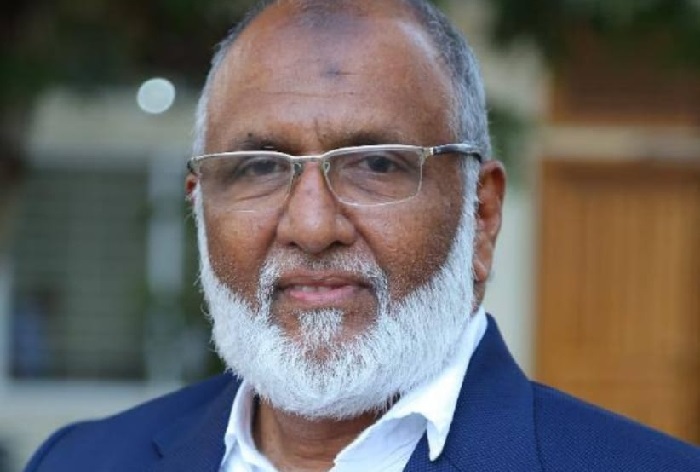
Mangaluru, July 31: Extending Eid al-Adha greetings to the people, S M Rashid Haji, president of the Bearys chamber of commerce & industry has termed the festival as a symbol of sacrifice and patience. 

“Eid al-Adha commemorates the Prophet Ibraheem’s (a) test of faith and sacrifices. It symbolizes sacrifice and endurance,” he said.

“Every human being during his lifetime faces one or the other test from the Almighty… Now we are collectively facing the hardship... May this festival bring goodness and peace, and herald the end of pandemic,” he said.

Comments

Add new comment

  • Coastaldigest.com reserves the right to delete or block any comments.
  • Coastaldigset.com is not responsible for its readers’ comments.
  • Comments that are abusive, incendiary or irrelevant are strictly prohibited.
  • Please use a genuine email ID and provide your name to avoid reject.