


Iran world’s biggest state sponsor of terrorism: US

February 5, 2017

Dubai, Feb 5: US Defense Secretary James Mattis has called Iran the world’s “biggest state sponsor of terrorism,” amid rising tensions between the two nations.
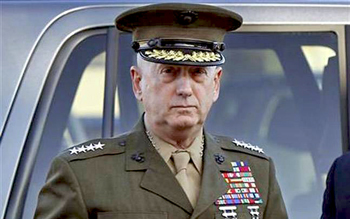
mattisHis comments come a day after the US imposed new sanctions against Iran in response to a ballistic missile test.

But Mattis said he did not see any need to boost US troop numbers in the Middle East to deal with Iran, reported BBC.

A Revolutionary Guards commander said Iran would use its missiles if its security is under threat, as the elite force defied new US sanctions on its missile program by holding a military exercise on Saturday.

Tensions between Tehran and Washington have risen since a recent Iranian ballistic missile test which prompted US President Donald Trump’s administration to impose sanctions on individuals and entities linked to the Revolutionary Guards.

Trump’s national security adviser Michael Flynn said the Washington was putting Iran on notice over its “destabilizing activity,” and Trump tweeted Tehran was “playing with fire”

“We are working day and night to protect Iran’s security,” head of Revolutionary Guards’ aerospace unit, Brig. Gen. Amir Ali Hajizadeh was quoted as saying by Tasnim news agency.

“If we see smallest misstep from the enemies, our roaring missiles will fall on their heads,” he added.

Iran’s Revolutionary Guards is holding the military exercise in Semnan province on Saturday to test missile and radar systems and to “showcase the power of Iran’s revolution and to dismiss the sanctions,” according to the force’s website.

Dismissing Trump’s comments that “nothing is off the table” in dealing with Tehran, the commander of Iran’s ground forces said on Saturday that the Islamic Republic has been hearing such threats since its 1979 revolution. “The defense capability and the offensive prowess of Iran’s armed forces would make America or any other enemy regretful of any incursion,” Ahmad Reza Pourdastan was quoted as saying by ISNA.

Iranian state news agencies reported that homemade missile systems, radars, command and control centers, and cyber warfare systems would be tested in Saturday’s drill.

Iran has one of the Middle East’s largest missile programs and held a similar exercise in December to showcase its defense systems, including radars, anti-missile defense units, and short and medium-range missiles.

Tehran confirmed on Wednesday that it had test-fired a new ballistic missile, but said the test did not breach its nuclear agreement with world powers or a UN Security Council resolution endorsing the pact.

Iran has test-fired several ballistic missiles since the nuclear deal in 2015, but the latest test was the first since Trump entered the White House. Trump said during his election campaign that he would stop Iran’s missile program.

The UN Security Council held an emergency meeting on Tuesday and recommended the missile testing be studied at the committee level. The new US ambassador to the UN, Nikki Haley, called the test “unacceptable.”

The Security Council resolution was adopted to buttress the deal under which Iran curbed its nuclear activities to allay concerns they could be used to develop atomic bombs, in exchange for relief from economic sanctions.

The resolution urged Tehran to refrain from work on ballistic missiles designed to deliver nuclear weapons. Critics say the resolution’s language does not make this obligatory.

Tehran says it has not carried out any work on missiles specifically designed to carry nuclear payloads.

Comments

Skazi
 - 
Sunday, 5 Feb 2017

US says Iran is the biggest terrorist..... But the world says US is the biggest terrorist, poking its nose every where....

Add new comment

  • Coastaldigest.com reserves the right to delete or block any comments.
  • Coastaldigset.com is not responsible for its readers’ comments.
  • Comments that are abusive, incendiary or irrelevant are strictly prohibited.
  • Please use a genuine email ID and provide your name to avoid reject.
News Network
April 5,2020

Beirut, Apr 5: The novel coronavirus has put global trade on hold, placed half of the world population in confinement and has the potential to topple governments and reshape diplomatic relations.

The United Nations has appealed for ceasefires in all the major conflicts rocking the planet, with its chief Antonio Guterres on Friday warning "the worst is yet to come". But it remains unclear what the pandemic's impact will be on the multiple wars roiling the Middle East.

Here is an overview of the impact so far on the conflicts in Syria, Yemen, Libya and Iraq:

The COVID-19 outbreak turned into a pandemic just as a ceasefire reached by the two main foreign power brokers in Syria's nine-year-old war -- Russia and Turkey -- was taking effect.

The three million people living in the ceasefire zone, in the country's northwestern region of Idlib, had little hope the deal would hold.

Yet fears the coronavirus could spread like wildfire across the devastated country appear to have given the truce an extended lease of life.

According to the Syrian Observatory for Human Rights, the month of March saw the lowest civilian death toll since the conflict started in 2011, with 103 deaths.

The ability of the multiple administrations in Syria -- the Damascus government, the autonomous Kurdish administration in the northeast and the jihadist-led alliance that runs Idlib -- to manage the coronavirus threat is key to their credibility.

"This epidemic is a way for Damascus to show that the Syrian state is efficient and all territories should be returned under its governance," analyst Fabrice Balanche said.

However the pandemic and the global mobilisation it requires could precipitate the departure of US-led troops from Syria and neighbouring Iraq.

This in turn could create a vacuum in which the Islamic State jihadist group, still reeling from the demise of its "caliphate" a year ago, could seek to step up its attacks.

The Yemeni government and the Huthi rebels initially responded positively to the UN appeal for a ceasefire, as did neighbouring Saudi Arabia, which leads a military coalition in support of the government.

That rare glimmer of hope in the five-year-old conflict was short-lived however and last week Saudi air defences intercepted ballistic missiles over Riyadh and a border city fired by the Iran-backed rebels.

The Saudi-led coalition retaliated by striking Huthi targets in the rebel-held capital Sanaa on Monday.

Talks have repeatedly faltered but the UN envoy Martin Griffiths is holding daily consultations in a bid to clinch a nationwide ceasefire.

More flare-ups in Yemen could compound a humanitarian crisis often described as the worst in the world and invite a coronavirus outbreak of catastrophic proportions.

In a country where the health infrastructure has collapsed, where water is a rare commodity and where 24 million people require humanitarian assistance, the population fears being wiped out if a ceasefire doesn't allow for adequate aid.

"People will end up dying on the streets, bodies will be rotting in the open," said Mohammed Omar, a taxi driver in the Red Sea port city of Hodeida.

Much like Yemen, the main protagonists in the Libyan conflict initially welcomed the UN ceasefire call but swiftly resumed hostilities.

Fierce fighting has rocked the south of the capital Tripoli in recent days, suggesting the risk of a major coronavirus outbreak is not enough to make guns fall silent.

Turkey has recently played a key role in the conflict, throwing its weight behind the UN-recognised Government of National Accord.

Fabrice Balanche predicted that accelerated Western disengagement from Middle East conflicts could limit Turkish support to the GNA.

That could eventually favour forces loyal to eastern-based strongman Khalifa Haftar, who launched an assault on Tripoli one year ago and has the backing of Russia, Egypt and the United Arab Emirates.

Western countries have been hit hardest by the pandemic, which could prompt them to divert both military resources and peace-brokering capacity from foreign conflicts.

A report by the International Crisis Group said European officials had reported that efforts to secure a ceasefire in Libya were no longer receiving high-level attention due to the pandemic.

Iraq is no longer gripped by fully-fledged conflict but it remains vulnerable to an IS resurgence in some regions and its two main foreign backers are at each other's throats.

Iran and the United States are two of the countries most affected by the coronavirus but there has been no sign of any let-up in their battle for influence that has largely played out on Iraqi soil.

With most non-US troops in the coalition now gone and some bases evacuated, American personnel are now regrouped in a handful of locations in Iraq.

Washington has deployed Patriot air defence missiles, prompting fears of a fresh escalation with Tehran, whose proxies it blames for a spate of rocket attacks on bases housing US troops.

Comments

Add new comment

  • Coastaldigest.com reserves the right to delete or block any comments.
  • Coastaldigset.com is not responsible for its readers’ comments.
  • Comments that are abusive, incendiary or irrelevant are strictly prohibited.
  • Please use a genuine email ID and provide your name to avoid reject.
Agencies
July 19,2020

Occupied Jerusalem, Jul 19: Israeli Prime Minister Benjamin Netanyahu’s corruption trial resumed on Sunday.

Netanyahu is charged with fraud, breach of trust and accepting bribes in a series of scandals in which he is alleged to have received lavish gifts from billionaire friends and exchanged regulatory favors with media moguls for more agreeable coverage of himself and his family.

Netanyahu denies wrongdoing, painting the accusations as a media-orchestrated witchhunt pursued by a biased law enforcement system.

The trial opened in May. Just before appearing in front of the judges, Netanyahu took to a podium inside the courthouse and flanked by his party members bashed the country’s legal institutions in an angry tirade.

Netanyahu was not expected to appear at Sunday’s hearing, which is taking place at an occupied Jerusalem court and is mostly a procedural deliberation.

The trial resumes as Netanyahu faces widespread anger over his government’s handling of the coronavirus crisis.

While the country appeared to have tamped down a first wave of infections, what’s emerged as a hasty and erratic reopening sent infections soaring. Yet even amid the rise in new cases Netanyahu and his emergency government — formed with the goal of dealing with the crisis — appeared to neglect the numbers and moved forward with other policy priorities and its reopening plans.

It has since paused them and even re-impose restrictions, including a weekend only lockdown set to begin later this week.

Netanyahu’s government has been criticized for a baffling, halting response to the new wave, which has seen daily cases rise to nearly 2,000. It has been slammed for its handling of the economic fallout of the crisis.

His trial thus comes at inopportune timing. Netanyahu had hoped to ride on the goodwill he gained from overcoming the first wave of infections going into his corruption trial, but the increasingly souring mood has affected his approval rating and may deny him the public backing he had hoped for. The anger has sparked protests over the past few weeks that have culminated in violent clashes with police.

Comments

Add new comment

  • Coastaldigest.com reserves the right to delete or block any comments.
  • Coastaldigset.com is not responsible for its readers’ comments.
  • Comments that are abusive, incendiary or irrelevant are strictly prohibited.
  • Please use a genuine email ID and provide your name to avoid reject.
Agencies
May 22,2020

Riyadh, May 22: The family of murdered Saudi journalist Jamal Khashoggi on Friday said that they forgave his killers. Washington Post journalist Jamal Khashoggi, who had written columns critical of Saudi Arabia, was brutally killed in October 2018, allegedly at the behest of Crown Prince Mohammad bin Salman.

“In this blessed night of the blessed month [of Ramadan] we remember God’s saying: If a person forgives and makes reconciliation, his reward is due from Allah,” Jamal Khashoggi’s son Salah Khashoggi said in a tweet. “Therefore, we the sons of the Martyr Jamal Khashoggi announce that we pardon those who killed our father, seeking reward [from] God almighty.”

The legal outcome of this announcement is not yet clear. Earlier, Salah Khashoggi said he had “full confidence” in the judicial system, and that the accused were trying to exploit the case.

Jamal Khashoggi’s body was said to have been dismembered inside the Saudi consulate in Istanbul and disposed of elsewhere, but his remains were never found.

Comments

Add new comment

  • Coastaldigest.com reserves the right to delete or block any comments.
  • Coastaldigset.com is not responsible for its readers’ comments.
  • Comments that are abusive, incendiary or irrelevant are strictly prohibited.
  • Please use a genuine email ID and provide your name to avoid reject.