


Iran world’s biggest state sponsor of terrorism: US

February 5, 2017

Dubai, Feb 5: US Defense Secretary James Mattis has called Iran the world’s “biggest state sponsor of terrorism,” amid rising tensions between the two nations.
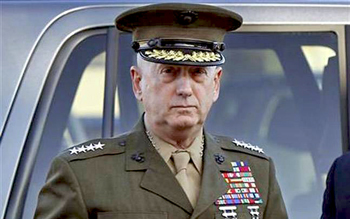
mattisHis comments come a day after the US imposed new sanctions against Iran in response to a ballistic missile test.

But Mattis said he did not see any need to boost US troop numbers in the Middle East to deal with Iran, reported BBC.

A Revolutionary Guards commander said Iran would use its missiles if its security is under threat, as the elite force defied new US sanctions on its missile program by holding a military exercise on Saturday.

Tensions between Tehran and Washington have risen since a recent Iranian ballistic missile test which prompted US President Donald Trump’s administration to impose sanctions on individuals and entities linked to the Revolutionary Guards.

Trump’s national security adviser Michael Flynn said the Washington was putting Iran on notice over its “destabilizing activity,” and Trump tweeted Tehran was “playing with fire”

“We are working day and night to protect Iran’s security,” head of Revolutionary Guards’ aerospace unit, Brig. Gen. Amir Ali Hajizadeh was quoted as saying by Tasnim news agency.

“If we see smallest misstep from the enemies, our roaring missiles will fall on their heads,” he added.

Iran’s Revolutionary Guards is holding the military exercise in Semnan province on Saturday to test missile and radar systems and to “showcase the power of Iran’s revolution and to dismiss the sanctions,” according to the force’s website.

Dismissing Trump’s comments that “nothing is off the table” in dealing with Tehran, the commander of Iran’s ground forces said on Saturday that the Islamic Republic has been hearing such threats since its 1979 revolution. “The defense capability and the offensive prowess of Iran’s armed forces would make America or any other enemy regretful of any incursion,” Ahmad Reza Pourdastan was quoted as saying by ISNA.

Iranian state news agencies reported that homemade missile systems, radars, command and control centers, and cyber warfare systems would be tested in Saturday’s drill.

Iran has one of the Middle East’s largest missile programs and held a similar exercise in December to showcase its defense systems, including radars, anti-missile defense units, and short and medium-range missiles.

Tehran confirmed on Wednesday that it had test-fired a new ballistic missile, but said the test did not breach its nuclear agreement with world powers or a UN Security Council resolution endorsing the pact.

Iran has test-fired several ballistic missiles since the nuclear deal in 2015, but the latest test was the first since Trump entered the White House. Trump said during his election campaign that he would stop Iran’s missile program.

The UN Security Council held an emergency meeting on Tuesday and recommended the missile testing be studied at the committee level. The new US ambassador to the UN, Nikki Haley, called the test “unacceptable.”

The Security Council resolution was adopted to buttress the deal under which Iran curbed its nuclear activities to allay concerns they could be used to develop atomic bombs, in exchange for relief from economic sanctions.

The resolution urged Tehran to refrain from work on ballistic missiles designed to deliver nuclear weapons. Critics say the resolution’s language does not make this obligatory.

Tehran says it has not carried out any work on missiles specifically designed to carry nuclear payloads.

Comments

Skazi
 - 
Sunday, 5 Feb 2017

US says Iran is the biggest terrorist..... But the world says US is the biggest terrorist, poking its nose every where....

Add new comment

  • Coastaldigest.com reserves the right to delete or block any comments.
  • Coastaldigset.com is not responsible for its readers’ comments.
  • Comments that are abusive, incendiary or irrelevant are strictly prohibited.
  • Please use a genuine email ID and provide your name to avoid reject.
Agencies
August 2,2020

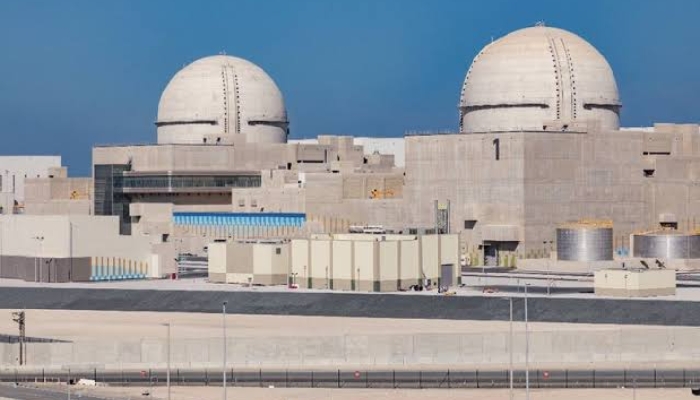
Dubai, Aug 2: The United Arab Emirates (UAE) announced on Saturday that it has started operations in the first of four reactors at the Barakah nuclear power station - the first nuclear power plant in the Arab world.

Emirates Nuclear Energy Corporation (ENEC), which is building and operating the plant with Korea Electric Power Corporation (KEPCO) said in a press release that its subsidiary Nawah Energy Company "has successfully started up Unit 1 of the Barakah Nuclear Energy Plant, located in the Al Dhafrah Region of Abu Dhabi".

That signals that Unit 1, which had fuel rods loaded in March, has achieved "criticality" - a sustained fission chain reaction.

"The start-up of Unit 1 marks the first time that the reactor safely produces heat, which is used to create steam, turning a turbine to generate electricity," said ENEC.

Barakah, which was originally scheduled to open in 2017, has been dogged by delays and is billions of dollars over budget. It has also raised myriad concerns among nuclear energy veterans who are concerned about the potential risks Barakah could visit upon the Arabian Peninsula, from an environmental catastrophe to a nuclear arms race.

Paul Dorfman, an honorary senior research fellow at the Energy Institute, University College London and founder and chair of the Nuclear Consulting Group, has criticised the Barakah reactors' "cheap and cheerful" design that he says cuts corners on safety.

Dorfman authored a report (PDF) last year detailing key safety features Barakah's reactors lack, such as a "core catcher" to literally stop the core of a reactor from breaching the containment building in the event of a meltdown. The reactors are also missing so-called Generation III Defence-In-Depth reinforcements to the containment building to shield against a radiological release resulting from a missile or fighter jet attack.

Both of these engineering features are standard on new reactors built in Europe, says Dorfman.

There have been at least 13 aerial attacks on nuclear facilities in the Middle East - more than any other region on earth.

The vulnerability of critical infrastructure in the Arabian Peninsula was further laid bare last year after Saudi Arabia's oil facilities at Abqaiq and Khurais were attacked by 18 drones and seven cruise missiles - an assault that temporarily knocked out more than half of the kingdom's oil production.

On Saturday, Dorfman reiterated his concern that there is no regional protocol in place to determine liability should an accident or incident at Barakah result in radioactive contamination spreading from the UAE to its neighbours. 

"Given Barakah has started up, because of all the well-rehearsed nuclear safety and security problems, it may be critically important that the Gulf states collectively evolve a Nuclear Accident Liability Convention, so that if anything does go wrong, victim states may have some sort of redress," Dorfman told Al Jazeera. 

The UAE has substantial oil and gas reserves, but it has made huge investments in developing alternative energy sources, including nuclear and solar.

Experts though have questioned why the UAE - which is bathed in sunlight and wind - has pushed ahead with nuclear energy - a far more expensive and riskier option than renewable energy sources.

When the UAE first announced Barakah in 2009, nuclear power was cheaper than solar and wind. But by 2012 - when the Emirates started breaking ground to build the reactors - solar and wind costs had plummeted dramatically.

Between 2009 and 2019, utility-scale average solar photovoltaic costs fell 89 percent and wind fell 43 percent, while nuclear jumped 26 percent, according to an analysis by the financial advisory and asset manager Lazard.

There are also concerns about the potential for Barakah to foment nuclear proliferation in the Middle East - a region rife with geopolitical fault lines and well-documented history of nuclear secrecy.

The UAE has sought to distance itself from the region's bad behaviour by agreeing not to enrich its own uranium or reprocess spent fuel. It has also signed up to the United Nation's nuclear watchdog's Additional Protocol, significantly enhancing inspection capabilities, and secured a 123 Agreement with the United States that allows bilateral civilian nuclear cooperation.

Comments

Add new comment

  • Coastaldigest.com reserves the right to delete or block any comments.
  • Coastaldigset.com is not responsible for its readers’ comments.
  • Comments that are abusive, incendiary or irrelevant are strictly prohibited.
  • Please use a genuine email ID and provide your name to avoid reject.
News Network
January 8,2020

Dubai, Jan 8: A Ukrainian airliner crashed soon after taking off from Tehran's Imam Khomeini airport on Wednesday, killing all 176 people aboard, Iran's state television and Ukraine's leaders said.

The Boeing 737 belonging to Ukraine International Airlines crashed near the airport and burst into flames. Ukraine's embassy in Iran, citing preliminary information, said the plane had suffered engine failure and the crash was not caused by "terrorism".

Ukraine President Volodymyr Zelenskiy said there were no survivors.

"My sincere condolences to the relatives and friends of all passengers and crew," Zelenskiy said in a statement, adding that Ukraine was seeking to establish the circumstances of the crash and the death toll.

Iranian TV said the crash was due to technical problems but did not elaborate. State broadcaster IRIB said on its website that one of the plane's two black boxes - the flight data recorder and the cockpit voice recorder - had been found.

Iranian media quoted an Iranian aviation official as saying the pilot of the airliner did not declare an emergency.

There was no official word from Ukraine International Airlines. It was the Kiev-based airline's first fatal crash.

"The fire is so heavy that we cannot (do) any rescue... we have 22 ambulances, four bus ambulances and a helicopter at the site," Pirhossein Koulivand, head of Iran's emergency services, told Iranian state television.

Ukraine's prime minister and Iranian state TV said 167 passengers and 9 crew were on board. Iranian TV said 32 of those on board were foreigners.

Television footage showed debris and smouldering engine parts strewn across a field, and rescue workers with face masks retrieving bodies of the victims.

According to air tracking service FlightRadar24, the plane that crashed was Flight PS 752 and was flying to Kiev. The plane was three years old and was a Boeing 737-800NG, it said.

The model's twin engines are made by CFM International, a U.S.-French venture co-owned by General Electric and France's Safran.

Modern aircraft are designed and certified to cope with an engine failure shortly after take-off and to fly for extended periods on one engine. However, an uncontained engine failure releasing shrapnel can cause damage to other aircraft systems.

A spokesman for Boeing said the company was aware of media reports of a plane crash in Iran and was gathering more information. The plane manufacturer grounded its 737 MAX fleet in March after two crashes that killed 346 people.

The 737-800 is one of the world's most-flown models with a good safety record and which does not have the software feature implicated in crashes of the 737 MAX.

Under international rules overseen by the United Nations, Iran is responsible for leading the crash investigation.

Ukraine would be involved and the United States would usually be accredited as the country where the Boeing jet was designed and built. France, where the engine maker CFM has half its activities, may also be involved.

There was no immediate word on whether the U.S. National Transportation Safety Board would be involved in the probe amid escalating tensions between the U.S. and Iran. The NTSB usually invites Boeing to give technical advice in such investigations.

Comments

Add new comment

  • Coastaldigest.com reserves the right to delete or block any comments.
  • Coastaldigset.com is not responsible for its readers’ comments.
  • Comments that are abusive, incendiary or irrelevant are strictly prohibited.
  • Please use a genuine email ID and provide your name to avoid reject.
News Network
May 4,2020

Dubai, May 4: An Indian salesman in the UAE has won a whopping 10 million dirhams at an Abu Dhabi draw, a media report said.

Dileep Kumar Ellikkottil Parameswaran, from Kerala’s Thrissur, works with an auto spare parts company in Ajman and earns 5,000 dirhams (USD 1,361) a month, Gulf News reported on Sunday.

Parameswaran, who won the 10 million dirhams (USD 2.7 million) prize at the Big Ticket draw in Abu Dhabi, will spend a big part of the money to repay a loan of 700,000 dirhams (USD 190,574 ), according to the report.

He said that a good part of the prize money will be spent on the education of his two children.

Parameswaran, who has been a resident of the UAE for 17 years, lives in Ajman along with his family.

Big Ticket is the largest and longest-running monthly raffle draw for cash prizes and dream luxury cars in Abu Dhabi.

A live monthly draw is organized at the Abu Dhabi International Airport on 3rd of each month.

Tickets are sold for 500 dirhams (USD 136).

Comments

Add new comment

  • Coastaldigest.com reserves the right to delete or block any comments.
  • Coastaldigset.com is not responsible for its readers’ comments.
  • Comments that are abusive, incendiary or irrelevant are strictly prohibited.
  • Please use a genuine email ID and provide your name to avoid reject.