


Govt urged to set up dept for non-resident Kannadigas' affairs, earmark Rs 50 cr

February 9, 2017

Bengaluru, Feb 9: A?legislature committee has recommended that the state government constitute an agency on the lines of Department of Non-Resident Keralites Affairs to redress the grievances of non-resident Kannadigas in India and abroad.
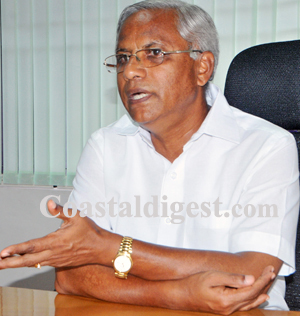
jrlobo3The committee on Welfare of Backward Classes and Minorities headed by the Congress MLA?J?R?Lobo has pointed in its report that Department of Non-Resident Keralites Affairs (NORKA) set up in 1996 is successfully functioning as an interface between the non-resident Keralites and the Kerala government.

A similar department should be set up by the Karnataka government for addressing the problems of non-resident Kannadigas (NRKs) besides safeguarding their rights.

The panel has suggested that the proposed department should open centres in major cities across the country, providing attestation facilities of educational qualification documents, certificates of birth and death, residence, marriage certificates of NRKs among others.

The committee has suggested that a job portal be set up providing details of employment opportunities abroad. Other suggestions include setting up of a relief fund for rendering immediate assistance to NRKs in need, issue of photo ID cards to NRKs and promotion of regional development with their participation.

The panel has recommended that the government set aside Rs 50 crore in the forthcoming budget for the proposed department.

Comments

Shahul
 - 
Thursday, 9 Feb 2017

At last it is a good move and good news by Karnataka government forming NORKA for the welfare and addressing the problems of Non-resident kannadigas of GCC countries. It is the long waiting demand of kannadigas residing in GCC countries. Same type of NORKA (Kerala affairs) is successfully running in Kerala and GCC countries as its branches.

NORKA branches should be opened in GCC country also with a chairman and some prominent members of Kannadigas as the members of NORKA forum.

Add new comment

  • Coastaldigest.com reserves the right to delete or block any comments.
  • Coastaldigset.com is not responsible for its readers’ comments.
  • Comments that are abusive, incendiary or irrelevant are strictly prohibited.
  • Please use a genuine email ID and provide your name to avoid reject.
News Network
February 5,2020

Tightening control over companies misleading advertisements of medicines and products, the Indian government could soon slap a fine of up to Rs10 lakh and up to two years' imprisonment. While repeat offender could be fined up to Rs50 and imprisonment up to five years.

The Ministry of Health and Family Welfare's new draft of the Drugs and Magic Remedies (Objectionable Advertisements) (Amendment) Bill, 2020, provides extremely stringent penalties compared to the current law.

Under the new Act, companies advertising medicines and products falsely claiming to make a person fairer, improve height and memory or cure issues like hair loss or greying and premature ageing, among several others, may attract more stringent fines and jail time.

The current Act, 1954, leaves scope for companies to create deceptive advertisements as first time offender can be jailed for six months while repeat offender can be up to one year in prison, reported The Indian Express.

Under the Bill, deceptive advertisements will cover digital advertising, notice, circular, label, wrapper, invoice, banner and poster, among others. The government also plans to expand the scope of the law under the proposed amendments to cover 24 more deceptive claims not included in the current law, like medicines that can cure AIDS, change the sex of a foetus, among others, reported Livemint.

Comments

Add new comment

  • Coastaldigest.com reserves the right to delete or block any comments.
  • Coastaldigset.com is not responsible for its readers’ comments.
  • Comments that are abusive, incendiary or irrelevant are strictly prohibited.
  • Please use a genuine email ID and provide your name to avoid reject.
News Network
April 22,2020

Madikeri, Apr 22: The quality of water in the River Cauvery in Kodagu district has improved significantly following the nationwide Lockdown.

The discharge of effluents from home stays and resorts situated on the banks of the river in the district has stopped due to lack of visitors. The discharge of waste water had made the river impure all these years.

The suspension of boat ride in Dubare has reduced the pollution from diesel motorboats in the river. For the last few years, the water quality of the river had reached 'C' category from 'B' category during the summer.

Comments

Add new comment

  • Coastaldigest.com reserves the right to delete or block any comments.
  • Coastaldigset.com is not responsible for its readers’ comments.
  • Comments that are abusive, incendiary or irrelevant are strictly prohibited.
  • Please use a genuine email ID and provide your name to avoid reject.
News Network
April 28,2020

Bengaluru, Apr 28: Karnataka has found that the rapid antibody test kits for COVID-19 that the Centre supplied to the state have only 47% sensitivity. The state will be returning the kits to the Indian Council of Medical Research (ICMR).

Karnataka had received 11,400 rapid antibody test kits from the ICMR a few days back, out of which it had sent around 200 of them to NIMHANS for validation.

After the ICMR, on Monday, sent a circular to all states to return the test kits to the suppliers, Dr CN Manjunath, Director, Jayadeva Institute of Cardiovascular Sciences and Research, and nodal officer for lab testing in the state's COVID-19 task force, said, "We have cancelled the orders we placed to Guangzhou Wondfo Biotech and Zhuhai Livzon Diagnostics for one lakh rapid antibody test kits. Since the ICMR supplied us with 11,400 kits out of the 6.5 lakh kits it procured, we will be returning the kits to them."

Manjunath told said that the validation at NIMHANS revealed the kits to have only 47% sensitivity. Sensitivity is the ability of a test to identify the true-positives in a population, i.e., the actual number of people who've been infected with the disease. With the rapid antibody testing kits being shelved, the state's plan to randomly test high risk groups has taken a backseat. 

So far, the state has tested 43,791 samples. 

Karnataka now has 22 testing facilities -- 14 government and seven private labs. Many private labs have not tested any samples so far because of the lack of test kits (the state has made it clear that it will not provide test kits to private labs). So, getting an ICMR approval for testing has become a moot point.p

Agreeing to the setback the state's plans of ramping up testing has taken, Manjunath said, "It is true that RT-PCR test kits are in shortage. Even Pune's Mylabs had a shortage in supplying test kits. But we are relying on institutes like Kidwai, Narayana Health and Biocon's Syngene that have received approval for testing. They're big institutes and we hope that they will test a large number of samples."

On reports that the Centre has RT-PCR test kits that will last for only a week, he said, "We have test kits that will last for eight to 10 days. We have ordered for more. We are hoping to receive them before the current kits run out."

Comments

Add new comment

  • Coastaldigest.com reserves the right to delete or block any comments.
  • Coastaldigset.com is not responsible for its readers’ comments.
  • Comments that are abusive, incendiary or irrelevant are strictly prohibited.
  • Please use a genuine email ID and provide your name to avoid reject.