


Kumar Bangarappa to be BJP candidate against his JDS brother in Sorab?

[email protected] (CD Network)
February 21, 2017

Bengaluru, Feb 21: Former Minister Kumar Bangarappa appears poised to shift loyalties from the Congress to the Bharatiya Janata Party, as he is “frustrated with the ill-treatment” meted out to him in the ruling party. He has, however, said that he is yet to take a final call.
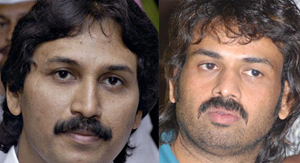
Untitled-1 copyIn the event of Mr. Kumar joining the BJP, it will again be a straight fight between his brother — Madhu Bangarappa (JD-S) and him — in Sorab constituency in 2018, once represented by their late father and former Chief Minister S. Bangarappa. H. Halappa, who contested on the KJP ticket in 2013, and is now in the BJP, is expected to migrate to another constituency in the district to make way for Mr. Kumar.

While Mr. Kumar may be the latest to join the bandwagon, it is speculated that at least half a dozen other Congress leaders will follow in the footsteps of former Chief Minister S.M. Krishna and senior leader V. Srinivas Prasad, who moved out of the Congress recently. Leaders like M.H. Ambareesh, Suresh Gowda, and L.R. Shivarame Gowda, leaders from Mandya, are likely to quit the Congress, sources in the party said.

Like his late father, who used to convene a meeting of his supporters in Sorab town prior to taking important political decisions, Mr. Kumar convened one recently. “In the Sorab meeting, people forced me to join the BJP. I will take a final call after holding another round of consultations with my supporters in Sorab,” he said.

Lashing out at Revenue Minister Kagodu Thimmappa, he said JD(S) activists were nominated for the taluk-level bagair hukum regularisation committee in Sorab constituency, which is represented by his younger brother, Madhu Bangarappa (JD-S).

Mr. Kumar said there was deep discontent among Congress activists against the style of functioning of the government and the Karnataka Pradesh Congress Committee. “The KPCC has remained deaf even to the displeasure expressed by senior leaders C.K. Jaffer Sharief, B. Janardhana Poojary, and H. Vishwanath,” he said.

Meanwhile, Madhu Bangarappa, president of the state youth wing of the JD(S), ruled out the possibility of his brother Kumar Bangarappa joining the party. “He is in a national party; I am a member of a regional one. We cannot be in the same party. That being the case, there is no possibility of him joining the JD(S),” Madhu told reporters in Shivamogga.

Comments

shaji
 - 
Tuesday, 21 Feb 2017

Both these are ruining their future. Its unfortunate that few leaders wants to be in higher position always for their own benefit and they start blaming the party whenever they are not given chance. These are selfish parties who are caring of themselves only and not caring for party or public. These people are now joining the most corrupt party BJP.

dodanna
 - 
Tuesday, 21 Feb 2017

Dear Brothers,

Both are same blood belongs to ONE family let them stay together and allow them to lead a peaceful and happy life.

why the politicians are playing such dirty politics with innocents.
One Shakuni is playing a big game behind the screen is a well known news.

Add new comment

  • Coastaldigest.com reserves the right to delete or block any comments.
  • Coastaldigset.com is not responsible for its readers’ comments.
  • Comments that are abusive, incendiary or irrelevant are strictly prohibited.
  • Please use a genuine email ID and provide your name to avoid reject.
News Network
February 6,2020

Thiruvananthapuram, Feb 6: The Kerala government on Wednesday said three foreign nationals were among the 2,528 people under observation in the state for the novel coronavirus infection and no new cases have been reported.

At least 93 people with minor symptoms of the virus have been lodged in isolation wards of various hospitals, state Health Minister KK Shailaja told reporters in Thiruvananthapuram.

India's three positive cases for the virus has been from the state's three districts of Thrissur, Alappuzha and Kasaragod.

All the three are students of China's Wuhan university, the epicentre of the virus.

"No new cases of coronavirus has been detected in the state today. At least 2,435 are under observation at home while 93 are in isolation wards at various hospital across the state," Mr Shailaja said.

The minister also said two foreigners have been quarantined in Ernakulam district and one foreign national at Thiruvananthapuram.

"The foreigner in Thiruvananthapuram has been kept at general hospital but not because he was showing symptoms but for observation as he travelled from China," an official said.

The health status of the three patients, who had tested positive for the virus, "remains satisfactory", the minister said.

After three cases were reported, the Left Democratic Front (LDF) government had declared the epidemic as a "state calamity" on Monday.

The health department has issued advisories to the education, tourism and the animal husbandry departments on taking precautions.

"The students, teachers, other staff members residing with families of Wuhan/China returnees who are already in home isolation should not attend classes...," an advisory issued to the education department read.

Rajan Khobragade, Principal Secretary (Health), said the health department has directed the District collectors to hold a meeting with the religious leaders of the district to create awareness during prayer meetings.

"We have directed district collectors to meet religious leaders and talk to them about the seriousness of the situation and create awareness among them and their followers on how to contain the spread of virus," the minister said.

Mr Shailaja also said the department got messages from some Kerala students studying in China, who returned to the state after the virus outbreak, that their Universities had asked them to return and attend classes.

"We have got some messages from the students that they were being recalled by the universities in China. We discussed the matter and it was decided that the centre will contact such universities and convey the message that it was not possible to send the students back to China until the epidemic was under control," the minister said.

Mr Shailaja also said even though there were no positive cases for the second consecutive day on Wednesday, the state needs to remain vigilant and reiterated the 28 days quarantine period for those returning from China.

Of the 2,528 people under observation, the maximum number is from Malappuram (383), followed by Ernakulam (333), Kozhikode (306) and Thrissur (241).

Comments

Add new comment

  • Coastaldigest.com reserves the right to delete or block any comments.
  • Coastaldigset.com is not responsible for its readers’ comments.
  • Comments that are abusive, incendiary or irrelevant are strictly prohibited.
  • Please use a genuine email ID and provide your name to avoid reject.
News Network
January 30,2020

Mangaluru: The police team investigating the case of bomb planting at the international airport here on January 20, took suspect Aditya Rao to several places in the city where he had frequented in the past few months, police said on Wednesday.

Police had earlier recovered a box from his bank locker at Udupi that contained a white powder which he claimed was cyanide. The substance has been sent to the Forensic Science laboratory for confirmation.

On further interrogation, Rao told police that he had a locker in a bank in Mangaluru also, where he was taken. Only some papers were seen in the locker, police said. He was also taken to the room where he stayed while he was working at a hotel in Balmatta here and to a hardware workshop from where he had purchased some spare parts, they said.

A 'live' explosive device was found in an unattended bag near a ticket counter of the departure gate of the airport here on January 20, triggering a scare before it was defused at a nearby open ground.

Police had released a picture of a man captured on CCTV camera as the suspect who placed the bomb and Rao later surrendered. Meanwhile, sources said the airport authorities got an anonymous call on Monday evening that a bomb had been planted in the airport. After thorough search, it was found to be a hoax. City police commissioner P S Harsha has warned of stringent action against those who make such calls.

Comments

Add new comment

  • Coastaldigest.com reserves the right to delete or block any comments.
  • Coastaldigset.com is not responsible for its readers’ comments.
  • Comments that are abusive, incendiary or irrelevant are strictly prohibited.
  • Please use a genuine email ID and provide your name to avoid reject.
Agencies
May 8,2020

Washington D.C., May 8: The prime time for brain development in a child's life is the first year, where the infant spends most of the time asleep. It is the time when neural connections form and sensory memories are encoded.

However, when sleep is disrupted, as occurs more often among children with autism, brain development may be affected, too.

New research led by the University of Washington finds that sleep problems in a baby's first 12 months may not only precede an autism diagnosis but also may be associated with altered growth trajectory in a key part of the brain, the hippocampus.

The study, which was published in the American Journal of Psychiatry, researchers report that in a sample of more than 400 taken of 6- to 12-month-old infants, those who were later diagnosed with autism were more likely to have had difficulty falling asleep.

It also states that this sleep difficulty was associated with altered growth trajectories in the hippocampus.

"The hippocampus is critical for learning and memory, and changes in the size of the hippocampus have been associated with poor sleep in adults and older children.

As many as 80 per cent of the children with autism spectrum disorder have sleep problems," said Annette Estes, director of the UW Autism Center and senior author of the study.

"In our clinical experience, parents have a lot of concerns about their children's sleep, and in our work on early autism intervention, we observed that sleep problems were holding children and families back," added Estes, who is also a UW professor of speech and hearing sciences.

"It could be that altered sleep is part-and-parcel of autism for some children. One clue is that behavioural interventions to improve sleep don't work for all children with autism, even when their parents are doing everything just right. This suggests that there may be a biological component to sleep problems for some children with autism," said Estes.

To consider links among sleep, brain development, and autism, researchers at the IBIS Network looked at MRI scans of 432 infants, surveyed parents about sleep patterns, and measured cognitive functioning using a standardized assessment.

At the outset of the study, infants were classified according to their risk for developing autism: Those who were at higher risk of developing autism -- about two-thirds of the study sample -- had an older sibling who had already been diagnosed.

Infant siblings of children with autism have a 20 per cent chance of developing autism spectrum disorder -- a much higher risk than children in the general population.

In the current study, 127 of the 432 infants were identified as "low risk" at the time the MRI scans were taken because they had no family history of autism.

They later evaluated all the participants at 24 months of age to determine whether they had developed autism. Of the roughly 300 children originally considered "high familial risk," 71 were diagnosed with autism spectrum disorder at that age.

Problems with sleep were more common among the infants later diagnosed with an autism spectrum disorder, as were larger hippocampi. No other subcortical brain structures were affected, including the amygdala, which is responsible for certain emotions and aspects of memory, or the thalamus, a signal transmitter from the spinal cord to the cerebral cortex.

The authors note that while parents reported more sleep difficulties among infants who developed autism compared to those who did not, the differences were very subtle and only observed when looking at group averages across hundreds of infants.

Sleep patterns in the first years of life change rapidly as infants transition from sleeping around the clock to a more adult-like sleep/wake cycle. Until further research is completed, Estes said, it is not possible to interpret challenges with sleep as an early sign of increased risk for autism.

Comments

Add new comment

  • Coastaldigest.com reserves the right to delete or block any comments.
  • Coastaldigset.com is not responsible for its readers’ comments.
  • Comments that are abusive, incendiary or irrelevant are strictly prohibited.
  • Please use a genuine email ID and provide your name to avoid reject.