


Kumar Bangarappa to be BJP candidate against his JDS brother in Sorab?

[email protected] (CD Network)
February 21, 2017

Bengaluru, Feb 21: Former Minister Kumar Bangarappa appears poised to shift loyalties from the Congress to the Bharatiya Janata Party, as he is “frustrated with the ill-treatment” meted out to him in the ruling party. He has, however, said that he is yet to take a final call.
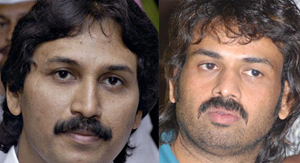
Untitled-1 copyIn the event of Mr. Kumar joining the BJP, it will again be a straight fight between his brother — Madhu Bangarappa (JD-S) and him — in Sorab constituency in 2018, once represented by their late father and former Chief Minister S. Bangarappa. H. Halappa, who contested on the KJP ticket in 2013, and is now in the BJP, is expected to migrate to another constituency in the district to make way for Mr. Kumar.

While Mr. Kumar may be the latest to join the bandwagon, it is speculated that at least half a dozen other Congress leaders will follow in the footsteps of former Chief Minister S.M. Krishna and senior leader V. Srinivas Prasad, who moved out of the Congress recently. Leaders like M.H. Ambareesh, Suresh Gowda, and L.R. Shivarame Gowda, leaders from Mandya, are likely to quit the Congress, sources in the party said.

Like his late father, who used to convene a meeting of his supporters in Sorab town prior to taking important political decisions, Mr. Kumar convened one recently. “In the Sorab meeting, people forced me to join the BJP. I will take a final call after holding another round of consultations with my supporters in Sorab,” he said.

Lashing out at Revenue Minister Kagodu Thimmappa, he said JD(S) activists were nominated for the taluk-level bagair hukum regularisation committee in Sorab constituency, which is represented by his younger brother, Madhu Bangarappa (JD-S).

Mr. Kumar said there was deep discontent among Congress activists against the style of functioning of the government and the Karnataka Pradesh Congress Committee. “The KPCC has remained deaf even to the displeasure expressed by senior leaders C.K. Jaffer Sharief, B. Janardhana Poojary, and H. Vishwanath,” he said.

Meanwhile, Madhu Bangarappa, president of the state youth wing of the JD(S), ruled out the possibility of his brother Kumar Bangarappa joining the party. “He is in a national party; I am a member of a regional one. We cannot be in the same party. That being the case, there is no possibility of him joining the JD(S),” Madhu told reporters in Shivamogga.

Comments

shaji
 - 
Tuesday, 21 Feb 2017

Both these are ruining their future. Its unfortunate that few leaders wants to be in higher position always for their own benefit and they start blaming the party whenever they are not given chance. These are selfish parties who are caring of themselves only and not caring for party or public. These people are now joining the most corrupt party BJP.

dodanna
 - 
Tuesday, 21 Feb 2017

Dear Brothers,

Both are same blood belongs to ONE family let them stay together and allow them to lead a peaceful and happy life.

why the politicians are playing such dirty politics with innocents.
One Shakuni is playing a big game behind the screen is a well known news.

Add new comment

  • Coastaldigest.com reserves the right to delete or block any comments.
  • Coastaldigset.com is not responsible for its readers’ comments.
  • Comments that are abusive, incendiary or irrelevant are strictly prohibited.
  • Please use a genuine email ID and provide your name to avoid reject.
Wafa Sultana
April 4,2020

Over the last couple of days when the world was occupied with unifying efforts to fight the deadly Covid19 pandemic, sections of Indian media provided viewers a familiar scapegoat – the Indian Muslims – who are often stereotyped as a community being constantly at loggerheads with the citizenry and the State. Biased media channels were quick to resort to blaming the entire Muslim community for the spread of the disease in the country, thanks to an ill-timed Tablighi Jamaat gathering at its international headquarters in Delhi’s Nizamuddin. Unsurprisingly, the opprobrium was also marked by a sudden spike in WhatsApp forwards of videos with people wearing skullcaps licking spoons and performing Sufi breathing rituals, suggesting some sort of wild conspiracy on the part of the community to spread the virus.  Some media channels were quick to formulate, hypothesize and provide loose definitions of a newly discovered form of Jihad i.e. ‘Corona Jihad ’ thereby vilifying the Islamic faith and its followers.

While the investigation on the culpability of the organizers of the Nizamuddin event is still ongoing, there is enough information to suggest that the meeting was held before any lockdown was in force, and the problem began when there was no way of getting people out once the curfew was announced. Be that as it may, there is little doubt that organizing a meet of such a scale when there is a global pandemic smacks of gross misjudgment, and definitely the organizers should be held accountable if laws or public orders were defied. Attendees who attempt to defy quarantine measures must be dealt with strictly. However, what is alarming is that the focus and narrative have now shifted from the unfortunate event at Nizamuddin to the Tablighi Jamaat itself.

For those not familiar with the Tablighi Jamaat, the organization was founded in 1926 in Mewat by scholar Maulana Mohammad Ilyas. The Jamaat’s main objective was to get Muslim youth to learn and practice pristine Islam shorn of external influences. This is achieved through individuals dedicating time for moral and spiritual upliftment secluded from the rest of the world for a brief period of time. There is no formal membership process. More senior and experienced participants typically travel from one mosque to other delivering talks on religious topics, inviting local youth to attend and then volunteer for a spiritual retreat for a fixed number of days to a mosque in a nearby town or village to present the message to their co-religionists. Contrary to ongoing Islamophobic rhetoric, the movement does not actively proselytize. The focus is rather on getting Muslims to learn the teachings and practices of Islam.  This grassroots India-based movement has now grown to almost all countries with substantial Muslim populations. Its annual meets, or ‘ijtemas’ are among the largest Islamic congregations in the world after the annual Haj. One of the reasons for its popularity and wide network in the subcontinent and wordwide is the fact that it has eschewed the need for scholarly intervention, focusing on peer learning of fundamental beliefs and practice rather than high-falutin ideological debates. The Tablighi Jamaat also distinguishes itself from other Islamic movements through its strictly apolitical nature, with a focus on individual self-improvement rather than political mobilization. Hardships and difficulty in the world are expected to be face through ‘sabr’ (patience) and ‘dua’ (supplication),  than through quest for political power or influence. In terms of ideology, it is very much based on mainstream Sunni Islamic principles derived from the Deobandi school.

So, why is all this background important in the current context? While biased media entities have expectedly brought out their Islamophobic paraphernalia out for full display, more neutral commentators have tried to paint the Tablighi Jamaat as a fringe group and have tried to distance it from 'mainstream Muslims'. While the intent is no doubt innocent, this is a trap we must not fall into. This narrative, unfortunately, is also gaining ground due to apathy some Muslims have for the group, accusing it of being “disconnected from the realities of the world”. Unlike other Muslim organizations and movements, the Tablighi Jamat, by virtue of its political indifference, does not boast of high-profile advocates and savvy spokespersons who can defend it in mainstream or social media.  The use of adjectives such as 'outdated' and 'orthodox' by liberal columnists to describe the Jamaat feeds into the malignant attempt to change the narrative from the control of the spread of the pandemic due to the Nizamuddin gathering to 'raison d'etre' of the organization itself.

A large mainstream religious group like the Tablighi Jamaat with nearly a hundred-year history, normally considered to be peaceful, apolitical and minding its own business is now suddenly being villainized owing to unfortunate circumstances. Biased media reactions filled with disgust and hate seem to feed the Indian public conscience with a danngerous misconception - to be a nominal Muslim is okay but being a practicing one is not.  For those committed to the truth and fighting the spread of Islamophobia, the temptation to throw the entire Tablighi Jamaat under the bus must be resisted.

The writer is a lawyer and research scholar at Qatar University. Her research interests include Islamic law and politics.

Comments

zahoorahmed
 - 
Saturday, 4 Apr 2020

great article! provides a great perspective on tableeg jamat

Add new comment

  • Coastaldigest.com reserves the right to delete or block any comments.
  • Coastaldigset.com is not responsible for its readers’ comments.
  • Comments that are abusive, incendiary or irrelevant are strictly prohibited.
  • Please use a genuine email ID and provide your name to avoid reject.
coastaldigest.com news network
February 7,2020

Newsroom, Feb 7: Prime Minister Narendra Modi’s recent statement that there is no detention camp in India is no more a lie. That doesn’t mean that there are no detention camps in the country, but the name of the camps have changed. 

In December, at a mega rally at Ramlila Maidan, meant to launch the BJP's campaign for the assembly elections in Delhi, Mr Modi had stated: “The rumour of detention centres being spread by the Congress and urban Naxals is totally false. This is being done with a bad intention to destroy the country, it’s filled with evil motives; this is a lie, lie, lie.” He had further claimed: “Neither are any of the country’s Muslims being sent to detention centres nor is there any detention centre in India”

In reality there are at least six detention camps in jails in Assam to house foreigners found staying in India illegally. A month prior to PM’s statement, Union minister of the state for home affairs Nityanand Rai had revealed that the six camps in Assam housed 1,043 foreigners — 1,025 Bangladeshis and 18 Myanmarese. Apart from these, at least ten new detention centres are coming up.

Outside Assam too, the Maharashtra government, under the then chief minister Devendra Fadnavis, had identified land for the state’s first detention centre for illegal immigrants.

Besides, in a case relating to illegal immigrants in Karnataka High Court in November this year, the Centre had told the court that it had written to all state governments in 2014 and sent a follow-up letter in 2018 to have detention centres to house foreign nationals illegally staying in India.

Karnataka’s first detention centre, apparently meant to lodge illegal immigrants and migrants overstaying in the country, is already open in Sondekoppa village on the outskirts of Bengaluru. The facility with several rooms, a kitchen and toilets has been kept ready on the directions of the government. 

Meanwhile, Union Minister of state for home Nityanand Rai has told the Lok Sabha that the name "detention centre" has now been changed to "holding centre".

Comments

Add new comment

  • Coastaldigest.com reserves the right to delete or block any comments.
  • Coastaldigset.com is not responsible for its readers’ comments.
  • Comments that are abusive, incendiary or irrelevant are strictly prohibited.
  • Please use a genuine email ID and provide your name to avoid reject.
News Network
July 21,2020

Bengaluru, Jul 21: The total number of Covid-19 cases in Karnataka breached the 70,000 mark on Tuesday as the state reported 3,649 fresh infections, while 61 fatalities took the death toll to 1,464, the health department said.

The day also saw 1,664 patients getting discharged after recovery. Out of 3,649 fresh cases reported on Tuesday, a whopping 1,714 were from Bengaluru urban alone. As of July 21 evening, cumulatively 71,069 Covid-19 cases have been confirmed in Karnataka, which includes 1,464 deaths and 25,459 discharges, the health department said in its bulletin.

It said that out of the 44,140 active cases, 43,557 patients are in isolation at designated hospitals and are stable, while 583 are in Intensive Care Units.

Twenty-two out of 61 deaths reported on Tuesday are from Bengaluru urban, followed by five each from Dakshina Kannada, Mysuru and Dharwad, four each from Kolar and Belagavi, three each from Hassan, Tumakuru and Haveri, Bidar 2, and one each from Chikkaballapura, Chikkamagaluru, Chamarajanagara, Gadag and Vijayapura.

Most of the deceased either had a history of Severe Acute Respiratory Infection (SARI) or Influenza-like illness (ILI). Out of 3,649 cases tested positive on Tuesday, contacts of the large number of the cases are still under tracing.

Among the districts where new cases were reported, Bengaluru urban accounted for 1,714, Ballari 193, Dakshina Kannada 149, Mysuru 135, Yadgir 117, Uttara Kannada 109, Hassan 107, Kolar 103, followed by others.

Bengaluru urban district topped the list of positive cases, with 34,943 infections, followed by Dakshina Kannada 3,829 and Kalaburagi 2,966. Among discharges Bengaluru urban was on top with 7,476 discharges, followed by Kalabuagi 1,834 and Udupi 1,731.

A total of 10,64,734 samples were tested so far, out of which 43,904 were tested on Tuesday alone, the bulletin said. It said that 19,328 of the 43,904 samples tested today were rapid antigen tests.

Comments

Add new comment

  • Coastaldigest.com reserves the right to delete or block any comments.
  • Coastaldigset.com is not responsible for its readers’ comments.
  • Comments that are abusive, incendiary or irrelevant are strictly prohibited.
  • Please use a genuine email ID and provide your name to avoid reject.