


Sena hits out at BJP on Air India privatisation decision

Agencies
June 30, 2017

Mumbai, Jun 30: NDA ally Shiv Sena today came down heavily on the Centre over its decision to privatise national carrier Air India, saying had such a decision been taken by the previous Congress-led UPA government, the BJP would not have spared it.airindia
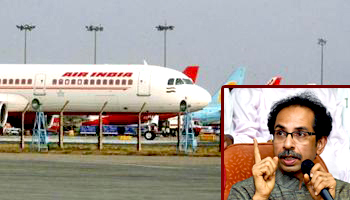
It also asked the finance minister to spell out the reasons which made the 'Maharaja' (the Air India's characteristic logo) a "beggar."

The Sena's taunt comes two days after Finance Minister Arun Jaitley said the Cabinet has given "in-principle" approval for the disinvestment of Air India.

The Civil Aviation Ministry is charting out the disinvestment of the debt-laden carrier.

"Had this decision been taken by the previous government, the BJP would have exposed the Congress in public. The BJP would have asked how can a government that cannot run an airline, run the nation," the Sena said in an editorial in party mouthpiece 'Saamana'.

"But the BJP today has indulged in the sale of the national carrier," it noted.

The Sena also sought to know from Jaitley the reasons for Air India's downfall and losses in the last few years, and those responsible for it.

The airline earlier had a local market share of about 35 per cent which has gone down to a mere 16 per cent. This happened as many routes were sold off to private companies by the Civil Aviation Ministry, the Sena claimed.

"This is corruption. If done during the Congress regime, the Modi dispensation had a chance to undo the damage. Why did they not do it?" it asked.

"Today the airline is being sold off as it has a debt of Rs 50,000 crore. Tomorrow the government will say they are unable to provide for the security cost of Kashmir valley and will thus auction it. They cannot be trusted," the Sena claimed.

Surviving on taxpayers' money, Air India has been in the red for long and various proposals, including government think tank Niti Aayog's suggestion for complete privatisation, have been made.

The airline has a debt of more than Rs 52,000 crore and is surviving on a Rs 30,000-crore bailout package extended by the previous UPA government in 2012.

Comments

Yaseen Baig
 - 
Friday, 30 Jun 2017

This government is selling one by one, now what is left!

Add new comment

  • Coastaldigest.com reserves the right to delete or block any comments.
  • Coastaldigset.com is not responsible for its readers’ comments.
  • Comments that are abusive, incendiary or irrelevant are strictly prohibited.
  • Please use a genuine email ID and provide your name to avoid reject.
News Network
March 7,2020

New Delhi, Mar 7: Prime Minister Narendra Modi turned emotional on Saturday when a woman beneficiary of his government's generic medicine programme told him that she had seen God in him.

Dehradun-resident Deepa Shah, who suffered paralysis in 2011, was interacting with the prime minister through video-conference on the occasion of Jan Aushadhi Diwas.

"I have not seen god, but I have seen God in you," she said, tears rolling down her eyes.

Modi was visibly emotional as the woman repeated her remark.

She also thanked the Uttarakhand chief minister and others who had helped her all along and said doctors had once told her that she cannot be cured.

"But on hearing your voice I have become better," she told Modi while profusely thanking the prime minister for his efforts to reduce the cost of medicines.

An emotional prime minister paused for a moment before telling her that it was her courage that had won over her disease and that she must carry on with the spirit.

Shah was expressing her plight and how she had suffered due to high cost of medicines after she suffered from paralysis in 2011 and has now started saving Rs 3,500 every month after benefitting from the government's low-cost generic medicines programme.

Soon after Shah rose to express her views, Modi asked her to sit and speak as he said she was uncomfortable while standing.

"You have defeated disease with your own will power. Your courage is your god and that same courage has given you the strength to emerge from such a big crisis. You should carry on this confidence in you," Modi told her.

He said some people still keep spreading rumours about generic medicines, going by their past experience, wondering how can medicines be available so cheap and that there must be something wrong with the medicine.

"But, by seeing you countrymen would gain confidence that there is nothing wrong in generic medicines. These medicines are not at all of inferior quality than any other medicine. These medicines have been certified by the best laboratories. These medicines are made in India and is 'Make in India' and are cheap," the prime minister said.

He said there is demand for generic medicines from India across the world and the government has made it mandatory for doctors to prescribe generic medicines to patients, unless necessary.

Comments

Sameeksha
 - 
Monday, 9 Mar 2020

Wowww so emotional... Lol .really god in you??? Drama king and queen

angry indian
 - 
Sunday, 8 Mar 2020

in 2002 riot we have seen shaitan in you..how come shaitan become GOD...


did he put atleat one tear for his mother, did he feel sad when pregnant muslim woman brutally murdered..

this guy is 21st century dajjal..

Suresh SS
 - 
Sunday, 8 Mar 2020

Big Nautanki, Dramebaz

Add new comment

  • Coastaldigest.com reserves the right to delete or block any comments.
  • Coastaldigset.com is not responsible for its readers’ comments.
  • Comments that are abusive, incendiary or irrelevant are strictly prohibited.
  • Please use a genuine email ID and provide your name to avoid reject.
Agencies
February 17,2020

New Delhi, Feb 17: The Supreme Court said on Monday that people have a fundamental right to protest against a law but the blocking of public roads is a matter of concern and there has to be a balancing factor.

Hearing pleas over the road blocks due to the ongoing protests at Shaheen Bagh against the Citizenship Amendment Act (CAA), a bench comprising Justices S K Kaul and K M Joseph said its concern is about what will happen if people start protesting on roads.

Democracy works on expressing views but there are lines and boundaries for it, the bench said.

It asked senior advocate Sanjay Hegde and advocate Sadhana Ramachandran to talk to Shaheen Bagh protestors and persuade them to move to an alternative site where no public place is blocked.

The matter has been posted for next hearing on February 24.

People have a fundamental right to protest but the thing which is troubling us is the blocking of public roads, the bench said.

Solicitor General Tushar Mehta said Shaheen Bagh protestors should not be given a message that every institution is on its knees trying to persuade them on this issue.

The apex court said that if nothing works, we will leave it to the authorities to deal with the situation.

Protestors have made their made their point and the protests have gone on for quite some time, it said.

Restrictions have been imposed on the Kalindi Kunj-Shaheen Bagh stretch and the Okhla underpass, which were closed on December 15 last year due to the protests against CAA and Register of Citizens.

The top court had earlier said the anti-CAA protesters at Delhi's Shaheen Bagh cannot block public roads and create inconvenience for others.

The apex court was hearing an appeal filed by advocate Amit Sahni, who had approached the Delhi high court seeking directions to the Delhi Police to ensure smooth traffic flow on the Kalindi Kunj-Shaheen Bagh stretch, which was blocked by anti-CAA protesters on December 15.

While dealing with Sahni's plea, the high court had asked local authorities to deal with the situation keeping in mind law and order.

Separately, former BJP MLA Nand Kishore Garg has filed a petition in the apex court seeking directions to the authorities to remove the protestors from Shaheen Bagh.

One of the pleas has sought laying down of comprehensive and exhaustive guidelines relating to outright restrictions for holding protests or agitations leading to obstruction of public place.

In his plea, Garg has said that law enforcement machinery was being "held hostage to the whims and fancies of the protesters" who have blocked vehicular and pedestrian movement from the road connecting Delhi to Noida.

State has the duty to protect fundamental rights of citizen who were continuously being harassed by the blockage of arterial road, it said.

"It is disappointing that the state machinery is muted and a silent spectator to hooliganism and vandalism of the protesters who are threatening the existential efficacy of the democracy and the rule of law and had already taken the law and order situation in their own hand," the plea had said.

In his appeal, Sahni had sought supervision of the situation in Shaheen Bagh, where several women are sitting on protest, by a retired Supreme Court judge or a sitting judge of the Delhi High Court.

Sahni has said in his plea that protests in Shaheen Bagh has inspired similar demonstrations in other cities and to allow it to continue would set a wrong precedent.

Comments

Add new comment

  • Coastaldigest.com reserves the right to delete or block any comments.
  • Coastaldigset.com is not responsible for its readers’ comments.
  • Comments that are abusive, incendiary or irrelevant are strictly prohibited.
  • Please use a genuine email ID and provide your name to avoid reject.
News Network
June 13,2020

New Delhi, Jun 13: About 56 per cent of children were found to have no access to smartphones which have emerged as essential tools for online learning during the coronavirus-induced lockdown, according to a new study that surveyed 42,831 students at various school levels.

The study ''Scenario amidst COVID 19 - Onground Situations and Possible Solutions'' was conducted by child rights NGO Smile Foundation with an aim of analysing the access to technology.

The findings of the study showed that 43.99 per cent of surveyed children have access to smartphones and another 43.99 per cent of students have access to basic phones while 12.02 per cent do not have access to either smartphones or basic phones.

A total of 56.01 per cent children were found to have no access to smartphones, the study said.

"Concerning television, it was noted that while 68.99 per cent have access to TV, a major chunk of 31.01 per cent does not. Hence suggesting that using smartphone interventions for enhancing learning outcomes is not the only solution," it said.

At the primary level of education (class 1 to 5) 19,576 children were surveyed while at upper primary level (class 6 to 8) 12,277 children were surveyed. At secondary level of education (class 9 to 10) 5,537 children were surveyed and at higher secondary level (class 11 to 12) 3,216 children were surveyed.

The survey based on which the study was conducted used two approaches - over the telephone wherein the NGO reached out to the children whose database it already had -- students enrolled in various education centres of the NGO -- and second was through community mobilization wherein community workers went door to door to get answers.

The survey was conducted in 23 states, including Delhi, Gujarat, Maharashtra, Karnataka, Tamil Nadu, West Bengal, Andhra Pradesh, Telangana, Uttar Pradesh, Haryana, over a period of 12 days from April 16 to April 28.

The lockdown induced by the COVID-19 pandemic in March prompted schools and colleges to move to the virtual world for teaching and learning activities. However, many experts say the digital divide in the country may turn online classes into an operational nightmare.

As per official statistics, there are over 35 crore students in the country. However, it is not clear as to how many of them have access to digital devices and Internet.

Santanu Mishra, co-founder and executive trustee, Smile Foundation, said the findings clearly show that the digital divide is a real challenge, and multiple approaches need to be implemented to cater to all across the nation.

"As an exercise before we start any programme, we do a baseline study to understand the on-ground challenges so that our programmes can bring in real work and real change. With the onset of the pandemic, following indefinite school closures, it is more important than ever to understand the situation and how can we ensure that children are given quality education. Through this, we understand that customized modules need to be built in accordance with the channel of communication," he said.  

Comments

Add new comment

  • Coastaldigest.com reserves the right to delete or block any comments.
  • Coastaldigset.com is not responsible for its readers’ comments.
  • Comments that are abusive, incendiary or irrelevant are strictly prohibited.
  • Please use a genuine email ID and provide your name to avoid reject.