


Sena hits out at BJP on Air India privatisation decision

Agencies
June 30, 2017

Mumbai, Jun 30: NDA ally Shiv Sena today came down heavily on the Centre over its decision to privatise national carrier Air India, saying had such a decision been taken by the previous Congress-led UPA government, the BJP would not have spared it.airindia
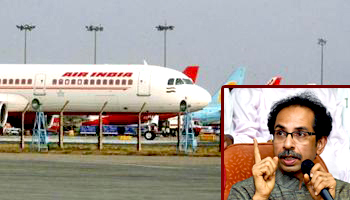
It also asked the finance minister to spell out the reasons which made the 'Maharaja' (the Air India's characteristic logo) a "beggar."

The Sena's taunt comes two days after Finance Minister Arun Jaitley said the Cabinet has given "in-principle" approval for the disinvestment of Air India.

The Civil Aviation Ministry is charting out the disinvestment of the debt-laden carrier.

"Had this decision been taken by the previous government, the BJP would have exposed the Congress in public. The BJP would have asked how can a government that cannot run an airline, run the nation," the Sena said in an editorial in party mouthpiece 'Saamana'.

"But the BJP today has indulged in the sale of the national carrier," it noted.

The Sena also sought to know from Jaitley the reasons for Air India's downfall and losses in the last few years, and those responsible for it.

The airline earlier had a local market share of about 35 per cent which has gone down to a mere 16 per cent. This happened as many routes were sold off to private companies by the Civil Aviation Ministry, the Sena claimed.

"This is corruption. If done during the Congress regime, the Modi dispensation had a chance to undo the damage. Why did they not do it?" it asked.

"Today the airline is being sold off as it has a debt of Rs 50,000 crore. Tomorrow the government will say they are unable to provide for the security cost of Kashmir valley and will thus auction it. They cannot be trusted," the Sena claimed.

Surviving on taxpayers' money, Air India has been in the red for long and various proposals, including government think tank Niti Aayog's suggestion for complete privatisation, have been made.

The airline has a debt of more than Rs 52,000 crore and is surviving on a Rs 30,000-crore bailout package extended by the previous UPA government in 2012.

Comments

Yaseen Baig
 - 
Friday, 30 Jun 2017

This government is selling one by one, now what is left!

Add new comment

  • Coastaldigest.com reserves the right to delete or block any comments.
  • Coastaldigset.com is not responsible for its readers’ comments.
  • Comments that are abusive, incendiary or irrelevant are strictly prohibited.
  • Please use a genuine email ID and provide your name to avoid reject.
News Network
February 9,2020

New Delhi, Feb 8: Arvind Kejriwal is set to return as Delhi chief minister and his Aam Aadmi Party (AAP) will virtually sweep the assembly elections, exit polls predicted Saturday.

As polling came to a close at 6 pm, with the Election Commission of India (ECI) projecting a voter turnout at 60.24% (as of 9:50 pm), a poll of polls covering 10 exit polls gave 52 seats to AAP, 17 to the Bharatiya Janata Party and one to the Indian National Congress.

The polls, which are sample surveys conducted among voters exiting polling booths, signalled that the Delhi voter responded to AAP’s campaign that focused on “kaam”, or getting work done.

Kejriwal, a former civil servant and activist who stormed into electoral politics with an anti-corruption campaign in 2013, led a campaign focusing on the development work his government did in Delhi, especially in education and healthcare, as well as sops such as lower electricity bills and free bus rides for women.

The exit polls gave AAP between 47 and 68 seats in the 70-member Assembly.

They predicted an absolute rout for Congress, which ruled Delhi for three terms between 1998 and 2013. The maximum seats to AAP were given by India Today TV-Axis exit poll, which predicted 59-68 seats for the party, while giving 2-11 for the BJP and none to the Congress.

If these figures hold, the results will come as a disappointment for the BJP, which had hoped its sweep in the Lok Sabha elections in 2019 would reflect in the assembly polls.

Delhi’s voter turnout saw a sharp fall over the 2015 elections. According to the Election Commission of India, voter turnout till 9 pm was projected at 60.24% — lower than 67.12% in 2015.

Traditionally, a lower voter turnout is read as a vote for the incumbent.

The voter turnout in Delhi has been similar during the Congress regime under Sheila Dikshit, when she won consecutive terms. In 2003, when Delhi voted a second time for the Dikshit government, the voter turnout was 53.42%, and a comparable 57.58% was the turnout in 2008.

Later, in two consecutive elections — 2013 and 2015 — voters turned out in big numbers to vote Dikshit out of power. In 2013, 65.63% of Delhi turned out and the percentage increased further to 67.12% in 2015.

Across constituencies, Matia Mahal in Central Delhi registered the highest voter turnout of 68.36%, whereas Bawana assembly constituency in North district saw the lowest turnout at 41.95%. Among districts, North East district registered the highest (62.75%) voter turnout, while the lowest turnout was recorded in South East district (54.15%), according to the ECI app.

Comments

Add new comment

  • Coastaldigest.com reserves the right to delete or block any comments.
  • Coastaldigset.com is not responsible for its readers’ comments.
  • Comments that are abusive, incendiary or irrelevant are strictly prohibited.
  • Please use a genuine email ID and provide your name to avoid reject.
News Network
January 9,2020

Mumbai, Jan 9: India's weddings are famously lavish -- lasting days and with hundreds if not thousands of guests -- but this season many families are cutting costs even if it risks their social standing.

It is symptomatic of a sharp slowdown in the world's fifth-largest economy, with Indians spending less on everything from daily essentials to once-in-a-lifetime celebrations.

Growth has hit a six-year low and unemployment a four-decade high under Prime Minister Narendra Modi. Prices are rising too, squeezing spending on everything from shampoo to mobile data.

Chartered accountant Palak Panchamiya, for example, has already slashed the budget on her upcoming Mumbai nuptials by a third, trimming spending on clothing and the guest list.

"Initially I chose a dress that cost 73,000 rupees ($1,000)," Panchamiya told news agency as she picked through outfits at a recent marriage trade fair.

"But my partner felt it was too expensive, and so now I am here reworking my options and looking for something cheaper."

India's massive wedding industry is worth an estimated $40-50 billion a year, according to research firm KPMG.

The celebrations can last a week and involve several functions, a dazzling variety of cuisines, music and dance performances, and lots of gifts.

Foreigners can even buy tickets to some events.

But these days, except for the super-rich -- a recent Ambani family wedding reportedly cost $100 million -- extravagance is out and frugality is in as families prioritise saving.

"Earlier Indian weddings were like huge concerts, but now things have changed," said Maninder Sethi, founder of Wedding Asia, which organises marriage fairs around the country.

Cracks emerged in 2016 when the Indian wedding season, which runs from September to mid-January, was hit by the government's shock withdrawal of vast amounts of banknotes from circulation in a bid to crack down on undeclared earnings.

Mumbai-based trousseau maker Sapna Designs Studio shut for months as the economy was turned on its head by Modi's move.

"No exhibitions were happening and there were no avenues for us to sell either," said Vishal Hariyani, owner of the clothing studio.

Hopes for a recovery proved short-lived when the cash ban was followed by a botched rollout of a nationwide goods and services tax (GST) in 2017 that saw many small-scale businesses close.

Since then, keeping his studio afloat has been a challenge, with consumers increasingly reluctant to spend too much, says Hariyani.

"We customise our clothes as per their budgets, and now week-long weddings have been converted to just a 36-hour ceremony," he told news agency.

"We have to pay GST, pay workers and even offer discounts to customers," he added.

"The whole economy has slowed down and reduced spending on weddings is a by-product of that. Everyone except the super-rich are affected," Pradip Shah from IndAsia Fund Advisors told news agency.

"It is reflective of how sombre the mood is," he said.

In a country where families traditionally spend heavily on weddings -- including taking on debt in some cases -- the downturn is also a source of sadness and shame, with elaborate celebrations often seen as a measure of social status.

"We haven't even invited our neighbours. It is embarrassing but the current situation doesn't offer us much respite," 52-year-old Tara Shetty said ahead of her son's wedding.

"In my era, we always spent a lot and had thousands of people attending the weddings," she explained.

"My wedding was supremely grand, and now my son's is the polar opposite."

Comments

Add new comment

  • Coastaldigest.com reserves the right to delete or block any comments.
  • Coastaldigset.com is not responsible for its readers’ comments.
  • Comments that are abusive, incendiary or irrelevant are strictly prohibited.
  • Please use a genuine email ID and provide your name to avoid reject.
News Network
May 20,2020

United Nations, May 20: Highlighting India's long-standing history of promoting inclusive and peaceful societies, a top UN official on Tuesday voiced concern over incidents of "increased hate speech and discrimination" against minority communities in the country following the adoption of the Citizenship Amendment Act.

Under-Secretary-General and UN Special Adviser on the Prevention of Genocide Adama Dieng, however, welcomed Prime Minister Narendra Modi’s call for unity and brotherhood in the wake of the COVID19 pandemic.

Dieng said in a note to the media on Tuesday that he is "concerned over reports of increased hate speech and discrimination against minority communities in India" since the adoption of the Citizenship Amendment Act (CAA) in December 2019.

The Indian government has maintained that the CAA is an internal matter of the country and stressed that the goal is to protect the oppressed minorities of neighbouring countries.

The CAA, which was notified on January 10, grants Indian citizenship to non-Muslim minorities migrated to India from Afghanistan, Pakistan and Bangladesh till December 31, 2014, following persecution over their faith.

"While the objective of the act, to provide protection to minority communities is commendable, it is concerning that this protection is not extended to all groups, including Muslims. This is contrary to India’s obligations under international human rights law, in particular on non-discrimination,” Dieng said.

The Special Adviser recognised "India’s long standing and well recognised history of promoting inclusive and peaceful societies, with respect for equality and principles of non-discrimination.”

He also welcomed recent statements by Prime Minister Modi that the COVID-19 pandemic “does not see race, religion, colour, caste, creed, language or border before striking and that our response and conduct...should attach primacy to unity and brotherhood.”

Dieng encouraged the Government of India to "continue to abide by this guidance by ensuring that national laws and policies follow international standards related to non-discrimination and to address and counter the rise of hate speech through messages of inclusion, respect for diversity and unity.”

He further reiterated that he would continue to follow developments and expressed his readiness to support initiatives to counter and address hate speech.

The hate speech and the dehumanisation of others goes against international human rights norms and values, he added.

“In these extraordinary times brought about by the COVID-19 crisis it is more important than ever that we stand united as one humanity, demonstrating unity and solidarity rather than division and hate,” he said.

Dieng also expressed concern over reports of violence during demonstrations against CAA in some regions of India.

Comments

Add new comment

  • Coastaldigest.com reserves the right to delete or block any comments.
  • Coastaldigset.com is not responsible for its readers’ comments.
  • Comments that are abusive, incendiary or irrelevant are strictly prohibited.
  • Please use a genuine email ID and provide your name to avoid reject.