


Sena hits out at BJP on Air India privatisation decision

Agencies
June 30, 2017

Mumbai, Jun 30: NDA ally Shiv Sena today came down heavily on the Centre over its decision to privatise national carrier Air India, saying had such a decision been taken by the previous Congress-led UPA government, the BJP would not have spared it.airindia
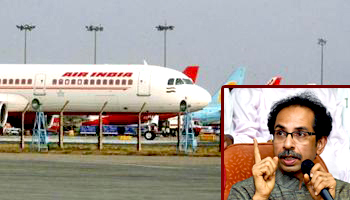
It also asked the finance minister to spell out the reasons which made the 'Maharaja' (the Air India's characteristic logo) a "beggar."

The Sena's taunt comes two days after Finance Minister Arun Jaitley said the Cabinet has given "in-principle" approval for the disinvestment of Air India.

The Civil Aviation Ministry is charting out the disinvestment of the debt-laden carrier.

"Had this decision been taken by the previous government, the BJP would have exposed the Congress in public. The BJP would have asked how can a government that cannot run an airline, run the nation," the Sena said in an editorial in party mouthpiece 'Saamana'.

"But the BJP today has indulged in the sale of the national carrier," it noted.

The Sena also sought to know from Jaitley the reasons for Air India's downfall and losses in the last few years, and those responsible for it.

The airline earlier had a local market share of about 35 per cent which has gone down to a mere 16 per cent. This happened as many routes were sold off to private companies by the Civil Aviation Ministry, the Sena claimed.

"This is corruption. If done during the Congress regime, the Modi dispensation had a chance to undo the damage. Why did they not do it?" it asked.

"Today the airline is being sold off as it has a debt of Rs 50,000 crore. Tomorrow the government will say they are unable to provide for the security cost of Kashmir valley and will thus auction it. They cannot be trusted," the Sena claimed.

Surviving on taxpayers' money, Air India has been in the red for long and various proposals, including government think tank Niti Aayog's suggestion for complete privatisation, have been made.

The airline has a debt of more than Rs 52,000 crore and is surviving on a Rs 30,000-crore bailout package extended by the previous UPA government in 2012.

Comments

Yaseen Baig
 - 
Friday, 30 Jun 2017

This government is selling one by one, now what is left!

Add new comment

  • Coastaldigest.com reserves the right to delete or block any comments.
  • Coastaldigset.com is not responsible for its readers’ comments.
  • Comments that are abusive, incendiary or irrelevant are strictly prohibited.
  • Please use a genuine email ID and provide your name to avoid reject.
News Network
April 23,2020

Washington, Apr 23: Air pollution over northern India has plummeted to a 20-year-low for this time of the year, according to satellite data published by US space agency National Aeronautics and Space Administration (NASA).
The US space agency's satellite sensors observed aerosol levels at a 20-year low post the countrywide lockdown, implemented to slow the spread of the novel coronavirus.

"We knew we would see changes in atmospheric composition in many places during the lockdown," said Pawan Gupta, a Universities Space Research Association (USRA) scientist at NASA''s Marshall Space Flight Center. "But I have never seen aerosol values so low in the Indo-Gangetic Plain at this time of year," added Mr Gupta.

Acting Assistant Secretary of State for South and Central Asia Alice G Wells tweeted, "These images from NASA were taken each spring starting in 2016 and show a 20-year low in airborne particle levels over India. When India and the world are ready to work and travel again, let's not forget that collaborative action can result in cleaner air."

The data published with maps show aerosol optical depth (AOD) in 2020 compared to the average for 2016-2019. Aerosol optical depth is a measure of how light is absorbed or reflected by airborne particles as it travels through the atmosphere.

If aerosols are concentrated near the surface, an optical depth of 1 or above indicates very hazy conditions. An optical depth, or thickness, of less than 0.1 over the entire atmospheric vertical column is considered "clean." The data were retrieved by the Moderate Resolution Imaging Spectroradiometer (MODIS) on NASA's Terra satellite.

In the first few days of the lockdown, it was difficult to observe a change in the pollution signature. "We saw an aerosol decrease in the first week of the shutdown, but that was due to a combination of rain and the lockdown," said Mr Gupta.

Around March 27, heavy rain poured over vast areas of northern India and helped clear the air of aerosols. Aerosol concentrations usually increase again after such heavy precipitation.

"After the rainfall, I was really impressed that aerosol levels did not go up and return to normal. We saw a gradual decrease and things have been staying at the level we might expect without anthropogenic emissions," Mr Gupta said.

On March 25, the Indian government placed its 1.3 billion citizens under a strict lockdown to reduce the spread of COVID-19. The countrywide mandate decreased activity at factories and severely reduced car, bus, truck and airplane traffic. Every year, aerosols from anthropogenic (human-made) sources contribute to unhealthy levels of air pollution in many Indian cities.

Aerosols are tiny solid and liquid particles suspended in the air that reduce visibility and can damage the human lungs and heart.

In southern India though, the story is a little hazier. Satellite data show aerosol levels have not yet decreased to the same extent. In fact, levels seem to be slightly higher than in the past four years. The reasons are unclear but could be related to recent weather patterns, agricultural fires, winds or other factors.

"This a model scientific experiment," Robert Levy, program leader for NASA's MODIS aerosol products, said about the lockdown and its effects on pollution.

"We have a unique opportunity to learn how the atmosphere reacts to sharp and sudden reductions in emissions from certain sectors. This can help us separate how natural and human sources of aerosols affect the atmosphere," Mr Levy added.

Comments

Add new comment

  • Coastaldigest.com reserves the right to delete or block any comments.
  • Coastaldigset.com is not responsible for its readers’ comments.
  • Comments that are abusive, incendiary or irrelevant are strictly prohibited.
  • Please use a genuine email ID and provide your name to avoid reject.
Agencies
June 7,2020

New Delhi, Jun 7: The Islamic Centre of India on Saturday issued an advisory for those visiting mosques in view of the Centre’s decision to allow reopening of religious places from June 8.

Islamic Centre of India chairman Maulana Khalid Rasheed Farangi Mahali advised people above 65 years and under 10 years of age not to visit mosques and instead offer prayers at home.

He also advised against crowding in mosques, stressing that not more than five people should be present at a time and social distancing be maintained, with the ‘namazis’ using masks and keeping a distance of six feet among themselves while offering prayers.

He added that the situation would be reviewed after 15 days and if required, another advisory would be issued.

Comments

Add new comment

  • Coastaldigest.com reserves the right to delete or block any comments.
  • Coastaldigset.com is not responsible for its readers’ comments.
  • Comments that are abusive, incendiary or irrelevant are strictly prohibited.
  • Please use a genuine email ID and provide your name to avoid reject.
Agencies
July 30,2020

Chennai, Jul 30: Tamil Nadu government on Thursday extended the Covid-19 lockdown till August 31, giving only a few relaxations like allowing delivery of non-essential goods by e-commerce sites. The ban on public transport has been extended till August 31, while availing of e-pass for inter-district and inter-state travel will continue to be in force.

In a detailed statement, Chief Minister Edappadi K Palaniswami announced a “complete lockdown” during which only essential services would continue to be in force on all Sundays during the month of August across the state.  

In Chennai, restaurants will be allowed to open dine-in facilities at 50 percent of its total capacity from 6 am to 7 pm from August 1, while vegetable shops, grocery outlets and standalone commercial establishments will also be allowed to remain open from 6 am to 7 pm.

E-commerce sites have been allowed to begin delivery of non-essential goods from August 1, while the ban on public transport, temples in urban areas and towns, cinema halls, shopping malls, and gyms would continue till August 31.

It also said companies or factories in Chennai that have been allowed to function with 50 percent of staff can increase their strength to 75 percent from August 1.

COVID-19 Pandemic Tracker: 15 countries with the highest number of coronavirus cases, deaths

The government also asked companies to encourage its employees to work from home and advised commercial establishments to follow the Standard Operating Procedure (SOP) as advised by it. Inter-state or inter-district travel will be allowed only with e-pass, while ban on metro and suburban trains continues.

The decision to extend the lockdown till August 31 comes as Tamil Nadu continues to grapple with an increasing number of coronavirus cases. The prevalence of the virus is no more limited to one city or region of the state with almost all districts reporting fresh cases, some of them over 200 new patients, every day.

On Thursday morning, Tamil Nadu’s Covid-19 tally was 2,34,114 including 1,72,883 discharges and 3,741 deaths. The active cases stood at 57,490.

Comments

Add new comment

  • Coastaldigest.com reserves the right to delete or block any comments.
  • Coastaldigset.com is not responsible for its readers’ comments.
  • Comments that are abusive, incendiary or irrelevant are strictly prohibited.
  • Please use a genuine email ID and provide your name to avoid reject.