


Girl's death in drain: Court acquits four BBMP officials

DHNS
June 28, 2017

Bengaluru, Jun 28: A city court has acquitted four Bruhat Bengaluru Mahanagara Palike (BBMP) officials, who were charged with being responsible for the death of Geetha Lakshmi (9) who was washed away after she fell into an uncovered drain on Bannerghatta Road on October 6, 2014.drainage
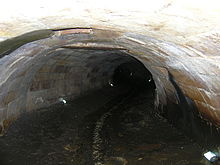
The officials who have been acquitted are Shivaprakash K M (53), the then jurisdictional assistant executive engineer, S L K Swamy (45), the then jurisdictional joint engineer, S G Shivakumar (56) and Renukananda V (50).

The girl fell into an uncovered drain during the rain around 8.10 pm in front of Janaka Group office, Pai International Showroom, Bannerghatta Road. Her body was recovered on October 8, 2014.

The victim’s aunt Lakshmi in her complaint to the police had stated that the BBMP officials carried out works in the day, but did not cover the drainage which led to the girl’s death.

Of the 23 witnesses named in the charge sheet, 21 including eye-witnesses, mahazar witnesses and the J P Nagar police, under whose jurisdiction the incident had occurred, did not appear before the court.

Considering the absence of these witnesses, Mala N D, the 44th Additional Chief Metropolitan Magistrate stated in her order that the investigating officer did not secure and produce before the court any of the eye-witnesses, which meant the investigation by the investigating officer remained unproved.

“As a result, the prosecution has failed to prove charges against the accused with convincing and corroborative evidences,” the magistrate noted. Only two witnesses were examined in the case, Lakshmi, the victim’s aunt and Prince Vicky, a worker in a store located near the place of the incident.

Lakshmi told the court that she was holding the hands of Geetha Lakshmi when the girl suddenly fell into the drainage and was washed away. Vicky denied giving any statement to the police and turned partially hostile. He told the court that there was some repair work on that day and the drainage was left uncovered.

Comments

binumuhammedhaneefa
 - 
Thursday, 29 Jun 2017

I can't share this page through Facebook.
photo note matching.

Add new comment

  • Coastaldigest.com reserves the right to delete or block any comments.
  • Coastaldigset.com is not responsible for its readers’ comments.
  • Comments that are abusive, incendiary or irrelevant are strictly prohibited.
  • Please use a genuine email ID and provide your name to avoid reject.
coastaldigest.com news network
May 31,2020

Mangaluru, May 31:  Even as the worst locust attack on India in recent years raised concerns over its impact on crops, swarms of locusts have triggered panic in Karnataka’s Dakshina Kannada too. 

Farmers in the coastal district were taken aback when they found the swarms of locusts, which they feared as the arrival of desert locusts in the region.

According to reports, Renjalady village under the limits of Nuji Baltila Gramp Panchayats in Kadaba taluk and Shirlalu village in Belthangady taluk witnessed locust attacks in last couple of days. 

“Locust swarms were seen in many areas. We have also alerted agriculture department. Already insects have destroyed crops of many farmers,” said a farmer in Shirlalu village.  

Joint director of Dakshina Kannada district agriculture department MC Seetha confirmed that officials have received information from villagers about the locust scare and entemologists have already visited the place to collect more information.

Not Desert Locusts?

“We contacted entemologists and forwarded the pictures that farmers sent to us. Looking at the picture, entemologists have opined that it may be calotropis locust or colour grasshopper. Desert locusts usually arrive in lakhs,” said Ms Seetha. Desert locusts that are destroying crops in other parts of India may not come to Dakshina Kannada, she added.

Comments

Add new comment

  • Coastaldigest.com reserves the right to delete or block any comments.
  • Coastaldigset.com is not responsible for its readers’ comments.
  • Comments that are abusive, incendiary or irrelevant are strictly prohibited.
  • Please use a genuine email ID and provide your name to avoid reject.
Agencies
May 8,2020

Washington D.C., May 8: The prime time for brain development in a child's life is the first year, where the infant spends most of the time asleep. It is the time when neural connections form and sensory memories are encoded.

However, when sleep is disrupted, as occurs more often among children with autism, brain development may be affected, too.

New research led by the University of Washington finds that sleep problems in a baby's first 12 months may not only precede an autism diagnosis but also may be associated with altered growth trajectory in a key part of the brain, the hippocampus.

The study, which was published in the American Journal of Psychiatry, researchers report that in a sample of more than 400 taken of 6- to 12-month-old infants, those who were later diagnosed with autism were more likely to have had difficulty falling asleep.

It also states that this sleep difficulty was associated with altered growth trajectories in the hippocampus.

"The hippocampus is critical for learning and memory, and changes in the size of the hippocampus have been associated with poor sleep in adults and older children.

As many as 80 per cent of the children with autism spectrum disorder have sleep problems," said Annette Estes, director of the UW Autism Center and senior author of the study.

"In our clinical experience, parents have a lot of concerns about their children's sleep, and in our work on early autism intervention, we observed that sleep problems were holding children and families back," added Estes, who is also a UW professor of speech and hearing sciences.

"It could be that altered sleep is part-and-parcel of autism for some children. One clue is that behavioural interventions to improve sleep don't work for all children with autism, even when their parents are doing everything just right. This suggests that there may be a biological component to sleep problems for some children with autism," said Estes.

To consider links among sleep, brain development, and autism, researchers at the IBIS Network looked at MRI scans of 432 infants, surveyed parents about sleep patterns, and measured cognitive functioning using a standardized assessment.

At the outset of the study, infants were classified according to their risk for developing autism: Those who were at higher risk of developing autism -- about two-thirds of the study sample -- had an older sibling who had already been diagnosed.

Infant siblings of children with autism have a 20 per cent chance of developing autism spectrum disorder -- a much higher risk than children in the general population.

In the current study, 127 of the 432 infants were identified as "low risk" at the time the MRI scans were taken because they had no family history of autism.

They later evaluated all the participants at 24 months of age to determine whether they had developed autism. Of the roughly 300 children originally considered "high familial risk," 71 were diagnosed with autism spectrum disorder at that age.

Problems with sleep were more common among the infants later diagnosed with an autism spectrum disorder, as were larger hippocampi. No other subcortical brain structures were affected, including the amygdala, which is responsible for certain emotions and aspects of memory, or the thalamus, a signal transmitter from the spinal cord to the cerebral cortex.

The authors note that while parents reported more sleep difficulties among infants who developed autism compared to those who did not, the differences were very subtle and only observed when looking at group averages across hundreds of infants.

Sleep patterns in the first years of life change rapidly as infants transition from sleeping around the clock to a more adult-like sleep/wake cycle. Until further research is completed, Estes said, it is not possible to interpret challenges with sleep as an early sign of increased risk for autism.

Comments

Add new comment

  • Coastaldigest.com reserves the right to delete or block any comments.
  • Coastaldigset.com is not responsible for its readers’ comments.
  • Comments that are abusive, incendiary or irrelevant are strictly prohibited.
  • Please use a genuine email ID and provide your name to avoid reject.
News Network
April 6,2020

Bengaluru, April 6: Karnataka Chief Minister BS Yediyurappa on Monday said he is following the one-time fasting as per the order by BJP President JP Nadda.

"I am following the one-time fasting as per the order by our national President JP Nadda, on BJP foundation day today, as a mark of respect to doctors, nurses, media personnel," said BS Yediyurappa.

In his message to BJP workers earlier today, Nadda stated, "All BJP Karyakartas to give up one meal on our Foundation Day as a way to show solidarity with people facing hardships during the lockdown. Provide food packets to 5+1 needy under #FeedtheNeedy program. In the next one week, put a system in place where we can provide two homemade face covers to each person at our booth. We should circulate videos of preparation and distribution of such face covers with #WearFaceCoverStaySafe."

Comments

Add new comment

  • Coastaldigest.com reserves the right to delete or block any comments.
  • Coastaldigset.com is not responsible for its readers’ comments.
  • Comments that are abusive, incendiary or irrelevant are strictly prohibited.
  • Please use a genuine email ID and provide your name to avoid reject.