Eid-Round 2: Koorath followers offer prayers amidst clashes in Ullal dargah mosque

CD Network
June 26, 2017

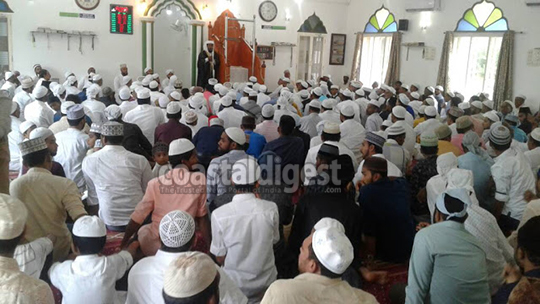
Mangaluru, Jun 26: For the first time in the history of Ullal, Muslims offered Eid al-Fitr namaz for two consecutive days in the same mosque, a development observed by Islamic scholars  as “most unfortunate and un-Islamic.”
ullals 1

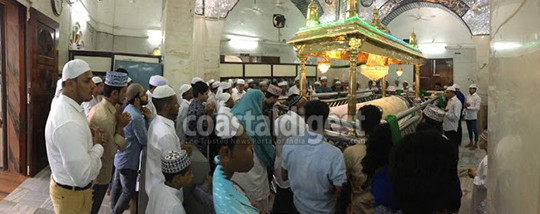
With this the internal clash between two factions of Sayyid Shareeful Madani Dargah and central Juma Masjid has entered a new phase.

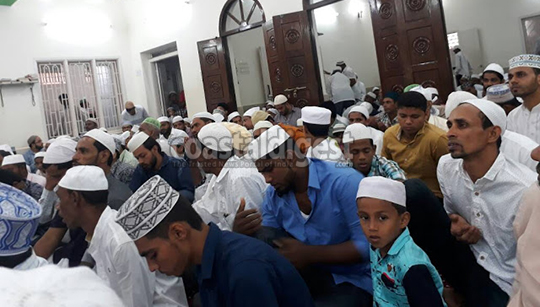
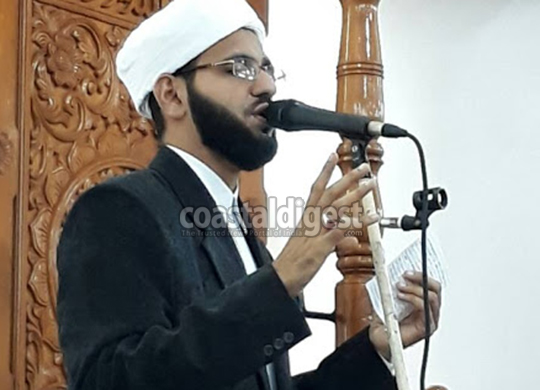
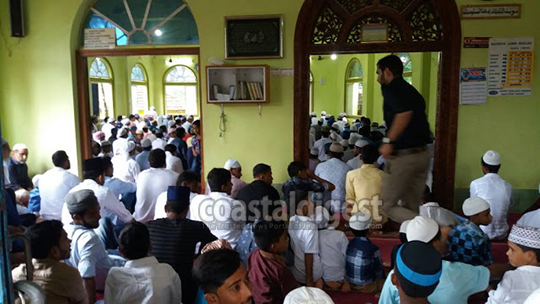
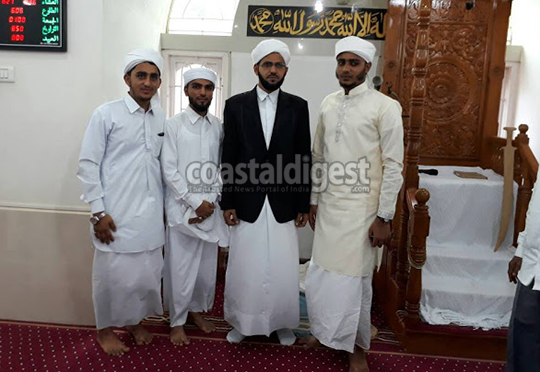
High drama prevailed, when a group of followers of beleaguered Ullal Khazi Fazal Koyamma Thangal aka Koorath Thangal, entered the premises of the mosque located adjacent to the dargah chanting takbir as part of Eid celebration on Monday noon.

Those who were inside the mosque, locked the doors from inside in an attempt to prevent the followers of Koorth Thangal from offering Eid namaz for the second day. Police had to intervene to bring the situation under control when the verbal altercation between two group led to a physical clash.

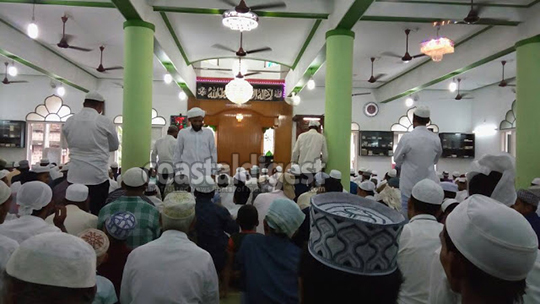
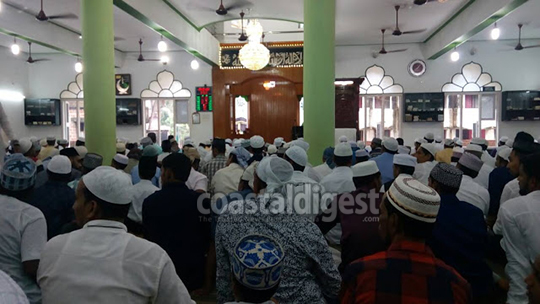
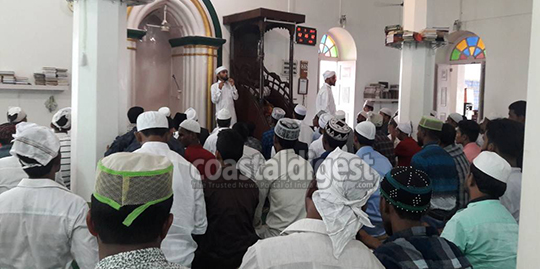
After a prolonged argument, the followers of Koorath Thangal were allowed to offer Eid namaz in congregation in the same mosque. Police had provided tight security for the namaz.

A majority of Muslims in Ullal had offered Eid namaz in juma mosque (dargah mosque) and other mosques on Sunday. However, followers of Koortha Thangal had observed fast on Sunday and postponed Eid to Monday.

Abdul Rasheed Haji, the president of the management committee of the Juma mosque and dargah had yesterday justified the decision of celebrating Eid al-Fitr on Sunday in spite of the sudden opposition by Koorath Thangal, who is not in touch with the committee for past one year.

“Dakshina Kannada Khazi Thwaka Ahmed Musliyar and Udupi Khazi Ibrahim Musliyar Bekal had already announced Eid after verifying moon-sighting reports from Bhatkal on Saturday night. Hence, in Ullal, assistant Khazi announced the Eid in the absence of Koorath Thangal,” he clarified.
Why two days?

Koorath Thangal was appointed as the Khazi of Ullal in March 2014 following the demise of his father Thajul Ulama Assayyid Abdurrahman Al-Bukhari, who was the Khazi of Ullal for several decades. Koorath Thangal’s several moves had triggered controversy in last couple of years.

According to sources, the reason for fresh controversy is that management committee of the mosque did not inform Koorath Thangal before announcing the end of the Ramadan Saturday night as he was not in touch with the committee.

As soon as Koorath Thangal realized that announcement of Eid was made without his permission, he sent a voice message on social media stating that Sunday will be the 30th day of Ramadan. A few clerics reportedly tried to convince Koorath Thangal to change his decision but in vain.


ullals 2

ullals 3

ullals 4

ullals 5

ullals 6

ullals 7

ullals 8

ullals 9

ullals 10

ullals 11

ullals 12

ullals 13

ullals 14

ullals 15

ullals 16

ullals 17

ullals 18

ullals 19

Comments

MILAN
 - 
Monday, 26 Jun 2017

this is nothing but ego from koora thangal.

in middle east, if one observe moon in saudi, all gcc countries follow saudi.

sam
 - 
Monday, 26 Jun 2017

Shame on you people... ullal people are scapegoat for two kerala thangals EGO CLASH. I dont know when you people unite in the name of Allah and Rasool than these dargas and thangals.

Alam
 - 
Tuesday, 27 Jun 2017

@Milan,
I would respectfully disagree, if thats the case then all of India should celebrate Eid on one day right?
If you check moonsighting.com, you will see different methods used by different countries to declare eid. One of the method is foll

Mohammed
 - 
Tuesday, 27 Jun 2017

None of the thangal or Mullah are scared of ALLAH, all they are doing this for their own benefit. lets avoid this thangal and mullahs in this cases to be united.

koora thangal announced 30th day of ramadan Just because the committee didn't inform him about the decision, WAW endu thanga bava if this is not called EGO then what? and those who still support him should be labeled as BHAKTS.

Mohammed
 - 
Wednesday, 28 Jun 2017

Eid Clashes are only because of EGO. There are two groups EK & AP who are taking people for ride. People with no knowledge of Islam go behind these fools. Y do we need any Thangal or Mullah to follow Islam? There is Quraan & haddeeth, that is more than enough. people who are half-learned scholars are creating this rift between muslim community. Educated people will never do this. May ALLAH give Hidaya to these fools running behind MULLAH & Thangal.

Add new comment

  • Coastaldigest.com reserves the right to delete or block any comments.
  • Coastaldigset.com is not responsible for its readers’ comments.
  • Comments that are abusive, incendiary or irrelevant are strictly prohibited.
  • Please use a genuine email ID and provide your name to avoid reject.
News Network
February 19,2020

Feb 19: Bavaguthu Raghuram Shetty was once a typical billionaire with a taste for the high-life.

He splurged on a private jet, vintage cars and two entire floors of the Burj Khalifa, the world’s tallest skyscraper. His website shows him hobnobbing with politicians, Bill Gates and Bollywood royalty.

“The thrill of speed and freedom makes me love cars,” Shetty, 77, told local reporters last year.

Shetty had more than enough money -- at least on paper -- to afford such a lifestyle from companies he helped found, including hospital operator NMC Health Plc and financial services firm Finablr Plc. On Dec. 10, his stakes in the public companies were valued at $2.4 billion, making up the bulk of a fortune spanning education, hospitality and one of the world’s oldest tea companies.

Then, a week later, Carson Block came along.

Block’s investment firm, Muddy Waters, issued a report criticizing NMC’s accounts and disclosing a short position. Since then, Muddy Waters’s scrutiny has snowballed into a troubling scenario for Shetty that sheds light on his complex share arrangements and casts doubts about his net worth. His holdings in Finablr and NMC are worth $885 million, but Shetty’s fortune may now be just a fraction of that, depending on the size of his borrowings.

Filings this month show that Shetty pledged a quarter of his NMC stake against loans with First Abu Dhabi Bank and Zurich-based Falcon Private Bank. Two other shareholders may own half of his reported stake. Another lender -- Al Salam Bank Bahrain -- has already sold some of those shares to enforce security over a loan for Shetty, and NMC said Tuesday that First Abu Dhabi Bank sold another chunk earlier this month.

The situation “seems to have gone beyond some of the issues that Muddy Waters focused on initially,“ said Gavin Launder, a fund manager at Legal & General Investment Management, who owned shares in NMC until October. “The increased scrutiny has unearthed other issues.”

Law firm Herbert Smith Freehills has launched a review of Shetty’s holdings at his request, a spokesperson for the Indian-born businessman said, declining to comment further until the analysis is completed. Shetty resigned Sunday as NMC’s chairman.

In its Dec. 17 report on NMC, Muddy Waters hinted at potential overpayment for assets, inflated cash balances and understated debt. Shares of the United Arab Emirates’ biggest private health-care provider have since plunged 67%, and the firm is now the focus of takeover speculation. The sell-off also spread to Finablr, whose stock has tumbled 64% in that span.

NMC has disputed Muddy Waters’s claims, and the company hired former FBI Director Louis Freeh to conduct an independent review of the short seller’s allegations. Meanwhile, local regulators “are making inquiries with the relevant parties,” a spokesperson for the U.K.’s Financial Conduct Authority said.

Shetty is hardly the only ultra-wealthy person to leverage his assets. Elon Musk has used his shares in Tesla Inc. to obtain personal loans, while Oracle Corp. Chairman Larry Ellison has put up millions of the company’s shares to fund a lavish lifestyle that includes trophy properties, America’s Cup teams and the Indian Wells tennis facility in California.

But such deals can also sour, as demonstrated by Shetty’s lenders selling shares his investment firm pledged. He and his advisers are investigating details of the sales as part of their legal review, according to filings.

To complicate matters, Shetty pledged another batch of NMC stock in 2018 as part of a so-called equity collar arrangement with Goldman Sachs Group Inc. that uses options to limit the impact from share moves. Last month, he also pledged most of his stake in Finablr to refinance a loan from the company’s takeover of foreign-exchange firm Travelex for about $1.2 billion.

BRS Ventures Investment, the UAE-based holding company for most of Shetty’s assets, doesn’t report consolidated financials, preventing a complete analysis of his net worth. His other assets include a catering company, a waste-management firm and pharmaceutical business Neopharma, which four months ago was in the early stages of planning for an initial public offering.

Block, 43, earned his reputation as a short seller a decade ago through targeting U.S.-listed Chinese companies that he claimed were frauds. More recently, his San Francisco-based firm focused on British litigation-finance firm Burford Capital Ltd. and Japanese biotech stock PeptiDream Inc. Short sellers seek to benefit from a decline in a company’s share price.

Shetty founded NMC in 1975 after moving to Abu Dhabi from his native India. He created Finablr two years ago to consolidate his financial brands before listing it on the London Stock Exchange in 2019.

Block said he didn’t anticipate NMC’s shareholding drama.

“I wouldn’t have been able to predict that we’d get these bizarre disclosures about unclear share ownership coming out of the company,” he said in a Feb. 13 phone interview. “This has been obviously a more dramatic unraveling than we usually see.”

Comments

Add new comment

  • Coastaldigest.com reserves the right to delete or block any comments.
  • Coastaldigset.com is not responsible for its readers’ comments.
  • Comments that are abusive, incendiary or irrelevant are strictly prohibited.
  • Please use a genuine email ID and provide your name to avoid reject.
News Network
March 24,2020

Bangalore , Mar 24: Bizom, India's leading retail intelligence platform, announced free subscription of its retailer app and tele-ordering solutions for consumer businesses in India and other emerging economies. Both solutions enable retailers to send their orders directly to the brand.
In COVID-19 times of social distancing and prophylactic measures, brands are conscious about the safety of their salespersons. Also, retailers don't want travelling salespeople to enter their premises. Consequently, many retail stores are facing stockout situations of fast-moving product categories. Bizom's self-ordering solutions help brands to avoid stockouts of their products.
Bizom trends, which analyses consumption and demand for consumer brands, showed how a near-complete shutdown during the Janta Curfew followed panic buying in early March. The asymmetrical demand and a lack of salespeople for order-taking are driving the industry towards social-distancing-based store-stocking mechanisms.
Bizom provides social-distancing-based store-stocking solutions for consumer businesses. They include the Bizom Retailer App and the Bizom Tele-ordering.
The Bizom Retailer App enables self-ordering for a brand's key retail outlets and can be implemented in under two weeks. The mobile app, a B2B shopping app, is a simple installation for retailers. It lists and groups the brand's products as per its product categories. The app's interface is no different from that of leading e-commerce apps. All the user has to do is select the preferred SKUs and add them to their shopping carts.
The app also allows brands to customize the app to meet the requirements of their continually changing product categories. For instance, if an SKU runs out of stock, the brand can disable the given SKU from the app.
With the Bizom Retailer App, brands can take orders directly from retailers instead of the traditional order-taking approach, which requires high-touch from a salesperson. Some of the key features of the app are, the ability to provide product information directly through retailers including SKUs, competitor comparison and pricing.
It also enables self-ordering from the retailer to maintain the flow of products as per demand, enables scheme rollout information through a notification on the app rather than through salespeople, tracks delivery of goods to the retailer and enables incentive payments to retailers directly rather than through distributor claims.
With Bizom Tele-ordering, as the sales teams go remote, the tele-ordering solution will become useful for brands who want to get salespeople to take orders from retailers, remotely. It ensures continued service to outlets despite not being physically present in the market.
Here, salespeople can discuss product requirements with retailers and enter orders based on specific outlet types (grocery, chemist etc.), outlet class (Class A, Class B etc.) or based on their beat or as per a distributor.
The key features of the Bizom Tele-ordering solution are, its ability to help salespeople collect orders from retailers remotely and enter it for fulfilment into Bizom using a tool, the flexibility offered to salespeople for remote servicing of retailers as per outlet type, beat, distributor area etc., secondary schemes get applied automatically, variable discounts will get applied as applicable at an SKU level.
"At Bizom, we are conscious of our responsibility to help brands run faster during these COVID-19 times. Our solutions of Bizom Retailer App and Bizom Tele-ordering have been built to ensure that brands can leverage this situation of low direct touch with retailers to enable a better way of working, remotely. I am trying to help brands go live in a few days so that they, in turn, can serve consumers better during these testing times," said Lalit Bhise, CEO, Bizom.

Comments

Add new comment

  • Coastaldigest.com reserves the right to delete or block any comments.
  • Coastaldigset.com is not responsible for its readers’ comments.
  • Comments that are abusive, incendiary or irrelevant are strictly prohibited.
  • Please use a genuine email ID and provide your name to avoid reject.
News Network
April 19,2020

Bengaluru, Apr 19:  Karnataka's Technical Education department following Union Home Ministry’s guidelines, on Sunday directed all its colleges not to use the Zoom application to conduct online classes during the ongoing lockdown period.

Considering Union Home Ministry's advisory that Zoom app is not safe, the department has taken the decision and issued a circular asking all government, aided and unaided engineering, polytechnic (Diploma) colleges to stop using the app immediately.

The department recommended the use of a free app developed by TCS: "TCS iON Digital class room" or any other App recommended by All India Council for Technical Education (AICTE) to conduct the online classes.

Comments

Add new comment

  • Coastaldigest.com reserves the right to delete or block any comments.
  • Coastaldigset.com is not responsible for its readers’ comments.
  • Comments that are abusive, incendiary or irrelevant are strictly prohibited.
  • Please use a genuine email ID and provide your name to avoid reject.