


Sasikala holds regular durbar in jail, Roopa says in report

DHNS
July 16, 2017

Bengaluru, Jul 16: V K Sasikala, the convicted Tamil Nadu politician, enjoys the services of a cook inside her cell on the first floor, sources said, quoting a report submitted by DIG (Prisons) D Roopa.Sasikala
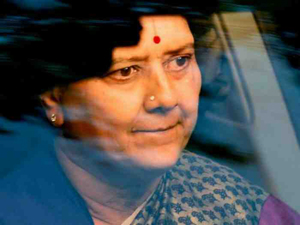
The jail staff have also given her a special room with a table and chair. Four chairs for visitors facilitate regular “office-like” meetings with Sasikala, the report purportedly says.

Sasikala’s “office” is located next to the office of a female jail superintendent in charge of women’s barracks. Roopa learnt about the arrangement from a staffer, after which she inspected the spot and prepared the report which she later submitted to the state police chief Rupak Kumar Dutta, the Home Secretary, the Anti Corruption Bureau (ACB) and her immediate boss, the DGP (Prisons) H S Sathyanarayana Rao.

Her enquiries revealed that prison staff let in more visitors than allowed in the manual. Rules about duration and frequency of visits were also violated. Other VIP prisoners have been provided similar facilities.

The report says two senior officials, attached to the Bengaluru and Belagavi prisons, had prodded inmates into protesting against her after she exposed jail irregularities. She has sought stringent action against them.

Footage vanished?

Roopa suspects systematic efforts to destroy evidence of irregularities at the Parappana Agrahara jail.

Her second report purportedly says CCTV installed at the barracks had been deliberately rendered dysfunctional. The CCTV cameras do not cover visitor rooms with cameras 7 and 8 remaining broken, a source quoted her report as saying. A significant amount of ‘select’ footage has also been deleted from the DVR at the headquarters of the Prisons Department.

The prison authorities have deleted crucial footage that could have proved her charges. She had used a video camera from the department to record the statements of inmates on June 28 and July 10, and entered the details in the prison dairy, but much of it has vanished, the report indicates.

Roopa had lunch with the inmates and even shared her phone number with them when she came to know of irregularities inside the prison. The report says she had asked a jail employee to send her the footage.

When nothing came, an enraged Roopa questioned the staffer, who said her seniors had prevented them from handing over the footage to her. When she persisted, she was given a pen drive with nothing significant.

The report purportedly says Roopa then came to know the footage had been deleted at the behest of her seniors.

Footage covering the barracks and visitor areas have been erased, the report complains.

Comments

wellwisher
 - 
Monday, 17 Jul 2017

Mr Shettar , state chief minister comments his just to understand our blind fold bjp criminal mind leaders that a hindu never play communal mind politics and game for his personal sake. He always work for his mother lands development and for citizens better future. There is no criminal game like bjp leaders.

Please try to understand the meaning i/o of teasing.

Add new comment

  • Coastaldigest.com reserves the right to delete or block any comments.
  • Coastaldigset.com is not responsible for its readers’ comments.
  • Comments that are abusive, incendiary or irrelevant are strictly prohibited.
  • Please use a genuine email ID and provide your name to avoid reject.
News Network
July 15,2020

Bengaluru, Jul 15: With the state capital along with a few districts under lockdown to control the spread of Covid-19, Karnataka Home Minister Basavaraj Bommai on Wednesday said the measure was important to break the chain and people seem to have understood its importance.

Appealing for cooperation from the people, he asked them not to make it inevitable for police to use force in implementing the lockdown. "Traffic movement is less, there is a lockdown atmosphere everywhere, I feel that people have understood the importance... cooperation is required. I appeal to the people, if this lockdown has to be effective it has to be voluntary, only then we can control the rapid spread of coronavirus," Bommai said.

Speaking to reporters here, he said this lockdown is important, last time the infection was not up to this level. "This time areas that have a high number of infections- about five districts and Bengaluru city are going for lockdown. People have understood that this lockdown is to break the chain," he said. "Please don't make it inevitable for police to use force," he added.

Bengaluru urban and rural areas are under "complete lockdown" since last night at 8 pm and it will be effective till 5 am on July 22.

Following Bengaluru urban and rural, administrations in several districts like Dharwad, Dakshina Kannada, Kalaburagi (only in Urban areas), Bidar, Raichur (in Raichur city and Sindhanur) and Yadgir too have announced lockdown.

Noting that Police have taken all necessary strict measures to enforce lockdown in Bengaluru urban and rural districts by restricting the movement of vehicles and people, Bommai said barricades have been erected at various places and flyovers have been shut. People have been allowed to purchase vegetables and groceries till 12 noon, he said.

The government has warned of action in case of any violation of the lockdown rules. As of July 14 evening, cumulatively 44,077 Covid-19 positive cases have been confirmed in the state, which includes 842 deaths and 17,390 discharges. Bengaluru Urban district tops the list of positive cases, with a total of 20,969 infections.

Comments

Add new comment

  • Coastaldigest.com reserves the right to delete or block any comments.
  • Coastaldigset.com is not responsible for its readers’ comments.
  • Comments that are abusive, incendiary or irrelevant are strictly prohibited.
  • Please use a genuine email ID and provide your name to avoid reject.
News Network
January 12,2020

Bengaluru, Jan 12: Karnataka’s ranking in Niti Aayog’s sustainable development goals (SDG) index rose by one place to No. 6 in 2019, compared to the year before.

Of the 17 SDGs that are used to compute the overall index, Karnataka topped in two – ‘climate action’ and ‘life on water’. The former is a measure of how well a state integrates climate action into policies and strategies and promote mechanisms for raising capacity for effective climate change planning and management. The latter focuses on preventing marine pollution, ending illegal and destructive fishing practices, and sustainably managing and protecting marine and coastal ecosystems.

It also did well in ‘decent work and economic growth’ and ‘peace, justice and strong institutions’. But it fared poorly, slipping 16 places – from No. 5 in 2018 to No. 21 in 2019 – in ‘industry, innovation and infrastructure’. Rankings in ‘quality education’ and ‘zero hunger’ have also fallen. While in education it is now ranked 7, a drop of three places, in ‘zero hunger’, it has dropped to No. 17 from 13. SDG is a United Nations initiative. Niti Aayog has customised it for India, and 36 states and union territories are ranked. The organisation admits there is an issue of data availability in India, indicating the numbers may not exactly reflect the ground situation.

In ‘industry, innovation and infrastructure, Karnataka scored just 40 out of a target of 100. The country average was 65. It failed to achieve targets in all the four parameters for the category, except in the number of mobile connections, where it has 100 connections per 100 population. The biggest dip was in manufacturing industry jobs and in providing allweather roads under Pradhan Mantri Gram Sadak Yojana to targeted habitats. Niti Ayog has given a score of 0 for the latter. Speaking on the dismal performance in the ‘industry and infrastructure’ category, state planning commission vice-chairman BJ Puttaswamy said he was yet to look into this parameter. “I have asked the departments concerned to meet me by Monday,” he said.

Comments

Add new comment

  • Coastaldigest.com reserves the right to delete or block any comments.
  • Coastaldigset.com is not responsible for its readers’ comments.
  • Comments that are abusive, incendiary or irrelevant are strictly prohibited.
  • Please use a genuine email ID and provide your name to avoid reject.
coastaldigest.com news network
February 23,2020

Mangalore University has been participating in the campus bird count a sub-event of ‘Great backyard bird count’ (GBBC) organized by Bird Count India for the past 5 years. This year, CBC was held from 14th to 17th February of 2020 across various campuses in India.

This year the four days event was successfully ended up with the sightings of 103 species of birds from various locations across the campus spread on 300 acres. In this Black Drongo, Black Kite, Brahminy Kite, Common Iora, Green Wabler, Purple-rumed Sunbird, Red-whiskered Bulbul, White-cheeked Barbet, Jungle Babbler and Plum headed parakeets were the common birds, and also observed House Crow with nest and nestlings, Indian Robin nest with eggs, Bronzed Drongo constructing the nest and Shikra mating and carrying nesting materials.  Whereas Yellow-billed Babbler is rare in the campus, Ashy Drongo, Barn Swallow, Booted Eagle, Grey Wagtail, Indian Pitta etc. were migratory birds, Grey-headed Bulbul (Near Threatened bird), Rufous Babbler and Grey-headed Bulbul were Western Ghats Endemics  and Brown Wood Owl, Barn Owl, Spotted Owlet, Nightjars (Savanna, Indian and Jerdon’s) and Sri Lanka Frogmouth were nocturnal birds. Blue-eared Kingfisher Grey-bellied Cuckoo which was very rare and new additions to avian list of the campus.

In the first year (2016) of Mangalore University’s CBC recorded 77 species, in 2017 recorded 95 species, in 2018 recorded 110 species and in 2019 recorded 107 species of birds. However some of the common species like Rose ringed parakeets, Blue tailed bee-eater, Nilgiri Flowerpecker and Indian roller etc., sighted last year were not seen this year. But with 2 new additions from this CBC, the checklist of Mangalore University Campus has been updated with a total of 141 species.

This event was coordinated by Vivek Hasyagar from the Department of Applied Zoology and Maxim Rodrigues from the Department of Marine Geology. Survey trails were led by more than 60 students and research scholars from various Departments of Mangalore University includes Applied Zoology, Biosciences, Microbiology, Botany, Physics, Chemistry and Material Science.  In addition, some enthusiastic participants from St. Aloysius College had involved in identifying the birds around the campus.

Quote:

Wild/planned fire affects negatively on the existing ecologically sensitive areas in and around the campus especially in lateritic grasslands. Because many insectivorous birds are dependent on these lateritic grassland habitats for their food and breeding grounds for many ground dwelling birds like Yellow wattled lapwing, Red wattled lapwing, Indian Robin and Barred buttonquails. Conserving these habitats will be helpful in protecting these birds.

Quotes from the participants: “The Campus Bird Count 2020 at Mangalore University was an experience of its own kind. Observing birds in their natural habitat gave me new perspective of viewing them not only as another living being, but as equals, or even of higher intelligence. The Campus Bird Count is an important step towards documenting bird life year after year, and creating awareness amongst youngsters, so that proper conservation steps can be taken to protect them from human interference”.

-Jyotsna Dessai ( 1 M.Sc Zoology)

Comments

Add new comment

  • Coastaldigest.com reserves the right to delete or block any comments.
  • Coastaldigset.com is not responsible for its readers’ comments.
  • Comments that are abusive, incendiary or irrelevant are strictly prohibited.
  • Please use a genuine email ID and provide your name to avoid reject.