Yogi govt to act against madrasas, where national anthem wasn't sung

Agencies
August 16, 2017

Lucknow, Aug 16: The Uttar Pradesh government is contemplating stern action against 'madrasas' (Islamic Seminaries), where the national anthem was not sung during the Independence Day celebrations on Tuesday in defiance of its directives.

According to the sources here on Tuesday, the government has taken a strong view of the reports that national anthem had not been sung at many 'madrasas', especially those owing allegiance to the Barelvi school of Islamic thought.

''We have received complaints from various quarters that national anthem was not sung at several madrasas,'' said a senior official of the education department here.

The education department would also conduct a probe into the complaints, he said.

''We have asked the complainants to furnish proof in support of their allegation,'' the official said adding that stern action would be taken against the erring madrasas.

Sources said that Tricolour was unfurled at the madrasas but the students did not sing the national anthem despite being made mandatory by the Yogi Adityanath government.

Reports said that instead of the national anthem, the students of the 'madrasas' sang 'sare Jahan seAchha Hindostan Hamara', penned by the famous Urdu poet Mohammed Iqbal.

The managers of these madrasas also did not conduct video recording of the I-Day celebrations, which had also been made mandatory by the state government.

The managers defended their decision not to sing national anthem saying that some of the lines in it were not in accordance with the tenets of Islam.

The clerics owing allegiance to the Barelvi sect had earlier made it clear that neither National Anthem nor ‘Vande Mataram’ would be sung in the ‘Madarsas’ affiliated with them.

The state government had, in a circular issued to all the 'madrasas', directed them to unfurl the Tricolour followed by the recital of the national anthem and national song. The government also directed the ‘madarsas’ to conduct videography of the entire program and submit the video and pictures to the concerned government official.

Comments

Hot & Fair
 - 
Thursday, 17 Aug 2017

He in imposing his thought by force. The constitution does not allow anyone to force to do so (to sing).

The meanings in those songs are against islamic teachings which is contracdicting Oneness of God.

Islam forbids to worship the concept of  multiple God. This type of worship is UNFORGIVABLE BIGGEST SIN.


Unfortunately Hindus also say 1God but worshipping crores of Gods, which does not make any sense.

Islam condemns such imposition on Muslims by any one,  whoever tries to impose his own ideas.

Muslims will not allow anyone to force them to follow their faiths. They will not succeed in doing it.  If trying to impose they have to PAY DEARLY.


Add new comment

  • Coastaldigest.com reserves the right to delete or block any comments.
  • Coastaldigset.com is not responsible for its readers’ comments.
  • Comments that are abusive, incendiary or irrelevant are strictly prohibited.
  • Please use a genuine email ID and provide your name to avoid reject.
Agencies
July 30,2020

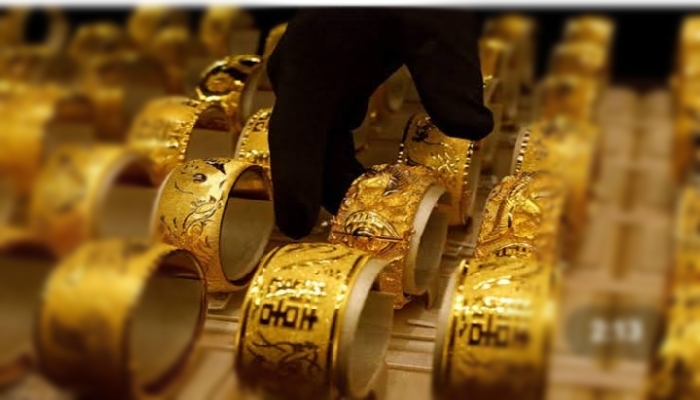
New Delhi, Jul 30: India's gold demand in 2020 is expected to fall to the lowest level in 26 years with domestic bullion prices hitting a record high and as falling disposable incomes could curtail retail purchases, the World Gold Council (WGC) said on Thursday.

Lower demand by the world's second-biggest bullion consumer could limit a rally in global prices, which hit a record high earlier this month, although it could also reduce India's trade deficit and support the ailing rupee.

"Fast rising gold prices could act as headwinds," said Somasundaram PR, the managing director of WGC's Indian operations.

Local gold futures have jumped 35% so far this year after rising a quarter in 2019.

India's gold consumption in the first half of 2020 plunged 56% on-year to 165.6 tonnes. Meanwhile, the coronavirus-triggered lockdown also slashed demand by 70% in the June quarter to 63.7 tonnes, the lowest in more than a decade, the WGC said in a report published on Thursday.

Millions of Indians have lost their jobs or taken a pay cut after the country imposed a lockdown on its 1.3 billion people to curb the spread of the virus that has infected more than 1.5 million Indians.

Consumption is generally high during the June quarter due to weddings and key festivals such as Akshaya Tritiya, but lockdown restrictions kept shoppers indoors this year.

The weak demand in the first half could drag down India's gold consumption in 2020 to the lowest since 1994, when demand stood at 415 tonnes, Somasundaram said, adding that it is still difficult to provide an estimate for full-year demand as the coronavirus crisis is still unfolding.

"Indian demand has previously jumped as much as 300 tonnes in a quarter. Latent demand could come out in the second half," Somasundaram said.

Comments

Add new comment

  • Coastaldigest.com reserves the right to delete or block any comments.
  • Coastaldigset.com is not responsible for its readers’ comments.
  • Comments that are abusive, incendiary or irrelevant are strictly prohibited.
  • Please use a genuine email ID and provide your name to avoid reject.
News Network
June 20,2020

New Delhi, Jun 20: With the highest single-day increase of 14,516 COVID-19 cases reported in the last 24 hours, India's coronavirus count stood at 3,95,048 on Saturday.

The death toll has gone up to 12,948 in the country with 375 persons succumbing to the infection.

According to the Union Ministry of Health and Family Welfare, the total number of cases includes 1,68,269 active cases, 2,13,831 cured/discharged/migrated and 12,948 deaths.

Maharashtra with 1,24,331 cases continues to be the worst-affected state in the country with 55,665 active cases while 62,773 patients have been cured and discharged in the state so far. The death toll due to COVID-19 stands at 5,893 in the state.

The number of confirmed cases in Tamil Nadu also crossed the 50 thousand mark on Saturday and reached 54,449.

The national capital is the third-worst affected by the infection in the country with the count reaching 53,116 today.

Comments

Add new comment

  • Coastaldigest.com reserves the right to delete or block any comments.
  • Coastaldigset.com is not responsible for its readers’ comments.
  • Comments that are abusive, incendiary or irrelevant are strictly prohibited.
  • Please use a genuine email ID and provide your name to avoid reject.
News Network
May 15,2020

New Delhi, May 15: A group of doctors from the AIIMS, Raipur has recommended restrictions on the use of mobile phones in healthcare institutions amid the COVID-19 pandemic, warning that such devices can be a potential carrier of the virus and lead to infection among healthcare workers.

In a commentary published in the BMJ Global Health journal, the doctors stated that mobile phone surfaces are a peculiar 'high-risk' surface, which can directly come in contact with the face or mouth, even if hands are properly washed and one study indicates that some healthcare workers use phones every 15 minutes to two hours.

Though there have been many significant guidelines from various health organisations like the WHO and CDC focusing on prevention and control of disease, the commentary highlighted "there is no mention of or focus on mobile phones in these guidelines, including the WHO infection control and prevention guidelines, which recommends the use of handwashing".

In healthcare facilities, phones are used to communicate with other health care workers, look up recent medical guidelines, research drug interactions, understand adverse events and side effects, conduct telemedicine appointments and track patients among others, stated the document.

The document has been authored by Dr Vineet Kumar Pathak, Dr Sunil Kumar Panigrahi, Dr M Mohan Kumar, Dr Utsav Raj and Dr Karpaga Priya P from the Department of Community and Family Medicine.

"In their tendency to come in direct contact with the face, nose or eyes in healthcare settings, mobile phones are perhaps second only to masks, caps or goggles," the authors said.

"However, they are neither disposable nor washable like these other three, thus warranting disinfection. Mobile phones can effectively negate hand hygiene... There is growing evidence that mobile phones are a potential vector for pathogenic organisms," they said.

It is the need of the hour to address proper hygienic use of mobile phones in healthcare settings. In a study in India, almost 100 per cent of health workers of a tertiary care hospital used mobile phones in the hospital, but only 10 per cent of them had at any time wiped their mobile phones clean, the commentary published on April 22 said.

"The safest thing to do is to consider your phone as an extension of your hand, so remember you are transferring whatever is on your phone to your hand," Dr Pathak said.

Amidst the ongoing pandemic, two biggest mobile phone companies have uploaded their user support guidelines, saying that 70 pc isopropyl alcohol or Clorox Disinfecting Wipes can be used to gently wipe the exterior surface of phones in switched-off mode.

However, in doing so, the use of bleach or entry of moisture through any of the openings must be avoided, and any harsh chemical may damage the oleophobic screen, leading to damage in the touch screen sensitivity of the phone, the article stated.

Mobile phones are one of the most highly touched surfaces according to the Centers for Disease Control and Prevention (CDC), along with counters, tabletops, doorknobs, bathroom fixtures, toilets, keyboards, tablets and bedside tables.

The doctors recommended restriction on mobile phone usage in healthcare settings like hospital wards, ICUs and operation theatres, while advocating the use of headphones to prevent contact with the face while talking.

There should be no sharing of mobile phones, headphones or headsets of any kind. In addition, where available, the use of interdepartmental intercom facility may be promoted.

"Although hand hygiene and mobile phone use by a person are not mutually exclusive, it is high time to acknowledge the potential role of mobile phones in disease transmission cascade and to take evidence-based appropriate actions. This is especially important, given the ongoing COVID-19 pandemic," the authors said.

They said it is necessary for government agencies and the WHO to generate public awareness and to formulate suitable information, education and communication material on mobile phone hygiene, especially in healthcare settings.

AIIMS, New Delhi, Resident Doctors' Association (RDA) General Secretary, Dr Srinivas Rajkumar T said even outside health care settings, people should pay special attention to the usage of mobile phones as they carry them to all places.

"Phone and computer peripherals like keyboard, mouse, etc. should be covered with transparent plastic covers which can be cleaned without interfering with their function. Cleaning hands by soap or alcohol-based hand sanitizer before and after contact with phone and between contact with other surfaces can decrease the risk of potential transmission.

"Using a handsfree headset, dedicated operator/assistant per ward handling the communication via common line in hospitals while on duty can enable communication without compromising safety," Dr Srinivas said.


Comments

Add new comment

  • Coastaldigest.com reserves the right to delete or block any comments.
  • Coastaldigset.com is not responsible for its readers’ comments.
  • Comments that are abusive, incendiary or irrelevant are strictly prohibited.
  • Please use a genuine email ID and provide your name to avoid reject.