Yogi govt to act against madrasas, where national anthem wasn't sung

Agencies
August 16, 2017

Lucknow, Aug 16: The Uttar Pradesh government is contemplating stern action against 'madrasas' (Islamic Seminaries), where the national anthem was not sung during the Independence Day celebrations on Tuesday in defiance of its directives.

According to the sources here on Tuesday, the government has taken a strong view of the reports that national anthem had not been sung at many 'madrasas', especially those owing allegiance to the Barelvi school of Islamic thought.

''We have received complaints from various quarters that national anthem was not sung at several madrasas,'' said a senior official of the education department here.

The education department would also conduct a probe into the complaints, he said.

''We have asked the complainants to furnish proof in support of their allegation,'' the official said adding that stern action would be taken against the erring madrasas.

Sources said that Tricolour was unfurled at the madrasas but the students did not sing the national anthem despite being made mandatory by the Yogi Adityanath government.

Reports said that instead of the national anthem, the students of the 'madrasas' sang 'sare Jahan seAchha Hindostan Hamara', penned by the famous Urdu poet Mohammed Iqbal.

The managers of these madrasas also did not conduct video recording of the I-Day celebrations, which had also been made mandatory by the state government.

The managers defended their decision not to sing national anthem saying that some of the lines in it were not in accordance with the tenets of Islam.

The clerics owing allegiance to the Barelvi sect had earlier made it clear that neither National Anthem nor ‘Vande Mataram’ would be sung in the ‘Madarsas’ affiliated with them.

The state government had, in a circular issued to all the 'madrasas', directed them to unfurl the Tricolour followed by the recital of the national anthem and national song. The government also directed the ‘madarsas’ to conduct videography of the entire program and submit the video and pictures to the concerned government official.

Comments

Hot & Fair
 - 
Thursday, 17 Aug 2017

He in imposing his thought by force. The constitution does not allow anyone to force to do so (to sing).

The meanings in those songs are against islamic teachings which is contracdicting Oneness of God.

Islam forbids to worship the concept of  multiple God. This type of worship is UNFORGIVABLE BIGGEST SIN.


Unfortunately Hindus also say 1God but worshipping crores of Gods, which does not make any sense.

Islam condemns such imposition on Muslims by any one,  whoever tries to impose his own ideas.

Muslims will not allow anyone to force them to follow their faiths. They will not succeed in doing it.  If trying to impose they have to PAY DEARLY.


Add new comment

  • Coastaldigest.com reserves the right to delete or block any comments.
  • Coastaldigset.com is not responsible for its readers’ comments.
  • Comments that are abusive, incendiary or irrelevant are strictly prohibited.
  • Please use a genuine email ID and provide your name to avoid reject.
News Network
June 18,2020

New Delhi, Jun 18: India on Wednesday took strong exception to China claiming sovereignty over the Galwan Valley in eastern Ladakh, saying its "exaggerated and untenable claims" are contrary to the understanding reached on the issue between the two sides.

Ministry of External Affairs Spokesperson Anurag Srivastava's response came after China claimed that the Galwan Valley in eastern Ladakh is a part of its territory.

"As we have conveyed earlier today, External Affairs Minister and the State Councillor and Foreign Minister of China had a phone conversation on recent developments in Ladakh," Srivastava said late Wednesday night.

"Both sides have agreed that the overall situation should be handled in a responsible manner and that the understandings reached between Senior Commanders on 6th June should be implemented sincerely. Making exaggerated and untenable claims is contrary to this understanding," he said.

Earlier on Wednesday, India delivered a strong message to China that the "unprecedented" incident in the Galwan Valley will have a "serious impact" on the bilateral relationship and held the "pre-meditated" action by Chinese army directly responsible for the violence that left 20 Indian Army personnel dead.

In a telephonic conversation, External Affairs Minister Jaishankar conveyed to his Chinese counterpart Wang Wi India's protest in the "strongest terms" and said the Chinese side should reassess its actions and take corrective steps, the Ministry of External Affairs said.

The Chinese Foreign Ministry, in a statement, said the two sides agreed to "cool down the situation on the ground as soon as possible", and maintain peace and tranquillity in the border area in accordance with the agreement reached so far between the two countries.

The clash in Galwan Valley on Monday night is the biggest confrontation between the two militaries after their 1967 clashes in Nathu La in 1967 when India lost around 80 soldiers while over 300 Chinese army personnel were killed.

The India-China border dispute covers the 3,488-km-long LAC. China claims Arunachal Pradesh as part of southern Tibet, while India contests it.

Prior to the clashes, both sides have been asserting that pending the final resolution of the boundary issue, it is necessary to maintain peace and tranquillity in the border areas.

Comments

Add new comment

  • Coastaldigest.com reserves the right to delete or block any comments.
  • Coastaldigset.com is not responsible for its readers’ comments.
  • Comments that are abusive, incendiary or irrelevant are strictly prohibited.
  • Please use a genuine email ID and provide your name to avoid reject.
News Network
January 13,2020

Jan 13: For the first time in years, the government of India’s Prime Minister Narendra Modi is playing defense. Protests have sprung up across the country against an amendment to India’s laws — which came into effect on Friday — that makes it easier for members of some religions to become citizens of India. The government claims this is simply an attempt to protect religious minorities in the Muslim-majority countries that border India; but protesters see it as the first step toward a formal repudiation of India’s constitutionally guaranteed secularism — and one that must be resisted.

Modi was re-elected prime minister last year with an enhanced majority; his hold over the country’s politics is absolute. The formal opposition is weak, discredited and disorganized. Yet, somehow, the anti-Citizenship Act protests have taken hold. No political party is behind them; they are generally arranged by student unions, neighborhood associations and the like.

Yet this aspect of their character is precisely what will worry Modi and his right-hand man, Home Minister Amit Shah. They know how to mock and delegitimize opposition parties with ruthless efficiency. Yet creating a narrative that paints large, flag-waving crowds as traitors is not quite that easy.

For that is how these protests look: large groups of young people, many carrying witty signs and the national flag. They meet and read the preamble to India’s Constitution, into which the promise of secularism was written in the 1970’s.

They carry photographs of the Constitution’s drafter, the Columbia University-trained economist and lawyer B. R. Ambedkar. These are not the mobs the government wanted. They hoped for angry Muslims rampaging through the streets of India’s cities, whom they could point to and say: “See? We must protect you from them.” But, in spite of sometimes brutal repression, the protests have largely been nonviolent.

One, in Shaheen Bagh in a Muslim-dominated sector of New Delhi, began simply as a set of local women in a square, armed with hot tea and blankets against the chill Delhi winter. It has now become the focal point of a very different sort of resistance than what the government expected. Nothing could cure the delusions of India’s Hindu middle class, trained to see India’s Muslims as dangerous threats, as effectively as a group of otherwise clearly apolitical women sipping sweet tea and sharing their fears and food with anyone who will listen.

Modi was re-elected less than a year ago; what could have changed in India since then? Not much, I suspect, in most places that voted for him and his party — particularly the vast rural hinterland of northern India. But urban India was also possibly never quite as content as electoral results suggested. India’s growth dipped below 5% in recent quarters; demand has crashed, and uncertainty about the future is widespread. Worse, the government’s response to the protests was clearly ill-judged. University campuses were attacked, in one case by the police and later by masked men almost certainly connected to the ruling party.

Protesters were harassed and detained with little cause. The courts seemed uninterested. And, slowly, anger began to grow on social media — not just on Twitter, but also on Instagram, previously the preserve of pretty bowls of salad. Instagram is the one social medium over which Modi’s party does not have a stranglehold; and it is where these protests, with their photogenic signs and flags, have found a natural home. As a result, people across urban India who would never previously have gone to a demonstration or a political rally have been slowly politicized.

India is, in fact, becoming more like a normal democracy. “Normal,” that is, for the 2020’s. Liberal democracies across the world are politically divided, often between more liberal urban centers and coasts, and angrier, “left-behind” hinterlands. Modi’s political secret was that he was that rare populist who could unite both the hopeful cities and the resentful countryside. Yet this once magic formula seems to have become ineffective. Five of India’s six largest cities are not ruled by Modi’s Bharatiya Janata Party in any case — the financial hub of Mumbai changed hands recently. The BJP has set its sights on winning state elections in Delhi in a few weeks. Which way the capital’s voters will go is uncertain. But that itself is revealing — last year, Modi swept all seven parliamentary seats in Delhi.

In the end, the Citizenship Amendment Act is now law, the BJP might manage to win Delhi, and the protests might die down as the days get unmanageably hot and state repression increases. But urban India has put Modi on notice. His days of being India’s unifier are over: From now on, like all the other populists, he will have to keep one eye on the streets of his country’s cities.


Comments

Add new comment

  • Coastaldigest.com reserves the right to delete or block any comments.
  • Coastaldigset.com is not responsible for its readers’ comments.
  • Comments that are abusive, incendiary or irrelevant are strictly prohibited.
  • Please use a genuine email ID and provide your name to avoid reject.
News Network
August 8,2020

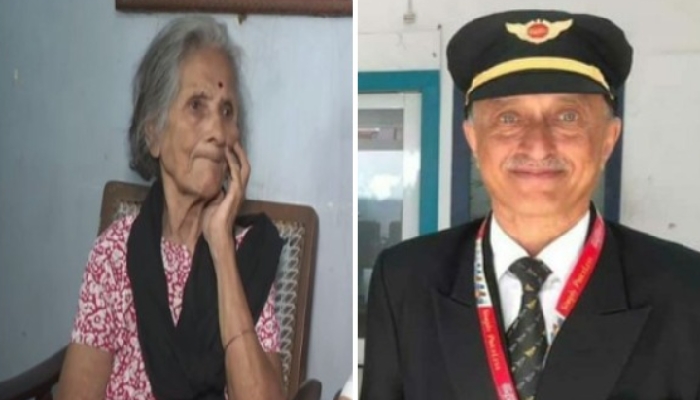
Nagpur, Aug 8: "He was a great son and always the first one to help others in need. He sacrificed his life for the country," said Neela Sathe, the mother of late captain DV Sathe, who was flying the Air India flight that crash-landed at Kozhikode airport on Friday, claiming 18 lives.

Indian Army Retired Colonel Vasant Sathe and his wife Neela lost both their sons in line of duty. The couple is originally from Nagpur, Maharashtra.

Speaking to news agency, Neela broke into tears and said, "He was a great son and always the first one to help others in need. 

His teachers still appreciate him. During the Ahmedabad floods, he saved the children of the soldiers by lifting them in his arms. I wish God would have called us instead of him."

"Both our children sacrificed their lives for the country," she added.

Remembering DV Sathe's childhood, Neela talked about every that moment when he made his parents proud.

Neela told with great pride that Captain DV Sathe had received the Sword of Honor and had also won eight medals in the Air Force.

Neela last talked to DV Sathe over phone call a few days ago during which captain told her mother not to go out of the house amid COVID-19 crisis as if something happens to her, he won't be able to bear that.

Vasant, captain's father retired as a colonel after serving in the Army for 30 years, following the footsteps of their father, both his sons joined too the Army.

Their elder son Vikas, was in the Army, and at the age of 22, he was martyred in an accident in Ferozepur in 1981. Their younger son Deepak (DV Sathe), who served as a pilot in Air India after serving in the Indian Air Force, died in the plane crash on Friday.

An Air India Express plane carrying 190 passengers including 10 infants skidded while landing at Karipur Airport in Kozhikode on Friday evening.

Comments

Add new comment

  • Coastaldigest.com reserves the right to delete or block any comments.
  • Coastaldigset.com is not responsible for its readers’ comments.
  • Comments that are abusive, incendiary or irrelevant are strictly prohibited.
  • Please use a genuine email ID and provide your name to avoid reject.