


Gujarat HC rejects Zakia Jafri's plea against SIT's clean chit to Modi

Agencies
October 5, 2017

Ahmedabad, Oct 5: The Gujarat High Court today rejected Zakia Jafri's plea challenging a lower court order upholding SIT's clean chit to then chief minister Narendra Modi and others on allegations of larger conspiracy in connection with the 2002 post-Godhra riots.

The high court, however, allowed Zakia to approach higher forums for further investigation in the case.

Zakia, the wife of slain former MP Ehsan Jafri, and activist Teesta Setalvad's NGO Citizen for Justice and Peace had moved the criminal review petition against a magistrate's order upholding the clean chit given by the special investigation team (SIT) to Modi and others regarding the allegations of a "larger criminal conspiracy" behind the riots.

The petition demanded that Modi and 59 others -- including senior police officers and bureaucrats -- be made accused for allegedly being part of a conspiracy which facilitated the riots.

It had also sought the high court's direction for a fresh investigation into the matter.

Ehsan Jafri, a Congress leader, was among 68 people who were killed at the Gulberg Society here when a mob attacked it on February 28, 2002, a day after the Godhra train burning incident which set off riots in the state.

The SIT's closure report, filed on February 8, 2012, gave a clean chit to Modi and others.

In December 2013, the metropolitan magistrate's court here rejected Jafri's petition against the report, after which she moved the high court in 2014.

Comments

Althaf
 - 
Thursday, 5 Oct 2017

When the judges belong to sangh parivar then how can we expect justice?? 

Add new comment

  • Coastaldigest.com reserves the right to delete or block any comments.
  • Coastaldigset.com is not responsible for its readers’ comments.
  • Comments that are abusive, incendiary or irrelevant are strictly prohibited.
  • Please use a genuine email ID and provide your name to avoid reject.
Agencies
May 26,2020

New Delhi, May 26: The in-fighting among the residents of housing societies over feeding of stray dogs is nowhere near ending, with yet another attack on a pregnant Russian woman again in the national capital region this time in Noida.

The Russian woman residing in a condominium in Noida's Sector 71 was allegedly attacked by two men for feeding foundling canines inside the complex.

"We have initiated an inquiry and a case has been registered against the men for voluntarily causing hurt and criminal intimidation," Amit Kumar Singh, Station House Officer of Phase 3 police station told IANS.

The police said that the victim is married to an Indian man and they live in that society.

The issue was raked up on social media by one of the residents of the society. Her post had even solicited a response and help from the Noida Police Commissioner.

Kaveri Rana Bharadwaj wrote, "Mob led by Vikas Sharma, and Mr. Chauhan beat up a pregnant woman in Jagriti Apartment, Sector 71 Noida. Request you to immediately arrest these men and provide security to the scared woman!"

When contacted, a member of the Resident Welfare Association (RWA) of the society said that the allegations levied by her are false and that he, along with a handful of other people, had only asked her not to feed the dogs.

Vikas Sharma divulged, "The woman was called at the society gate by the members of the RWA. When she was asked not to feed the street dogs, she became aggressive, started fighting with the residents of the society and even pushed a 70-year-old woman. The complaint that she registered against us is false. We did not even touch her."

He added that there are 70-80 street dogs in the society who have lately become extremely aggressive. "The lady was asked not to feed them as people feared stepping out of their houses and getting bitten."

In another incident on Tuesday, a Greater Noida man beat up a Chinese woman for allegedly fostering a stray dog which bit his canine.

Greater Noida District Commissioner of Police Rajesh Kumar Singh told IANS that the man named Amar Pratap Singh of ATS Paradiso misbehaved with the woman after his dog was bit by another dog who she used to feed every day.

The incident happened in the wee hours of the day when the accused took his dog out for a walk. "After his dog was bitten, in a fit of rage, he misbehaved with the Chinese woman." A Non-Cognizable Report (NCR) has been registered and no arrests have been made so far, the police said.

Comments

Add new comment

  • Coastaldigest.com reserves the right to delete or block any comments.
  • Coastaldigset.com is not responsible for its readers’ comments.
  • Comments that are abusive, incendiary or irrelevant are strictly prohibited.
  • Please use a genuine email ID and provide your name to avoid reject.
Agencies
July 30,2020

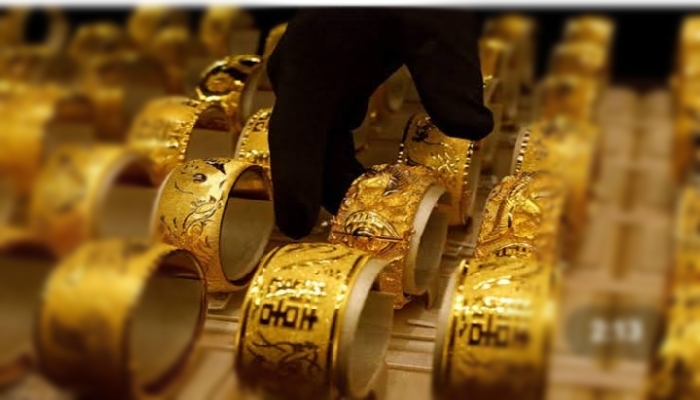
New Delhi, Jul 30: India's gold demand in 2020 is expected to fall to the lowest level in 26 years with domestic bullion prices hitting a record high and as falling disposable incomes could curtail retail purchases, the World Gold Council (WGC) said on Thursday.

Lower demand by the world's second-biggest bullion consumer could limit a rally in global prices, which hit a record high earlier this month, although it could also reduce India's trade deficit and support the ailing rupee.

"Fast rising gold prices could act as headwinds," said Somasundaram PR, the managing director of WGC's Indian operations.

Local gold futures have jumped 35% so far this year after rising a quarter in 2019.

India's gold consumption in the first half of 2020 plunged 56% on-year to 165.6 tonnes. Meanwhile, the coronavirus-triggered lockdown also slashed demand by 70% in the June quarter to 63.7 tonnes, the lowest in more than a decade, the WGC said in a report published on Thursday.

Millions of Indians have lost their jobs or taken a pay cut after the country imposed a lockdown on its 1.3 billion people to curb the spread of the virus that has infected more than 1.5 million Indians.

Consumption is generally high during the June quarter due to weddings and key festivals such as Akshaya Tritiya, but lockdown restrictions kept shoppers indoors this year.

The weak demand in the first half could drag down India's gold consumption in 2020 to the lowest since 1994, when demand stood at 415 tonnes, Somasundaram said, adding that it is still difficult to provide an estimate for full-year demand as the coronavirus crisis is still unfolding.

"Indian demand has previously jumped as much as 300 tonnes in a quarter. Latent demand could come out in the second half," Somasundaram said.

Comments

Add new comment

  • Coastaldigest.com reserves the right to delete or block any comments.
  • Coastaldigset.com is not responsible for its readers’ comments.
  • Comments that are abusive, incendiary or irrelevant are strictly prohibited.
  • Please use a genuine email ID and provide your name to avoid reject.
Agencies
May 21,2020

Eminent river engineer and former professor of civil engineering at IIT in the Banaras Hindu University (BHU) Prof. U.K. Choudhary has said that the judicious use of river technology can help resolve the Coronavirus crisis as well as the plight of Ganga river.

Choudhary, who is also founder of Ganga Research Centre at IIT (BHU), said: "The Ganga water contains a significantly higher proportion of bacteriophages - a kind of virus that kill bacteria. Our ancient scriptures like Vedas, Puranas and Upanishads say that Ganga jal is medicinal water. Scientists later found that Ganga water has bacteriophages capable of killing pathogens."

Explaining further, he said, "Let us analyze the source of bacteriophages. If we take three rivers of Himalayan origin having sources at different heights -the Ganga (Gomukh), Yamuna (Yamunotri) and the Sone river, we find the colours of waters are different. The whitish colour of Ganga water, greenish colour of Yamuna water and the brownish colour of Sone water is also indicative. As Gomukh is the highest among the three, its water comes from lowest depth of aquifer as compared to Yamunotri and Sone river," he explained.

Thus, the quality of river water is proportional to height of origin point. This defines the genetic character of Ganga water. The balanced flow of this water in entire length of the Ganga defines the medicinal property of Ganga water," he stated.

Prof Chaudhary said that the bacteriophages in the Ganga can curb the spread of coronavirus through soil, water and air.
He suggested that the idea is to preserve the medicinal value of Ganga water and to use it to fight Corona. He said that this can be done by opening the gates of all the dams and barrages in a way that the discharge through each is similar to the water at Gomukh. In this way, the concentration of bacteriophage will be enhanced in Ganga water making it more effective against pathogens.

"With increasing diffusion of bacteriophages in water and soil, the spread of Coronavirus will be impacted and reduced. This methodology and technique can also help maintain the quality of Ganga water later when the problem of Corona ends," he said.

Comments

Add new comment

  • Coastaldigest.com reserves the right to delete or block any comments.
  • Coastaldigset.com is not responsible for its readers’ comments.
  • Comments that are abusive, incendiary or irrelevant are strictly prohibited.
  • Please use a genuine email ID and provide your name to avoid reject.