Taj Mahal belongs to Lord Shiva; rename it as Taj Mandir: BJP MP Vinay Katiyar

News Network
October 24, 2017

Ayodhya, Oct 24: The controversy over Taj Mahal refuses to die down any time soon, and now BJP leader Vinay Katiyar has asked the authorities to rename the iconic historic monument located in Agra as Taj Mandir.

The firebrand BJP MP on Tuesday said that nothing is wrong in it as the whole compound belongs to Lord Shiva.

It was a temple earlier, Katiyar added.

Katiyar made these remarks after some activists belonging to Hindu outfit Hindu Yuva Vahini were arrested for reciting 'Shiv Chalisa' inside the premises of the Taj Mahal on Monday.

The incident triggered tension and the activists were formally arrested by the local police. They were released only after they submitted a written apology.

The MP had last week claimed that the Mughal mausoleum was actually a Hindu temple.

Kaityar said that the Taj Mahal was known as 'Tejo Mahal' and had a shivling, which was later removed from the monument.

“It was Tejo Mahal, Lord Shiva’s temple, where Shahjahan buried his wife and turned it into a mausoleum,” Katiyar, who had been in the forefront of the Ram temple movement of Ayodhya, had claimed.

“It was constructed by Hindu kings, the rooms and carvings there prove that it was a Hindu monument… it has also been termed as one by historian PN Oak,” he claimed.

The firebrand BJP lawmaker said like a Shiva temple, water drips from the ceiling in the Taj Mahal, which is not a case in any mausoleum anywhere and is like that only on a Shivlinga.

“It was a famous monument and was grabbed by Shahjahan,” Katiyar said.

“It was our temple but was made a mausoleum as they had more power. But it is a grand monument and national heritage… people come to see it and so it should be kept safe and secure,” he said.

Last week, Uttar Pradesh Chief Minister Yogi Adityanath gave a clear snub to his BJP colleague and MLA Sangeet Som for stirring the Taj Mahal controversy, stating that "it does not matter who built it and for what reason; it was built by blood and sweat of Indian labourers".

Som had courted controversy on Sunday, stating that the iconic Taj Mahal was built by traitors and hence, cannot be included in the Indian history.

Taj Mahal was also recently omitted from the UP Government's Tourism Booklet. However, the Taj Mahal later found a place of pride in the 2018 calender brought out by the Uttar Pradesh government.

Comments

khasai Khane
 - 
Wednesday, 25 Oct 2017

Tajmahal is a diversion topic. Look for what they're actually trying to hide with this.


BTW, 


Tajmahal is a grave of Mumtaz, wife of Shajahan. Islamic ruling is to level the graves to the ground/one hand span, regardless of who the person is - a prophet, a sahaba, or any modern day jaahil. Now this Tajmahal is basically a grave, a dargah, and a dargah not of auliya allah!

We should take this suggestion of BJP/Sangh parivar seriously and appreciate it coz any such durga/dargah should be demolished, or would have been demolished if the Sahaba were ruling us.!


If you think this is only an attack on Muslim history, well this shouldn't have been a part of a true islamic empire in the first place. Secondly, we show our strength in knowledge, education, serving the people etc.. 


Thafseer
 - 
Wednesday, 25 Oct 2017

This is just their propaganda to divert people mind from Shah Company issue to Taj Mahal. This is their plan people can forget Shah Company scam, But We don’t.

Imran
 - 
Wednesday, 25 Oct 2017

who is Vinay katiyar ? he is  just  barking but nothing will happen.

Indian
 - 
Tuesday, 24 Oct 2017

There it comes!!!!


shameless Fellows


shareef
 - 
Tuesday, 24 Oct 2017

This belongs to his father.

Junc rotten egg of BJP circus.

Add new comment

  • Coastaldigest.com reserves the right to delete or block any comments.
  • Coastaldigset.com is not responsible for its readers’ comments.
  • Comments that are abusive, incendiary or irrelevant are strictly prohibited.
  • Please use a genuine email ID and provide your name to avoid reject.
Agencies
June 30,2020

United Nations, Jun 30: India accounts for 45.8 million of the world's 142.6 million "missing females" over the past 50 years, a report by the United Nations said on Tuesday, noting that the country along with China form the majority of such women globally.

The State of World Population 2020 report released on Tuesday by the United Nations Population Fund (UNFPA), the world organisation's sexual and reproductive health agency, said that the number of missing women has more than doubled over the past 50 years - from 61 million in 1970 to a cumulative 142.6 million in 2020.

Of this global figure, India accounted for 45.8 million missing females as of 2020 and China accounted for 72.3 million.

Missing females are women missing from the population at given dates due to the cumulative effect of postnatal and prenatal sex selection in the past, the agency said.

Between 2013 and 2017, about 460,000 girls in India were missing' at birth each year. According to one analysis, gender-biased sex selection accounts for about two-thirds of the total missing girls, and post-birth female mortality accounts for about one-third, the report said.

Citing data by experts, it said that China and India together account for about 90-95 per cent of the estimated 1.2 million to 1.5 million missing female births annually worldwide due to gender-biased (prenatal) sex selection.

The two countries also account for the largest number of births each year, it said.

The report cites data by Alkema, Leontine and others, 2014 National, Regional, and Global Sex Ratios of Infant, Child, and under-5 Mortality and Identification of Countries with Outlying Ratios: A Systematic Assessment' from The Lancet Global Health.

According to their analysis, India has the highest rate of excess female deaths, 13.5 per 1,000 female births, which suggests that an estimated one in nine deaths of females below the age of 5 may be attributed to postnatal sex selection.

The report notes that governments have also taken action to address the root causes of sex selection. India and Vietnam have included campaigns that target gender stereotypes to change attitudes and open the door to new norms and behaviours.

They spotlight the importance of daughters and highlight how girls and women have changed society for the better. Campaigns that celebrate women's progress and achievements may resonate more where daughter-only families can be shown to be prospering, it said.

The report said that successful education-related interventions include the provision of cash transfers conditional on school attendance; or support to cover the costs of school fees, books, uniforms and supplies, taking note of successful cash-transfer initiatives such as Apni Beti Apna Dhan' in India.

It said that preference for a male child manifested in sex selection has led to dramatic, long-term shifts in the proportions of women and men in the populations of some countries.

This demographic imbalance will have an inevitable impact on marriage systems. In countries where marriage is nearly universal, many men may need to delay or forego marriage because they will be unable to find a spouse, the report said.

This so-called "marriage squeeze", where prospective grooms outnumber prospective brides, has already been observed in some countries and affects mostly young men from lower economic strata.

"At the same time, the marriage squeeze could result in more child marriages, the report said citing experts.

Some studies suggest that the marriage squeeze will peak in India in 2055. The proportion of men who are still single at the age of 50 is forecast to rise after 2050 in India to 10 per cent, it said.

The UN report said that every year, millions of girls globally are subjected to practices that harm them physically and emotionally, with the full knowledge and consent of their families, friends and communities.

At least 19 harmful practices, ranging from breast ironing to virginity testing, are considered human rights violations, according to the UNFPA report, which focuses on the three most prevalent ones: female genital mutilation, child marriage, and extreme bias against daughters in favour of sons.

Harmful practices against girls cause profound and lasting trauma, robbing them of their right to reach their full potential, says UNFPA Executive Director Dr. Natalia Kanem.

This year, an estimated 4.1 million girls will be subjected to female genital mutilation. Today, 33,000 girls under age 18 will be forced into marriages, usually to much older men and an extreme preference for sons over daughters in some countries has fuelled gender-biased sex selection or extreme neglect that leads to their death as children, resulting in the 140 million missing females.

The report said that ending child marriage and female genital mutilation worldwide is possible within 10 years by scaling up efforts to keep girls in school longer and teach them life skills and to engage men and boys in social change.

Investments totalling USD 3.4 billion a year through 2030 would end these two harmful practices and end the suffering of an estimated 84 million girls, it said.

A recent analysis revealed that if services and programmes remain shuttered for six months due to the COVID-19 pandemic, an additional 13 million girls may be forced into marriage and 2 million more girls may be subjected to female genital mutilation between now and 2030.

The pandemic both makes our job harder and more urgent as so many more girls are now at risk, Kanem said.


Comments

Add new comment

  • Coastaldigest.com reserves the right to delete or block any comments.
  • Coastaldigset.com is not responsible for its readers’ comments.
  • Comments that are abusive, incendiary or irrelevant are strictly prohibited.
  • Please use a genuine email ID and provide your name to avoid reject.
Agencies
July 30,2020

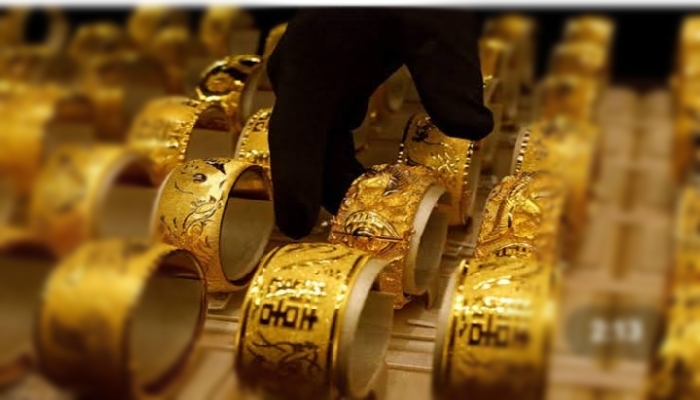
New Delhi, Jul 30: India's gold demand in 2020 is expected to fall to the lowest level in 26 years with domestic bullion prices hitting a record high and as falling disposable incomes could curtail retail purchases, the World Gold Council (WGC) said on Thursday.

Lower demand by the world's second-biggest bullion consumer could limit a rally in global prices, which hit a record high earlier this month, although it could also reduce India's trade deficit and support the ailing rupee.

"Fast rising gold prices could act as headwinds," said Somasundaram PR, the managing director of WGC's Indian operations.

Local gold futures have jumped 35% so far this year after rising a quarter in 2019.

India's gold consumption in the first half of 2020 plunged 56% on-year to 165.6 tonnes. Meanwhile, the coronavirus-triggered lockdown also slashed demand by 70% in the June quarter to 63.7 tonnes, the lowest in more than a decade, the WGC said in a report published on Thursday.

Millions of Indians have lost their jobs or taken a pay cut after the country imposed a lockdown on its 1.3 billion people to curb the spread of the virus that has infected more than 1.5 million Indians.

Consumption is generally high during the June quarter due to weddings and key festivals such as Akshaya Tritiya, but lockdown restrictions kept shoppers indoors this year.

The weak demand in the first half could drag down India's gold consumption in 2020 to the lowest since 1994, when demand stood at 415 tonnes, Somasundaram said, adding that it is still difficult to provide an estimate for full-year demand as the coronavirus crisis is still unfolding.

"Indian demand has previously jumped as much as 300 tonnes in a quarter. Latent demand could come out in the second half," Somasundaram said.

Comments

Add new comment

  • Coastaldigest.com reserves the right to delete or block any comments.
  • Coastaldigset.com is not responsible for its readers’ comments.
  • Comments that are abusive, incendiary or irrelevant are strictly prohibited.
  • Please use a genuine email ID and provide your name to avoid reject.
News Network
June 4,2020

New Delhi, Jun 4: India's Defence Secretary Ajay Kumar tested positive for COVID-19 on Wednesday, following which the defence ministry carried out a massive contact-tracing exercise, official sources said.

Kumar's condition is stable and he is currently under home-quarantine, they said.

At least 35 officials working at the ministry's headquarters in South Block in the Raisina Hills have been sent on home quarantine after reports of Kumar testing positive for the infection emerged on Wednesday morning.

There was no official comment on Kumar's health condition. The defence ministry spokesperson refused to comment on the issue.

It is learnt that Defence Minister Rajnath Singh did not attend office as part of a precautionary measure.

The offices of the defence minister, the defence secretary, the Army Chief and the Navy Chief are on the first floor of the South Block.

The sources said all laid down protocols on contact-tracing and quarantining of people are being scrupulously followed.

Comments

Add new comment

  • Coastaldigest.com reserves the right to delete or block any comments.
  • Coastaldigset.com is not responsible for its readers’ comments.
  • Comments that are abusive, incendiary or irrelevant are strictly prohibited.
  • Please use a genuine email ID and provide your name to avoid reject.