Those who talk about Hindu Terror are anti-nationals: Yogi

News Network
November 6, 2017

Lucknow, Nov 6: Recent remarks by a few artistes against Hindutva extremism and terrorism seem to have sparked a political storm as now Uttar Pradesh chief minister Yogi Adityanath has jumped into the discourse and branded individuals talking about intolerance and Hindu terrorism as anti-nationals.

“Those who market their intellectual wisdom for making money talk about intolerance in the country and those who talk about Hindu terrorism are surviving on hand-out of foreigners. They are anti-nationals and people of this country will never forgive them,” a news paper quoted him while he participated in a debate in Lucknow on Sunday.

“Sanatan dharm is the only religion in India. Rest are followers of different cults and beliefs. There is nothing called secularism in the country. It is the biggest lie in Independent India. Everyone has a right to follow their own cult or religion but above them is the nation and one cannot betray nation by raising their heads in the name of intolerance and Hindu terrorism,” said Yogi Adityanth.

Comments

Abu Muhammad
 - 
Monday, 6 Nov 2017

Whoever do not respect/recognise Indian Constitution, Indian Secularism is definitely an ANTI-NATIONAL. There is no ambiguity at all.

Abu Muhammad
 - 
Monday, 6 Nov 2017

Whoever do not respect/recognise Indian Constitution, Indian Secularism is definitely an ANTI-NATIONAL. There is no ambiguity at all.

Add new comment

  • Coastaldigest.com reserves the right to delete or block any comments.
  • Coastaldigset.com is not responsible for its readers’ comments.
  • Comments that are abusive, incendiary or irrelevant are strictly prohibited.
  • Please use a genuine email ID and provide your name to avoid reject.
News Network
March 16,2020

Mar 16: An investigation into Coffee Day Enterprises Ltd., initiated by its board after the death of founder V.G. Siddhartha, is likely to conclude that at least Rs 2,000 crore is missing from its accounts, according to people familiar with the matter.

The months-long probe following the suicide of Siddhartha in July examined the financial transactions of India’s largest coffee chain and its dealings with dozens of private companies owned by the entrepreneur. The draft report, running more than a hundred pages, points to thousands of rupees that have gone missing, said the people, asking not to be named because the details aren’t public. It also details hundreds of transactions between the founder’s listed and personal businesses that were not conducted at arm’s length, they said.

Though the report is in its final stages, the precise details could change before its release, expected as early as this week, the people said. The missing funds could total more than Rs 2500 crore, one person said.

“The investigation report is still a work in progress, and not finalized,” a spokesman for the company said. “The board of directors and the company are unaware of its content at this point of time. Hence it would be premature to speculate on the investigation findings.”

The priority for management and Siddhartha’s family “is to keep the business running in a challenging environment and meet all stakeholder commitments, including 30,000 jobs associated with the group,” the spokesman added.

The disappearance of the 59-year-old founder last year stunned India’s business community. He had last been seen telling his driver he was going for an evening walk along a bridge in southern India; his body was found by local fishermen two days later. A letter delivered to Coffee Day’s board and employees, which appeared to be signed by Siddhartha, described massive debts and complained of pressure from lenders and tax authorities. It claimed he bore sole responsibility for the company’s financial transactions.

The probe began about a month later when the company brought in Ashok Kumar Malhotra, a retired senior official from India’s federal enforcement agency, to investigate. A senior lawyer practicing in India’s top court is assisting, the company said in a regulatory filing at the time.

The publicly traded Coffee Day was supposed to be India’s answer to Starbucks Corp. More than 1,500 of its Café Coffee Day outlets blanketed cities and highways, with affordable options for the country’s aspiring middle classes. The chain’s tagline: “A lot can happen over coffee.”

But the empire has been battered since the founder’s death. Its shares plummeted about 90% and its market value dropped to about $80 million. Trading was suspended in February.

India’s regulators are tracking the situation and may use the company’s final report as part of a deeper dive into its internal affairs, the people said. Coffee Day showed about Rs 2400 crore in cash and cash equivalents on its balance sheet as of March 2019, the most recent figures the company has issued.

After the death of Siddhartha however, the company faced a severe liquidity crunch and had “zero cash in the bank,” according to one of the people. It struggled with day-to-day expenses and paying salaries has been a strain, the person said.

The draft report details personal guarantees by Siddhartha for loans taken by Coffee Day, and his unsecured loans at high interest rates from local money lenders, the people said. It also probes Coffee Day’s defaults to coffee growers and other vendors, they said.

A related issue is that coffee estates owned by Siddhartha and several employees had been used as collateral for bank loans. The report found that valuations for properties were inflated to get the loans, one person said.

Investigators have examined several theories about what happened to the company’s money, including whether Coffee Day was manipulating its finances to show cash and profit and whether Siddhartha was taking cash out of the listed company to pay off a large investor to whom he had guaranteed a return, the person said. From the filings of his listed and private companies, the entrepreneur’s loans had totaled more than Rs 10,000 crore, and he had been squeezed by borrowing to repay interest on earlier loans, the person said.

In the letter purportedly from Siddhartha, the entrepreneur said he had tried his best but failed as an entrepreneur. “I am solely responsible for all mistakes,” the letter read. “Every financial transaction is my responsibility. My team, auditors and senior management are totally unaware of all my transactions. The law should hold me and only me accountable, as I have withheld this information from everybody including my family.”

As the report nears release, Coffee Day is finalizing a deal with Blackstone Group Inc. for real estate assets. A large tranche of the payment is due in about a week, one person said.

Coffee Day said it is working to reduce its debt load by divesting non-core enterprises.

“The aim is to save employment and preserve this iconic Indian brand,” the spokesman said.

Comments

Add new comment

  • Coastaldigest.com reserves the right to delete or block any comments.
  • Coastaldigset.com is not responsible for its readers’ comments.
  • Comments that are abusive, incendiary or irrelevant are strictly prohibited.
  • Please use a genuine email ID and provide your name to avoid reject.
coastaldigest.com news network
July 27,2020

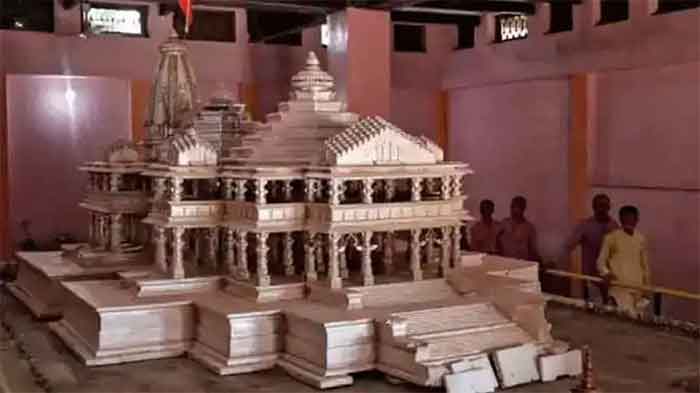
Ayodhya, Jul 27: With days to go for the August 5 "bhoomi pujan" ceremony of the Ram temple in Ayodhya, the mosques adjacent to the demolished Babri Masjid premises are spreading the message of a peaceful coexistence of Hindus and Muslims.

There are eight mosques and two mausoleums located close to the 70-acre Babri Masjid premises mandated by the Supreme Court for a temple of Sri Ram.

Azaan and namaaz are offered in the mosques and the annual "Urs" is held at the mausoleums without any objection from the local Hindus.

The eight mosques located near the upcoming Ram temple premises are Masjid Dorahikuan, Masjid Mali Mandir ke Bagal, Masjid Kaziyana Achchan ke Bagal, Masjid Imambara, Masjid Riyaz ke Bagal, Masjid Badar Paanjitola, Masjid Madaar Shah and Masjid Tehribazar Jogiyon ki.

The two mausoleums are Khanqaahe Muzaffariya and Imambara.

"It is the greatness of Ayodhya that the mosques surrounding the Ram temple are giving a strong message of communal harmony to the rest of the world," Haji Asad Ahmad, the corporator of the Ram Kot ward, said. The Ram temple area is situated in Ahmad's ward.

"Muslims take out the 'juloos' of Barawafaat that goes through the periphery of Ram Janmabhoomi. All religious functions and rituals of Muslims are respected by their fellow citizens," the corporator said.

Asked for a comment on the presence of mosques near the upcoming Ram temple premises, the chief priest of the temple, Acharya Satyendra Das, said, "We had a dispute only with the structure that was connected to the name of (Mughal emperor) Babur. We have never had any issue with the other mosques and mausoleums in Ayodhya. This is a town where Hindus and Muslims live in peace."

"Muslims offer namaaz, we perform our puja. The mosques around us will strengthen Ayodhya's communal harmony and peace will prevail," he added.

Both Hindus and Muslims have accepted the Supreme Court verdict over Ram Janmabhoomi, Das said, adding, "We have no dispute with each other."

Sayyad Akhlaq Ahmad Latifi, the "sajjada nasheen" and "pir" of the 500-year-old Khanqaahe Muzaffariya mausoleum, said Muslims in Ayodhya are performing all religious practices freely.

"We offer prayers five times a day in the mosque at Khanqaah and hold the yearly 'Urs'," he added.

"What a scene would it be -- a grand Ram temple surrounded by small mosques and mausoleums and everyone offering prayers according to their beliefs. That will be representative of the true culture of India," Mahant Yugal Kishore Sharan Shastri, the chief priest of the Sarayu Kunj temple adjacent to the Ram Janmabhoomi premises, said.

Reacting to the presence of mosques and mausoleums near the Ram Janmabhoomi premises, Triloki Nath Pandey, the decree holder of the land as the "first friend of Ram Lalla" as mandated by the Supreme Court, said, "We do not have any objection to either those mosques or any other mosques. We will not trigger a dispute regarding any structure, Ayodhya must live in peace and communal harmony."

Mahant Raju Das, the priest of the Hanumangarhi temple, said, "The presence of the mosques tells the story of Ayodhya's communal harmony. A Ram mandir will be built and there will be no objection to the mosques or religious practices of Muslims."

Comments

Add new comment

  • Coastaldigest.com reserves the right to delete or block any comments.
  • Coastaldigset.com is not responsible for its readers’ comments.
  • Comments that are abusive, incendiary or irrelevant are strictly prohibited.
  • Please use a genuine email ID and provide your name to avoid reject.
Agencies
March 14,2020

New Delhi, Mar 14: The central government on Saturday declared COVID-19 as a national 'disaster' and announced to provide ex-gratia relief of Rs 4 lakh to the families who died of the virus.

The Ministry of Home Affairs in a letter to states and union territories stated: "Keeping in view that spread of COVID-19 virus in India the declaration of it as pandemic by World Health Organisation, the Central government has decided to treat it as a notified disaster and announced to provide assistance under State Disaster Response Fund (SDRF)."

The Centre said that cost of hospitalization for managing COVID-19 patient would be at the rates fixed by the state governments. The state government can use SDRF found for providing temporary accommodation, food, clothing and medical care for people affected and sheltered in quarantine camps, other than home quarantine, or for cluster containment operations.

The state executive committee will decide the number of quarantine camps, their duration and the number of persons in such camps. "Period can be extended by the committee beyond the prescribed limit subject to condition that expenditure on this account should not exceed 25 percent of SDRF allocation for the year," the Ministry of Home Affairs notification stated.

The cost of consumables for sample collection would be taken from the funds which can be sued to support for checking, screening and contact tracing.

Further, funds can also be withdrawn for setting up additional testing laboratories within the government set up. The state has also to bear the cost of personal protection equipment for healthcare, municipal, police and fire authorities. Further SDRF money can also be used for procuring thermal scanners and ventilation and other necessary equipment.

Comments

Add new comment

  • Coastaldigest.com reserves the right to delete or block any comments.
  • Coastaldigset.com is not responsible for its readers’ comments.
  • Comments that are abusive, incendiary or irrelevant are strictly prohibited.
  • Please use a genuine email ID and provide your name to avoid reject.