Udupi: Ayodhya, beef, Hindutva to be core issues of VHP’s 3-day Dharma Sansad

coastaldigest.com news network
November 23, 2017

Udupi, Nov 23: The coastal city of Udupi is all set to host three-day Dharma Sansad, an international level conference of Vishwa Hindu Parishad (VHP) from November 24 to 26. It would be inaugurated by Shivakumar Mahaswami of Siddaganga Mutt, Tumakuru, and Veerasomeshwara Rajadesikendra Shivacharya Swami, Ramabhapuri, at the Royal Gardens, here at 10 a.m. on Friday.

According to Pejawar mutt seer Sri Vishwesha Theertha Swami religious and traditional issues would be focused in the three-day conference. Core issues are Ayodhya, the ban on cattle slaughter and the conservation of Hinduism.

The seer said that as the issue of Ram Mandir is in court, there could be a possibility of the Central government and the Uttar Pradesh government, which is run by BJP, passing a Bill in favour of the temple.

He said, although, the country is in the third position in the export of beef, there is a need to stop cattle slaughter completely, adding that the demand to ban cattle slaughter is not new. It exists since many decades. Even during the Morarji Desai government in 1977, Vinobha Bhave demanded a ban on cow slaughter and held an indefinite hunger strike. However, there are no fruitful results for any of the protests carried out in the past.

He said the seer said that the occasion would be purely the conglomeration of Hindu saints. The seers belonging to Sikh, Buddhist, Jains and Lingayats communities will be attending the conference. Vishwa Hindu Parishat always considers all the 'dharmas' introduced by the seers in the country as a fraction of Hinduism. It is a wonderful occasion to celebrate Hinduism and protect it from the evils of untouchability and conversion, he added.

He said Uttar Pradesh Chief Minister Yogi Adityanath will attend the conference. As many as 2,000 saints have been approached. The seer of Siddaganga Mutt Dr Shivakumar Swami will attend the inaugural ceremony.

Meanwhile, the Dharma Samsad organising committee has informed that Union minister Uma Bharati and Sadhvi Niranjana would be participating, while Sri Sri Ravishankar and Manthralaya seer Sri Shubhudendra Theertha will participate from the Day One. VHP leader Praveen Togadia, Ashok Chowgle, Raghav Reddy, Sampath Roy will participate. The 12th Dharma Samsad will be inaugurated on November 24.

The demand to make temple administration free of government control and also problems like population explosion will be discussed. In the 1969 Dharma Samsad, the main agenda was of harmony among various sects and castes in Hinduism. A podium will also be named after Narayana Guru, the seer from backward class.

Hindu Vaibhav, an expo on the various cultural and traditional facts of Hinduism, will be displayed and inaugurated on November 23.

Comments

P
 - 
Thursday, 23 Nov 2017

The real issue.The hindu women are left behind because of umatched kundli. There is no job for hindu youngsters. Basic needs are high price. Only upper caste will make speech and lower caste will fight with the public where uppercaste portray the innocents as enemies of the religion. It is so easy for upper caste to make play when people listen to them and ask them to attack the innocent , who doesnt use the god given intellect and logic. The more these people fall into their trap the more they can make U play on their orders... Wake up public go with right and look for the basics in the life for job, food and other useful requirement.


Althaf
 - 
Thursday, 23 Nov 2017

In the name of Ram Mandir crores of rupees have swollen by VHP leaders. Please discuss this issue also in your program.

abdullah
 - 
Thursday, 23 Nov 2017

No development at all. Only they need to loot our India.


Add new comment

  • Coastaldigest.com reserves the right to delete or block any comments.
  • Coastaldigset.com is not responsible for its readers’ comments.
  • Comments that are abusive, incendiary or irrelevant are strictly prohibited.
  • Please use a genuine email ID and provide your name to avoid reject.
News Network
May 31,2020

Bengaluru, May 31: Karnataka government on Sunday issued guidelines, which will come into force from June 1 and continue till June 30.

According to the new guidelines, religious places and places of worship for the public, hotels, restaurants and other hospitality services, and shopping malls will be permitted to open from June 8.

Union Ministry of Home Affairs (MHA) on Saturday announced new guidelines for phased re-opening of "all activities outside containment zones for the next one month beginning June 1.

In an order, Karnataka government said that phased re-opening of areas outside the containment zones, all activities will be permitted, except the following, which will be allowed, with the stipulation of following Standard Operating Procedures (SOPs) to be prescribed by the Ministry of Health and Family Welfare (MoHFW).

PHASE I

The activities will be allowed with effect from June 8 at religious places/places of worship for public, hotels, restaurants, and other hospitality services, shopping malls.

PHASE II

For the opening of schools, colleges, educational/training/ coaching institutions, the State government will hold consultations at the institution level with parents and other stakeholders. Based on the feedback, a decision on the re-opening of these institutions will be taken in the month of July.

PHASE III

Based on the assessment of the situation, dates for re-starting activities will be decided -- international air travel of passengers, except as permitted by MHA, Metro Rail, cinema halls, gymnasiums, swimming pools, entertainment parks, theatres, bars and auditoriums, assembly halls and similar places, social/political/spoils/ entertainment/academic/cultural/religious functions and other large congregations.

The State government said that it will follow the MHA's national directives for the coronavirus management, including compulsory use of face masks and social distancing norms.

"Face coverings are compulsory in public places, workplaces and during transport. Individuals must maintain a minimum distance of 6 feet in public places. Shops will ensure physical distancing among customers and will not allow more than 5 persons at a time," read the directives issued by the MHA.

In the order, State government has said that night curfew will continue to remain in force on the movement of individuals for all non-essential activities outside containment zones till June 30.

Lockdown limited to Containment Zones

* Lockdown shall continue to remain in force in the Containment Zones till June 30.

* Containment Zones will be demarcated by the district authorities after taking into consideration the guidelines of Department of Health and Family Welfare, Government of Karnataka.

* In the Containment Zones, only essential activities shall be allowed. There shall be strict perimeter control to ensure that there is no movement of people in or out of these zones, except for medical emergencies and for maintaining a supply of essential goods and services.

* In the Containment Zones, there shall be intensive contact tracing, house-to-house surveillance, and other clinical interventions, as required. Guidelines of the Department of Health and Family Welfare, Government of Karnataka shall be taken into consideration for the above purpose.

* District authorities/BBMP authorities may also identify buffer zones outside the Containment Zones, where new cases are more likely to occur. Within the buffer zones, restrictions, as considered necessary, may be put in place by the District authorities.

Movement of persons, goods

* There shall be no restriction on inter-State and intra-State movement of persons and goods. No separate permission/approval/e-permit will be required for such movements.

* Based on reasons of public health and assessment of the prevalence of Covid-19 in various States separate orders will be issued by the Health and Family Welfare Department regarding the inter-state movement of persons to Karnataka.

* Movement by passenger trains and Shramik special trains; domestic passenger air travel; movement of Indian Nationals stranded outside the country and of specified persons to travel abroad; evacuation of foreign nationals; and sign-on and sign-off of Indian seafarers will continue to be regulated as per SOPs issued.

The State Government in its guidelines advised persons above 65 years of age, persons with co-morbidities, pregnant women, and children below the age of 10 years, to stay at home, except for essential and health purposes.

Guidelines for Aarogya Setu App

* Aarogya Setu enables early identification of potential risk of infection, and thus acts as a shield for individuals and the community.

* With a view to ensuring safety in offices and workplaces, employers on best effort basis should ensure that Aarogya Sew is installed by all employees having compatible mobile phones.

* District authorities and BBMP Authorities may advise individuals to install the Aarogya Setu application on compatible mobile phones and regularly update their health status on the app. This will facilitate timely provision of medical attention to those individuals who are at risk.

Union Ministry of Home Affairs (MHA) on Saturday said that lockdown will continue in containment zones till June 30 and only essential activities will be allowed in those areas.

"Lockdown shall continue to remain in force in the containment zones till 30 June. In the containment zones, only essential activities shall be allowed. There shall be strict perimeter control to ensure that there is no movement of people in or out of these zones, except for medical emergencies and for maintaining the supply of essential goods and services. In the containment zones, there shall be intensive contact tracing, house-to-house surveillance, and other clinical interventions, as required," MHA said in its guidelines for #Unlock1.

It also issued new guidelines for phased re-opening of "all activities outside containment zones for the next one month beginning June 1."


Comments

Add new comment

  • Coastaldigest.com reserves the right to delete or block any comments.
  • Coastaldigset.com is not responsible for its readers’ comments.
  • Comments that are abusive, incendiary or irrelevant are strictly prohibited.
  • Please use a genuine email ID and provide your name to avoid reject.
coastaldigest.com news network
August 2,2020

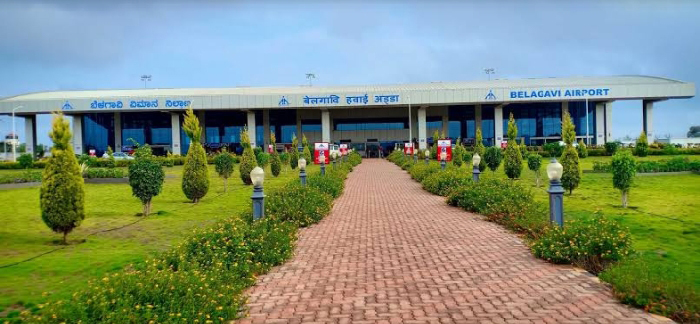
Bengaluru, Aug 2: All the seven Airports in Karnataka have seen poor traffic even after the restoration of domestic flight services post covid-19 lockdown. Interestingly, Mangaluru International Airport, the second biggest in the state, has slipped to third position in number of number of passengers and flights. 

Of all the seven airports in State-- Bengaluru, Mangaluru, Hubballi, Belagavi, Mysuru, Kalaburagi and Vijaynagara (Hosapete)-- it was the Sambra (Belagavi) airport which saw the highest number of passengers and flights after Bengaluru. 

According to Airports Authority of India report released on their website recently, the Sambra airport outperformed the Managluru international airport in June. 

As many 10,224 passengers travelled to or from Belagavi airport in June, whereas Mangaluru airport saw a footfall of only 8,608 passengers including 3,726 international and 4,882 domestic passengers. Belagavi airport handled 391 flights whereas Mangaluru airport handled 190 flights.

Even the Bengaluru international airport saw a decline in the number of passengers and flights in June. Only 3.69 lakh domestic and 10,654 international passengers arrived or departed from Kempegowda International Airport, Bengaluru in June as against 27.59 lakh total passengers in June 2019. 

Between April-June 2020 the Bengaluru airport saw only 4.54 lakh total passengers (domestic and international) as against 84.11 lakh total passenger during the same period last year. The number of flights to and from Bengaluru also saw a huge dip in June with only 731 international (2,582 in June 2019) and 4290 domestic (16,216 in June 2019) flights.

Though the Mysuru domestic airport handled a higher number of flights compared to last June, the number of passengers either arriving or departing saw a decline. Last year June 4,775 passengers travelled in 96 flights, whereas in June 2020 the airport handled 3,158 passengers and 330 flights.

Hubballi airport saw the least number of passengers or flights among the seven airports in Karnataka in June. It saw only 55 passengers either arriving or departing from the city's airport in 14 flights in the month of June. In the same month last year, Hubballi airport, which was third busiest before the pandemic, had facilitated 45,973 passengers and handled 604 flights.

Since April 2020 to June, the Hubballi airport has handled only 18 flights (as against 1,958 during the same period last year) and 122 passengers (1,50,416 between April-June 2019).

Comments

Add new comment

  • Coastaldigest.com reserves the right to delete or block any comments.
  • Coastaldigset.com is not responsible for its readers’ comments.
  • Comments that are abusive, incendiary or irrelevant are strictly prohibited.
  • Please use a genuine email ID and provide your name to avoid reject.
Ram Puniyani
January 14,2020

In the beginning of January 2020 two very disturbing events were reported from Pakistan. One was the attack on Nankana Sahib, the holy shrine where Sant Guru Nanak was born. While one report said that the place has been desecrated, the other stated that it was a fight between two Muslim groups. Prime Minister of Pakistan Imran Khan condemned the incident and the main accused Imran Chisti was arrested. The matter related to abduction and conversion of a Sikh girl Jagjit Kaur, daughter of Pathi (One who reads Holy Guru Granth Sahib in Gurudwara) of the Gurudwara. In another incident one Sikh youth Ravinder Singh, who was out on shopping for his marriage, was shot dead in Peshawar.

While these condemnable attacks took place on the Sikh minority in Pakistan, BJP was quick enough to jump to state that it is events like this which justify the Citizenship Amendment Act (CAA). Incidentally CAA is the Act which is discriminatory and relates to citizenship with Religion, which is not as per the norms of Indian constitution. There are constant debates and propaganda that population of Hindus has come down drastically in Pakistan and Bangla Desh. Amit Shah, the Home minister stated that in Pakistan the population of Hindus has come down from 23% at the time of partition to 3.7% at present. And in Bangla Desh it has come down from 22% to present 8%.

While not denying the fact that the religious minorities are getting a rough deal in both these countries, the figures which are presented are totally off the mark. These figures don’t take into consideration the painful migrations, which took place at the time of partition and formation of Bangla Desh later. Pakistan census figures tell a different tale. Their first census was held in 1951. As per this census the overall percentage of Non Muslim in Pakistan (East and West together) was 14.2%, of this in West Pakistan (Now Pakistan) it was 3.44 and in Eat Pakistan it was 23.2. In the census held in Pakistan 1998 it became 3.72%. As far as Bangla Desh is concerned the share of Non Muslims has gone down from 23.2 (1951) to 9.6% in 2011.

The largest minority of Pakistan is Ahmadis, (https://minorityrights.org/country/pakistan/) who are close to 4 Million and are not recognised as Muslims in Pakistan. In Bangla Desh the major migrations of Hindus from Bangla Desh took place in the backdrop of Pakistan army’s atrocities in the then East Pakistan.

As far as UN data on refugees in India it went up by 17% between 2016-2019 and largest numbers were from Tibet and Sri Lanka.  (https://www.un.org/en/development/desa/population/migration/publication…)

The state of minorities is in a way the index of strength of democracy. Most South Asian Countries have not been able to sustain democratic values properly. In Pakistan, the Republic began with Jinnah’s classic speech where secularism was to be central credo of Pakistan. This 11th August speech was in a way what the state policy should be, as per which people of all faiths are free to practice their religion. Soon enough the logic of ‘Two Nation theory” and formation of Pakistan, a separate state for Muslim took over. Army stepped in and dictatorship was to reign there intermittently. Democratic elements were suppressed and the worst came when Zia Ul Haq Islamized the state in collusion with Maulanas. The army was already a strong presence in Pakistan. The popular formulation for Pakistan was that it is ruled by three A’s, Army, America and Allah (Mullah).

Bangla Desh had a different trajectory. Its very formation was a nail in the coffin of ‘two nation theory’; that religion can be the basis of a state. Bangla Desh did begin as a secular republic but communal forces and secular forces kept struggling for their dominance and in 1988 it also became Islamic republic. At another level Myanmar, in the grip of military dictatorship, with democratic elements trying to retain their presence is also seeing a hard battle. Democracy or not, the army and Sanghas (Buddhist Sang has) are strong, in Myanmar as well. The most visible result is persecution of Rohingya Muslims.

Similar phenomenon is dominating in Sri Lanka also where Budhhist Sanghas and army have strong say in the political affairs, irrespective of which Government is ruling. Muslim and Christian minorities are a big victim there, while Tamils (Hindus, Christians etc.) suffered the biggest damage as ethnic and religious minorities. India had the best prospect of democracy, pluralism and secularism flourishing here. The secular constitution, the outcome of India’s freedom struggle, the leadership of Gandhi and Nehru did ensure the rooting of democracy and secularism in a strong way.

India so far had best democratic credentials amongst all the south Asian countries. Despite that though the population of minorities rose mainly due to poverty and illiteracy, their overall marginalisation was order of the day, it went on worsening with the rise of communal forces, with communal forces resorting to identity issues, and indulging in propaganda against minorities.

While other South Asian countries should had followed India to focus more on infrastructure and political culture of liberalism, today India is following the footsteps of Pakistan. The retrograde march of India is most visible in the issues which have dominated the political space during last few years. Issues like Ram Temple, Ghar Wapasi, Love Jihad, Beef-Cow are now finding their peak in CAA.

India’s reversal towards a polity with religion’s identity dominating the political scene was nicely presented by the late Pakistani poetess Fahmida Riaz in her poem, Tum bhi Hum Jaise Nikle (You also turned out to be like us). While trying to resist communal forces has been an arduous task, it is becoming more difficult by the day. This phenomenon has been variously called, Fundamentalism, Communalism or religious nationalism among others. Surely it has nothing to do with the religion as practiced by the great Saint and Sufi traditions of India; it resorts mainly to political mobilization by using religion as a tool.

Comments

Ashi
 - 
Tuesday, 14 Jan 2020

If Malaysia implement similar NRC/CAA, India and China are the loser.

Add new comment

  • Coastaldigest.com reserves the right to delete or block any comments.
  • Coastaldigset.com is not responsible for its readers’ comments.
  • Comments that are abusive, incendiary or irrelevant are strictly prohibited.
  • Please use a genuine email ID and provide your name to avoid reject.