Schoolgirl raped and murdered; cops on hunt for Deepak and gang

News Network
December 20, 2017

Vijayapura Dec 20: Tension reigned in Karnataka’s Vijayapura following the rape and murder of a school girl belonging to Dalit community.

Jurisdictional Adarsh Nagar police has registered a case against Deepak, who is said to be main accused along with five other persons, but the police is still looking for the accused.

Meanwhile Dalit leaders have demanded immediate arrest of the accused. They held a protest till late on Tuesday night by keeping the body of the girl at Ambedkar Circle of the city.  On Wednesday, the family placed the victim's corpse on the road at Ambedkar circle demanding justice for their daughter.

District in-charge Minister M.B. Patil who met the protesters and the family members promised to get Rs. 5 lakh compensation to the poor family. He said that he has directed the police not to show any laxity in the case and not to succumb to any pressure.

Srikant Pujari, president of Dalit Vidyarthi Parishat, has condemned the incident and demanded immediate arrest of the accused. He said Dalit unions were planning to call for a Vijayapura bandh on Saturday.

Comments

kamath
 - 
Thursday, 21 Dec 2017

see the name who raped Deepak! then why protest, no hungama….chalta hai.  


shahid
 - 
Wednesday, 20 Dec 2017

Govt job is ready for 5 culprits in delhi.... and shobha where are u i havent seen any tweet against this jihadis

Pulimunchi
 - 
Wednesday, 20 Dec 2017

Shobhakka where did you go now? At least post a tweet supporting the Sanghi activist Deepak.

Kumar
 - 
Wednesday, 20 Dec 2017

Indian laws are weak on rape punishments and there are many advocates who works for money

Mohan
 - 
Wednesday, 20 Dec 2017

Those rapists will be safe inside jail than out. And they may get VIP treatment. They will get free food, no work, free accomodation and everything 

Sukesh
 - 
Wednesday, 20 Dec 2017

Should hang the rapist in front of public

Add new comment

  • Coastaldigest.com reserves the right to delete or block any comments.
  • Coastaldigset.com is not responsible for its readers’ comments.
  • Comments that are abusive, incendiary or irrelevant are strictly prohibited.
  • Please use a genuine email ID and provide your name to avoid reject.
News Network
January 30,2020

Udupi, Jan 30: Fishermen in Udupi’s Malpe have netted ‘spanner crab’, a rare variety of deep sea crab, mostly found in Australia and Hawaiian coast.

Hundreds of onlookers were surprised to the see the catch when it was brought to Malpe harbour by the fisherman Prashanth Kunder and others on Tuesday evening.

Dr Shivakumar Haragi, Assistant Professor at Karnatak University, PG Centre Department of Marine Biology, Karwar identified this crab variety as ‘spanner crab’ and the scientific name of this crab is Ranina Ranina.

Ranina Ranina is mainly nocturnal as it remains active during night and is found buried in sand during the day .It is easily distinguished from other crab species in its habitat due to its red carapace and elongated midsection.

Resembling a frog in its shape, this crab species is found mainly in Africa, Hawaiian coast and also in the Great Barrier Reef, located in the Coral Sea, off the coast of Queensland, Australia. Its lifetime is seven to nine years and each crab weighs around 400-900 grams.

Prashanth Kunder and his associates have also netted a rare fish variety called yellow-edged lyretail. Another unique variety fish netted by Prashanth is epinephelus flavocaeruleus.

Comments

Add new comment

  • Coastaldigest.com reserves the right to delete or block any comments.
  • Coastaldigset.com is not responsible for its readers’ comments.
  • Comments that are abusive, incendiary or irrelevant are strictly prohibited.
  • Please use a genuine email ID and provide your name to avoid reject.
News Network
July 28,2020

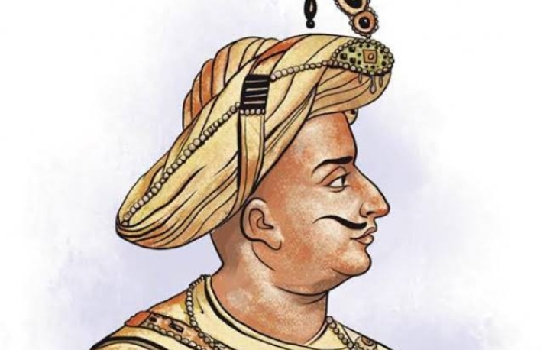
Bengaluru, Jul 28: After the Central Board of Secondary Education (CBSE) reduced the syllabi for Classes 9 to 12 due to COVID-19 pandemic, the Karnataka government has followed the suit. The Department of Public Instruction has omitted the chapters on legendary south Indian rulers Hyder Ali and Tipu Sultan from the textbooks of Class 7 in their attempt to reduce syllabus for state board schools by 30 per cent. 

The department, however, has decided to retain similar chapters on Tipu Sultan in 6th and 10th Classes, though the syllabus in text books for all classes from 1 to 10th has been trimmed. 

The trimmed textbooks uploaded on the website of the Department of State Education Research and Training (DSERT) by Karnataka state Textbook Society revealed removal of chapters on Tipu Sultan for the seventh grade.

Justifying the decision, officials said, "students study similar chapters in Class 6 and more in the 10th grade." Yet another senior official from the Text Book Society said, "Trimming does not mean we have removed half of the syllabus from textbooks. It is only keeping in mind the repetition we have condensed the chapters. In case students study about a particular dynasty in higher grades, then the same had been removed from lower grades."

A few months ago, there was an uproar over dropping of content on Tipu Sultan and MLAs from the ruling BJP also demanded the same and petitioned to the Chief Minister. Even an expert committee led by Prof Baraguru Ramachandrappa suggested to not drop any content on the historic figure. However, the department still decided to drop lessons from one of the classes while keeping the syllabus short for the next 120 active academic days.

Earlier this month, a controversy had erupted over the CBSE's decision to omit topics like federalism, secularism, citizenship, etc while reducing the syllabus for Classes 9 to 12. The education board had issued a detailed clarification later, stating that topics claimed to be dropped "are either being covered by the rationalised syllabus or in the Alternative Academic Calendar of NCERT".

"The rationalisation of syllabus up to 30 per cent has been undertaken by the Board for nearly 190 subjects of class 9 to 12 for the academic session 2020-21 as a one-time measure only. The objective is to reduce the exam stress of students due to the prevailing health emergency situation and prevent learning gaps," it said.

Last week, the Congress in Uttar Pradesh expressed its concern over 'deliberate and systematic' deletions of chapters related to the freedom struggle and the party's role in it from the Class 10-12 syllabi of the Secondary Education Board.

Comments

Add new comment

  • Coastaldigest.com reserves the right to delete or block any comments.
  • Coastaldigset.com is not responsible for its readers’ comments.
  • Comments that are abusive, incendiary or irrelevant are strictly prohibited.
  • Please use a genuine email ID and provide your name to avoid reject.
Agencies
May 8,2020

Washington D.C., May 8: The prime time for brain development in a child's life is the first year, where the infant spends most of the time asleep. It is the time when neural connections form and sensory memories are encoded.

However, when sleep is disrupted, as occurs more often among children with autism, brain development may be affected, too.

New research led by the University of Washington finds that sleep problems in a baby's first 12 months may not only precede an autism diagnosis but also may be associated with altered growth trajectory in a key part of the brain, the hippocampus.

The study, which was published in the American Journal of Psychiatry, researchers report that in a sample of more than 400 taken of 6- to 12-month-old infants, those who were later diagnosed with autism were more likely to have had difficulty falling asleep.

It also states that this sleep difficulty was associated with altered growth trajectories in the hippocampus.

"The hippocampus is critical for learning and memory, and changes in the size of the hippocampus have been associated with poor sleep in adults and older children.

As many as 80 per cent of the children with autism spectrum disorder have sleep problems," said Annette Estes, director of the UW Autism Center and senior author of the study.

"In our clinical experience, parents have a lot of concerns about their children's sleep, and in our work on early autism intervention, we observed that sleep problems were holding children and families back," added Estes, who is also a UW professor of speech and hearing sciences.

"It could be that altered sleep is part-and-parcel of autism for some children. One clue is that behavioural interventions to improve sleep don't work for all children with autism, even when their parents are doing everything just right. This suggests that there may be a biological component to sleep problems for some children with autism," said Estes.

To consider links among sleep, brain development, and autism, researchers at the IBIS Network looked at MRI scans of 432 infants, surveyed parents about sleep patterns, and measured cognitive functioning using a standardized assessment.

At the outset of the study, infants were classified according to their risk for developing autism: Those who were at higher risk of developing autism -- about two-thirds of the study sample -- had an older sibling who had already been diagnosed.

Infant siblings of children with autism have a 20 per cent chance of developing autism spectrum disorder -- a much higher risk than children in the general population.

In the current study, 127 of the 432 infants were identified as "low risk" at the time the MRI scans were taken because they had no family history of autism.

They later evaluated all the participants at 24 months of age to determine whether they had developed autism. Of the roughly 300 children originally considered "high familial risk," 71 were diagnosed with autism spectrum disorder at that age.

Problems with sleep were more common among the infants later diagnosed with an autism spectrum disorder, as were larger hippocampi. No other subcortical brain structures were affected, including the amygdala, which is responsible for certain emotions and aspects of memory, or the thalamus, a signal transmitter from the spinal cord to the cerebral cortex.

The authors note that while parents reported more sleep difficulties among infants who developed autism compared to those who did not, the differences were very subtle and only observed when looking at group averages across hundreds of infants.

Sleep patterns in the first years of life change rapidly as infants transition from sleeping around the clock to a more adult-like sleep/wake cycle. Until further research is completed, Estes said, it is not possible to interpret challenges with sleep as an early sign of increased risk for autism.


Comments

Add new comment

  • Coastaldigest.com reserves the right to delete or block any comments.
  • Coastaldigset.com is not responsible for its readers’ comments.
  • Comments that are abusive, incendiary or irrelevant are strictly prohibited.
  • Please use a genuine email ID and provide your name to avoid reject.