


Germany’s anti-Islam political party’s leader embraces Islam

News Network
January 25, 2018

In a curious development, a prominent leader of the Alternative for Germany (AfD), a political party known for its racist and islamophobic tendencies, has converted to Islam and resigned from his position with the party.

Arthur Wagner, a leading member of the far-right party in Germany's eastern German state of Brandenburg, stepped down for "personal reasons", a party spokesperson confirmed, according to state broadcaster Deutsche Welle.

Wagner, who has been a member of the party since 2015, refused to comment to Tagesspiegel, the daily newspaper that first broke the news of his conversion. "That's my private business," he told the daily.

On the party's Brandenburg state committee, Wagner's work focused on churches and faith communities, according to Deutsche Welle.

The AfD has campaigned against refugees and migrants and made history when it won 12.6 percent of the vote in federal elections in September 2017, entering the Bundestag for the first time.

The party became the third largest party in the Bundestag.

The news sparked derision on social media, with many Twitter users pointing to the irony of Wagner converting to Islam after being a high-ranking member of a party that has railed against the presence of Muslims in Germany.

Emily Dische-Becker said: "Creeping Sharia picks up speed as politician from Germany's islamophobic AfD converts to Islam." Mark Berry said: "I really don't understand Nazis."

Originally founded in 2013 as a Eurosceptic party, the AfD took the lead as the most aggressive anti-refugee voice in the country while nearly a million asylum seekers arrived in Germany in 2015.

In the party's first bill since its electoral success in September, the AfD proposed amending Germany's Residence Act by barring refugees from bringing their relatives from the war-ravaged countries they fled.

Earlier this month, Beatrix von Storch, the deputy leader of the AfD's parliamentary group, was blocked from Facebook and Twitter after publishing Islamophobic posts criticising police for posting Arabic-language updates on New Year's Eve.

She had written: "What the hell is happening in this country? Why is an official police site tweeting in Arabic? Do you think it is to appease the barbaric, gang-raping hordes of Muslim men?"

The party has also sought to ban the construction of mosques in Germany. 

In March 2016, the party's Bavaria branch published a policy statement calling for an end to the "construction and operation" of mosques in the region, Deutsche Welle reported at the time. 

In February of that year, then party leader Petry Frauke sparked outrage when she proclaimed that German border guards should "use fire arms if necessary" in order to prevent "illegal border crossings" by refugees and migrants. 

In April 2016, the AfD's Alexander Gauland proclaimed that Germany must remain "a Christian country" and "Islam is a foreign entity". 

The rise in anti-Muslim rhetoric has also coincided with a spike in violence against asylum seekers. The German interior ministry documented 3,533 attacks on refugees and their accommodations - nearly 10 a day - in 2016.

Comments

TomCat
 - 
Wednesday, 21 Feb 2018

Many men want to embrace Islam cause want to marry again, and can marry up to four wives. Criminality made legal. 

ABDUL AZIZ S.A
 - 
Thursday, 15 Feb 2018

Alhamdulillah


this is the example and truth of Islam , the more  someone hate Islam ,Islam will grow faster ,and people will understand the islam religion,

THINKERS
 - 
Thursday, 25 Jan 2018

Alhamdullillah... Thanks to Allah...

Many people try to demonize ISLAM without knowledge. When they learn ISLAM is the means of this life. They want to follow the religion of ONE GOD who is worthy of Worship... When we are honest in searching for God, Just says The one who put soul in me Please Guide me to TRUTH. Have trust and U will definetely SEE The truth and understand the world clearly.

Abu Muhammad
 - 
Thursday, 25 Jan 2018

For us Muslims this is neither new nor surprising news as we have example of Hazrat Umar (RA) who was a different man before (fierce enemy of Islam) and after (supreme leader of Islam) he revert to Islam.


Surah MUMTAHANA (60) Ayat (7) Allah says - ..Allah will establish Friendship between you and those whom Ye hold as enemies. For Allah has power (over all things); and Allah is oft-forgiving, most merciful".


Here is a great lesson for enemies of God and Islam

سيد
 - 
Thursday, 25 Jan 2018

الحمد لله...................

Add new comment

  • Coastaldigest.com reserves the right to delete or block any comments.
  • Coastaldigset.com is not responsible for its readers’ comments.
  • Comments that are abusive, incendiary or irrelevant are strictly prohibited.
  • Please use a genuine email ID and provide your name to avoid reject.
News Network
March 28,2020

London: Italy on Friday recorded the most daily deaths of any country since the start of the coronavirus pandemic and Spain had its deadliest day, as British Prime Minister Boris Johnson became the first major world leader to test positive.

Italy reported 969 new deaths, Spain 769 and France 299 as Europe reeled from a crisis that has put millions at risk around the world and threatened a global economic meltdown.

In other grim milestones, AFP tallies showed a total of 300,000 cases now recorded in Europe with more than 26,000 deaths worldwide, and the United States overtook China as the country with the most infections.

Italy showed infection rates continuing a downward trend and Spain said its rate of new infections appeared to be slowing, but other countries were bracing to feel the full impact of the virus's spread.

The World Health Organization's regional director for Africa warned the continent faced a "dramatic evolution" of the pandemic, as South Africa became the latest nation to start life under lockdown and reported its first COVID-19 deaths.

Johnson, whose country has seen more than 14,000 declared coronavirus cases and 759 deaths, said he had developed mild symptoms over the previous 24 hours and was self-isolating after testing positive.

Britain's Health Secretary Matt Hancock also tested positive with mild symptoms.

Europe has suffered the brunt of the coronavirus crisis in recent weeks, with millions across the continent on lockdown and the streets of Paris, Rome and Madrid eerily empty.

In France — where nearly 2,000 people have died -- the government announced it was extending its stay-at-home order until at least April 15. While severe, the 299 new deaths it recorded on Friday was lower than the 365 reported the previous day.

The death of a 16-year-old girl from the virus has particularly shaken France, and shattered the belief of many young people that they are immune.

The girl's mother Sabine told AFP that Julie "just had a cough" at first but deteriorated quickly. She died on Wednesday, less than a week after showing her first symptoms.

"It's unbearable," Sabine said. "We were supposed to have a normal life."

Focus was also turning to the United States, where the number of known infections jumped by 18,000 on Friday, reaching more than 97,000 -- higher than both China and Italy. The US also recorded 345 deaths over the past 24 hours, with a total toll of 1,478.

In New York City, health workers are battling a surging toll of dead and infected at the US epicentre of the crisis, including an increasing number of younger patients.

"Now it's 50-year-olds, 40-year-olds, 30-year-olds," said one respiratory therapist at the Jewish Medical Center in Queens.

They "didn't listen about not going out or protecting themselves and washing their hands", he said.

- 'Afraid and lost' -

The coronavirus first emerged in China late last year before spreading globally, with more than half a million declared cases in 183 countries and territories.

Over the last six days, as many new cases have been diagnosed around the world as in the previous 80 days.

Beijing managed to contain its spread with lockdowns and quarantines and its epicentre Wuhan is in the process of easing severe movement restrictions in place for two months.

Three billion people around the world have been told to stay indoors.

In a historic first, Pope Francis performed the rarely recited "Urbi et Orbi" blessing to an empty Saint Peter's Square.

"Thick darkness has gathered over our squares, our streets and our cities; it has taken over our lives, filling everything with a deafening silence and a distressing void, that stops everything as it passes by," he said.

"We find ourselves afraid and lost," he said, describing the coronavirus as a "tempest".

Health care systems even in the most developed nations are stretched to breaking point and medical workers have been having to make difficult choices.

"If I've got five patients and only one bed, I have to choose who gets it," Sara Chinchilla, a paediatrician at a hospital near Madrid, told AFP.

The WHO's chief Tedros Adhanom Ghebreyesus said the dire lack of protective gear for frontline health workers was one of the most pressing problems in the fight to prevent deaths.

"The chronic global shortage of personal protective equipment is now one of the most urgent threats to our collective ability to save lives," he told a virtual news conference in Geneva.

Lockdowns and other measures are wreaking havoc on the global economy, with fears of a downturn worse than the Great Depression of the 1930s.

"It is clear that we have entered a recession" that will be worse than in 2009 following the global financial crisis, International Monetary Fund chief Kristalina Georgieva said Friday.

Unprecedented stimulus measures have helped markets bounce back after a brutal month, but people around the world are bracing for economic hardship.

The United States reported that 3.3 million people applied for unemployment benefits last week -- by far the highest number ever recorded.

Retail workers in particular have suffered as many countries shutter non-essential business, while airlines and the global tourism industry have been dealt devastating blows.

The fashion industry was the latest hit on Friday, with Paris men's fashion week and haute couture shows cancelled along with Milan men's fashion week.

- Armies of volunteers -

The World Tourism Organization said Friday it expected tourist arrivals to fall by 20-30 percent this year, with losses of $300 billion-450 billion in international tourism receipts.

But there have been rays of hope in the midst of the crisis.

Armed groups in Cameroon, the Philippines and Yemen have moved in recent days to reduce violence after UN Secretary General Antonio Guterres issued an appeal for ceasefires.

And armies of volunteers have emerged in many countries to bring help to the needy, with food deliveries for the elderly, free taxi rides, accommodation for health workers, and even home-sewn face masks.

Comments

Add new comment

  • Coastaldigest.com reserves the right to delete or block any comments.
  • Coastaldigset.com is not responsible for its readers’ comments.
  • Comments that are abusive, incendiary or irrelevant are strictly prohibited.
  • Please use a genuine email ID and provide your name to avoid reject.
News Network
May 7,2020

United Nations, May 7: An average of 80,000 COVID-19 cases were reported each day in April to the World Health Organization, the top UN health agency has said, noting that South Asian nations like India and Bangladesh are seeing a spike in the infections while the numbers are declining in regions such as Western Europe.

WHO Director-General Tedros Adhanom Ghebreyesus said on Wednesday that countries must also be able to manage any risk of the disease being imported into their territories, and communities should be fully educated to adjust to what will be a "new norm".

He said as the countries press forward in the common fight against COVID-19, they should also lay the groundwork for resilient health systems globally.

"More than 3.5 million cases of COVID-19 and almost 250,000 deaths have now been reported to the WHO. Since the beginning of April, an average of around 80,000 new cases have been reported to the WHO every day," Ghebreyesus said in Geneva yesterday.

Asserting that the virus cases were not just numbers, he said: "every single case is a mother, a father, a son, a daughter, a brother, sister or friend".

He said while the numbers are declining in Western Europe, more cases are being reported every day from Eastern Europe, Africa, South-East Asia, the Eastern Mediterranean and the Americas. Even within regions and within countries, there are divergent trends, the agency added.

While some countries are reporting an increase in COVID-19 cases over time, many have seen caseloads rise because they have ramped up testing, the WHO official said.

"We've also seen in Europe and Western Europe a fundamental decrease in the number of cases, but we have seen an associated increase in the number of cases reported in places like the Russian Federation. Southeast, the Western Pacific areas are relatively on the downward trend like Korea and others, but then we do see in South Asia, in places like Bangladesh, in India, some trends towards increase.

"So it's very difficult to say that any particular region is improving or (not improving). There are individual countries within each region that are having difficulties getting on top of this disease and I am particularly concerned about those countries that have (an) ongoing humanitarian crisis," WHO's Executive Director Michael Ryan said.

The death toll due to COVID-19 in India rose to 1,783 while the number of cases climbed to 52,952 on Thursday, registering an increase of 89 deaths and 3,561 cases in the last 24 hours, the Union Health Ministry said.

The number of active COVID-19 cases stood at 35,902 while 15,266 people have recovered, it said.

Noting that while seeing an increase in the number of cases is not good in terms of transmission, WHO's Emerging Diseases and Zoonoses Unit head Maria Van Kerkhove said: "but I don't want to equate that with something (being) wrong".

"I want to equate that with countries are working very hard to increase their ability to find the virus, to find people with the virus, to have testing in place to identify who has COVID-19, and putting into place what they need to do to care for those patients," Kerkhove said.

With more countries considering easing restrictions implemented to curb the spread of the coronavirus, the WHO has again reminded the authorities of the need to maintain vigilance.

"The risk of returning to lockdown remains very real if countries do not manage the transition extremely carefully, and in a phased approach," Ghebreyesus said.

He urged countries to consider the UN agency's six criteria for lifting stay-at-home measures.

That advice includes ensuring surveillance is strong, cases are declining and transmission is controlled. Health systems also must be able to detect, isolate, test and treat cases, and to trace all contacts.

Additionally, the risk of outbreak in settings such as health facilities and nursing homes needs to be minimised, while schools, workplaces and other public locations should have preventive measures in place.

"The COVID-19 pandemic will eventually recede, but there can be no going back to business as usual. We cannot continue to rush to fund panic but let preparedness go by the wayside," he said.

He said the crisis has highlighted the importance of strong national health systems as the foundation of global health security: not only against pandemics but also against the multitude of health threats that people across the world face every day.

"If we learn anything from COVID-19, it must be that investing in health now will save lives later," Ghebreyesus said.

While the world currently spends around USD 7.5 trillion on health annually, the WHO believes the best investments are in promoting health and preventing disease.

"Prevention is not only better than cure, it's cheaper, and the smartest thing to do," he said.

The deadly coronavirus, which originated from the Chinese city of Wuhan in December last year, has infected over 3.7 million people and killed 263,831 people globally, according to a tally by Johns Hopkins University.

Comments

Add new comment

  • Coastaldigest.com reserves the right to delete or block any comments.
  • Coastaldigset.com is not responsible for its readers’ comments.
  • Comments that are abusive, incendiary or irrelevant are strictly prohibited.
  • Please use a genuine email ID and provide your name to avoid reject.
Agencies
July 29,2020

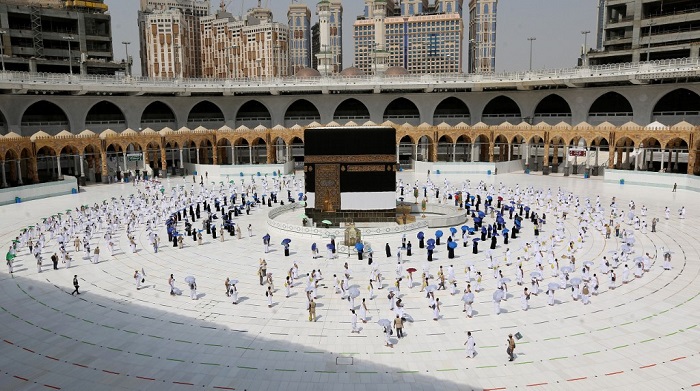
Dubai, Jul 29: Muslim pilgrims on Wednesday begin the annual Haj, downsized this year as the Saudi hosts strive to prevent a coronavirus outbreak during the five-day pilgrimage.

The Haj, one of the five pillars of Islam and a must for able-bodied Muslims at least once in their lifetime, is usually one of the world's largest religious gatherings.

But this year only up to 10,000 people already residing in the Kingdom will participate in the ritual, a tiny fraction of the 2.5 million pilgrims from around the world that attended last year.

"There are no security-related concerns in this pilgrimage, but (downsizing) is to protect pilgrims from the danger of the pandemic," said Khalid bin Qarar Al Harbi, Saudi Arabia's director of public security.

Pilgrims will be required to wear masks and observe social distancing during a series of religious rites that are completed over five days in the holy city of Makkah and its surroundings in western Saudi Arabia.

Those selected to take part in the Haj were subject to temperature checks and placed in quarantine as they began trickling into Makkah at the weekend.

State media showed health workers sanitising their luggage, and some pilgrims reported being given electronic wristbands to allow authorities to monitor their whereabouts.

Workers, clutching brooms and disinfectant, were seen cleaning the area around the Kaaba, the structure at the centre of the Grand Mosque draped in gold-embroidered cloth towards which Muslims around the world pray.

Haj authorities have cordoned off the Holy Kaaba this year, saying pilgrims will not be allowed to touch it, to limit the chances of infection.

They also reported setting up multiple health facilities, mobile clinics and ambulances to cater to the pilgrims.

Saudi authorities said only around 1,000 pilgrims residing in the Kingdom would be permitted for the Haj. Some 70 per cent of the pilgrims are foreigners residing in the Kingdom, while the rest will be Saudi citizens, authorities said.

All worshippers were required to be tested for coronavirus before arriving in the holy city of Makkah and will also have to quarantine after the pilgrimage as the number of cases in the Kingdom nears 270,000.

They were given elaborate amenity kits that include sterilised pebbles for a stoning ritual, disinfectants, masks, a prayer rug and the Ihram, a seamless white garment worn by pilgrims, according to a Haj ministry programme document.

"I did not expect, among millions of Muslims, to be blessed with approval," Emirati pilgrim Abdullah Al Kathiri said in a video released by the Saudi media ministry.

"It is an indescribable feeling... especially since it is my first pilgrimage."

The Haj ministry said non-Saudi residents of the Kingdom from around 160 countries competed in the online selection process but it did not say how many people applied.

Despite the pandemic, many pilgrims consider it safer to participate in this year's ritual without the usual colossal crowds cramming into tiny religious sites, which make it a logistical nightmare and a health hazard.

Comments

Add new comment

  • Coastaldigest.com reserves the right to delete or block any comments.
  • Coastaldigset.com is not responsible for its readers’ comments.
  • Comments that are abusive, incendiary or irrelevant are strictly prohibited.
  • Please use a genuine email ID and provide your name to avoid reject.