Saudi Arabia bans foreign workers in 12 sectors; Indian expats to be affected

Agencies
February 6, 2018

New Delhi, Feb 6: In a bid to pressure companies into hiring more Saudi citizens and reduce unemployment in the country, the Kingdom of Saudi Arabia has imposed a restriction on the expatriates from working in 12 sectors.

The tighter policy has been approved by Labor Minister Ali bin Nasser al-Ghafis, a report in Prabhat Khabar said.

The new rule could potentially affect large numbers of people since about 12 million foreigners work in Saudi Arabia, doing many of the strenuous, dangerous and lower-paid jobs shunned by 20 million Saudi citizens.

The restriction is also likely to affect over 30 lakh Indians who live and work in Saudi Arabia.

Minister of Labour and Social Development will restrict working in these 12 sectors in a phased manner.

The following sectors will be restricted for hiring of expatriates from September 11, 2018:

- Car and motorbike showrooms

- Readymade clothes stores

- Home and office furniture stores

- Home appliances and kitchen utensils stores

The following sectors will be restricted for hiring of expatriates from November 9, 2018

- Electronics stores

- Watches and clocks stores

- Optics stores

The following sectors will be restricted for hiring of expatriates from January 7, 2019

- Medical equipment and supplies stores

- Building material stores

- Auto spare parts stores

- Carpet selling stores

- Sweet shops

The jobless rate among Saudis aged 15 to 24 stood at 32.6 percent last year, according to the International Labour Organisation. Saudi Arabia posted an economic contraction in 2017 for the first time in eight years due to severe austerity measures.

The new rule is a part of the ongoing economic reforms launched last year to ease joblessness among Saudis by 2020. Saudi Arabia is India's fourth largest trade partner after China, the US and the UAE.

The country is a major source of India's energy requirement as it accounts for almost one-fifth of India's crude oil requirement.

Comments

Nagesh
 - 
Tuesday, 6 Feb 2018

maybe they could sell pakodas there.


Hari
 - 
Tuesday, 6 Feb 2018

Why it affects only workers? What about the people who running companies or business there? Through them country getting benefit. so those people needed..!

Kumar
 - 
Tuesday, 6 Feb 2018

It will affect more to Indian economy. Indian economy bulit by arab countries money... by indian people who work in arab countries

Danish
 - 
Tuesday, 6 Feb 2018

Indirectly they are doing Swadeshi movement. many countries following the same thing.

Mohan
 - 
Tuesday, 6 Feb 2018

India should do the same for creating more job oppurtunities to Indian citizens

Ganesh
 - 
Tuesday, 6 Feb 2018

Many countries doing the same for protecting their people. Foreigners doing work their may create lack of jobs for citizens.

Add new comment

  • Coastaldigest.com reserves the right to delete or block any comments.
  • Coastaldigset.com is not responsible for its readers’ comments.
  • Comments that are abusive, incendiary or irrelevant are strictly prohibited.
  • Please use a genuine email ID and provide your name to avoid reject.
News Network
January 17,2020

New Delhi, Jan 17: The Supreme Court on Friday closed the monitoring of the killing of rationalist M M Kalburgi in 2015 in Dharwad.

A bench of Justices R F Nariman and S Ravindra Bhat noted that the charge sheet has already been filed and the matter was assigned to the sessions court. The court, however, noted two accused had absconded and could not be arrested till date, according to reports.

Senior advocate Devadatt Kamat, appearing for the Karnataka government, submitted that the High Court had also stopped monitoring of the matter.

The top court had in early last year directed that the Karnataka High Court's Dharwad bench to monitor the probe. The Karnataka police SIT, which investigated Gauri Lankesh case and filed the charge sheet, was allowed to take over the Kalburgi case.

Umadevi, in her 2017 plea, drew a parallel between Kalburgi's murder and killings of Narendra Dabholkar and Comrade Govind Pansare in Maharashtra and sought an SIT probe by a retired Supreme Court or a High Court judge. She urged the top court to monitor the probe till it reached its logical conclusion as there was no progress in the investigation conducted so far by the Karnataka police.

The court had earlier sought to know if there was a "common thread" in murder cases of Communist leader Pansare and rationalist Dabholkar in Maharashtra, and Kannada writer Kalburgi and journalist-activist Gauri Lankesh in Karnataka.

Comments

Add new comment

  • Coastaldigest.com reserves the right to delete or block any comments.
  • Coastaldigset.com is not responsible for its readers’ comments.
  • Comments that are abusive, incendiary or irrelevant are strictly prohibited.
  • Please use a genuine email ID and provide your name to avoid reject.
News Network
July 28,2020

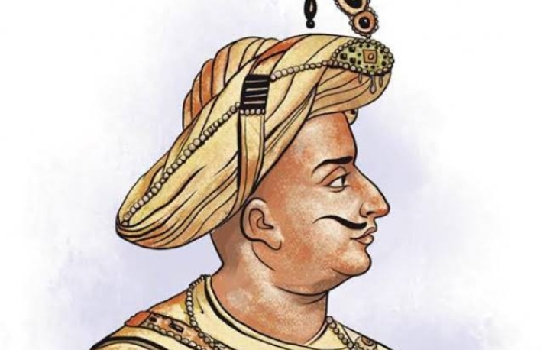
Bengaluru, Jul 28: After the Central Board of Secondary Education (CBSE) reduced the syllabi for Classes 9 to 12 due to COVID-19 pandemic, the Karnataka government has followed the suit. The Department of Public Instruction has omitted the chapters on legendary south Indian rulers Hyder Ali and Tipu Sultan from the textbooks of Class 7 in their attempt to reduce syllabus for state board schools by 30 per cent. 

The department, however, has decided to retain similar chapters on Tipu Sultan in 6th and 10th Classes, though the syllabus in text books for all classes from 1 to 10th has been trimmed. 

The trimmed textbooks uploaded on the website of the Department of State Education Research and Training (DSERT) by Karnataka state Textbook Society revealed removal of chapters on Tipu Sultan for the seventh grade.

Justifying the decision, officials said, "students study similar chapters in Class 6 and more in the 10th grade." Yet another senior official from the Text Book Society said, "Trimming does not mean we have removed half of the syllabus from textbooks. It is only keeping in mind the repetition we have condensed the chapters. In case students study about a particular dynasty in higher grades, then the same had been removed from lower grades."

A few months ago, there was an uproar over dropping of content on Tipu Sultan and MLAs from the ruling BJP also demanded the same and petitioned to the Chief Minister. Even an expert committee led by Prof Baraguru Ramachandrappa suggested to not drop any content on the historic figure. However, the department still decided to drop lessons from one of the classes while keeping the syllabus short for the next 120 active academic days.

Earlier this month, a controversy had erupted over the CBSE's decision to omit topics like federalism, secularism, citizenship, etc while reducing the syllabus for Classes 9 to 12. The education board had issued a detailed clarification later, stating that topics claimed to be dropped "are either being covered by the rationalised syllabus or in the Alternative Academic Calendar of NCERT".

"The rationalisation of syllabus up to 30 per cent has been undertaken by the Board for nearly 190 subjects of class 9 to 12 for the academic session 2020-21 as a one-time measure only. The objective is to reduce the exam stress of students due to the prevailing health emergency situation and prevent learning gaps," it said.

Last week, the Congress in Uttar Pradesh expressed its concern over 'deliberate and systematic' deletions of chapters related to the freedom struggle and the party's role in it from the Class 10-12 syllabi of the Secondary Education Board.

Comments

Add new comment

  • Coastaldigest.com reserves the right to delete or block any comments.
  • Coastaldigset.com is not responsible for its readers’ comments.
  • Comments that are abusive, incendiary or irrelevant are strictly prohibited.
  • Please use a genuine email ID and provide your name to avoid reject.
Agencies
July 23,2020

Expressing concern over the ban imposed on TikTok by the government of India, Facebook CEO Mark Zuckerberg has reportedly called the development in the south Asian country “worrisome”.

TikTok was amongst the 59 Chinese apps that were banned in India but why it hogs the maximum limelight because TikTok had the second-largest user base in India with over 200 million users.

As per The Verge writer Casey Newton, Zuckerberg was worried about TikTok’s India ban. Although it soon cashed into the opportunity and released a TikTok clone “Reels”, the government’s reason behind banning the app in India wasn’t received well by Mark Zuckerberg. 

He had said that if India can ban a platform with over 200 million users in India without citing concrete reasons, it can also ban Facebook if something goes amiss on the security and privacy front.

Why Mark finds it particularly worrisome because Facebook is already involved in a lot tussle with the governments across the world involving national security concerns. 

“Facebook already faces fights around the world from governments on both the left and the right related to issues that fit under the broad umbrella of national security: election interference, influence campaigns, hate speech, and even just plain-old democratic speech. Zuckerberg knows that the leap from banning TikTok on national security grounds to banning Facebook on national security grounds is more of a short hop,” the report by Casey read.

Facebook till now has not faced any kind of issue in India but considering the debacle with the other governments, it is not entirely wrong to worry about its future in India if any national security issue arises. Back in 2016, Facebook’s Free Basics service, which means a free but restricted internet service, was banned in India by the telecom regulators. 

The TRAI had said that the Free Basic services were banned in India because it violated the principles of net neutrality. With Free Basics services, Facebook had planned to bring more unconnected users online. But since 2016, there has been no major tussle between the Indian government and Zuckerberg due to national security issues.

Comments

Add new comment

  • Coastaldigest.com reserves the right to delete or block any comments.
  • Coastaldigset.com is not responsible for its readers’ comments.
  • Comments that are abusive, incendiary or irrelevant are strictly prohibited.
  • Please use a genuine email ID and provide your name to avoid reject.