IS propoganda has not affected Indian social fabric, says Rajnath Singh

Agencies
March 15, 2018

Gurgaon, Mar 15: Home Minister Rajnath Singh has said Indian social fabric has not been affected by the emergence of the Islamic State.

"I am, however, happy that Indian social fabric has not been affected by the emergence of the Islamic State and I am sure this will not have any further impact in our country," he said.

Addressing the fourth counter-terrorism conference -- 'Changing Contours of Global Terror' -- Singh, without taking Pakistan's name, said some countries are providing sponsorship and safe havens to terrorists and this has further played a major role in the phenomenal growth of terrorism globally.

"Radicalisation of populace, particularly youths, is another trend and one of the most challenging problems being faced the world over.

"Several countries in the world have identified the problem and have taken measures to check and control the process of radicalisation and I am happy to state that India has timely busted some modules that were planning to orchestrate terrorist attacks on her soil," he said.

The home minister said providing sponsorship and safe havens have further played a major role in the phenomenal growth of global terrorism.

In addition, state support has granted terrorist groups access to resources, guidance and logistics, which would normally be beyond their capabilities, Singh said.

"Any effort to counter the activities of terrorist groups carries the danger of placing the victim nation in direct confrontation with the host nation and its resources," he said.

Singh said in the recent years, the perception of global terrorism has undergone a massive makeover with the rise of armed terror groups especially in the Middle East, South Asia and Africa.

"This phenomenon could be attributed to the diminishing control in the terror space of the Al-Qaeda leadership, which just a decade ago was the face of terrorism. The shift of AQ Network from the Middle East to South Asia is a phenomenon, which is of serious concern to India," he said.

The home minister said a new dimension of terrorism is the networking of terrorist groups with the criminal underworld including organised crime gangs, gunrunners, smugglers, drug peddlers, with hawala and parallel banking channels being used for global flows of finance.

"It has enabled global terrorist groups to use the infrastructure and terrain knowledge of local outfits for launching attacks in countries, despite having no presence in the area," he said.

The home minister said the government has kept a keen watch on the growth of IS and their ways of using social media as a key tool for ideological indoctrination, recruitment and networking by targeting young generation and intellectual Muslims.

"The potential threat posed by the ISIS are large-scale radicalisation of Muslim youths throughout the world, the rise in 'lone-wolf' and terror attacks by returnee foreign fighters to their home countries. The terror attacks in Australia and France are telling examples of such threat," he said.

Singh said IS propaganda has significantly altered jihadi discourse in India, which, so far, was rooted in grievances against the Indian state and society.

"I am, however, happy that Indian social fabric has not been affected by the emergence of the Islamic State and I am sure this will not have any further impact in our country," he said.

The home minister said India has consistently taken steps to intensify and strengthen international cooperation through various means.

Terrorism, in all forms, including, Left Wing Extremism and Insurgency, poses a challenge on the sovereignty of India and the country already faces a serious challenge due to relentless efforts of Pakistan-sponsored anti-India Islamist groups like the LeT, JeM, HUJI and Hizbul Mujahideen, he said.

Singh said the emergence of India at the global level is also being challenged by the terrorist groups, due to its vibrant economy and plural character.

Comments

Abu Muhammad
 - 
Thursday, 15 Mar 2018

Rajnathji, it is because Muslim scholars exposed IS as anti-muslim, unislamic and US-Israel sponsored international terrorist group whose leader is a Jew with a muslim name.


Sirji, why did you left out RSS, BD, VHP, Gou Rakshas, Vahinis, Senas, brigades etc. affiliated to BJP from Radicalisation, Terrorism, extremism, communalism ?? World wants to know your answer???

Add new comment

  • Coastaldigest.com reserves the right to delete or block any comments.
  • Coastaldigset.com is not responsible for its readers’ comments.
  • Comments that are abusive, incendiary or irrelevant are strictly prohibited.
  • Please use a genuine email ID and provide your name to avoid reject.
News Network
January 22,2020

Davos, Jan 22: President Donald Trump has said that the US is watching the developments between India and Pakistan over Kashmir "very closely" and repeated his offer to "help" resolve the longstanding dispute between the two neighbours as he met Prime Minister Imran Khan on the sidelines of the World Economic Forum here in the Swiss ski resort.

Addressing the media with the Pakistan Prime Minister prior to their private meeting on Tuesday, President Trump asserted that trade and borders were both critical points for discussion, while Khan said that for him, Afghanistan was the top priority.

Trump told Khan, whom he referred to as "my friend", that he would speak to Prime Minister Narendra Modi about the ongoing Kashmir issue. The US president is expected to visit India in the coming weeks, marking his first visit after taking up his post in the White House.

"What's going on between Pakistan and India … if we can help, we certainly will be willing to. We have been watching it very closely and it's an honour to be here with my friend," he said.

"The Pakistan-India conflict is a very big issue for us in Pakistan and we expect the US to always play its part in deescalating the tensions, because no other country can," Khan said.

President Trump has repeatedly offered to mediate following India's August 5 decision to revoke the special status to Jammu and Kashmir and bifurcate the state into two Union Territories, evoking strong reaction from Pakistan which has been trying to internationalise the Kashmir issue.

New Delhi has defended the move, saying Jammu and Kashmir is an integral part of India and the issue was strictly internal to the country, and the special status provisions only gave rise to terrorism in Jammu and Kashmir.

"The country took the decision of abrogation of Article 370, which had only given separatism and terrorism to that state," Prime Minister Narendra Modi said at a function in October last year.

This is the third meeting between Trump and Khan since Pakistan premier assumed office in 2018 and it came against the backdrop of Pakistan Foreign Minister Shah Mehmood Qureshi's recent trip to the US, amid reports that the US and Afghan Taliban were close to striking a peace deal.

"There are issues we want to talk about. The main issue is Afghanistan because it concerns the US and Pakistan. Fortunately, we are on the same page. Both of us are interested in peace there and an orderly transition in Afghanistan with talks with Taliban and the government," Khan said.

When a reporter asked Trump if he would visit Pakistan considering he was already set to visit India, the US president said he was meeting the Pakistan premier in Davos.

"Well, we're visiting right now. So we don't really have to. I wanted to say that from a relationship standpoint, we got a great relationship. From the standpoint our two countries, we're getting along very well. I would say we've never been closer with Pakistan the way we're right now. And this is a big statement," Trump said.

Khan left for Switzerland to attend the World Economic Forum and meet the world leaders, including President Trump, on the sidelines of the annual event which kicked off at the ski resort town of Davos on Tuesday.

The four-day summit marks the 50th anniversary of the forum.

A total of 53 heads of State are on the guest list. Nearly 3,000 participants from 118 countries are expected to attend the event during which political leaders, business executives, heads of international organisations and civil society representatives are set to deliberate on contemporary economic, geopolitical, social and environmental issues.

Comments

Add new comment

  • Coastaldigest.com reserves the right to delete or block any comments.
  • Coastaldigset.com is not responsible for its readers’ comments.
  • Comments that are abusive, incendiary or irrelevant are strictly prohibited.
  • Please use a genuine email ID and provide your name to avoid reject.
News Network
February 19,2020

New Delhi, Feb 19: India will switch to the world's cleanest petrol and diesel from April 1 as it leapfrogs straight to Euro-VI emission compliant fuels from Euro-IV grades now - a feat achieved in just three years and not seen in any of the large economies around the globe.

India will join the select league of nations using petrol and diesel containing just 10 parts per million of sulphur as it looks to cut vehicular emissions that are said to be one of the reasons for the choking pollution in major cities.

Sanjiv Singh, Chairman of Indian Oil Corp (IOC) - the firm that controls roughly half of the country's fuel market, said almost all refineries began producing ultra-low sulphur BS-VI (equivalent to Euro-VI grade) petrol and diesel by the end of 2019 and oil companies have now undertaken the tedious task of replacing every drop of fuel in the country with the new one.

"We are absolutely on track for supplying BS-VI fuel from April 1. Almost all refineries have begun supplying BS-VI fuel and the same has reached storage depots across the country," he said.

From storage depots, the fuel has started travelling to petrol pumps and in the next few weeks all of them will only have BS-VI grade petrol and diesel, he said. "We are 100 per cent confident that fuel that will flow from nozzles at all the petrol pumps in the country on April 1 will be BS-VI emission compliant fuel."

India adopted Euro-III equivalent (or Bharat Stage-III) fuel with a sulphur content of 350 ppm in 2010 and then took seven years to move to BS-IV that had a sulphur content of 50 ppm. From BS-IV to BS-VI it took just three years.

"It was a conscious decision to leapfrog to BS-VI as first upgrading to BS-V and then shifting to BS-VI would have prolonged the journey to 4 to 6 years. Besides, oil refineries, as well as automobile manufacturers, would have had to make investments twice - first to producing BS-V grade fuel and engines and then BS-VI ones," he said.

State-owned oil refineries spent about Rs 35,000 crore to upgrade plants that could produce ultra-low sulphur fuel. This investment is on top of Rs 60,000 crore they spent on refinery upgrades in the previous switchovers.

BS-VI has a sulphur content of just 10 ppm and emission standards are as good as CNG.

Originally, Delhi and its adjoining towns were to have BS-VI fuel supplies by April 2019 and the rest of the country was to get same supplies from April 2020.

But oil marketing companies switched over to supply of BS-VI grade fuels in the national capital territory of Delhi on April 1, 2018.

The supply of BS-VI fuels was further extended to four contiguous districts of Rajasthan and eight of Uttar Pradesh in the National Capital Region (NCR) on April 1, 2019, together with the city of Agra.

BS-VI grade fuels were made available in 7 districts of Haryana from October 1, 2019.

Singh said the new fuel will result in a reduction in NOx in BS-VI compliant vehicles by 25 per cent in petrol cars and by 70 per cent in diesel cars.

The switchover, he said, is a tedious task as every drop of old, higher-sulphur content fuel has to be flushed out in depots, pipelines and tanks before being replaced by BS-VI.

"We are confident of disruption-free switchover to BS-VI supplies across the country," he said. "What we will be supplying is the best quality available anywhere in the world. You don't have any better fuel that is supplied in any part of the world. Perhaps our BS-VI fuel will be better than equivalent fuel in some parts of the US and Europe."

India adopted a fuel upgradation programme in the early 1990s. Low lead gasoline (petrol) was introduced in 1994 in Delhi, Mumbai, Kolkata and Chennai. On February 1, 2000, unleaded gasoline was mandated nationwide.

Similarly, BS-2000 (Euro-I equivalent, BS-1) vehicle emission norms were introduced for new vehicles from April 2000. BS-II (Euro-II equivalent) emission norms for new cars were introduced in Delhi from 2000 and extended to the other metro cities in 2001.

Benzene limits have been reduced progressively from 5 per cent in 2000 to 1 per cent nationwide. Lead content in gasoline was removed in phases and only unleaded gasoline is being produced and sold from February 1, 2000.

The octane number of gasoline signifies the improved performance of the engine. Loss in octane number due to phasing out of lead was made up by installing new facilities in the refinery and changes in refinery operation. RON (Research Octane Number) of gasoline for BS-2000 spec was increased to 88. This has over time been increased to 91.

Singh said sulphur reduction will reduce Particulate Matter (PM) emissions even in the in-use older generation diesel vehicles.

Comments

Add new comment

  • Coastaldigest.com reserves the right to delete or block any comments.
  • Coastaldigset.com is not responsible for its readers’ comments.
  • Comments that are abusive, incendiary or irrelevant are strictly prohibited.
  • Please use a genuine email ID and provide your name to avoid reject.
Agencies
July 30,2020

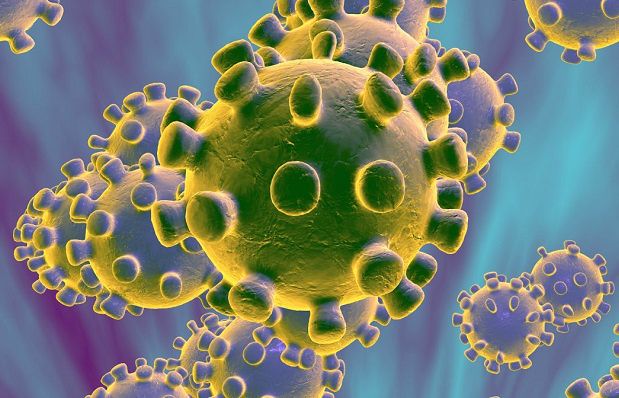
New Delhi, Jul 30: India witnessed a single-day spike of 52,123 COVID-19 cases as the total cases in the country reached 15,83,792, the Union Ministry of Health and Family Welfare said on Thursday.

The total cases include 5,28,242 active cases and 10,20,582 cured/discharged cases, the Health Ministry added.

A total of 775 deaths were reported in the last 24 hours taking the death toll to 34,968.

Maharashtra continues to be the worst-affected state as it reported 9,211 new COVID-19 cases 298 deaths on Wednesday. The total number of cases is now at 4,00,651 including 2,39,755 recovered cases, 1,46,129 active cases and 14,463 deaths.

The total number of cases in Tamil Nadu reached 2,34,114.

Delhi reported 1,035 COVID-19 cases yesterday, taking the total number of cases in the national capital to 1,32,275.

The total number of COVID-19 samples tested up to July 29 is 1,81,90,382 including 4,46,642 samples tested yesterday, said the Indian Council of Medical Research (ICMR).

Comments

Add new comment

  • Coastaldigest.com reserves the right to delete or block any comments.
  • Coastaldigset.com is not responsible for its readers’ comments.
  • Comments that are abusive, incendiary or irrelevant are strictly prohibited.
  • Please use a genuine email ID and provide your name to avoid reject.