Dalit agitation death toll mounts

Agencies
April 3, 2018

New Delhi/Bhopal/Lucknow/Jaipir, Apr 3 : At least seven people were killed and many injured in violence on Monday as Dalit protesters went on a rampage during a nationwide bandh against the dilution of the SC/ST (Prevention of Atrocities) Act.

While five people were killed in cross-firing in Madhya Pradesh alone, one each died in Uttar Pradesh and Rajasthan, according to officials there.

Curfew was imposed in several places and hundreds were detained.

Fifteen companies or 1,700 personnel of Rapid Action Force were rushed to UP, MP and Rajasthan. Two companies of the BSF were sent to Punjab.

Transport, mobile and internet services were hit in many states with over 100 trains getting affected due to protests.

Some states had ordered closure of educational institutions as a precaution.

Incidents of arson, firing and vandalism were reported from many states.

Appealing for peace, Union Home Minister Rajnath Singh said the government was committed to ensuring the welfare of Scheduled Castes and Scheduled Tribes and guaranteeing them full protection of law. "I am deeply pained by the acts of violence and loss of precious lives in some parts of the country," he said.

In Madhya Pradesh, two died in Gwalior, two in Bhind and one in Morena.

Sources said that one person was killed in Muzaffarnagar in UP, when pro-bandh supporters opened fire while forcing closure of shops. Another person received bullet injuries and was admitted to the hospital, where his condition was stated to be critical.

Police detained nearly 400 people, including former BSP MLA from Meerut Yogesh Verma .

UP Chief Minister Yogi Adityanath appealed for peace and urged the people not to vitiate law and order.

The CBSE has already postponed Class 12 and Class 10 examinations scheduled to be held on Monday in Punjab at the request of the state government.

The Supreme Court had on March 20 diluted certain provisions of the Scheduled Caste and Scheduled Tribe (Prevention of Atrocities) Act, in a bid to protect 'honest' public servants discharging bona fide duties from being blackmailed with false cases under the Act.

Western UP districts having sizable Dalit population witnessed large scale violence.

Dozens of vehicles were torched in Muzaffarnagar, Meerut. They also attacked scribes and molested women, sources said.

BSP supremo Mayawati attributed the violence to ''outside criminal elements'' and asked the government to identify such people and punish them.

In Rajasthan, Pawan Kumar, a youth, died in police firing after protesters attacked a police station in Alwar and tried to set it ablaze. "A youth sucummbed to injuries. He along with other protestors had beaten up the police and were trying to burn the police station," N R K Reddy (ADG Law & Order) confirmed.

Meanwhile Rajasthan Chief Minister Vasundhara Raje appealed for peace in the state.

In Punjab, the Indo-Pak bus service too was hit. The Lahore-bound bus from Delhi was made to go off the road at Sirhind, while the Delhi-bound bus from Lahore was stopped at Amritsar.

In Gujarat, though there have been no reports of any loss of life or major incidents of violence, crowds stopped vehicules on highways and in the cities and got into scuffles with the police.

Comments

shaji
 - 
Tuesday, 3 Apr 2018

This shows utter failure of Central Govt.  Looting, arson, unrest, killing of innocents, destruction of publice + Govt properties etc is going on all over India and Central Govt is unable to control it.  The only thing it doing is rise in fuel prices to bring profit to business tycoons.  Govt should step down immedaitely taking moral responsibilities of death of scrores of innocents.  Goondas and Terrorists of sangh parivar are taking law in their own hand and POlice is silently watching it. Its really shame.  Its as if Police is supporting these terrorists. If this continues, i think economy of India will go down.  President should interfere and take necessary action.

Add new comment

  • Coastaldigest.com reserves the right to delete or block any comments.
  • Coastaldigset.com is not responsible for its readers’ comments.
  • Comments that are abusive, incendiary or irrelevant are strictly prohibited.
  • Please use a genuine email ID and provide your name to avoid reject.
Agencies
July 29,2020

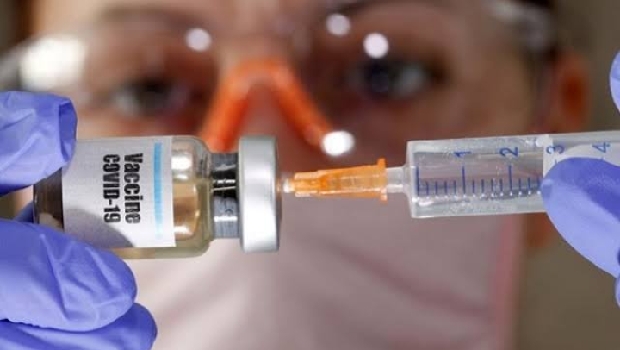
If everything goes as Russia’s expectation, it will be world’s first country to approve a coronavirus vaccine for widespread in the second week of August despite safety and efficacy concerns, according to a report. The adenoviral vector-based vaccine developed by Russian military and government researchers is currently in phase 2 trials.

According to a report from CNN, Russian officials are hoping to get approval for the COVID-19 vaccine developed by the Moscow-based Gamaleya Institute on Agust 10 or even before that. The officials told the outlet that the vaccine will be approved for public use with frontline healthcare workers receiving it first.

“It’s a Sputnik moment,” said Kirill Dmitriev, head of Russia’s sovereign wealth fund, which is financing Russian vaccine research, referring to the successful 1957 launch of the world’s first satellite by the Soviet Union, according to CNN.

“Americans were surprised when they heard Sputnik’s beeping. It’s the same with this vaccine. Russia will have got there first,” he was quoted as saying.

However, Russia is yet to release the scientific data on its coronavirus vaccine trials, hence, questions remain about the safety and efficacy of the vaccine, said the report. The vaccine is in the second phase of testing with developers planning to launch the phase 3 trials sometime after August 3.

Earlier, Interfax reported, citing Health Minister Mikhail Murashko, that the vaccine will be widely used in parallel with phase 3 trials. He said the country plans to vaccinate medics who are at high-risk for COVID-19 next month before clinical trials are completed.

Murashko added that individuals at higher risk of getting infected with the coronavirus such as older people or those with health conditions will also be prioritised for the vaccine, although he did not estimate or reveal when that would happen. The minister added 800 people will be recruited for the phase 3 trials.

Meanwhile, health officials were more cautious considering the fact that human testing of the vaccine is incomplete, and the state registration is expected to begin after August 3, reported The Moscow Times.

On Monday, Moderna and Pfizer announced the commencement of the final phase 3 trials of their candidate vaccines against the SARS-CoV-2 virus, which has so far claimed at least 654,477 lives and infected 16,514,500 people worldwide. 

Researchers will recruit up to 30,000 volunteers in separate trials both backed by the US government. India's first indigenous coronavirus vaccine, COVAXIN, is undergoing phase 1 human clinical trials across the country. More than 150 COVID-19 vaccines are being developed all over the world with at least six candidates already in late-stage clinical trials.

Comments

Add new comment

  • Coastaldigest.com reserves the right to delete or block any comments.
  • Coastaldigset.com is not responsible for its readers’ comments.
  • Comments that are abusive, incendiary or irrelevant are strictly prohibited.
  • Please use a genuine email ID and provide your name to avoid reject.
International New York Times
July 7,2020

The coronavirus can stay aloft for hours in tiny droplets in stagnant air, infecting people as they inhale, mounting scientific evidence suggests.

This risk is highest in crowded indoor spaces with poor ventilation, and may help explain superspreading events reported in meatpacking plants, churches and restaurants.

It’s unclear how often the virus is spread via these tiny droplets, or aerosols, compared with larger droplets that are expelled when a sick person coughs or sneezes, or transmitted through contact with contaminated surfaces, said Linsey Marr, an aerosol expert at Virginia Tech.

Follow latest updates on the Covid-19 pandemic here

Aerosols are released even when a person without symptoms exhales, talks or sings, according to Marr and more than 200 other experts, who have outlined the evidence in an open letter to the World Health Organization.

What is clear, they said, is that people should consider minimizing time indoors with people outside their families. Schools, nursing homes and businesses should consider adding powerful new air filters and ultraviolet lights that can kill airborne viruses.

What does it mean for a virus to be airborne?

For a virus to be airborne means that it can be carried through the air in a viable form. For most pathogens, this is a yes-no scenario. HIV, too delicate to survive outside the body, is not airborne. Measles is airborne, and dangerously so: It can survive in the air for up to two hours.

For the coronavirus, the definition has been more complicated. Experts agree that the virus does not travel long distances or remain viable outdoors. But evidence suggests it can traverse the length of a room and, in one set of experimental conditions, remain viable for perhaps three hours.

How are aerosols different from droplets?

Aerosols are droplets, droplets are aerosols — they do not differ except in size. Scientists sometimes refer to droplets fewer than 5 microns in diameter as aerosols. (By comparison, a red blood cell is about 5 microns in diameter; a human hair is about 50 microns wide.)

From the start of the pandemic, the WHO and other public health organizations have focused on the virus’s ability to spread through large droplets that are expelled when a symptomatic person coughs or sneezes.

These droplets are heavy, relatively speaking, and fall quickly to the floor or onto a surface that others might touch. This is why public health agencies have recommended maintaining a distance of at least 6 feet from others, and frequent hand washing.

But some experts have said for months that infected people also are releasing aerosols when they cough and sneeze. More important, they expel aerosols even when they breathe, talk or sing, especially with some exertion.

Scientists know now that people can spread the virus even in the absence of symptoms — without coughing or sneezing — and aerosols might explain that phenomenon.

Because aerosols are smaller, they contain much less virus than droplets do. But because they are lighter, they can linger in the air for hours, especially in the absence of fresh air. In a crowded indoor space, a single infected person can release enough aerosolized virus over time to infect many people, perhaps seeding a superspreader event.

For droplets to be responsible for that kind of spread, a single person would have to be within a few feet of all the other people, or to have contaminated an object that everyone else touched. All that seems unlikely to many experts: “I have to do too many mental gymnastics to explain those other routes of transmission compared to aerosol transmission, which is much simpler,” Marr said.

Can I stop worrying about physical distancing and washing my hands?

Physical distancing is still very important. The closer you are to an infected person, the more aerosols and droplets you may be exposed to. Washing your hands often is still a good idea.

What’s new is that those two things may not be enough. “We should be placing as much emphasis on masks and ventilation as we do with hand washing,” Marr said. “As far as we can tell, this is equally important, if not more important.”

Should I begin wearing a hospital-grade mask indoors? And how long is too long to stay indoors?

Health care workers may all need to wear N95 masks, which filter out most aerosols. At the moment, they are advised to do so only when engaged in certain medical procedures that are thought to produce aerosols.

For the rest of us, cloth face masks will still greatly reduce risk, as long as most people wear them. At home, when you’re with your own family or with roommates you know to be careful, masks are still not necessary. But it is a good idea to wear them in other indoor spaces, experts said.

As for how long is safe, that is frustratingly tough to answer. A lot depends on whether the room is too crowded to allow for a safe distance from others and whether there is fresh air circulating through the room.

What does airborne transmission mean for reopening schools and colleges?

This is a matter of intense debate. Many schools are poorly ventilated and are too poorly funded to invest in new filtration systems. “There is a huge vulnerability to infection transmission via aerosols in schools,” said Don Milton, an aerosol expert at the University of Maryland.

Most children younger than 12 seem to have only mild symptoms, if any, so elementary schools may get by. “So far, we don’t have evidence that elementary schools will be a problem, but the upper grades, I think, would be more likely to be a problem,” Milton said.

College dorms and classrooms are also cause for concern.

Milton said the government should think of long-term solutions for these problems. Having public schools closed “clogs up the whole economy, and it’s a major vulnerability,” he said.

“Until we understand how this is part of our national defense, and fund it appropriately, we’re going to remain extremely vulnerable to these kinds of biological threats.”

What are some things I can do to minimize the risks?

Do as much as you can outdoors. Despite the many photos of people at beaches, even a somewhat crowded beach, especially on a breezy day, is likely to be safer than a pub or an indoor restaurant with recycled air.

But even outdoors, wear a mask if you are likely to be close to others for an extended period.

When indoors, one simple thing people can do is to “open their windows and doors whenever possible,” Marr said. You can also upgrade the filters in your home air-conditioning systems, or adjust the settings to use more outdoor air rather than recirculated air.

Public buildings and businesses may want to invest in air purifiers and ultraviolet lights that can kill the virus. Despite their reputation, elevators may not be a big risk, Milton said, compared with public bathrooms or offices with stagnant air where you may spend a long time.

If none of those things are possible, try to minimize the time you spend in an indoor space, especially without a mask. The longer you spend inside, the greater the dose of virus you might inhale.


Comments

Add new comment

  • Coastaldigest.com reserves the right to delete or block any comments.
  • Coastaldigset.com is not responsible for its readers’ comments.
  • Comments that are abusive, incendiary or irrelevant are strictly prohibited.
  • Please use a genuine email ID and provide your name to avoid reject.
News Network
June 10,2020

Chennai, Jun 10: DMK MLA J Anbazhagan who had tested positive for coronavirus and was on ventilator support from June 3 passed away at a hospital in Chennai on Wednesday.

Coincidently, today is the 62nd birthday of the MLA.

"Anbazhagan J, who has been fighting for his life with severe COVID 19 pneumonia rapidly deteriorated early this morning. In spite of full medical support including mechanical ventilation at our COVID facility, he succumbed to his illness. He was declared dead at 08:05 hours on the 10th of June 2020," the hospital said in a statement.

In 2001, Anbazhagan was elected from T Nagar Assembly constituency. He served for five years.

Later in 2011, he was elected to Tamil Nadu Assembly from Chepauk-Thiruvallikeni seat. The DMK leader was re-elected from the same constituency in 2016.

Comments

Add new comment

  • Coastaldigest.com reserves the right to delete or block any comments.
  • Coastaldigset.com is not responsible for its readers’ comments.
  • Comments that are abusive, incendiary or irrelevant are strictly prohibited.
  • Please use a genuine email ID and provide your name to avoid reject.