RSS chief says Indian Muslims did not demolish Ram Mandir, vows to 'fight' for it

Agencies
April 16, 2018

Mumbai, Apr 16: Muslims in India did not demolish the Ram Mandir, said Rashtriya Swayamsevak Sangh (RSS) chief Mohan Bhagwat while raking up Ayodhya dispute once again on Sunday.

"The Muslim community in India did not destroy the Ram Mandir. Indian nationals can't do such a thing. Foreign forces destroyed temples here to demoralise Indians," said Bhagwat while speaking at a Viraat Hindu Sammelan at Dahanu in adjoining Palghar district.

Bhagwat further stressed that it is the nation's responsibility to restore the Ram Mandir.

“The temple in Ayodhya was demolished by those outside India. It is our responsibility to restore what was demolished within the country. The temple should be built where it actually was. We are ready to fight for it,” he added.

"If the Ram Mandir (in Ayodhya) is not rebuilt, the root of our culture will be cut. There is no doubt that the temple will be built at the spot where it was," Bhagwat said.

"But today, we are independent. We have the right to rebuild whatever was destroyed because these were not just temples but the symbols of our identity," he said.

The final hearing in the centuries-old Ram Janmabhoomi-Babri Masjid dispute is before the Supreme Court at present. The top court is hearing 13 appeals filed against the 2010 judgment of the Allahabad High Court in four civil suits. The petitions challenge the high court verdict that mandated a three-way division of the disputed site in Ayodhya.

The RSS chief also hit out at opposition parties, blaming them for the recent caste violence in several parts of the country.

"Those whose shops have been shut (those who lost out in elections) are now inciting people to fight on issues of caste," Bhagwat said.

Comments

angel of death
 - 
Monday, 16 Apr 2018

As*Hole face of india,  i dont know how hez going to die, even RAm also hate him from core..

Abdullah
 - 
Monday, 16 Apr 2018

Indian did nor demolish Babri Masjid. Foreign people like you destroyed it.

Add new comment

  • Coastaldigest.com reserves the right to delete or block any comments.
  • Coastaldigset.com is not responsible for its readers’ comments.
  • Comments that are abusive, incendiary or irrelevant are strictly prohibited.
  • Please use a genuine email ID and provide your name to avoid reject.
Agencies
February 27,2020

Bengaluru, Feb 27: Defence Minister Rajnath Singh on Thursday said that the situation is moving towards normalcy in Delhi after recent incidents of violence.

"Situation is moving towards normalcy," Rajnath told media here.

Joint Commissioner of Police (Traffic) Narendra Singh Bundela on Thursday said that the law and order and traffic situation in violence-affected parts of Delhi is normal.

"The situation is quite normal and peaceful as far as security and traffic are concerned. We have held talks and conducted patrols with people of all communities. Services such as road cleaning have resumed and traffic flow is normal," Bundela told ANI here.

"People can go out to get their daily needs from the market but we are advising them not to come out in groups," he added.

Meanwhile, the death toll in the incidents of violence in North-East Delhi has risen to 34.

Delhi Police has registered 18 FIRs and 106 people have been arrested in connection with the violence.

Comments

Add new comment

  • Coastaldigest.com reserves the right to delete or block any comments.
  • Coastaldigset.com is not responsible for its readers’ comments.
  • Comments that are abusive, incendiary or irrelevant are strictly prohibited.
  • Please use a genuine email ID and provide your name to avoid reject.
Agencies
August 3,2020

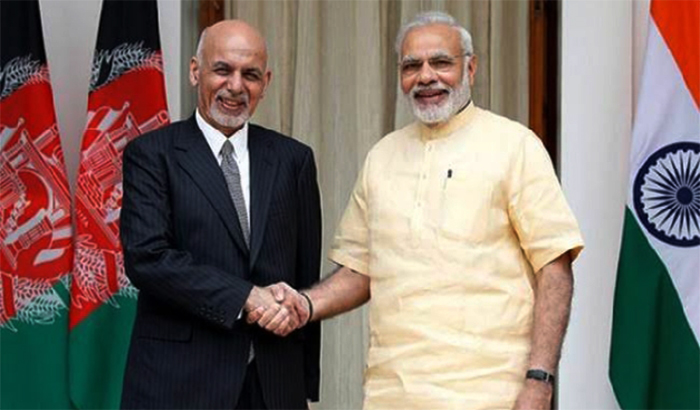
New Delhi, Aug 3: Afghanistan President Ashraf Ghani on Monday thanked Prime Minister Narendra Modi for the timely supply of food and medical assistance to meet the requirement in Afghanistan.

During their telephonic conversation, PM Modi also reiterated India's commitment to the people of Afghanistan in their quest for a peaceful, prosperous and inclusive Afghanistan, the Prime Minister's Office said in a statement on Monday.

The two leaders also exchanged views on the evolving security situation in the region and other areas of mutual bilateral interest.
Both leaders also exchanged greetings on Eid-Al-Adha. 

Comments

Add new comment

  • Coastaldigest.com reserves the right to delete or block any comments.
  • Coastaldigset.com is not responsible for its readers’ comments.
  • Comments that are abusive, incendiary or irrelevant are strictly prohibited.
  • Please use a genuine email ID and provide your name to avoid reject.
Agencies
June 6,2020

United Nations, Jun 6: The coronavirus disease has not "exploded" in India, but the risk of that happening remains as the country moves towards unlocking its nationwide lockdown that was imposed in March to contain the Covid-19, according to a top WHO expert.

WHO Health Emergencies Programme Executive Director Michael Ryan on Friday said the doubling time of the coronavirus cases in India is about three weeks at this stage.

“So the direction of travel of the epidemic is not exponential but it is still growing,” he said, adding that the impact of the pandemic is different in different parts of India and varies between urban and rural settings.

“In South Asia, not just in India but in Bangladesh and...in Pakistan, other countries in South Asia, with large dense populations, the disease has not exploded. But there is always the risk of that happening,” Ryan said in Geneva.

He stressed that as the disease generates and creates a foothold in communities, it can accelerate at any time as has been seen in a number of settings.

Ryan noted that measures taken in India such as the nationwide lockdown have had an impact in slowing transmission but the risk of an increase in cases looms as the country opens up.

“The measures taken in India certainly had an impact in dampening transmission and as India, as in other large countries, open up and as people begin to move again, there's always a risk of the disease bouncing back up,” he said.

He added that there are specific issues in India regarding the large amount of migration, the dense populations in the urban environment and the fact that many workers have no choice but to go to work every day.

India went past Italy to become the sixth worst-hit nation by the COVID-19 pandemic.

India saw a record single-day jump of 9,887 coronavirus cases and 294 deaths on Saturday, pushing the nationwide infection tally to 2,36,657 and the death toll to 6,642, according to the health ministry.

The lockdown in India, was first clamped on March 25 and spanned for 21 days, while the second phase of the curbs began on April 15 and stretched for 19 days till May 3. The third phase of the lockdown was in effect for 14 days and ended on May 17. The fourth phase ended on May 31.

The country had registered 512 coronavirus infection cases till March 24.

The nation-wide lockdown in containment zones will continue till June 30 in India but extensive relaxations in a phased manner from June 8 are listed in the Union home ministry's fresh guidelines on tackling the Covid-19 pandemic issued last week.

WHO Chief Scientist Soumya Swaminathan said the over 200,000 current coronavirus cases in India, a country of over 1.3 billion people, "look big but for a country of this size, it's still modest.”

She stressed that it is important for India to keep track of the growth rate, the doubling time of the virus and to make sure that that number doesn't get worse.

She said that India is a “heterogeneous and huge country” with very densely populated cities and much lower density in some rural areas and varying health systems in different states and these offer challenges to the control of Covid-19.

Swaminathan added that as the lockdown and restrictions are lifted, it must be ensured that all precautions are taken by people.

“We've been making this point repeatedly that really if you want behaviour change at a large level, people need to understand the rationale for asking them to do certain things (such as) wearing masks,” she said.

In many urban areas in India, it's impossible to maintain physical distancing, she said adding that it then becomes very important for people to wear appropriate face coverings when they are out, in office settings, in public transport and educational institutions.

“As some states are thinking about opening, every institution, organisation, industry and sector needs to think about what are the measures that need to be put in place before you can allow a functioning and it may never be back to normal.”

She said that in many professions working from home can be encouraged but in several jobs, people have to go to work and in such cases measures must be put in place that allow people to protect themselves and others.

“I think communication and behaviour change is a very large part of this whole exercise,” she added.


Comments

Add new comment

  • Coastaldigest.com reserves the right to delete or block any comments.
  • Coastaldigset.com is not responsible for its readers’ comments.
  • Comments that are abusive, incendiary or irrelevant are strictly prohibited.
  • Please use a genuine email ID and provide your name to avoid reject.