Cong women leaders slam Shobha Karandlaje’s silence on Kathua, Unnao rapes

News Network
April 17, 2018

Two women leaders of Congress have dared and demanded Bharatiya Janata Party leader Udupi-Chikkamagaluru MP Shobha Karandlaje to speak against the two incidents of gang-rape at Kashmir’s Kathua and UP’s Unnao.

Karnataka Pradesh Congress Committee Women’s Wing President Laxmi Hebbalkar speaking to reporters in Bengaluru on Tuesday condemned the incident of gang-rape and murder of eight-year-old girl at Kathua temple and of gang-rape of 17-year-old girl at Unnao by BJP leaders.

“BJP is in power in both the states. BJP MLA Kuldeep Singh Sengar has been named as accused in the Unnao case,” she pointed out.

Karandlaje who during other times speaks a lot should now come forward and talk about the two incidents of rape and condemn them. Its right time that she raises her voice for women’s cause, she said.

On the other hand State Congress Women's Committee general secretary Pratibha Kulai, speaking to media persons in Mangaluru slammed the silence of BJP leaders including Shobha Karandlaje who are known for communalising the crimes committed by individuals of other communities.

Comments

Rosi Roshan
 - 
Thursday, 19 Apr 2018

Wonderfull the ladies from Congi said!!! how it is possible to say Shobakka,Yeddiappa Terrorist, Rapiest did this barbaric raping, what else you voters required from this barbarian criminals, is hse MP, what a meaning of MP, Mother of ------ my fellow hindustanis please ignore asking these type of questions again, at least let her get marry, Leaving toghter is not a Hindustani custums, Shobakka try to become hindustani nari.

abmohammed
 - 
Wednesday, 18 Apr 2018

  1. At first i will salute the congress womans specaially  Prathiba kulai & Shakunthala Shetty  they
  2. strongly condemmed asifa incident this sister are hindu community   & Mrs. Kulai, she added  our  baby asifa  name  with  her dougther . Now i am, asking in congress party so called muslims leader like ut khader & m. bava are ashamed not uttered a single criticize, you people what kind of muslim, being a muslim & worshing temples & shaithan house for what? for vote your chair should in jahanam (hell) if your not ask forgiveness , with Almighty .this kind of open sins
  3.  
  4. shirk Almighty can't pardone you . 
  5. One more thing adding now Rss(Rapist Sangah) now make new plan to divert this issue All people should  what they planned. wait & see

A Kannadiga
 - 
Tuesday, 17 Apr 2018

Daye marere Shobakkana bayig kol paduvar, itte bogolare shuru malthnda, unthavna banga.

Mohan SS
 - 
Tuesday, 17 Apr 2018

She open her felthy mouth against Muslims only, she cannot bark about RSS Chaddies, she is a dirtest lady ever our Karnataka had, dirty lady

Hari
 - 
Tuesday, 17 Apr 2018

Dont question Shobhakha. She may take lethal  weapon.

Add new comment

  • Coastaldigest.com reserves the right to delete or block any comments.
  • Coastaldigset.com is not responsible for its readers’ comments.
  • Comments that are abusive, incendiary or irrelevant are strictly prohibited.
  • Please use a genuine email ID and provide your name to avoid reject.
Agencies
February 20,2020

India ranked 77th on a sustainability index that takes into account per capita carbon emissions and ability of children in a nation to live healthy lives and secures 131st spot on a flourishing ranking that measures the best chance at survival and well-being for children, according to a UN-backed report.

The report was released on Wednesday by a commission of over 40 child and adolescent health experts from around the world. It was commissioned by the World Health Organization (WHO), UN Children's Fund (UNICEF) and The Lancet medical journal.

In the report assessing the capacity of 180 countries to ensure that their youngsters can survive and thrive, India ranks 77th on the Sustainability Index and 131 on the Flourishing Index, it said.

Flourishing is the geometric mean of Surviving and Thriving. For Surviving, the authors selected maternal survival, survival in children younger than 5 years old, suicide, access to maternal and child health services, basic hygiene and sanitation, and lack of extreme poverty.

For Thriving, the domains were educational achievement, growth and nutrition, reproductive freedom, and protection from violence.

Under the Sustainability Index, the authors noted that promoting today's national conditions for children to survive and thrive must not come at the cost of eroding future global conditions for children's ability to flourish.

The Sustainability Index ranks countries on excess carbon emissions compared with the 2030 target. This provides a convenient and available proxy for a country's contribution to sustainability in future.

The report noted that under realistic assumptions about possible trajectories towards sustainable greenhouse gas emissions, models predict that global carbon emissions need to be reduced from 39·7 giga­ tonnes to 22·8 gigatonnes per year by 2030 to maintain even a 66 per cent chance of keeping global warming below 1·5°C.

It said that the world's survival depended on children being able to flourish, but no country is doing enough to give them a sustainable future.

"No country in the world is currently providing the conditions we need to support every child to grow up and have a healthy future," said Anthony Costello, Professor of Global Health and Sustainability at University College London, one of the lead authors of the report.

"Especially, they're under immediate threat from climate change and from commercial marketing, which has grown hugely in the last decade," said Costello – former WHO Director of Mother, Child and Adolescent health.

Norway leads the table for survival, health, education and nutrition rates - followed by South Korea and the Netherlands. Central African Republic, Chad and Somalia come at the bottom.

However, when taking into account per capita CO2 emissions, these top countries trail behind, with Norway 156th, the Republic of Korea 166th and the Netherlands 160th.

Each of the three emits 210 per cent more CO2 per capita than their 2030 target, the data shows, while the US, Australia, and Saudi Arabia are among the 10 worst emitters. The lowest emitters are Burundi, Chad and Somalia.

According to the report, the only countries on track to beat CO2 emission per capita targets by 2030, while also performing fairly – within the top 70 – on child flourishing measures are: Albania, Armenia, Grenada, Jordan, Moldova, Sri Lanka, Tunisia, Uruguay and Vietnam.

"More than 2 billion people live in countries where development is hampered by humanitarian crises, conflicts, and natural disasters, problems increasingly linked with climate change," said Minister Awa Coll-Seck from Senegal, Co-Chair of the commission.

The report also highlights the distinct threat posed to children from harmful marketing.

Evidence suggests that children in some countries see as many as 30,000 advertisements on television alone in a single year, while youth exposure to vaping (e-cigarettes) advertisements increased by more than 250 per cent in the US over two years, reaching more than 24 million young people.

Studies in Australia, Canada, Mexico, New Zealand and the US – among many others – have shown that self-regulation has not hampered commercial ability to advertise to children.

Children's exposure to commercial marketing of junk food and sugary beverages is associated with purchase of unhealthy foods and overweight and obesity, linking predatory marketing to the alarming rise in childhood obesity, it said.

The number of obese children and adolescents increased from 11 million in 1975 to 124 million in 2016 – an 11-fold increase, with dire individual and societal costs, the report said.

To protect children, the authors call for a new global movement driven by and for children.

Specific recommendations include stopping CO2 emissions with the utmost urgency, to ensure children have a future on this planet; placing children and adolescents at the centre of global efforts to achieve sustainable development, the report said.

New policies and investment in all sectors to work towards child health and rights; incorporating children's voices into policy decisions and tightening national regulation of harmful commercial marketing, supported by a new Optional Protocol to the UN Convention on the Rights of the Child, it said.


Comments

Add new comment

  • Coastaldigest.com reserves the right to delete or block any comments.
  • Coastaldigset.com is not responsible for its readers’ comments.
  • Comments that are abusive, incendiary or irrelevant are strictly prohibited.
  • Please use a genuine email ID and provide your name to avoid reject.
coastaldigest.com news network
August 4,2020

Mangaluru, Aug 4: The Kasaragod district administration has decided to restore the e-pass system for daily commuters between Kasaragod and Mangaluru amid covid-19 crisis. 

As covid-19 cases began to increase in Dakshina Kannada, the Kasargod district administration had unilaterally newly introduced of daily pass system on July 6 for entry and exit from Talapady border. This had inconvenienced hundreds of employees, who visited Mangaluru daily to eke a living. 

The decision to resume the pass system was taken in a video conference of Kerala Revenue Minister Chandrasekharan with officials and elected representatives on August 3.

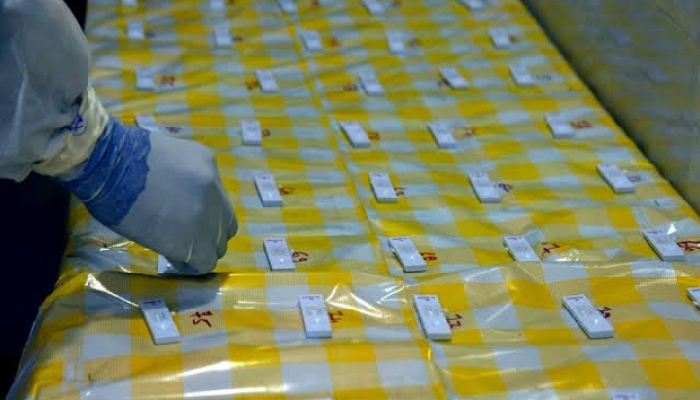
The minister said the Kasaragod district administration will resume issuing of passes for daily commuters between Kasaragod and Mangaluru. But they should undergo rapid antigen test for every week to renew their passes.

"Similarly, one-time interstate passes will be issued for those who want to take part in marriages, funeral and other functions in both states. Even they should undergo antigen test after returning from the functions,” the minister added.

As per the previous order, daily commuters, especially employees, had to stay in Mangaluru for 28 days before returning to Kasargod. Later, Kerala government relaxed rules on July 23 allowing only bank employees from Kasaragod to travel daily in their private vehicles to their workplace in Dakshina Kannada.

Comments

Add new comment

  • Coastaldigest.com reserves the right to delete or block any comments.
  • Coastaldigset.com is not responsible for its readers’ comments.
  • Comments that are abusive, incendiary or irrelevant are strictly prohibited.
  • Please use a genuine email ID and provide your name to avoid reject.
News Network
January 30,2020

Bengaluru, Jan 30: The BJP government of Karnataka has given green signal to the proposal of hiking milk prices by Rs 2 per litre.

The new prices will come into effect from February 1. Seeking revision of prices, the Karnataka Milk Federation (KMF) had submitted a proposal last week to the state government. Alongside the revision of milk prices, the state government has also hiked the prices of curd by Rs 2 per liter.

The sudden hike in the prices of milk, curd is likely to have a cascading effect on the milk related beverages such as coffee, tea, and milkshakes with hoteliers and eateries mulling to increase the prices of coffee and tea following the hike in prices.

Sources in the state government revealed to DH that out of Rs 2, farmers will be getting a lion’s share as their accounts will be credited with Rs 1. Another 40 paise will be given to the farmers towards the insurances of their livestock.

Another 40 paise will go to the milk salesmen in the form of commission. The remaining 20 paise will be distributed among the workforce at the milk cooperative unions as an additional incentive.

Comments

Add new comment

  • Coastaldigest.com reserves the right to delete or block any comments.
  • Coastaldigset.com is not responsible for its readers’ comments.
  • Comments that are abusive, incendiary or irrelevant are strictly prohibited.
  • Please use a genuine email ID and provide your name to avoid reject.