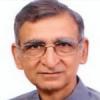
Karnataka polls: With assets over Rs 1,020-cr Priya Krishna is the richest candidate

coastaldigest.com news network
April 21, 2018

Bengaluru, Apr 21: This 34-year-old Congress candidate from Govindarajanagar in Bengaluru with assets worth over Rs 1,020 crore appears to be the richest candidate in the fray for May 12, 2018 Karnataka assembly polls.

The incumbent MLA of Govindarajanagar, Priya Krishna, son of Housing Minister M Krishnappa aka Layout Krishnappa was the richest candidate in 2013 too with the declared assets of Rs 910.9 crore. In five years he saw a growth of 11%.

Priya Krishna was first elected from Govindarajanagar in the 2009 bypoll. Most of the immoveable assets of this young politician are ‘gifted,’ as he mentions in the affidavit accompanying the nomination papers for the election.

N. Nagaraju, the Congress candidate from Hosakote, has more than doubled his wealth at Rs. 1,010 crore. In 2013, the businessman had declared Rs. 470.13 crore. D.K. Shivakumar, Energy Minister, may be the third richest candidate this time after reporting wealth of Rs. 841.372 crore now.

Comments

Mohan
 - 
Saturday, 21 Apr 2018

He proved he is a congress leader... a (Rahul) Gandhian

Ganesh
 - 
Saturday, 21 Apr 2018

Why these people entering into politics.. actually these people dont want to serve poor people. If they really wanted to help, then they might have been choose some other social services

Yogesh
 - 
Saturday, 21 Apr 2018

Agsin he wanted to raise his wealth thats why he chose congress. You people should learn from BJP leaders

Danish
 - 
Saturday, 21 Apr 2018

What about BM Farooq

Add new comment

  • Coastaldigest.com reserves the right to delete or block any comments.
  • Coastaldigset.com is not responsible for its readers’ comments.
  • Comments that are abusive, incendiary or irrelevant are strictly prohibited.
  • Please use a genuine email ID and provide your name to avoid reject.
News Network
March 11,2020

Mar 11: The Karnataka government on Wednesday started a campaign called 'Namaste over Handshake' that encourages people to greet in the traditional Indian style, to tackle the spread of coronavirus.

The campaign also includes health advice on how people can protect themselves from the infection by adopting hygiene practices such as regularly washing hands to prevent the spread of COVID-19.

As part of the campaign, the state health and family welfare department has uploaded a poster on the social media, featuring a 'Bharatnatyam' dancer draped in a red saree saying 'Namaste'.

"Use Namasthe to greet others, fight against corona" read a message on the poster online.

The poster has health helpline numbers (104 and 011- 23978046) for public queries on the viral disease, which has claimed 4,251 lives worldwide.

A health department official told PTI that as part of the campaign, posters have been uploaded on social media and it would be printed and despatched to different districts to be put up at important junctions.

"We had been working on this idea. Kerala has already done it. They are using Kathakali dancers whereas we are using a Bharatanatyam dancer as our model," the official said.

Medical Education Minister K Sudhakar too had insisted that people should adopt 'Namasthe' or 'Namaskara' to greet people instead of handshakes or hugs.

Comments

Add new comment

  • Coastaldigest.com reserves the right to delete or block any comments.
  • Coastaldigset.com is not responsible for its readers’ comments.
  • Comments that are abusive, incendiary or irrelevant are strictly prohibited.
  • Please use a genuine email ID and provide your name to avoid reject.
News Network
February 12,2020

Kathmandu, Feb 12: Nepal has suspended the licence of a mountainous resort for three months due to poor security management and managerial weakness at the hotel where eight Indian tourists, including four minors, died of possible asphyxiation, according to media reports.

Kathmandu: Nepal has suspended the licence of a mountainous resort for three months due to poor security management and managerial weakness at the hotel where eight Indian tourists, including four minors, died of possible asphyxiation, according to media reports.

Tragedy struck a group of 15 tourists from Kerala when eight of them died on January 21 due to possible asphyxiation after they fell unconscious probably due to a gas leak from a heater in their room at a mountainous resort in Makwanpur district.

The tourists were airlifted to HAMS hospital here where they were pronounced dead on arrival. Makwanpur police said the victims might have fallen unconscious due to asphyxiation.

The Department of Tourism on Sunday imposed a ban on the operation of Daman-based Everest Panorama Resort for three months based on the report submitted by a probe committee formed to investigate the death of the Indian tourists from Kerala, the Kathmandu Post reported on Tuesday.

The department decided to shut down the resort as the report submitted by a probe committee pointed out poor security management and managerial weakness at the resort for the incident, it said.

The Ministry of Culture, Tourism and Civil Aviation had formed the probe committee under Surendra Thapa, the director of the Department of Tourism. After a field inspection, the committee had submitted its report a few days ago, pointing to the shortcomings of the resort.

During the investigation, the committee found the resort had not been following the recommended safety measures and was providing substandard services to its guests, The Himalayan Times reported.

Moreover, the committee discovered that the resort had not fulfilled the criteria set by DoT to be categorised a 'resort', it said.

Mira Acharya, director of DoT was quoted as saying by the report that the resort's operations have been halted as per Section 15 of Tourism Act-1979.

"If the resort owner wishes to resume services after three months of suspension, the resort should be upgraded as per the Hotel, Lodge, Restaurant, Bar and Tourist Guide Rules-1981 and also meet the criteria mentioned in a notice published in the Nepal Gazette under the title 'Hotel Classification and Criteria'," Acharya said.

She added that the resort would also have to undergo the Environment Impact Assessment to get the permission from DoT to resume operation.

Meanwhile, the resort management has said that they will work towards meeting the standards fixed by the department and run the resort efficiently.

"We will work towards meeting the standards fixed by the department and run the resort efficiently. We are saddened by the tragic incident. We will ensure that such incidents don't occur in the future,” said Sudesh Gautam, the operator of the resort was quoted as saying by the Kathmandu Post.

The group, after travelling to Pokhara -- a popular mountainous tourist destination -- was on their way back home and stayed at Everest Panorama Resort in Daman.

Those who were killed were Praveen Krishnan Nair, his wife Saranya Sasi and their three children and Ranjith Kumar Adatholath Punathil, his wife Indu Lakshmi Peethambaran Ragalatha and their son.

Everest Panorama Resort was established 28 years ago in Daman Simbhajyang area, a tourist destination in Bagmati Province. The tourist numbers, according to Thaha Hotel Association, have plunged after the tragic accident of January 27.

Comments

Add new comment

  • Coastaldigest.com reserves the right to delete or block any comments.
  • Coastaldigset.com is not responsible for its readers’ comments.
  • Comments that are abusive, incendiary or irrelevant are strictly prohibited.
  • Please use a genuine email ID and provide your name to avoid reject.
Ram Puniyani
June 29,2020

In Minneapolis, US an African American, George Floyd lost his life as the white policeman, Derek Chauvin, caught hold of him and put his knee on his neck. This is a technique developed by Israel police. For nine long minutes the knee of the while policeman was on the neck of George, who kept shouting, I can’t breathe.

Following this gruesome murder America erupted with protests, ‘Black lives matter’. The protestors were not just African Americans but also a large section of whites. Within US one police Chief apologized for the act of this. In a touching gesture of apology the police force came on its knees. This had reverberations in different parts of the World.

The act was the outcome of the remnants of the racial hatred against blacks by the whites. It is the hatred and the perceptions which are the roots of such acts of violence. What was also touching that the state of democracy in US is so deep that even the police apologized, the nation, whites and blacks, stood up as a sensitive collective against this violence.

US is not the only country where the brutal acts of violence torment the marginalized sections of society. In India there is a list of dalits, minorities and adivasis who are regularly subjected to such acts. But the reaction is very different. We have witnessed the case of Tabrez Ansari, who was tied to the pole by the mob and beaten ruthlessly. When he was taken to police station, police took enough time to take him to hospital and Tabrez died.

Mohsin Sheikh, a Pune techie was murdered by Hindu Rashtra Sena mob, the day Modi came to power in 2014. Afrazul was killed by Shambhulal Regar, videotaped the act released on social media. Regar believed that Muslims are indulging in love Jihad, so deserve such a fate. Mohammad Akhlaq is one among many names who were mob lynched on the issue of beef cow. The list can fill pages after pages.

Recently a young dalit boy was shot dead for the crime of entering a temple. In Una four dalits were stripped above waste and beaten mercilessly. Commenting on this act the Union Minister Ramvilas Paswan commented that it is a minor incident. Again the list of atrocities against dalits is long enough. The question is what Paswan is saying is the typical response to such gruesome murders and tortures. In US loss of one black life, created the democratic and humane response. In India there is a general silence in response to these atrocities. Some times after a good lapse of time, the Prime Minister will utter, ‘Mother Bharati has lost a son’. Most of the time victim is blamed. Some social groups raise their voice in some fora but by and large the deafening silence from the country is the norm.

India is regarded as the largest democracy. Democracy is the rule of law, and the ground on which the injustices are opposed. In America though the present President is insensitive person, but its institutions and processes of democratic articulations are strong. The institutions have deepened their roots and though prejudices may be guiding the actions of some of the officers like the killer of George, there are also police officers who can tell their President to shut up if he has nothing meaningful to say on the issue. The prejudices against Blacks may be prevalent and deep in character, still there are large average sections of society, who on the principles of ‘Black lives matter’. There are large sections of vocal population who can protest the violation of basic norms of democracy and humanism.

In India by contrast there are multiple reasons as to why the lives of Tabrez Ansari, Mohammad Akhlaq, Una dalit victims and their likes don’t matter. Though we claim that we are a democracy, insensitivity to injustices is on the rise. The strong propaganda against the people from margins has become so vicious during last few decades that any violence against them has become sort of a new normal. The large populace, though disturbed by such brutalities, is also fed the strong dose of biases against the victims. The communal forces have a great command over effective section of media and large section of social media, which generates Hate against these disadvantaged groups, thereby the response is muted, if at all.

As such also the process of deepening of our democracy has been weak. Democracy is a dynamic process; it’s not a fixed entity. Decades ago workers and dalits could protest for their rights. Now even if peasants make strong protests, dominant media presents it as blocking of traffic! How the roots of democracy are eroded and are visible in the form where the criticism of the ruling dispensation is labelled as anti National..

Our institutions have been eroded over a period of time, and these institutions coming to the rescue of the marginalized sections have been now become unthinkable. The outreach of communal, divisive ideology, the ideology which looks down on minorities, dalits and Adivasis has risen by leaps and bounds.

The democracy in India is gradually being turned in to a hollow shell, the rule of law being converted in to rule of an ideology, which does not have faith in Indian Constitution, which looks down upon pluralism and diversity of this country, which is more concerned for the privileges of the upper caste, rich and affluent. The crux of the matter is the weak nature of democracy, which was on way to become strong, but from decades of 1980s, as emotive issues took over, the strength of democracy started dwindling, and that’s when the murders of the types of George Floyd, become passé. One does complement the deeper roots of American democracy and its ability to protect the democratic institutions, which is not the case in India, where protests of the type, which were witnessed after George Floyd’s murder may be unthinkable, at least in the present times. 

Comments

Add new comment

  • Coastaldigest.com reserves the right to delete or block any comments.
  • Coastaldigset.com is not responsible for its readers’ comments.
  • Comments that are abusive, incendiary or irrelevant are strictly prohibited.
  • Please use a genuine email ID and provide your name to avoid reject.