Cong playing caste politics in Karnataka; BJP’s only agenda is development: PM Modi

Agencies
April 26, 2018

Bengaluru, Apr 26: Prime Minister Narendra Modi said today that development was his only agenda for the Karnataka Assembly polls, and accused the state's Congress government of stalling its progress.

Modi also accused the Congress of playing caste politics during elections.

"BJP has a three-pronged agenda for Karnataka-- development, fast-paced development, all-round development," he told BJP leaders, office bearers and party workers via video conference.

"Our agenda is vikas (development), vikas, vikas," he said.

Without naming the Lingayats, the prime minister accused the Congress government of doing caste politics.

"When elections come, they offer lollipops to a caste group so they get busy with it. But the BJP's priority is politics of development," he said.

The Siddaramaiah government recently recommended religious minority status for the Lingayat and its sub-group Veershaiva Lingayat community. The move is seen as an attempt to divide the Lingayats, the bedrock of the BJP's voter base in the state.

The Congress government in Karnataka, he alleged, was responsible for the tardy progress of the state.

With pre-poll surveys projecting a hung Assembly, Modi asked the voters to elect a BJP government with an absolute majority to give a fillip to development.

Comments

SHAJI
 - 
Thursday, 26 Apr 2018

PM Modi is 100 percent correct in saying bjp agent is development, but he did not say whose development.   He kept this secret.  However, all of us know bjp is working for the development of its high rank officials, business tycoons like Ambani, Adani, Modi etc etc.   the only citizend gained from bjp are business tycoons and looters like Modi, Mallya, etc etc.   Also gainer is swiss bank.   Sab ka saath sab ka vikaas aur aam admi ka satyanaas

Mr Frank
 - 
Thursday, 26 Apr 2018

Shame on to say our agenda is development who's agenda is killing people in the name of cow, rape on minor children and you made to open bank account every poor man and collected their hardly earned money,even someone lost life on que but you say it is for nation when no rich man lost money or life on demonitisation.All your slogans are must be rewrite, such as MODI HATAO BETI BACHAO,SUB KA SATH SABKA VINASH,People in karnataka teach Bjp perfect lesson it is a state of an educational hub cannot be fooled by empty slogans.

MAX
 - 
Thursday, 26 Apr 2018

i think Mr Prime Minister forgot he is addressing in karnataka not in UP to fool the people


The worst Government in Karnataka was under BJP rule


Three Chief Ministers


and Yeddyurappa caught in Corruption charges 

reddy brothers 

continues.... 

Modiji First try to make corruption free bjp in karnataka then think about the state

Add new comment

  • Coastaldigest.com reserves the right to delete or block any comments.
  • Coastaldigset.com is not responsible for its readers’ comments.
  • Comments that are abusive, incendiary or irrelevant are strictly prohibited.
  • Please use a genuine email ID and provide your name to avoid reject.
Ram Puniyani
February 10,2020

Noam Chomsky is one of the leading peace workers in the world. In the wake of America’s attack on Vietnam, he brought out his classic formulation, ‘manufacturing consent’. The phrase explains the state manipulating public opinion to have the public approve of it policies—in this case, the attack of the American state on Vietnam, which was then struggling to free itself from French colonial rule.

In India, we are witness to manufactured hate against religious minorities. This hatred serves to enhance polarisation in society, which undermines India’s democracy and Constitution and promotes support for a Hindu nation. Hate is being manufactured through multiple mechanisms. For example, it manifests in violence against religious minorities. Some recent ghastly expressions of this manufactured hate was the massive communal violence witnessed in Mumbai (1992-93), Gujarat (2002), Kandhamal (2008) and Muzaffarnagar (2013). Its other manifestation was in the form of lynching of those accused of having killed a cow or consumed beef. A parallel phenomenon is the brutal flogging, often to death, of Dalits who deal with animal carcasses or leather.

Yet another form of this was seen when Shambhulal Regar, indoctrinated by the propaganda of Hindu nationalists, burned alive Afrazul Khan and shot the video of the heinous act. For his brutality, he was praised by many. Regar was incited into the act by the propaganda around love jihad. Lately, we have the same phenomenon of manufactured hate taking on even more dastardly proportions as youth related to Hindu nationalist organisations have been caught using pistols, while police authorities look on.

Anurag Thakur, a BJP minster in the central government recently incited a crowd in Delhi to complete his chant of what should happen to ‘traitors of the country...” with a “they should be shot”. Just two days later, a youth brought a pistol to the site of a protest at Jamia Millia Islamia university and shouted “take Azaadi!” and fired it. One bullet hit a student of Jamia. This happened on 30 January, the day Nathuram Godse had shot Mahatma Gandhi in 1948. A few days later, another youth fired near the site of protests against the CAA and NRC at Shaheen Bagh. Soon after, he said that in India, “only Hindus will rule”.

What is very obvious is that the shootings by those associated with Hindu nationalist organisations are the culmination of a long campaign of spreading hate against religious minorities in India in general and against Muslims in particular. The present phase is the outcome of a long and sustained hate campaign, the beginning of which lies in nationalism in the name of religion; Muslim nationalism and Hindu nationalism. This sectarian nationalism picked up the communal view of history and the communal historiography which the British introduced in order to pursue their ‘divide and rule’ policy.

In India what became part of “social common sense” was that Muslim kings had destroyed Hindu temples, that Islam was spread by force, and that it is a foreign religion, and so on. Campaigns, such as the one for a temple dedicated to the Hindu god Rama to be built at the site where the Babri masjid once stood, further deepened the idea of a Muslim as a “temple-destroyer”. Aurangzeb, Tipu Sultan and other Muslim kings were tarnished as the ones who spread Islam by force in the subcontinent. The tragic Partition, which was primarily due to British policies, and was well-supported by communal streams also, was entirely attributed to Muslims. The Kashmir conflict, which is the outcome of regional, ethnic and other historical issues, coupled with the American policy of supporting Pakistan’s ambitions of regional hegemony, (which also fostered the birth of Al-Qaeda), was also attributed to the Muslims.

With recurring incidents of communal violence, these falsehoods went on going deeper into the social thinking. Violence itself led to ghettoisation of Muslims and further broke inter-community social bonds. On the one hand, a ghettoised community is cut off from others and on the other hand the victims come to be presented as culprits. The percolation of this hate through word-of-mouth propaganda, media and re-writing of school curricula, had a strong impact on social attitudes towards the minorities.

In the last couple of decades, the process of manufacturing hate has been intensified by the social media platforms which are being cleverly used by the communal forces. Swati Chaturvedi’s book, I Am a Troll: Inside the Secret World of the BJP’s Digital Army, tells us how the BJP used social media to spread hate. Whatapp University became the source of understanding for large sections of society and hate for the ‘Other’, went up by leaps and bounds. To add on to this process, the phenomenon of fake news was shrewdly deployed to intensify divisiveness.

Currently, the Shaheen Bagh movement is a big uniting force for the country; but it is being demonised as a gathering of ‘anti-nationals’. Another BJP leader has said that these protesters will indulge in crimes like rape. This has intensified the prevalent hate.

While there is a general dominance of hate, the likes of Shambhulal Regar and the Jamia shooter do get taken in by the incitement and act out the violence that is constantly hinted at. The deeper issue involved is the prevalence of hate, misconceptions and biases, which have become the part of social thinking.

These misconceptions are undoing the amity between different religious communities which was built during the freedom movement. They are undoing the fraternity which emerged with the process of India as a nation in the making. The processes which brought these communities together broadly drew from Gandhi, Bhagat Singh and Ambedkar. It is these values which need to be rooted again in the society. The communal forces have resorted to false propaganda against the minorities, and that needs to be undone with sincerity.

Combating those foundational misconceptions which create hatred is a massive task which needs to be taken up by the social organisations and political parties which have faith in the Indian Constitution and values of freedom movement. It needs to be done right away as a priority issue in with a focus on cultivating Indian fraternity yet again.

Comments

Add new comment

  • Coastaldigest.com reserves the right to delete or block any comments.
  • Coastaldigset.com is not responsible for its readers’ comments.
  • Comments that are abusive, incendiary or irrelevant are strictly prohibited.
  • Please use a genuine email ID and provide your name to avoid reject.
coastaldigest.com news network
April 17,2020

The unexpected lockdown to prevent spread of covid–19 has caused a serious damage to the lives of Indian expatriates irrespective of laborers and entrepreneurs in Kingdom of Saudi Arabia. Different stories of expatriates' ordeals are emerging from the region. 

Abdul Razaq, hailing from Udupi in Karnataka has been running small scale business at Jeddah, Saudi Arabia, based on oil refinery projects of the government. He was undergoing medical treatment for his cancer which is in fist stage. He explaines his ordeals caused by lockdown and stopping the flight facility. 

“I was regularly visiting home country for the treatment of cancer. Now I cannot go as international flight service has been stopped. I expect that government will hear problems of expatriates and will arrange facilities to take us back to home”, he said.

Mubeen from Bengaluru was working on temporary basis  for a company in Jubail. He had lost his jobs like some of his colleagues due to the lockdown.

“As everything was alright, I had brought my parents recently to Saudi Arabia on a visit visa. Things changed drastically with covid-19 attack. Continuous lockdown caused burden over the company and they removed temporary employees like me to control possible losses” he said.

“Now owner of the flat has been harassing me for the rent. I do not have money either to pay rent or to cover daily family expenses. I do not know what to do further”, he added. 

Iqbal from Mangaluru left for Saudi Arabia to help his family. He got a job in a juce centre in Dammam recently. Corona lockdown made his life difficult. He is eager to return his home country. 

“I came to Saudi Arbia because of financial difficulties as I had not found any job with good salary there. I thought I can earn well by going to Saudi Arabia. However, here too the salary was not so good. Now juice center is closed due to lockdown and sponsor is giving very small amount of money as salary through which we cannot afford our expenses and our families back in home,” he said.

“Here It is not easy get help of fellow Indians since most of them have their own ordeals. I would like to return home country; there however we can manage to get help of friends and relatives. I am looking forward the help of Indian government to start air facility for stranded NRIs,” he said. 

Mohsin from Mysuru is a taxi driver in Dammam, Saudi Arabia. He was earning on commission basis. Now Saudi government banned movement of taxis in the region, which pushed him and his fellow taxi drivers into trouble.

“We were earning commissions daily on the basis of trips. Now we cannot move outside with taxi since it may cause us to pay the fine of SR.10000. How can I manage my expenses and family members in home?”, he asked.

There are cases of pregnant women who have to return India for delivery. Those who brought family here on visit visa will not have insurance. Delivery charges and any kind of medical facilities without insurance in Saudi Arabia is very expensive. Expatriate Indians with such problems are awaiting government's help.

“I had brought my wife on one year visit visa. Now she is pregnant and I have to send her back to home for delivery. If lockdown continues, it is difficult to send back and we have to spend big amounts for delivery without insurance. It is a big burden to me as I work for small salary in a company”, said Yunus from Hyderabad, who is living in Jeddah, Saudi Arabia.

Lockdown is haunting even entrepreneurs in Saudi Arabia. Most of expatriates in the industrial hub of Jubail are doing business based on Saudi Government’s oil refinery projects. Saudi Arabia temporarily stopped most of the projects as part of public health safety measures to maintain social distance. 

“We are doing business based on oil refinery projects. Now projects are stopped. We brought around 1100 people on work permit visa on temporary basis. And also, we have around 1200 permanent workers. It is a big burden to provide them with food, accommodation and salary. It may cause a big loss for our company”, said owner of expatriates company, Sheikh Mohammed.

Saudi Arabia had reported first corona virus affected case in March 2, 2020. At the end of March, it was 1600 and now it already corssed 6000. Saudi Health ministry has cautioned the number of affected people may rise 10000 to 200,000 and directed for more precautionary measures. In such case, the Indian expatriates may have to face crisis in the region. 

Indian expatriate organizations are demanding for immediate intervention of Indian government to ensure better quarantine facility and treatment of NRIs in Saudi Arabia as the cases are increasing rapidly. The condition of laborers in some of the camps are such that seven to eight people should share a single bed room. 

“Normally if there is a flat, it will consist three to four bed rooms. In single bedroom companies will provide three four bunk beds and six to eight people should share the room. In such cases, if a person affected with virus it will spread quickly to others. Thus, Indian government should ensure quarantine facility for NRIs”, says Wasim Rabbani, president of Indian Social Forum, Eastern Region, Saudi Arabia. 

President of Karnataka Non Residential Indians, A forum for the NRI organizations of Karnataka, Zakaria Muzain says Indian Government should immediately interfere to bring back those stranded NRIs who wish to return home. Government should intervene to pressure Indian embassy to take the issues of troubled expatriates. 

“Government should make special flight arrangement for such NRIs in trouble. It should also arrange quarantine facility for those who return to India. Already there are many Non-Governmental charity organization which have come forward to give their facilities for NRIs”, he said. 

NRIs from all categories are looking forward for the help of Indian government. It is important to Indian government to take quick action as the problem is increasing in Saudi Arabia.


Comments

Althaf
 - 
Monday, 20 Apr 2020

Help from modi government is a nightmare 

Add new comment

  • Coastaldigest.com reserves the right to delete or block any comments.
  • Coastaldigset.com is not responsible for its readers’ comments.
  • Comments that are abusive, incendiary or irrelevant are strictly prohibited.
  • Please use a genuine email ID and provide your name to avoid reject.
coastaldigest.com news network
June 14,2020

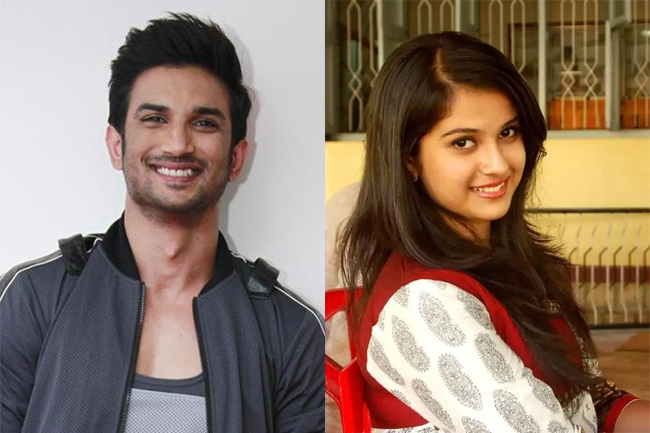
Newsroom, Jun 14: Bollywood star Sushant Singh Rajput, who was found dead in his house in Mumbai’s Bandra today, was heartbroken after the death of his former manager Disha Salian.

34-year-old actor had posted a heartfelt note after her death: “It’s such devastating news. My deepest condolences to Disha’s family and friends. May your soul rest in peace.” 

The police are considering 28-year-old Disha’s death as an accidental one and the investigation is on to find if it was a suicide. She died after falling off the 14th floor of a building in Malad, Mumbai on June 8.

It is not yet known if there is any connection between the two deaths. Sushant’s house help reportedly found him hanging inside his room on Sunday and cops are investigating the case. He was recently seen in Nitesh Tiwari’s Chhichhore and more recently on Netflix opposite Jacqueline Fernandez in Drive.

Who is Disha Salian?

Disha Salian hails from Karnataka’s coastal district of Udupi. She was born in 1992 into a business family background. She reportedly migrated to Mumbai with her family at an early age. 

After completing her education, she worked in the Times of India Group for more than three years. She went on to become the celebrity manager at Media Vantage.

Apart from Sushant, she had great links with many popular celebrities like Bharti Singh, Alisha Panwar, and others.

Comments

Add new comment

  • Coastaldigest.com reserves the right to delete or block any comments.
  • Coastaldigset.com is not responsible for its readers’ comments.
  • Comments that are abusive, incendiary or irrelevant are strictly prohibited.
  • Please use a genuine email ID and provide your name to avoid reject.