Karnataka launches new scholarship scheme for OBC students

News Network
June 18, 2015

Bengaluru, Jun 18: The Social Welfare Department has launched three new schemes for Other Backward Classes (OBC) students including cash awards for merit students to commemorate the centenary year of former chief minister D Devaraj Urs.

OBC students2

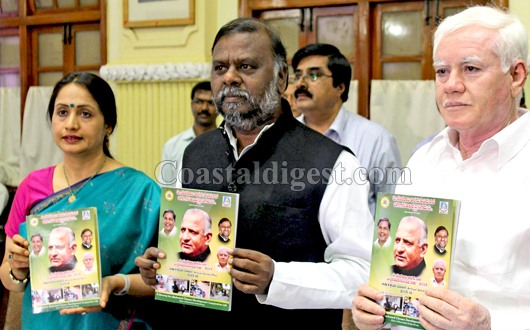
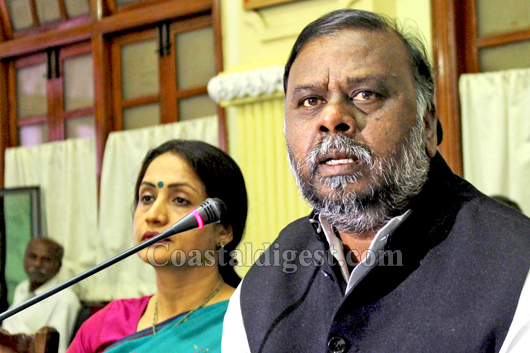
Addressing a press meet in Bengaluru on Wednesday,?Social?Welfare Minister H?Anjaneya said that the “Devaraj Urs Pratibha Puraskara” with cash awards ranging between Rs 10,000 and Rs 25,000 will be provided to 2,500 students of OBC communities who have secured 90 per cent marks.

The income of the students’ families should not exceed Rs one lakh per annum. “A sum of Rs 10,000 will be paid to 1,000 SSLC?students, Rs 15,000 to 500 II?PU students, Rs 20,000 to 500 degree students and Rs 25,000 to 500 students studying in professional institutions,” the minister said.

The department will provide assistance to the tune of Rs 10 lakh per annum for 100 students who wish to study aboard.

Candidates whose family income is below Rs six lakh per annum and who score a minimum of 60 per cent in their degree or postgraduate examination can apply for the “Devaraj Urs Study Abroad scheme”.

Under another scheme named after Urs, research scholars pursuing PhDs will be given a monthly stipend of Rs 5,000 per month for three years.

Details of the schemes are available on the website www.backwardclasses.kar.nic.in. Students can apply online by logging on to their website. Post-martic students of Other Backward Classes looking for government hostel facilities can also apply online from the same portal.

Hostel facilities

Last year, as many as 90,765 students were provided free hostel facilities in 869 hostels belonging to the Social Welfare Department.

The minister said an expert committee will be constituted soon to bring out a book on the life and times of Urs. A series of functions will be organised across the state on August 20, to coincide with the birth anniversary of Urs.

OBC students1

Comments

Pooja M R
 - 
Tuesday, 26 Jun 2018

How to apply 4 this scholarship

Sindhu
 - 
Sunday, 24 Jun 2018

I have completed 2nd PUC with 83% ...how can I apply this scholarship ?? Please guide me !!

Sindhu
 - 
Sunday, 24 Jun 2018

I have completed 2nd PUC with 83% ...how can I apply this scholarship?? Please guide me!!

Prasanna Desai
 - 
Saturday, 23 Jun 2018

I scored 70% in 2nd.  i belong to 3b category and our annual income is 6000 . Then how can we get a scholarship​..?

pavan kumar b s
 - 
Friday, 22 Jun 2018

iam a obc candidate and i pass tenth  so i apply merit scolarship so lhelp me

CHETHAN S
 - 
Tuesday, 19 Jun 2018

SIR 


I scored 86% in 2nd pu in 2018 


how can i got scolarship


my income is 20000


my caste is OBC(3A)

Chaitra
 - 
Sunday, 17 Jun 2018

I completed my 2nd pu with 89.5 percentage ,how can I apply for this scholarship , please guide me

SHWETHA HAMSE
 - 
Sunday, 17 Jun 2018

i have two daughters elder one has passed puc with 65% and younger one has passed sslc with 82% marks. kindly guide us for scholarships 


RUCHITA HEGDE
 - 
Tuesday, 12 Jun 2018

sir please tell me how to apply for the scholarship 

niveditha bm
 - 
Monday, 4 Jun 2018

i  passed my 2puc in 1st class, how to apply for scholarship

Menaka
 - 
Saturday, 2 Jun 2018

My got 91%.how to apply the scholarship 

PAVAN KUMAR.R
 - 
Friday, 11 May 2018

I passed 2puc in 1st class how to get scholarship

Sanjay
 - 
Thursday, 10 May 2018

Dear sir,


As my daughter scored in 10th state board exam out of 625/616. pls guide for scholarship process... i am Jain swethamper and service class person so it will be 

more helpful to build her carrier


Basavaraj veer…
 - 
Thursday, 10 May 2018

How to apply for this scholarship sir? and when is the deadline date

shahi
 - 
Wednesday, 9 May 2018

sir hw to apply fr this and whn is the applying dte 

Anura Mary
 - 
Tuesday, 8 May 2018

Hi, my daughter Tina Alex.L got 91% in PUC. She need to do Engineering, we are belong to 3B catergory. our Annual income is 80000. for futher studies can my daugher get scholarship or education loan. kindly assist.

Shraddha Shetty
 - 
Monday, 7 May 2018

Annual income is 11000 so i need schloorship for my higher studies

Kavya.k
 - 
Sunday, 6 May 2018

  • I have secured 90.66% in 2nd PUC 2018 .My family belong to OBC group(3A). l need scholarship for my higher education. 
  • How to apply? 
  • Please give me the right suggestions...............

dhanraj
 - 
Sunday, 6 May 2018

Respected madam/sir I have completed my 2nd puc with 91%, now I'm doing CA it would be great help if you provide me financial support, and my dad income is 10000. Your help would help me to grow for higher studies.

Ashok walikar
 - 
Friday, 4 May 2018

Please  gave me scholarship  for my higher education 


Thank you  sir/madam

beena balakrishna
 - 
Wednesday, 2 May 2018

Pls help me how to apply for OBC 2A Catergory . for studies in aborad. Pls lets me know the application details.

Dhanu Shree GR
 - 
Tuesday, 20 Mar 2018

Tell me about scholarships

Naveen j
 - 
Tuesday, 27 Feb 2018

Parents annual income 15000

Tanzil Ahmed
 - 
Thursday, 15 Feb 2018

How can I apply for this and on which site the link is available

M.D.Rafee
 - 
Tuesday, 9 Jan 2018

How to apply it and what's the last date?? 

muthunagammal
 - 
Tuesday, 9 Jan 2018

HOW TO APPLY THIS

babureddy
 - 
Friday, 5 Jan 2018

HOW WE APPLY FOR THIS

Some. N. T
 - 
Saturday, 2 Dec 2017

How to apply for this 

Bhaskar G Naik
 - 
Friday, 2 Dec 2016

Student annual income is 11000

Manoj Kumar
 - 
Sunday, 18 Sep 2016

Hw to we apply fr ths

sanjay u
 - 
Saturday, 27 Aug 2016

last date for applying this scholarship in 2016

Add new comment

  • Coastaldigest.com reserves the right to delete or block any comments.
  • Coastaldigset.com is not responsible for its readers’ comments.
  • Comments that are abusive, incendiary or irrelevant are strictly prohibited.
  • Please use a genuine email ID and provide your name to avoid reject.
coastaldigest.com news network
February 3,2020

A motley group of as many as 150 birders ‘walked the chirp’ in search of their feathered friends in and around the countryside of Manipal. The occasion was the 10th Edition of Manipal Bird Day organised by Manipal Birders Group on Sunday, February 2nd, 2020.

The day began ‘Bird Walk’ from Hotel Sheela Sagar (Opposite MIT campus) at 6:30 a.m. The birders divided themselves in smaller groups of 10-12 members and followed 13 different trails which took them through different terrains like hills, plains, paddy fields and wetlands. The idea was to sight as many birds as possible and record their presence in the region.

When the walk ended at about 10:00 a.m., the different groups have recorded a total of 125 species of birds, which was a bit lesser than the sighting of the yester years. “The 10th edition this year has seen a very good growth of interest among people. At the same time a decline has been seen in the bird species sighted compared to previous years,” said one of the organisers. Some of the rare birds sighted were Indian Pitta, Oriental Turtle Dove, Fork-Tailed Drongo Cuckoo, Orange Breasted Green Pigeon, Eurasian Marsh Harrier and Malabar Pied Hornbill.

The bird walk was followed with an interaction session at KMC Food Court and MAHE Vice Chancellor Dr. H. Vinod Bhat presided over the function. He felicitated six people who actively participated recently in a rescue mission of abandoned birds in Manipal.

A program then continued with a talk on ‘Ethical Photography’ by Dhruvam Desai, final year student of MIT, Manipal. This was followed by ‘Backyard Birding’ with Shubha Bhat from IISc Bangalore. She spoke on different ways to feed the birds with water using different materials for bird baths. “I have recorded 120 species of birds from bird baths in my garden,” she said. She encouraged the participants to have bird baths in their gardens or flats which will help quench the thirst of these little winged wonders during summer.

The participants involved themselves actively in the interaction sessions. The event was accompanied with an art exhibition titled ‘Feathered Jewels’ by Aditya Bhat. He presented around 18 paintings all from his memory of birding encounters.

Participation in Manipal Bird Day was open to all and entry was free.

MANIPAL BIRD DAY

Manipal Bird Day is an annual event dedicated to celebrating birds in Manipal. This day long event brings together a large number of birders from Manipal, Udupi, Mangalore, Mysore, Bangalore, Davangere and other places. Around 150-200 people gather and are split into different teams. They visit the assigned regions and count as many birds as possible. This non competitive event focuses on spreading awareness regarding the diverse avifauna around us. Turn out for this event has been increasing from 3 people to 200 in last 10 years. This is the 10th edition of Manipal Bird Day.

MANIPAL BIRDERS CLUB

Manipal Birders Club started as a Facebook group after the release of the first edition of “A Birders Handbook to Manipal” to share information about the latest sightings. It is now a formal group of over 500 like-minded members that meets at least once a week to go on bird walks. It is now a large birders community and a medium to organize events, bird walks and discussions about birds and sightings.

The next step would be to involve a higher number of local and young birders who will dictate the change in environment around the town in the coming years. With the co operation of Zoology and natural sciences students and other nature enthusiasts and faculty of different colleges weekly birding sessions have been conducted to involve and encourage more and more people to bird and get connected to the nature and to try to understand the changes happening around us, the media release issued by the group said.


Comments

Add new comment

  • Coastaldigest.com reserves the right to delete or block any comments.
  • Coastaldigset.com is not responsible for its readers’ comments.
  • Comments that are abusive, incendiary or irrelevant are strictly prohibited.
  • Please use a genuine email ID and provide your name to avoid reject.
News Network
July 10,2020

Bengaluru, Jul 10: Alarmed by the surging COVID-19 cases across the state, especially in Bengaluru, Karnataka Chief Minister BS Yediyurappa on Thursday urged the state capital’s residents not to visit their villages to prevent the infection’s spread.

“I urge the people of Bengaluru not to travel to their villages and prevent the infection from spreading in rural areas,” Yediurappa told reporters.

Admitting that the battle against the virus would be long, he said that the fight against COVID-19 could be won only through persistent efforts and with people’s cooperation with the frontline ‘warriors’.

“Combating the pandemic through preventive measures, providing treatment to the infected and saving lives are our priority,” he said.

With a record 2,228 positive cases on Thursday, the southern state’s COVID-19 tally shot up to 31,105, including 17,782 active cases, while 457 people have died of the infection till date, 17 just in the last 24 hours.

Of the new cases in the state, Bengaluru accounted for 1,373, taking its tally to 13,882, including 10,870 active, while 177 have succumbed to the virus since March 9.

No deaths were, however, reported in the city on Thursday.

Of the 457 patients in intensive care units (ICU) across the state, 292 are in Bengaluru hospitals.

Since unlock began on June 1, COVID-19 cases shot up to 15,242 on June 30 from 3,221 on May 31 and to 31,105 in 9 days since July 1.

Similarly, in Bengaluru, positive cases shot up to 4,555 on June 30 from 358 on May 31 and rose to 13,882 in 9 days since July 1.

The Chief Minister also appealed to all legislators of the ruling and opposition parties to give priority to contain the disease in their Assembly segments.

“Visit the COVID-19 designated hospitals and inspect if the required facilities are in place and bring any shortcomings to our notice,” the CM said

Comments

Add new comment

  • Coastaldigest.com reserves the right to delete or block any comments.
  • Coastaldigset.com is not responsible for its readers’ comments.
  • Comments that are abusive, incendiary or irrelevant are strictly prohibited.
  • Please use a genuine email ID and provide your name to avoid reject.
Ram Puniyani
February 10,2020

Noam Chomsky is one of the leading peace workers in the world. In the wake of America’s attack on Vietnam, he brought out his classic formulation, ‘manufacturing consent’. The phrase explains the state manipulating public opinion to have the public approve of it policies—in this case, the attack of the American state on Vietnam, which was then struggling to free itself from French colonial rule.

In India, we are witness to manufactured hate against religious minorities. This hatred serves to enhance polarisation in society, which undermines India’s democracy and Constitution and promotes support for a Hindu nation. Hate is being manufactured through multiple mechanisms. For example, it manifests in violence against religious minorities. Some recent ghastly expressions of this manufactured hate was the massive communal violence witnessed in Mumbai (1992-93), Gujarat (2002), Kandhamal (2008) and Muzaffarnagar (2013). Its other manifestation was in the form of lynching of those accused of having killed a cow or consumed beef. A parallel phenomenon is the brutal flogging, often to death, of Dalits who deal with animal carcasses or leather.

Yet another form of this was seen when Shambhulal Regar, indoctrinated by the propaganda of Hindu nationalists, burned alive Afrazul Khan and shot the video of the heinous act. For his brutality, he was praised by many. Regar was incited into the act by the propaganda around love jihad. Lately, we have the same phenomenon of manufactured hate taking on even more dastardly proportions as youth related to Hindu nationalist organisations have been caught using pistols, while police authorities look on.

Anurag Thakur, a BJP minster in the central government recently incited a crowd in Delhi to complete his chant of what should happen to ‘traitors of the country...” with a “they should be shot”. Just two days later, a youth brought a pistol to the site of a protest at Jamia Millia Islamia university and shouted “take Azaadi!” and fired it. One bullet hit a student of Jamia. This happened on 30 January, the day Nathuram Godse had shot Mahatma Gandhi in 1948. A few days later, another youth fired near the site of protests against the CAA and NRC at Shaheen Bagh. Soon after, he said that in India, “only Hindus will rule”.

What is very obvious is that the shootings by those associated with Hindu nationalist organisations are the culmination of a long campaign of spreading hate against religious minorities in India in general and against Muslims in particular. The present phase is the outcome of a long and sustained hate campaign, the beginning of which lies in nationalism in the name of religion; Muslim nationalism and Hindu nationalism. This sectarian nationalism picked up the communal view of history and the communal historiography which the British introduced in order to pursue their ‘divide and rule’ policy.

In India what became part of “social common sense” was that Muslim kings had destroyed Hindu temples, that Islam was spread by force, and that it is a foreign religion, and so on. Campaigns, such as the one for a temple dedicated to the Hindu god Rama to be built at the site where the Babri masjid once stood, further deepened the idea of a Muslim as a “temple-destroyer”. Aurangzeb, Tipu Sultan and other Muslim kings were tarnished as the ones who spread Islam by force in the subcontinent. The tragic Partition, which was primarily due to British policies, and was well-supported by communal streams also, was entirely attributed to Muslims. The Kashmir conflict, which is the outcome of regional, ethnic and other historical issues, coupled with the American policy of supporting Pakistan’s ambitions of regional hegemony, (which also fostered the birth of Al-Qaeda), was also attributed to the Muslims.

With recurring incidents of communal violence, these falsehoods went on going deeper into the social thinking. Violence itself led to ghettoisation of Muslims and further broke inter-community social bonds. On the one hand, a ghettoised community is cut off from others and on the other hand the victims come to be presented as culprits. The percolation of this hate through word-of-mouth propaganda, media and re-writing of school curricula, had a strong impact on social attitudes towards the minorities.

In the last couple of decades, the process of manufacturing hate has been intensified by the social media platforms which are being cleverly used by the communal forces. Swati Chaturvedi’s book, I Am a Troll: Inside the Secret World of the BJP’s Digital Army, tells us how the BJP used social media to spread hate. Whatapp University became the source of understanding for large sections of society and hate for the ‘Other’, went up by leaps and bounds. To add on to this process, the phenomenon of fake news was shrewdly deployed to intensify divisiveness.

Currently, the Shaheen Bagh movement is a big uniting force for the country; but it is being demonised as a gathering of ‘anti-nationals’. Another BJP leader has said that these protesters will indulge in crimes like rape. This has intensified the prevalent hate.

While there is a general dominance of hate, the likes of Shambhulal Regar and the Jamia shooter do get taken in by the incitement and act out the violence that is constantly hinted at. The deeper issue involved is the prevalence of hate, misconceptions and biases, which have become the part of social thinking.

These misconceptions are undoing the amity between different religious communities which was built during the freedom movement. They are undoing the fraternity which emerged with the process of India as a nation in the making. The processes which brought these communities together broadly drew from Gandhi, Bhagat Singh and Ambedkar. It is these values which need to be rooted again in the society. The communal forces have resorted to false propaganda against the minorities, and that needs to be undone with sincerity.

Combating those foundational misconceptions which create hatred is a massive task which needs to be taken up by the social organisations and political parties which have faith in the Indian Constitution and values of freedom movement. It needs to be done right away as a priority issue in with a focus on cultivating Indian fraternity yet again.


Comments

Add new comment

  • Coastaldigest.com reserves the right to delete or block any comments.
  • Coastaldigset.com is not responsible for its readers’ comments.
  • Comments that are abusive, incendiary or irrelevant are strictly prohibited.
  • Please use a genuine email ID and provide your name to avoid reject.