



Karnataka launches new scholarship scheme for OBC students

News Network
June 18, 2015

Bengaluru, Jun 18: The Social Welfare Department has launched three new schemes for Other Backward Classes (OBC) students including cash awards for merit students to commemorate the centenary year of former chief minister D Devaraj Urs.
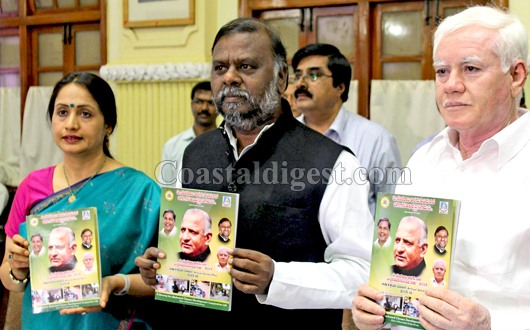
OBC students2

Addressing a press meet in Bengaluru on Wednesday,?Social?Welfare Minister H?Anjaneya said that the “Devaraj Urs Pratibha Puraskara” with cash awards ranging between Rs 10,000 and Rs 25,000 will be provided to 2,500 students of OBC communities who have secured 90 per cent marks.

The income of the students’ families should not exceed Rs one lakh per annum. “A sum of Rs 10,000 will be paid to 1,000 SSLC?students, Rs 15,000 to 500 II?PU students, Rs 20,000 to 500 degree students and Rs 25,000 to 500 students studying in professional institutions,” the minister said.

The department will provide assistance to the tune of Rs 10 lakh per annum for 100 students who wish to study aboard.

Candidates whose family income is below Rs six lakh per annum and who score a minimum of 60 per cent in their degree or postgraduate examination can apply for the “Devaraj Urs Study Abroad scheme”.

Under another scheme named after Urs, research scholars pursuing PhDs will be given a monthly stipend of Rs 5,000 per month for three years.

Details of the schemes are available on the website www.backwardclasses.kar.nic.in. Students can apply online by logging on to their website. Post-martic students of Other Backward Classes looking for government hostel facilities can also apply online from the same portal.

Hostel facilities

Last year, as many as 90,765 students were provided free hostel facilities in 869 hostels belonging to the Social Welfare Department.

The minister said an expert committee will be constituted soon to bring out a book on the life and times of Urs. A series of functions will be organised across the state on August 20, to coincide with the birth anniversary of Urs.
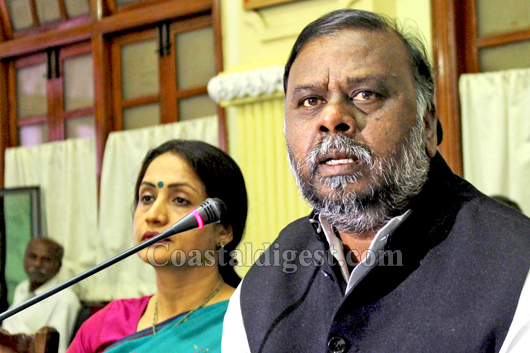

OBC students1

Comments

Pooja M R
 - 
Tuesday, 26 Jun 2018

How to apply 4 this scholarship

Sindhu
 - 
Sunday, 24 Jun 2018

I have completed 2nd PUC with 83% ...how can I apply this scholarship ?? Please guide me !!

Sindhu
 - 
Sunday, 24 Jun 2018

I have completed 2nd PUC with 83% ...how can I apply this scholarship?? Please guide me!!

Prasanna Desai
 - 
Saturday, 23 Jun 2018

I scored 70% in 2nd.  i belong to 3b category and our annual income is 6000 . Then how can we get a scholarship​..?

pavan kumar b s
 - 
Friday, 22 Jun 2018

iam a obc candidate and i pass tenth  so i apply merit scolarship so lhelp me

CHETHAN S
 - 
Tuesday, 19 Jun 2018

SIR 


I scored 86% in 2nd pu in 2018 


how can i got scolarship


my income is 20000


my caste is OBC(3A)

Chaitra
 - 
Sunday, 17 Jun 2018

I completed my 2nd pu with 89.5 percentage ,how can I apply for this scholarship , please guide me

SHWETHA HAMSE
 - 
Sunday, 17 Jun 2018

i have two daughters elder one has passed puc with 65% and younger one has passed sslc with 82% marks. kindly guide us for scholarships 


RUCHITA HEGDE
 - 
Tuesday, 12 Jun 2018

sir please tell me how to apply for the scholarship 

niveditha bm
 - 
Monday, 4 Jun 2018

i  passed my 2puc in 1st class, how to apply for scholarship

Menaka
 - 
Saturday, 2 Jun 2018

My got 91%.how to apply the scholarship 

PAVAN KUMAR.R
 - 
Friday, 11 May 2018

I passed 2puc in 1st class how to get scholarship

Sanjay
 - 
Thursday, 10 May 2018

Dear sir,


As my daughter scored in 10th state board exam out of 625/616. pls guide for scholarship process... i am Jain swethamper and service class person so it will be 

more helpful to build her carrier


Basavaraj veer…
 - 
Thursday, 10 May 2018

How to apply for this scholarship sir? and when is the deadline date

shahi
 - 
Wednesday, 9 May 2018

sir hw to apply fr this and whn is the applying dte 

Anura Mary
 - 
Tuesday, 8 May 2018

Hi, my daughter Tina Alex.L got 91% in PUC. She need to do Engineering, we are belong to 3B catergory. our Annual income is 80000. for futher studies can my daugher get scholarship or education loan. kindly assist.

Shraddha Shetty
 - 
Monday, 7 May 2018

Annual income is 11000 so i need schloorship for my higher studies

Kavya.k
 - 
Sunday, 6 May 2018

  • I have secured 90.66% in 2nd PUC 2018 .My family belong to OBC group(3A). l need scholarship for my higher education. 
  • How to apply? 
  • Please give me the right suggestions...............

dhanraj
 - 
Sunday, 6 May 2018

Respected madam/sir I have completed my 2nd puc with 91%, now I'm doing CA it would be great help if you provide me financial support, and my dad income is 10000. Your help would help me to grow for higher studies.

Ashok walikar
 - 
Friday, 4 May 2018

Please  gave me scholarship  for my higher education 


Thank you  sir/madam

beena balakrishna
 - 
Wednesday, 2 May 2018

Pls help me how to apply for OBC 2A Catergory . for studies in aborad. Pls lets me know the application details.

Dhanu Shree GR
 - 
Tuesday, 20 Mar 2018

Tell me about scholarships

Naveen j
 - 
Tuesday, 27 Feb 2018

Parents annual income 15000

Tanzil Ahmed
 - 
Thursday, 15 Feb 2018

How can I apply for this and on which site the link is available

M.D.Rafee
 - 
Tuesday, 9 Jan 2018

How to apply it and what's the last date?? 

muthunagammal
 - 
Tuesday, 9 Jan 2018

HOW TO APPLY THIS

babureddy
 - 
Friday, 5 Jan 2018

HOW WE APPLY FOR THIS

Some. N. T
 - 
Saturday, 2 Dec 2017

How to apply for this 

Bhaskar G Naik
 - 
Friday, 2 Dec 2016

Student annual income is 11000

Manoj Kumar
 - 
Sunday, 18 Sep 2016

Hw to we apply fr ths

sanjay u
 - 
Saturday, 27 Aug 2016

last date for applying this scholarship in 2016

Add new comment

  • Coastaldigest.com reserves the right to delete or block any comments.
  • Coastaldigset.com is not responsible for its readers’ comments.
  • Comments that are abusive, incendiary or irrelevant are strictly prohibited.
  • Please use a genuine email ID and provide your name to avoid reject.
News Network
March 31,2020

Kasaragod, Mar 31: Two more Kasaragod natives lost their lives on Monday due to blockade of the interstate border by Karnataka police in the wake of outbreak of novel coronavirus.

They could not get emergency health care as the Karnataka police stopped the ambulance carrying them to a hospital in Mangaluru at the border.

Another critically-ill person, who was sent back by Manguluru hospital authorities on March 23 for being a Kasaragod native, also died on Monday.

This is the fifth such case in many days.

The deceased are Madhavan, 50, Ayesha, 55 and Aziz Haji, 61 respectively.

All three of them lived near the Karnataka border.

Madhavan, who hailed from Thummanattu in Manjeswaram, died enroute to Kanhangad hospital after being denied entry to cross over to Karnataka. He had an acute bronchial attack.

Udyavar native Ayesha, an asthma patient, was referred to the Mangaluru Hospital by the hospital authorities at Uppali. When the authorities stopped her at the border, she was taken to the Kanhangad hospital. However, she died before reaching the hospital.

Aziz Haji, from Nayabazar Cherugoli MA Cottage at Uppala, was allegedly refused entry into a Manguluru Hospital on March 23 on account of being a Kasaragod native. Haji was a dialysis patient at the hospital. “We were unable to contact his doctor at the time,” his relatives said. Haji, who was on the ventilator, lost his life Monday morning.

One more from Kerala dies as Karnataka police stop ambulance at border
Kunjathoor native Abdul Hameed and Bandwal native Fathima also lost their lives due to the closing of the interstate border.

The district authorities has appealed to the Government to intervene in the matter and influence Karnataka as to lift a ban in crossing over for ambulances carrying critical patients.

The people of Kasaragod are largely dependent on the medical facilities in Mangaluru for critical illness care.

The Kasaragod MP, Rajmohan Unnithan has said he would move the Supreme court against this.

Kerala Chief Minister Pinarayi Vijayan has already taken up the issue with the Centre.

Kerala HC takes up issue with Karnataka AAG

The Kerala High Court on Monday sought the views of the Advocate General of Karnataka on the issue of the government of the neighbouring state blocking its borders with Kerala.

Considering a Public Interest Litigation (PIL) filed by Kerala High Court Advocates Association, seeking a direction for opening the roads, a bench comprising Justices A K Jayasankaran Nambiar and Shaji P Chali requested the Advocate General of Karnataka to join the hearing at 11 am on Tuesday through video conferencing.

The Court orally observed that the blockades erecting embankments on the inter-state roads would affect the people's right to life.

The Karnataka government blocked the state highway with to prevent movement of vehicles carrying essential goods and people seeking emergency treatment at hospitals in the city of Mangalore bordering Kasaragod.

With 97 infected patients, Kasaragod has the largest number of COVID-19 cases in Kerala. 7,437 people are under observation in the district.

Comments

Add new comment

  • Coastaldigest.com reserves the right to delete or block any comments.
  • Coastaldigset.com is not responsible for its readers’ comments.
  • Comments that are abusive, incendiary or irrelevant are strictly prohibited.
  • Please use a genuine email ID and provide your name to avoid reject.
News Network
April 28,2020

Bengaluru, Apr 28: With fresh guidelines on the COVID-19 lockdown expected soon, Karnataka Chief Minister B S Yediyurappa on Monday chaired a meeting with key ministers, officials and Deputy Commissioners of districts and discussed about re-starting economic activities in the state, as he took stock about of the pandemic.

"At the video conference with DCs, CM took stock of COVID-19 situation and measures taken to control its spread. Discussions also happened regarding starting of certain economic activities in parts of the state," official sources said. The state government would take any decision in this regard after the Centre issues fresh guidelines or directives, they said, without elaborating.

The meeting came hours after Prime Minister Narendra Modi held a video conferencing with Chief Ministers to discuss the situation arising due to COVID-19 in the country, which is under lockdown since March 25 to contain the pandemic. Only nine chief ministers spoke in the virtual meeting with the Prime Minister and Yediyurappa did not get an opportunity.

A senior Minister, who attended the meeting told PTI, necessary directions regarding the lockdown after May 3, they were likely to come in a couple of days.

"Most of the Chief Ministers wanted the lockdown to continue to contain the spread.... nothing concrete emerged, but we expect the necessary directions will follow in couple of days. This is what we expect after seeing what has happened as a followup to three to four such video conferences in the past," he said.

The Minister said the larger opinion was that the current measures should continue and interstate or inter-district movement should not be allowed. Regarding movement within the districts that are green zone, some decision may be taken soon, he said, adding the Prime Minister also asked states to concentrate on reforms, aimed at attracting investments in the days to come.

Comments

Add new comment

  • Coastaldigest.com reserves the right to delete or block any comments.
  • Coastaldigset.com is not responsible for its readers’ comments.
  • Comments that are abusive, incendiary or irrelevant are strictly prohibited.
  • Please use a genuine email ID and provide your name to avoid reject.
Wafa Sultana
April 4,2020

Over the last couple of days when the world was occupied with unifying efforts to fight the deadly Covid19 pandemic, sections of Indian media provided viewers a familiar scapegoat – the Indian Muslims – who are often stereotyped as a community being constantly at loggerheads with the citizenry and the State. Biased media channels were quick to resort to blaming the entire Muslim community for the spread of the disease in the country, thanks to an ill-timed Tablighi Jamaat gathering at its international headquarters in Delhi’s Nizamuddin. Unsurprisingly, the opprobrium was also marked by a sudden spike in WhatsApp forwards of videos with people wearing skullcaps licking spoons and performing Sufi breathing rituals, suggesting some sort of wild conspiracy on the part of the community to spread the virus.  Some media channels were quick to formulate, hypothesize and provide loose definitions of a newly discovered form of Jihad i.e. ‘Corona Jihad ’ thereby vilifying the Islamic faith and its followers.

While the investigation on the culpability of the organizers of the Nizamuddin event is still ongoing, there is enough information to suggest that the meeting was held before any lockdown was in force, and the problem began when there was no way of getting people out once the curfew was announced. Be that as it may, there is little doubt that organizing a meet of such a scale when there is a global pandemic smacks of gross misjudgment, and definitely the organizers should be held accountable if laws or public orders were defied. Attendees who attempt to defy quarantine measures must be dealt with strictly. However, what is alarming is that the focus and narrative have now shifted from the unfortunate event at Nizamuddin to the Tablighi Jamaat itself.

For those not familiar with the Tablighi Jamaat, the organization was founded in 1926 in Mewat by scholar Maulana Mohammad Ilyas. The Jamaat’s main objective was to get Muslim youth to learn and practice pristine Islam shorn of external influences. This is achieved through individuals dedicating time for moral and spiritual upliftment secluded from the rest of the world for a brief period of time. There is no formal membership process. More senior and experienced participants typically travel from one mosque to other delivering talks on religious topics, inviting local youth to attend and then volunteer for a spiritual retreat for a fixed number of days to a mosque in a nearby town or village to present the message to their co-religionists. Contrary to ongoing Islamophobic rhetoric, the movement does not actively proselytize. The focus is rather on getting Muslims to learn the teachings and practices of Islam.  This grassroots India-based movement has now grown to almost all countries with substantial Muslim populations. Its annual meets, or ‘ijtemas’ are among the largest Islamic congregations in the world after the annual Haj. One of the reasons for its popularity and wide network in the subcontinent and wordwide is the fact that it has eschewed the need for scholarly intervention, focusing on peer learning of fundamental beliefs and practice rather than high-falutin ideological debates. The Tablighi Jamaat also distinguishes itself from other Islamic movements through its strictly apolitical nature, with a focus on individual self-improvement rather than political mobilization. Hardships and difficulty in the world are expected to be face through ‘sabr’ (patience) and ‘dua’ (supplication),  than through quest for political power or influence. In terms of ideology, it is very much based on mainstream Sunni Islamic principles derived from the Deobandi school.

So, why is all this background important in the current context? While biased media entities have expectedly brought out their Islamophobic paraphernalia out for full display, more neutral commentators have tried to paint the Tablighi Jamaat as a fringe group and have tried to distance it from 'mainstream Muslims'. While the intent is no doubt innocent, this is a trap we must not fall into. This narrative, unfortunately, is also gaining ground due to apathy some Muslims have for the group, accusing it of being “disconnected from the realities of the world”. Unlike other Muslim organizations and movements, the Tablighi Jamat, by virtue of its political indifference, does not boast of high-profile advocates and savvy spokespersons who can defend it in mainstream or social media.  The use of adjectives such as 'outdated' and 'orthodox' by liberal columnists to describe the Jamaat feeds into the malignant attempt to change the narrative from the control of the spread of the pandemic due to the Nizamuddin gathering to 'raison d'etre' of the organization itself.

A large mainstream religious group like the Tablighi Jamaat with nearly a hundred-year history, normally considered to be peaceful, apolitical and minding its own business is now suddenly being villainized owing to unfortunate circumstances. Biased media reactions filled with disgust and hate seem to feed the Indian public conscience with a danngerous misconception - to be a nominal Muslim is okay but being a practicing one is not.  For those committed to the truth and fighting the spread of Islamophobia, the temptation to throw the entire Tablighi Jamaat under the bus must be resisted.

The writer is a lawyer and research scholar at Qatar University. Her research interests include Islamic law and politics.

Comments

zahoorahmed
 - 
Saturday, 4 Apr 2020

great article! provides a great perspective on tableeg jamat

Add new comment

  • Coastaldigest.com reserves the right to delete or block any comments.
  • Coastaldigset.com is not responsible for its readers’ comments.
  • Comments that are abusive, incendiary or irrelevant are strictly prohibited.
  • Please use a genuine email ID and provide your name to avoid reject.