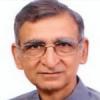
I don’t grow money on trees: HDK on delay in allocation of funds

TNN
August 10, 2018

Bengaluru, Aug 10: Chief minister HD Kumaraswamy on Thursday hit back at detractors questioning him over the delay in allocation of funds for various government schemes. His retort — he doesn’t grow money on trees.

“I am being accused of not allocating funds for the farm loan waiver, Shaadi Bhagya and other schemes. But I want to let them know that I don’t grow money on trees to distribute funds right away,” Kumaraswamy said while addressing a function in Bengaluru to mark World Tribal Day.

He added that a certain process has to be followed and there are multiple constraints that only he knows about. “I need to take officials into confidence before allocating funds. Despite these constraints, I have to convince them to release the money,” he added.

The CM, however, clarified that he would ensure all schemes meant for the poor and backward classes continue without any monetary hindrance. “I have found ways to allocate money for the Rs 49,000 crore mega farm loan waiver. People should have patience and give me some time to address other issues,” he said.

On reports that the government has reduced the allocation for Shaadi Bhagya, a scheme introduced by the previous Congress regime, Kumaraswamy said this isn’t true.

“Be it Shaadi Bhagya or any other scheme, there hasn’t been any reduction in allocation. I haven’t slashed allocation for programmes announced by the Congress government during its vote-on-account budget placed before the assembly in February this year,” the chief minister said.

Comments

Danish
 - 
Friday, 10 Aug 2018

Collect from BM Farooq (JDS) and return it later

Kumar
 - 
Friday, 10 Aug 2018

Basically some centre support is must for allocating funds. Centre should give funds. 

Add new comment

  • Coastaldigest.com reserves the right to delete or block any comments.
  • Coastaldigset.com is not responsible for its readers’ comments.
  • Comments that are abusive, incendiary or irrelevant are strictly prohibited.
  • Please use a genuine email ID and provide your name to avoid reject.
News Network
February 14,2020

Bengaluru, Feb 14: In order to bring down the accident rates, Karnataka government is planning to increase the penalty for road offences, state Transport Minister Laxman Savadi announced here on Thursday.

Addressing media persons here, he said, ''The Centre had brought an amendment to increase the penalty amount. We too have a similar proposal, which we will discuss, post the budget session.

''Before bringing in the amendment, we will create awareness among the road users. By increasing the penalty amount, the number of offences and accidents will come down,'' Mr Savadi added.

Comments

Add new comment

  • Coastaldigest.com reserves the right to delete or block any comments.
  • Coastaldigset.com is not responsible for its readers’ comments.
  • Comments that are abusive, incendiary or irrelevant are strictly prohibited.
  • Please use a genuine email ID and provide your name to avoid reject.
Ram Puniyani
June 29,2020

In Minneapolis, US an African American, George Floyd lost his life as the white policeman, Derek Chauvin, caught hold of him and put his knee on his neck. This is a technique developed by Israel police. For nine long minutes the knee of the while policeman was on the neck of George, who kept shouting, I can’t breathe.

Following this gruesome murder America erupted with protests, ‘Black lives matter’. The protestors were not just African Americans but also a large section of whites. Within US one police Chief apologized for the act of this. In a touching gesture of apology the police force came on its knees. This had reverberations in different parts of the World.

The act was the outcome of the remnants of the racial hatred against blacks by the whites. It is the hatred and the perceptions which are the roots of such acts of violence. What was also touching that the state of democracy in US is so deep that even the police apologized, the nation, whites and blacks, stood up as a sensitive collective against this violence.

US is not the only country where the brutal acts of violence torment the marginalized sections of society. In India there is a list of dalits, minorities and adivasis who are regularly subjected to such acts. But the reaction is very different. We have witnessed the case of Tabrez Ansari, who was tied to the pole by the mob and beaten ruthlessly. When he was taken to police station, police took enough time to take him to hospital and Tabrez died.

Mohsin Sheikh, a Pune techie was murdered by Hindu Rashtra Sena mob, the day Modi came to power in 2014. Afrazul was killed by Shambhulal Regar, videotaped the act released on social media. Regar believed that Muslims are indulging in love Jihad, so deserve such a fate. Mohammad Akhlaq is one among many names who were mob lynched on the issue of beef cow. The list can fill pages after pages.

Recently a young dalit boy was shot dead for the crime of entering a temple. In Una four dalits were stripped above waste and beaten mercilessly. Commenting on this act the Union Minister Ramvilas Paswan commented that it is a minor incident. Again the list of atrocities against dalits is long enough. The question is what Paswan is saying is the typical response to such gruesome murders and tortures. In US loss of one black life, created the democratic and humane response. In India there is a general silence in response to these atrocities. Some times after a good lapse of time, the Prime Minister will utter, ‘Mother Bharati has lost a son’. Most of the time victim is blamed. Some social groups raise their voice in some fora but by and large the deafening silence from the country is the norm.

India is regarded as the largest democracy. Democracy is the rule of law, and the ground on which the injustices are opposed. In America though the present President is insensitive person, but its institutions and processes of democratic articulations are strong. The institutions have deepened their roots and though prejudices may be guiding the actions of some of the officers like the killer of George, there are also police officers who can tell their President to shut up if he has nothing meaningful to say on the issue. The prejudices against Blacks may be prevalent and deep in character, still there are large average sections of society, who on the principles of ‘Black lives matter’. There are large sections of vocal population who can protest the violation of basic norms of democracy and humanism.

In India by contrast there are multiple reasons as to why the lives of Tabrez Ansari, Mohammad Akhlaq, Una dalit victims and their likes don’t matter. Though we claim that we are a democracy, insensitivity to injustices is on the rise. The strong propaganda against the people from margins has become so vicious during last few decades that any violence against them has become sort of a new normal. The large populace, though disturbed by such brutalities, is also fed the strong dose of biases against the victims. The communal forces have a great command over effective section of media and large section of social media, which generates Hate against these disadvantaged groups, thereby the response is muted, if at all.

As such also the process of deepening of our democracy has been weak. Democracy is a dynamic process; it’s not a fixed entity. Decades ago workers and dalits could protest for their rights. Now even if peasants make strong protests, dominant media presents it as blocking of traffic! How the roots of democracy are eroded and are visible in the form where the criticism of the ruling dispensation is labelled as anti National..

Our institutions have been eroded over a period of time, and these institutions coming to the rescue of the marginalized sections have been now become unthinkable. The outreach of communal, divisive ideology, the ideology which looks down on minorities, dalits and Adivasis has risen by leaps and bounds.

The democracy in India is gradually being turned in to a hollow shell, the rule of law being converted in to rule of an ideology, which does not have faith in Indian Constitution, which looks down upon pluralism and diversity of this country, which is more concerned for the privileges of the upper caste, rich and affluent. The crux of the matter is the weak nature of democracy, which was on way to become strong, but from decades of 1980s, as emotive issues took over, the strength of democracy started dwindling, and that’s when the murders of the types of George Floyd, become passé. One does complement the deeper roots of American democracy and its ability to protect the democratic institutions, which is not the case in India, where protests of the type, which were witnessed after George Floyd’s murder may be unthinkable, at least in the present times. 

Comments

Add new comment

  • Coastaldigest.com reserves the right to delete or block any comments.
  • Coastaldigset.com is not responsible for its readers’ comments.
  • Comments that are abusive, incendiary or irrelevant are strictly prohibited.
  • Please use a genuine email ID and provide your name to avoid reject.
News Network
February 23,2020

The euphoria over the claim that around 3,000 tonnes of gold reserves, worth Rs 12 trillion, have been discovered in Uttar Pradesh’s Sonbhadra district could not last even 24 hours, with the Geological Survey of India (GSI) clarifying on Saturday there had been no such discovery.

The GSI, headquartered in Kolkata, rebutted the claims of the Uttar Pradesh Directorate of Geology and Mining (UPDGM), and said “miscommunication” must have led to the wrong reporting of facts.

M Sridhar, director general of the GSI, said nobody in the agency gave any such data. He said 52,806 tonnes of gold ore was found in Sonbhadra district during the exploration work in 1998-2000. From this reserve, only 160 kg of gold can be extracted.

“There must have been some miscommunication of facts because of which the gold ore deposits have been overestimated. We have written a letter to Uttar Pradesh (UPDGM), stating the facts. The GSI has not estimated such kind of vast resource of gold deposits in Sonbhadra,” Sridhar said.

ALSO READ: 2,900-tonne gold mine found in Sonbhadra, 4 times that of India's reserves

The UPDGM had said on Friday that gold deposits were found in Son Pahadi and Hardi areas of the district. Sridhar said while gold ore was found in the area during the GSI’s exploration work in 1998-2000, it had told the state government about the discovery in November last year.

Under the new regulation, which came into effect from 2015, the GSI has to inform the state government when ore deposits are discovered. Earlier, no such action was mandatory. In its report, the GSI estimated that only 3.03 gm of gold can be extracted from a tonne of ore. It also clarified that even the extraction amount was tentative and could not be established for certain.

Moreover, Sridhar said the deposits were spread across only 0.5 sq km in forest land, which made the mining of ore economically unviable. “When there are several mines nearby, we can club it into a block and then it makes sense to mine the ore. But in this case, the deposits are too small to make it viable for any company to mine it,” he said. The GSI usually prioritises its exploration work based on the needs of the Centre. While strategic minerals like tin, cobalt, lithium, beryllium, germanium, gallium, indium, tantalum, niobium, selenium, and bismuth are atop the list in GSI exploration, gold is another commodity on its priority list.

According to the World Gold Council, India has reserves of 630 tonnes of gold.

Comments

Add new comment

  • Coastaldigest.com reserves the right to delete or block any comments.
  • Coastaldigset.com is not responsible for its readers’ comments.
  • Comments that are abusive, incendiary or irrelevant are strictly prohibited.
  • Please use a genuine email ID and provide your name to avoid reject.