Don’t send 5 arrested activists to jail now; keep them in house arrest till Sept 6: SC

Agencies
August 29, 2018

New Delhi, Aug 29: The Supreme Court today ordered that the five human rights activists, arrested in connection with the Bhima-Koregaon violence case, be kept under house arrest till September 6, saying dissent was the "safety valve" of democracy. 

The five activists will now not be sent to jail till September 6 but will remain in house arrest under police watch.

A bench headed by Chief Justice Dipak Misra questioned the Maharashtra police for arresting these persons after around nine months of the Bhima-Koregaon incident.

"Dissent is the safety valve of democracy and if you don't allow these safety valves, it will burst," the bench, which also comprised Justices A M Khanwilkar and D Y Chandrachud, said.

The top court also issued notice to the Maharashtra state government and the state police on the plea filed by five intellectuals, including historian Romila Thapar and economists Prabhat Patnaik and Devika Jain, against the arrest of the rights activists yesterday in connection with the case.

The counsel, appearing for Maharashtra, raised the issue of maintainability of the plea, saying a "stranger" cannot seek relief for the activists who have already approached the high courts.

Prominent Telugu poet Varavara Rao was arrested from Hyderabad, while activists Vernon Gonzalves and Arun Farreira were nabbed from Mumbai, trade union activist Sudha Bhardwaj from Faridabad in Haryana and civil liberties activist Gautam Navalakha was arrested from New Delhi.

The Maharashtra Police had arrested them in connection with an FIR lodged there following an event -- 'Elgaar Parishad' (conclave) -- held on December 31 last year that had triggered violence at Koregaon-Bhima village.

The bench posted the matter for hearing on September 6.

Comments

saad Khan
 - 
Thursday, 30 Aug 2018

SECLURISM ON STAKE 


Current BJP/RSS Regime


If you agree with their ideology then you are NATONALIST ----- if you disagree or if you speak against their policy then you are ANTI NATIONALIST and you will be linked with fake case like Moist or Terrorist group...

MR
 - 
Wednesday, 29 Aug 2018

For now encounter on hold..

Add new comment

  • Coastaldigest.com reserves the right to delete or block any comments.
  • Coastaldigset.com is not responsible for its readers’ comments.
  • Comments that are abusive, incendiary or irrelevant are strictly prohibited.
  • Please use a genuine email ID and provide your name to avoid reject.
Agencies
August 3,2020

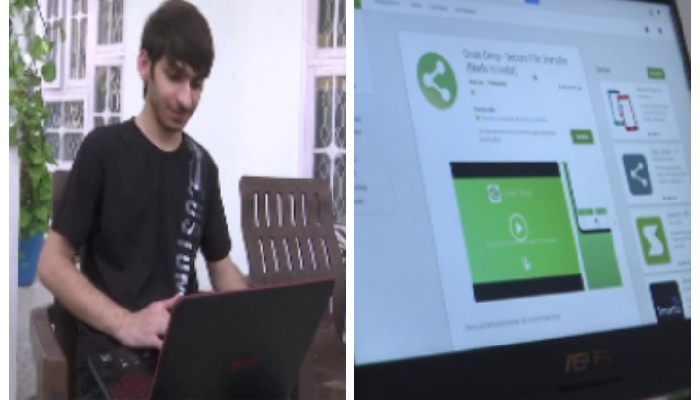
Rajouri, Aug 3: Ashfaq Mehmood Choudhary, a 17-year-old boy from Chattyear of Jammu and Kashmir's Rajouri district, has developed a file-sharing app 'Dodo Drop' which would enable users to share audios, videos, images, and texts between two devices without Internet access.

While speaking to media persons, Ashfaq Mehmood said that the 'Dodo Drop' application is an alternative to the Chinese 'SHAREit' app. "The Indian government has banned several Chinese apps due to data breaching, and among those apps was SHAREit which was used for sharing files.

Users faced a lot of problems due to the ban, and so I decided to make this file-sharing app. With 'Dodo Drop', users can share audios, videos, images, and even texts," he said.

Ashfaq said that it took him four weeks to develop the application, and it was launched on August 1 this year. The 'Dodo Drop' application has a transfer rate of up to 480 mbps, which is faster than the SHAREit app and is "quite easy" to use.

"Users can transfer data comprising photos, videos, audios, apps, texts, etc. between two devices with no Internet access. The transfers are fully encrypted and secure," he added.

"Our Prime Minister has always asserted the need for decreasing the dependency on foreign products and apps and to focus on the development of India-based apps. I tried to be part of the initiative of 'Aatmanirbhar Bharat' by developing an India-based file-sharing app. I want to develop global-standard apps for India," he added.

"We support and cooperate with him. He generates his own income by working on some projects and utilises it. We will continue to support him," said Parvez Ahmed Choudhary, Ashfaq's father.

In July, the Ministry of Electronics and Information Technology (MEITY) banned 47 apps, which were variants and cloned copies of the 59 apps banned earlier in June. These banned clones included SHAREit Lite, Tiktok Lite, Helo Lite, BIGO LIVE Lite, and VFY Lite.

The 59 apps had been banned by the Centre in June in view of the information available that they were engaged in activities which were "prejudicial to sovereignty and integrity and defence" of the country.

Almost all the apps banned had some preferential Chinese interest and the majority had parent Chinese companies.

The ban came amid border tensions with China in the Eastern Ladakh region.

Comments

Add new comment

  • Coastaldigest.com reserves the right to delete or block any comments.
  • Coastaldigset.com is not responsible for its readers’ comments.
  • Comments that are abusive, incendiary or irrelevant are strictly prohibited.
  • Please use a genuine email ID and provide your name to avoid reject.
News Network
June 13,2020

New Delhi, Jun 13: About 56 per cent of children were found to have no access to smartphones which have emerged as essential tools for online learning during the coronavirus-induced lockdown, according to a new study that surveyed 42,831 students at various school levels.

The study ''Scenario amidst COVID 19 - Onground Situations and Possible Solutions'' was conducted by child rights NGO Smile Foundation with an aim of analysing the access to technology.

The findings of the study showed that 43.99 per cent of surveyed children have access to smartphones and another 43.99 per cent of students have access to basic phones while 12.02 per cent do not have access to either smartphones or basic phones.

A total of 56.01 per cent children were found to have no access to smartphones, the study said.

"Concerning television, it was noted that while 68.99 per cent have access to TV, a major chunk of 31.01 per cent does not. Hence suggesting that using smartphone interventions for enhancing learning outcomes is not the only solution," it said.

At the primary level of education (class 1 to 5) 19,576 children were surveyed while at upper primary level (class 6 to 8) 12,277 children were surveyed. At secondary level of education (class 9 to 10) 5,537 children were surveyed and at higher secondary level (class 11 to 12) 3,216 children were surveyed.

The survey based on which the study was conducted used two approaches - over the telephone wherein the NGO reached out to the children whose database it already had -- students enrolled in various education centres of the NGO -- and second was through community mobilization wherein community workers went door to door to get answers.

The survey was conducted in 23 states, including Delhi, Gujarat, Maharashtra, Karnataka, Tamil Nadu, West Bengal, Andhra Pradesh, Telangana, Uttar Pradesh, Haryana, over a period of 12 days from April 16 to April 28.

The lockdown induced by the COVID-19 pandemic in March prompted schools and colleges to move to the virtual world for teaching and learning activities. However, many experts say the digital divide in the country may turn online classes into an operational nightmare.

As per official statistics, there are over 35 crore students in the country. However, it is not clear as to how many of them have access to digital devices and Internet.

Santanu Mishra, co-founder and executive trustee, Smile Foundation, said the findings clearly show that the digital divide is a real challenge, and multiple approaches need to be implemented to cater to all across the nation.

"As an exercise before we start any programme, we do a baseline study to understand the on-ground challenges so that our programmes can bring in real work and real change. With the onset of the pandemic, following indefinite school closures, it is more important than ever to understand the situation and how can we ensure that children are given quality education. Through this, we understand that customized modules need to be built in accordance with the channel of communication," he said.  

Comments

Add new comment

  • Coastaldigest.com reserves the right to delete or block any comments.
  • Coastaldigset.com is not responsible for its readers’ comments.
  • Comments that are abusive, incendiary or irrelevant are strictly prohibited.
  • Please use a genuine email ID and provide your name to avoid reject.
News Network
April 20,2020

New Delhi, Apr 20: With 1,553 more COVID-19 cases, India's total number of coronavirus cases has reached 17,265, the Ministry of Health and Family Welfare said on Monday.

Out of the total cases, 14,175 cases are active, while 2,547 people have been cured/discharged/migrated and 543 deaths have been reported, as per the ministry.

As many as 36 deaths have been reported in the last 24 hours.

According to the Ministry of Health and Family Welfare, Maharashtra continues to be the worst-affected state with a total of 4,203 cases. While 507 patients have recovered, 223 deaths have been reported.

Delhi comes next with 2,003 cases, out of which 72 patients have recovered while 45 patients have died.

Rajasthan has confirmed 1,478 cases, out of which 183 people have recovered while 14 patients are dead.

Tamil Nadu has reported 1,477 cases, out of which 411 have recovered and 15 have succumbed to the virus.

Madhya Pradesh has reported 1,407 cases, including 127 patients recovered and 70 patients dead. On the other hand, Uttar Pradesh has 1,084 COVID-19 positive cases.

In Kerala, which reported the country's first COVID-19 case, 402 people have been detected positive for coronavirus.

Comments

Add new comment

  • Coastaldigest.com reserves the right to delete or block any comments.
  • Coastaldigset.com is not responsible for its readers’ comments.
  • Comments that are abusive, incendiary or irrelevant are strictly prohibited.
  • Please use a genuine email ID and provide your name to avoid reject.