


59% of terror attacks in 2017 in 5 Asian countries; Muslims are biggest victims: US report

News Network
September 20, 2018

Washington, Sept 20: Almost 59% of all terrorist attacks in 2017 took place in five Asian countries, including Pakistan and India, a US report said Thursday.

The other three countries include Afghanistan, Iraq and the Philippines. Like every year, Muslim dominant countries were the biggest victims of the terror attacks in 2017 too.

The total number of terrorist attacks worldwide last year decreased by 23 per cent. Similarly, the total deaths due to terrorist violence decreased by 27 per cent, according to the report.

The decline in terrorist violence was largely due to dramatically fewer attacks and deaths in Iraq, Nathan Sales, State Department coordinator of counterterrorism, said during a conference call with reporters Thursday.

"Although terrorist attacks took place in 100 countries in 2017, they were concentrated geographically. Fifty-nine percent of all attacks took place in five countries. Those are Afghanistan, India, Iraq, Pakistan, and the Philippines. Similarly, 70 per cent of all deaths due to terrorist attacks took place in five countries, and those are Afghanistan, Iraq, Nigeria, Somalia, and Syria," he said.

The annual State Department Country Report on Terrorism, he said, notes a number of major strides that the United States and its allies made to defeat and degrade terrorist organisations in 2017.

"We worked with allies and partners around the world to expand information sharing, improve aviation security, enhance law enforcement and rule of law capacities, and to counter terrorist radicalisation with a focus on preventing recruitment and recidivism," Sales said.

However, despite these many successes, the terrorist landscape grew more complex in 2017, he said. "ISIS, al-Qaida, and their affiliates have proven to be resilient, determined, and adaptable," Sales added.

He said foreign terrorist fighters were heading home from the war zones in Iraq and Syria or travelling to third countries to join ISIS branches there.

"We also are experiencing an increase in attacks by homegrown terrorists – that is, people who have been inspired by ISIS but have never set foot in Syria or Iraq. We've seen ISIS-directed or ISIS-inspired attacks outside the war zone on soft targets and in public spaces like hotels, tourist resorts, and cultural sites," Sales said.

"We've seen this trend in places as far as Bamako, Barcelona, Berlin, London, Marawi, New York City, Ouagadougou, and many others," added the top counter terrorism official from the State Department.

Iran, he alleged, remains the world's leading "state sponsor of terrorism" and is responsible for intensifying multiple conflicts and undermining US interests in Syria, Yemen, Iraq, Bahrain, Afghanistan and Lebanon. Sales said Tehran uses a number of proxies and other instruments such as Lebanese Hizbollah and the Islamic Revolutionary Guard Corp's Quds Force.

The threats posed by Iran's support for terrorism are not confined to the Middle East; they are truly global, he asserted.

"We have seen Iran's and its proxies' terrorist-related activities across the globe. There are active fundraising networks in places as far afield as Africa, in South America. We've seen weapons caches planted around the world," he said.

Al-Qaida, he said, was a determined and patient adversary.

It has largely remained out of the headlines in recent years as it has been content to let ISIS bear the brunt of the international response, but one shouldn't confuse that period of relative quiet with al-Qaida's abandonment of its capabilities or intentions to strike the US and its allies, Sales said.

"That is why we are continuing to keep the pressure on al-Qaida, its affiliates, and its individuals. The report details a number of efforts that we've taken to designate – and I mentioned in my opening remarks – efforts that we have taken to designate al-Qaida affiliates in Syria, in Mali, as well as individuals who are associated with the group," he said.

"So, although ISIS has gotten the headlines, we remain focused and determined to confront al-Qaida wherever we find it," Sales added.

Comments

Rashid
 - 
Thursday, 20 Sep 2018

As per reports it is stated that ISIS and Al qaeda are global terrorist org..it is also reported that their main intention is create islamic state.. we don't know actual hidden agenda of these organizations , and which power is behind them....even though Islamic faith never focused only to create Islamic state. but islam focused to spread true faith 'there is only one creator , worship Him only and do not worship any of His creation'..


  I even don't know by the actions of these outfits , what muslim community gain... they created anarchy in muslim majority states like syria, iraq.libya.. etc , even trying destabilize other countries KSA, egypt yeman etc. where muslims are minorities , whole of the community is blamed for their actions , even state views whole of the community as suspects.. even hesitate to accept poor migrated people also...


Do Islamic state is part of islamic faith ? No. it is only part of worldly affair... If Allah wills it provides.. If provided it is the duty of ruler to spread peace and distribute national resource equally to all the residents.. If not provided obey other ruler on worldly affairs , even if he is disbeliever and be obedient to creator...

Dear naresh i appricate your word TRUE MUSLIM WORK FOR PEACE, but there is one important question will araise? who create terrorist  and why they do and why does they dont hav any innocent life like us ? why.


asnwer is simple, if i drop bomb sitting inside my house using drone plane and kill your all family what you will do!!! simple you will find out whos drone it is and try to kill that Country people who made your life mesirable...thats what going on in middle east....these american bast@rd who whant to rule all world and only poor peole will become terror..."if you love me i will love you, if you kill me i wil try my best to kill you" MUSLIM are courages people they will die fighting instead of  living like maron in this world 

Naresh
 - 
Thursday, 20 Sep 2018

In contradiction, most of the killers are so called muslims. (They are truly following or not, they identify as muslims. like rss claim themselves are true hindus) 


Apart from all these, there are true muslims who works for peace

Add new comment

  • Coastaldigest.com reserves the right to delete or block any comments.
  • Coastaldigset.com is not responsible for its readers’ comments.
  • Comments that are abusive, incendiary or irrelevant are strictly prohibited.
  • Please use a genuine email ID and provide your name to avoid reject.
Agencies
July 28,2020

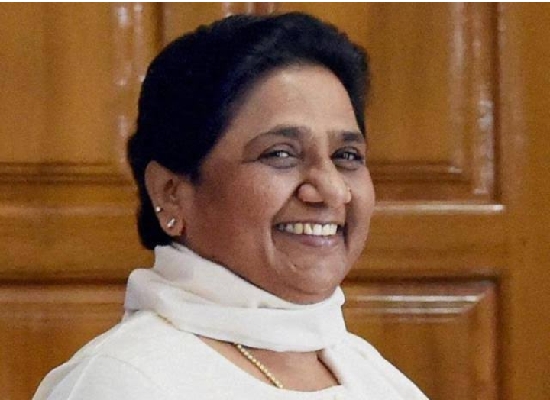
New Delhi, Jul 28: Chief Minister Ashok Gehlot had "unconstitutionally" merged six MLAs of the Bahujan Samaj Party (BSP) with the Congress in Rajasthan, he did the same in his earlier tenure too, for which we wanted to teach him and his party a lesson, said BSP chief Mayawati on Tuesday.

The BSP chief added that her party could have gone to courts earlier but decided to wait for the "right opportunity".

"In Rajasthan, after elections results, BSP gave unconditional support of all its 6 MLAs to Congress. Unfortunately, Chief Minister Ashok Gehlot, out of his malicious intent and to damage BSP, merged them with Congress unconstitutionally. He did the same even during his earlier tenure," Mayawati said here.

"BSP could have gone to the court earlier too but we were looking for the time to teach Congress party and CM Ashok Gehlot a lesson. Now we have decided to go to the Court. We will not let this matter alone. We will go even to the Supreme Court," she added.

The BSP chief further reiterated that the party has asked the six MLAs to vote against the Congress government led by Ashok Gehlot if a trust vote takes place on the floor of the Rajasthan Assembly, failing which "their party membership will be cancelled".
She further said that the merger of BSP MLAs with Congress was immoral and went against the mandate given by voters in Rajasthan.
"Ulta-chor kotwal ko daante (the thief accuses the cop of wrongs) they (Congress) themselves indulge in wrongdoing and then accuse us," she further said.
On Sunday, the BSP issued a whip to six MLAs, asking them to vote against Congress in case of a no-confidence motion or any proceedings to be held during the Rajasthan Assembly session.

National General Secretary of BSP Satish Chandra Mishra, while speaking to news agecncy said, "Notices have been issued to the six MLAs separately as well as collectively, pointing out that since BSP is a National Party, there cannot be any merger at the state level at the instance of six MLAs unless there is a merger of BSP at the national level. If they violate it, they will be disqualified.

Notices have been issued to all six MLAs- - R Gudha, Lakhan Singh, Deep Chand, JS Awana, Sandeep Kumar and Wajib Ali, who are elected to the Rajasthan Assembly."
However, later on Monday, Lakhan Singh, hit back saying he and the five others had already joined the Congress.

"We six MLAs have already joined the Congress. BSP remembered us after nine months. They have issued this whip, after a message from the BJP. On this basis they are going to court", said Karauli MLA Lakhan Singh.

Rajasthan government is in turmoil after simmering differences between Deputy Chief Minister Sachin Pilot and Gehlot came out in the open. Pilot was removed as the Deputy Chief Minister and the state unit chief of Congress.

The Congress has accused the BJP of indulging in horse-trading to bring down the Gehlot government. The BJP has rejected the allegations.

Comments

Add new comment

  • Coastaldigest.com reserves the right to delete or block any comments.
  • Coastaldigset.com is not responsible for its readers’ comments.
  • Comments that are abusive, incendiary or irrelevant are strictly prohibited.
  • Please use a genuine email ID and provide your name to avoid reject.
News Network
July 28,2020

Hounde, Jul 28: Coronavirus and its restrictions are pushing already hungry communities over the edge, killing an estimated 10,000 more young children a month as meager farms are cut off from markets and villages are isolated from food and medical aid, the United Nations warned Monday.

In the call to action shared with The Associated Press ahead of publication, four UN agencies warned that growing malnutrition would have long-term consequences, transforming individual tragedies into a generational catastrophe.

Hunger is already stalking Haboue Solange Boue, an infant from Burkina Faso who lost half her former body weight of 5.5 pounds (2.5 kilograms) in just a month. Coronavirus restrictions closed the markets, and her family sold fewer vegetables. Her mother was too malnourished to nurse.

“My child,” Danssanin Lanizou whispered, choking back tears as she unwrapped a blanket to reveal her baby's protruding ribs.

More than 550,000 additional children each month are being struck by what is called wasting, according to the UN — malnutrition that manifests in spindly limbs and distended bellies. Over a year, that's up 6.7 million from last year's total of 47 million. Wasting and stunting can permanently damage children physically and mentally.

“The food security effects of the COVID crisis are going to reflect many years from now,” said Dr. Francesco Branca, the WHO head of nutrition. “There is going to be a societal effect.”

From Latin America to South Asia to sub-Saharan Africa, more poor families than ever are staring down a future without enough food.

In April, World Food Program head David Beasley warned that the coronavirus economy would cause global famines “of biblical proportions” this year. There are different stages of what is known as food insecurity; famine is officially declared when, along with other measures, 30% of the population suffers from wasting.

The World Food Program estimated in February that one Venezuelan in three was already going hungry, as inflation rendered salaries nearly worthless and forced millions to flee abroad. Then the virus arrived.

“Every day we receive a malnourished child,” said Dr. Francisco Nieto, who works in a hospital in the border state of Tachira.

In May, Nieto recalled, after two months of quarantine, 18-month-old twins arrived with bodies bloated from malnutrition. The children's mother was jobless and living with her own mother. She told the doctor she fed them only a simple drink made with boiled bananas.

“Not even a cracker? Some chicken?” he asked.

“Nothing,” the children's grandmother responded. By the time the doctor saw them, it was too late: One boy died eight days later.

The leaders of four international agencies — the World Health Organization, UNICEF, the World Food Program and the Food and Agriculture Organization — have called for at least dollar 2.4 billion immediately to address global hunger.

But even more than lack of money, restrictions on movement have prevented families from seeking treatment, said Victor Aguayo, the head of UNICEF's nutrition program.

“By having schools closed, by having primary health care services disrupted, by having nutritional programs dysfunctional, we are also creating harm,” Aguayo said. He cited as an example the near-global suspension of Vitamin A supplements, which are a crucial way to bolster developing immune systems.

In Afghanistan, movement restrictions prevent families from bringing their malnourished children to hospitals for food and aid just when they need it most. The Indira Gandhi hospital in the capital, Kabul, has seen only three or four malnourished children, said specialist Nematullah Amiri. Last year, there were 10 times as many.

Because the children don't come in, there's no way to know for certain the scale of the problem, but a recent study by Johns Hopkins University indicated an additional 13,000 Afghans younger than 5 could die.

Afghanistan is now in a red zone of hunger, with severe childhood malnutrition spiking from 690,000 in January to 780,000 — a 13% increase, according to UNICEF.

In Yemen, restrictions on movement have blocked aid distribution, along with the stalling of salaries and price hikes. The Arab world's poorest country is suffering further from a fall in remittances and a drop in funding from humanitarian agencies.

Yemen is now on the brink of famine, according to the Famine Early Warning Systems Network, which uses surveys, satellite data and weather mapping to pinpoint places most in need.

Some of the worst hunger still occurs in sub-Saharan Africa. In Sudan, 9.6 million people live from one meal to the next — a 65% increase from the same time last year.

Lockdowns across Sudanese provinces, as around the world, have dried up work and incomes for millions. With inflation hitting 136%, prices for basic goods have more than tripled.

“It has never been easy but now we are starving, eating grass, weeds, just plants from the earth,” said Ibrahim Youssef, director of the Kalma camp for internally displaced people in war-ravaged south Darfur.

Adam Haroun, an official in the Krinding camp in west Darfur, recorded nine deaths linked with malnutrition, otherwise a rare occurrence, over the past two months — five newborns and four older adults, he said.

Before the pandemic and lockdown, the Abdullah family ate three meals a day, sometimes with bread, or they'd add butter to porridge. Now they are down to just one meal of “millet porridge” — water mixed with grain. Zakaria Yehia Abdullah, a farmer now at Krinding, said the hunger is showing “in my children's faces.”

“I don't have the basics I need to survive,” said the 67-year-old, who who hasn't worked the fields since April. “That means the 10 people counting on me can't survive either.”

Comments

Add new comment

  • Coastaldigest.com reserves the right to delete or block any comments.
  • Coastaldigset.com is not responsible for its readers’ comments.
  • Comments that are abusive, incendiary or irrelevant are strictly prohibited.
  • Please use a genuine email ID and provide your name to avoid reject.
coastaldigest.com news network
June 29,2020

Mangaluru, Jun 29: Senior IPS officer Vikash Kumar Vikash today took over as the new commissioner of police of Mangaluru city.

He replaced Dr P S Harsha, who was recently transferred and posted as the Deputy Inspector General and Commissioner of Information and Public Relations.

Before coming to Mangaluru as city police chief, Vikash Kumar was the Deputy Inspector General of Police and Commander of Anti Naxal Force.

He had also served as the superintendent of police of Chikkamagaluru district.

Comments

Add new comment

  • Coastaldigest.com reserves the right to delete or block any comments.
  • Coastaldigset.com is not responsible for its readers’ comments.
  • Comments that are abusive, incendiary or irrelevant are strictly prohibited.
  • Please use a genuine email ID and provide your name to avoid reject.