Rahul Gandhi's two-day UAE visit begins

News Network
January 10, 2019

Dubai, Jan 10: India’s Congress party president Rahul Gandhi has arrived in Dubai for a much-anticipated visit to the UAE that will see him address Indian expatriates at Dubai International Cricket Stadium on January 11.

A large crowd had gathered to see Gandhi at the airport.

When he finally arrived, there were smiles all around.

Comments

Wellwisher
 - 
Friday, 11 Jan 2019

It's a good sign from Indian expatriate to Mr.Rahul Gandhi. Good Luck A sign of Young leaders requirement by the Indians.

Add new comment

  • Coastaldigest.com reserves the right to delete or block any comments.
  • Coastaldigset.com is not responsible for its readers’ comments.
  • Comments that are abusive, incendiary or irrelevant are strictly prohibited.
  • Please use a genuine email ID and provide your name to avoid reject.
News Network
March 16,2020

New Delhi, Mar 16: Due to the coronavirus pandemic, most airlines in the world will be bankrupt by the end of May and only a coordinated government and industry action right now can avoid the catastrophe, said global aviation consultancy firm CAPA in a note on Monday.

"As the impact of the coronavirus and multiple government travel reactions sweep through our world, many airlines have probably already been driven into technical bankruptcy, or are at least substantially in breach of debt covenants," it stated.

Across the world, airlines have announced drastic reduction in their operations in the wake of the coronavirus outbreak. For example, Atlanta-based Delta Air Lines stated on Sunday that it would be grounding 300 aircraft in its fleet and reduce flights by 40 per cent.

The US has suspended all tourist visas for people belonging to the European Union, the UK and Ireland. Similarly, the Indian government has suspended all tourist visas and e-visas granted on or before March 11.

CAPA, in its note on Monday, said, "By the end of May-2020, most airlines in the world will be bankrupt. Coordinated government and industry action is needed - now - if catastrophe is to be avoided."

Cash reserves are running down quickly as fleets are grounded and "what flights there are operate much less than half full", it added.

"Forward bookings are far outweighed by cancellations and each time there is a new government recommendation it is to discourage flying. Demand is drying up in ways that are completely unprecedented. Normality is not yet on the horizon," it said.

India's largest airline IndiGo -- which has around 260 planes in its fleet -- said on Thursday that it has seen a decline of 15-20 per cent in daily bookings in the last few days.

The low-cost carrier had stated that it expects its quarterly earnings to be materially impacted due to such decline.

CAPA said the failure to coordinate the future will result in protectionism and much less competition.

"The alternative does not bear thinking about. An unstructured and nationalistic outcome will not be survival of the fittest.

"It will mostly consist of airlines that are the biggest and the best-supported by their governments. The system will reek of nationalism. And it will not serve the needs of the 21st century world. That is not a prospect that any responsible government should be prepared to contemplate," the consultancy firm said.

Comments

Add new comment

  • Coastaldigest.com reserves the right to delete or block any comments.
  • Coastaldigset.com is not responsible for its readers’ comments.
  • Comments that are abusive, incendiary or irrelevant are strictly prohibited.
  • Please use a genuine email ID and provide your name to avoid reject.
News Network
May 23,2020

Karachi, May 23: Ninety-seven people were killed and two survived when a passenger plane crashed into homes in Pakistan's southern city of Karachi, health officials said Saturday.

The Pakistan International Airlines (PIA) plane had made multiple approaches to land at the city's airport when it came down in a residential area, damaging buildings and sparking a rescue operation that lasted into the night.

All passengers and crew had been accounted for and the bodies of those killed had been recovered from the crash site, the Sindh Health Ministry said, adding that 19 had been identified.

A local hospital earlier reported it had received the bodies of people killed on the ground.

The site remained cordoned off on Saturday morning.

The crash sent plumes of smoke were into the air as rescue workers and residents searched the debris for people and as firefighters tried to extinguish the flames.

An AFP reporter witnessed charred bodies being loaded into ambulances.

PIA said the plane lost contact with air traffic control just after 2:30 pm (0930 GMT) travelling from Lahore to Karachi.

The disaster comes as Pakistanis prepare to celebrate the end of Ramadan and the beginning of Eid al-Fitr, with many travelling back to their homes in cities and villages.

Comments

Add new comment

  • Coastaldigest.com reserves the right to delete or block any comments.
  • Coastaldigset.com is not responsible for its readers’ comments.
  • Comments that are abusive, incendiary or irrelevant are strictly prohibited.
  • Please use a genuine email ID and provide your name to avoid reject.
Agencies
August 2,2020

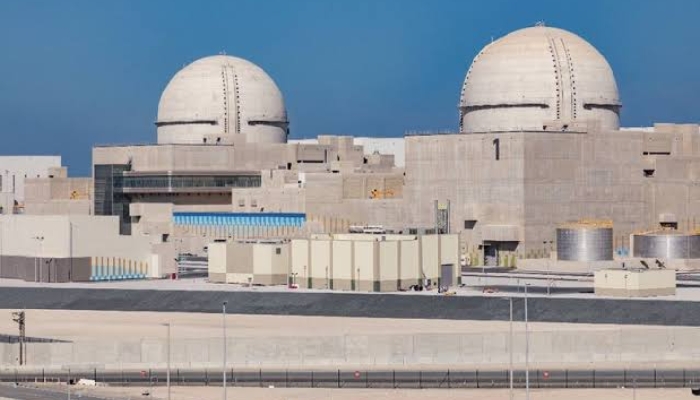
Dubai, Aug 2: The United Arab Emirates (UAE) announced on Saturday that it has started operations in the first of four reactors at the Barakah nuclear power station - the first nuclear power plant in the Arab world.

Emirates Nuclear Energy Corporation (ENEC), which is building and operating the plant with Korea Electric Power Corporation (KEPCO) said in a press release that its subsidiary Nawah Energy Company "has successfully started up Unit 1 of the Barakah Nuclear Energy Plant, located in the Al Dhafrah Region of Abu Dhabi".

That signals that Unit 1, which had fuel rods loaded in March, has achieved "criticality" - a sustained fission chain reaction.

"The start-up of Unit 1 marks the first time that the reactor safely produces heat, which is used to create steam, turning a turbine to generate electricity," said ENEC.

Barakah, which was originally scheduled to open in 2017, has been dogged by delays and is billions of dollars over budget. It has also raised myriad concerns among nuclear energy veterans who are concerned about the potential risks Barakah could visit upon the Arabian Peninsula, from an environmental catastrophe to a nuclear arms race.

Paul Dorfman, an honorary senior research fellow at the Energy Institute, University College London and founder and chair of the Nuclear Consulting Group, has criticised the Barakah reactors' "cheap and cheerful" design that he says cuts corners on safety.

Dorfman authored a report (PDF) last year detailing key safety features Barakah's reactors lack, such as a "core catcher" to literally stop the core of a reactor from breaching the containment building in the event of a meltdown. The reactors are also missing so-called Generation III Defence-In-Depth reinforcements to the containment building to shield against a radiological release resulting from a missile or fighter jet attack.

Both of these engineering features are standard on new reactors built in Europe, says Dorfman.

There have been at least 13 aerial attacks on nuclear facilities in the Middle East - more than any other region on earth.

The vulnerability of critical infrastructure in the Arabian Peninsula was further laid bare last year after Saudi Arabia's oil facilities at Abqaiq and Khurais were attacked by 18 drones and seven cruise missiles - an assault that temporarily knocked out more than half of the kingdom's oil production.

On Saturday, Dorfman reiterated his concern that there is no regional protocol in place to determine liability should an accident or incident at Barakah result in radioactive contamination spreading from the UAE to its neighbours. 

"Given Barakah has started up, because of all the well-rehearsed nuclear safety and security problems, it may be critically important that the Gulf states collectively evolve a Nuclear Accident Liability Convention, so that if anything does go wrong, victim states may have some sort of redress," Dorfman told Al Jazeera. 

The UAE has substantial oil and gas reserves, but it has made huge investments in developing alternative energy sources, including nuclear and solar.

Experts though have questioned why the UAE - which is bathed in sunlight and wind - has pushed ahead with nuclear energy - a far more expensive and riskier option than renewable energy sources.

When the UAE first announced Barakah in 2009, nuclear power was cheaper than solar and wind. But by 2012 - when the Emirates started breaking ground to build the reactors - solar and wind costs had plummeted dramatically.

Between 2009 and 2019, utility-scale average solar photovoltaic costs fell 89 percent and wind fell 43 percent, while nuclear jumped 26 percent, according to an analysis by the financial advisory and asset manager Lazard.

There are also concerns about the potential for Barakah to foment nuclear proliferation in the Middle East - a region rife with geopolitical fault lines and well-documented history of nuclear secrecy.

The UAE has sought to distance itself from the region's bad behaviour by agreeing not to enrich its own uranium or reprocess spent fuel. It has also signed up to the United Nation's nuclear watchdog's Additional Protocol, significantly enhancing inspection capabilities, and secured a 123 Agreement with the United States that allows bilateral civilian nuclear cooperation.


Comments

Add new comment

  • Coastaldigest.com reserves the right to delete or block any comments.
  • Coastaldigset.com is not responsible for its readers’ comments.
  • Comments that are abusive, incendiary or irrelevant are strictly prohibited.
  • Please use a genuine email ID and provide your name to avoid reject.


