Rahul Gandhi's two-day UAE visit begins

News Network
January 10, 2019

Dubai, Jan 10: India’s Congress party president Rahul Gandhi has arrived in Dubai for a much-anticipated visit to the UAE that will see him address Indian expatriates at Dubai International Cricket Stadium on January 11.

A large crowd had gathered to see Gandhi at the airport.

When he finally arrived, there were smiles all around.

Comments

Wellwisher
 - 
Friday, 11 Jan 2019

It's a good sign from Indian expatriate to Mr.Rahul Gandhi. Good Luck A sign of Young leaders requirement by the Indians.

Add new comment

  • Coastaldigest.com reserves the right to delete or block any comments.
  • Coastaldigset.com is not responsible for its readers’ comments.
  • Comments that are abusive, incendiary or irrelevant are strictly prohibited.
  • Please use a genuine email ID and provide your name to avoid reject.
News Network
February 17,2020

Feb 17: Chinese authorities on Monday reported a slight upturn in new virus cases and 105 more deaths for a total of 1,770 since the outbreak began two months ago.

The 2,048 new cases followed three days of declines but was up by just 39 cases from the previous day’s figure. Another 10,844 people have recovered from COVID-19, a disease caused by the new coronavirus, and have been discharged from hospitals, according to Monday’s figures.

The update followed the publication late Saturday in China’s official media of a recent speech by President Xi Jinping in which he indicated for the first time that he had led the response to the outbreak from early in the crisis. While the reports were an apparent attempt to demonstrate the Communist Party leadership acted decisively from the start, it also opened Xi up to criticism over why the public was not alerted sooner.

In his speech, Xi said he gave instructions on fighting the virus on Jan. 7 and ordered the shutdown of the most-affected cities that began on Jan. 23.

The disclosure of his speech indicates top leaders knew about the outbreak’s potential severity at least two weeks before such dangers were made known to the public. It was not until late January that officials said the virus can spread between humans and public alarm began to rise.

New cases in other countries are raising growing concerns about containment of the virus.

Taiwan on Sunday reported its first death from COVID-19, the fifth fatality outside of mainland China. Taiwan’s Central News Agency, citing health minister Chen Shih-chung, said the man who died was in his 60s and had not traveled overseas recently and had no known contact with virus patients.

Japanese Prime Minister Shinzo Abe convened an experts meeting to discuss containment measures in his country, where more than a dozen cases have emerged in the past few days without any obvious link to China.

“The situation surrounding this virus is changing by the minute,” Abe said.

Japanese Health Minister Katsunobu Kato said the country is “entering into a phase that is different from before,” requiring new steps to stop the spread of the virus.

Japan now has 413 confirmed cases, including 355 from a quarantined cruise ship, and one death from the virus. Its total is the highest number of cases among about two dozen countries outside of China where the illness has spread.

Hundreds of Americans from the cruise ship took charter flights home, as Japan announced another 70 infections had been confirmed on the Diamond Princess. Canada, Hong Kong and Italy were planning similar flights.

The 300 or so Americans flying on U.S.-government chartered aircraft back to the U.S. will face another 14-day quarantine at Travis Air Force Base in California and Lackland Air Force Base in Texas. The U.S. Embassy said the departure was offered because people on the ship were at a high risk of exposure to the virus. People with symptoms were banned from the flights.

About 255 Canadians and 330 Hong Kong residents are on board the ship or undergoing treatment in Japanese hospitals. There are also 35 Italians, of which 25 are crew members, including the captain.

In China’s Hubei province, where the outbreak began in December, all vehicle traffic will be banned in another containment measure. It expands a vehicle ban in the provincial capital, Wuhan, where public transportation, trains and planes have been halted for weeks.

Exceptions were being made for vehicles involved in epidemic prevention and transporting daily necessities.

Hubei has built new hospitals with thousands of patient beds and China has sent thousands of military medical personnel to staff the new facilities and help the overburdened health care system.

Last Thursday, Hubei changed how it recognized COVID-19 cases, accepting a doctor’s diagnosis rather than waiting for confirmed laboratory test results, in order to treat patients faster. The tally spiked by more than 15,000 cases under the new method.

Comments

Add new comment

  • Coastaldigest.com reserves the right to delete or block any comments.
  • Coastaldigset.com is not responsible for its readers’ comments.
  • Comments that are abusive, incendiary or irrelevant are strictly prohibited.
  • Please use a genuine email ID and provide your name to avoid reject.
Agencies
August 2,2020

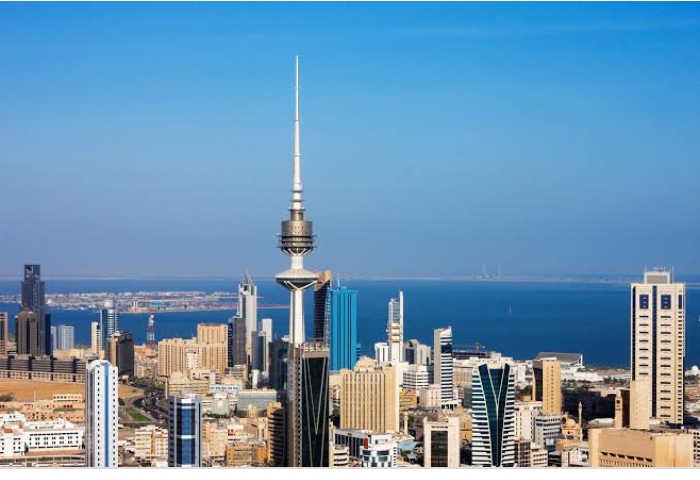
Kuwait, Aug 2: Kuwait has barred entry of foreign passengers from over 30 countries including India and China.

A circular from the Director General Civil Aviation, State of Kuwait directed all airlines operating at Kuwait International Airport to adhere to the instructions in this regard.

"Based on the decision of the Health Authority in State of Kuwait, no foreign passenger coming from the down listed countries will be allowed to enter the State of Kuwait," the circular read.

These include- India, Iran, China, Brazil, Colombia, Armenia, Bangladesh, Philippines, Syria, Spain, Singapore, Bosnia and Herzegovina, Sri Lanka, Nepal, Iraq, Mexico, Indonesia, Chile, Pakistan, Egypt, Lebanon, Hong Kong, Italy, North Macedonia, Moldova, Panama, Beirut ,Serbia Montenegro, Dominican Republic and Kosovo.

The circular stated that such restriction will also include the passengers were present 14 days before the date of travel until further notice.

The ban was announced the same day Kuwait began a partial resumption of commercial flights according to Khaleej Times, which quoted authorities stating that Kuwait International Airport would run at about 30 per cent capacity from Saturday, gradually increasing in coming months.

According to the latest data from Johns Hopkins University, Kuwait has reported 67,448 cases of coronavirus while the fatalities related to the virus stand at 453.

Comments

Add new comment

  • Coastaldigest.com reserves the right to delete or block any comments.
  • Coastaldigset.com is not responsible for its readers’ comments.
  • Comments that are abusive, incendiary or irrelevant are strictly prohibited.
  • Please use a genuine email ID and provide your name to avoid reject.
News Network
February 2,2020

Feb 2: Prime Minister Narendra Modi’s second budget in seven months disappointed investors who were hoping for big-bang stimulus to revive growth in Asia’s third-largest economy.

The fiscal plan -- delivered by Finance Minister Nirmala Sitharaman on Saturday -- proposed tax cuts for individuals and wider deficit targets but failed to provide specific steps to fix a struggling financial sector, improve infrastructure and create jobs. Stocks slumped as a proposal to scrap the dividend distribution tax for companies failed to impress investors.

"Far from being a game changer, the budget provides little in terms of short-term growth stimulus,” said Priyanka Kishore, head of India and South East Asia economics at Oxford Economics Ltd. in Singapore. “While income tax cuts will provide some relief on the consumption front, the multiplier effect is low and the overall stance of the budget is not expansionary."

India has gone from being the world’s fastest-growing major economy three years ago, expanding at 8%, to posting its weakest performance in more than a decade this fiscal year, estimated at 5%.

While the government has taken a number of steps in recent months to spur growth, they’ve fallen short of spurring demand in the consumption-driven economy. Saturday’s budget just added to the glum sentiment.

Okay Budget

“It’s an okay budget but not firing on all cylinders that the market was hoping for,” said Andrew Holland, chief executive officer at Avendus Capital Alternate Strategies in Mumbai.

The government had limited scope for a large stimulus given a huge shortfall in revenues in the current year. The slippage induced Sitharaman to invoke a never-used provision in fiscal laws, allowing the government to exceed the budget gap by 0.5 percentage points. The result: the deficit for the year ending March was widened to 3.8% of gross domestic product from a planned 3.3%.

On Friday, India’s chief economic adviser Krishnamurthy Subramanian said reviving economic growth was an “urgent priority” and deficit goals could be relaxed to achieve that. The adviser’s Economic Survey estimated growth will rebound to 6%-6.5% in the year starting April.

The fiscal gap will narrow to 3.5% next year, as the government budgeted for gross market borrowing to rise marginally to 7.8 trillion rupees from 7.1 trillion rupees in the current year. A plan to earn 2.1 trillion rupees by selling state-owned assets in the year starting April will also help plug the deficit.

Total spending in the coming fiscal year will increase to 30.4 trillion rupees, representing a 13% increase from the current year’s budget, according to latest data.

Key highlights from the budget:

* Tax on annual income up to 1.25 million rupees pared, with riders

* Dividend distribution tax to be levied on investors, instead of companies

* Farm sector budget raised 28%, transport infrastructure gets 7% more

* Spending on education raised 5%

* Fertilizer subsidy cut 10%

Analysts said the muted spending plan to keep the deficit in check will lead to more downside risks to growth in the coming months.

“It is very doubtful that the increase in expenditure will push demand much,” Chakravarthy Rangarajan, former governor at the Reserve Bank of India told BloombergQuint, adding that achieving next year’s budget deficit goal of 3.5% of GDP was doubtful.

With the government sticking to a conservative fiscal path, the focus will now turn to central bank, which is set to review monetary policy on Feb. 6. Given inflation has surged to a five-year high of 7.35%, the RBI is unlikely to lower interest rates.

What Bloomberg’s Economists Say:

The burden of recovery now falls solely on the Reserve Bank of India. With inflation breaching RBI’s target at present, any rate cuts by the central bank are likely to be delayed and contingent upon inflation falling below the upper end of its 2%-6% target range.

-- Abhishek Gupta, India economist

Governor Shaktikanta Das may instead focus on unconventional policy tools such as the Federal Reserve-style Operation Twist -- buying long-end debt while selling short-tenor bonds -- to keep borrowing costs down.


Comments

Add new comment

  • Coastaldigest.com reserves the right to delete or block any comments.
  • Coastaldigset.com is not responsible for its readers’ comments.
  • Comments that are abusive, incendiary or irrelevant are strictly prohibited.
  • Please use a genuine email ID and provide your name to avoid reject.