Blasts hit churches, hotels across Sri Lanka; Over 200 killed, 500 injured

Agencies
April 21, 2019

Colombo, Apr 21: At least nine foreigners were among over 200 people killed in six near simultaneous and coordinated explosions that rocked three churches and three luxury hotels frequented by tourists in Sri Lanka on Easter Sunday, in one of the deadliest blasts in the country's history, officials said.

The blasts targeted St Anthony's Church in Colombo, St Sebastian's Church in the western coastal town of Negombo and another church in the eastern town of Batticaloa around 8.45 a.m. (local time) as the Easter Sunday mass were in progress, police spokesman Ruwan Gunasekera said.

Three explosions were reported from the five-star hotels - the Shangri-La, the Cinnamon Grand and the Kingsbury in Colombo. Foreigners and locals who were injured in hotel blasts were admitted to the Colombo General Hospital.

Harsha de Silva, Sri Lanka's Minister of Economic Reforms and Public Distribution, said that there have been "many casualties including foreigners."

"45 people died in Colombo where three hotels and a church were hit, while more than 90 were killed in Negombo and 27 in Batticaloa," hospital sources said, adding that more than 450 people were injured in the blasts.

Among the 45 bodies at the Colombo National Hospital there are nine foreigners, they said, adding that Americans and British citizens were among the dead.

The Colombo National Hospital spokesperson, Dr Samindi Samarakoon, said more than 300 people have been admitted with injuries.

Dr Kalanidhi Ganeshalingam, the spokesperson for the Batticaloa hospital, said over 100 have been admitted with injuries from St Michael's Church explosion.

No group has claimed responsibility for Sunday's attacks.

However, most of the deadly attacks in the past in Sri Lanka were carried out by the Liberation Tigers of Tamil Eelam (LTTE) which ran a military campaign for a separate Tamil homeland in the northern and eastern provinces of the island nation for nearly 30 years before its collapse in 2009 after the Sri Lankan Army killed its supreme leader Velupillai Prabhakaran.

President Maithripala Sirisena has appealed for calm.

"I have been shocked by this totally unexpected incidents. The security forces haven been asked to take all action necessary," Sirisena said.

Prime Minister Ranil Wickremesinghe termed the blasts as "cowardly attacks" and said his government was working to "contain the situation."

"I call upon all Sri Lankans during this tragic time to remain united and strong... The government is taking immediate steps to contain this situation," he tweeted.

The Sri Lankan government has summoned an emergency meeting. All necessary emergency steps have been taken by the government, Harsha de Silva said.

"Horrible scenes. I saw many body parts strewn all over. Emergency crews are at all locations in full force. We, at 1990 also have close to 20 units at various locations. We took multiple casualties to hospital. Hopefully saved many lives," he said.

The Indian High Commission in Colombo said that it was closely monitoring the situation in Sri Lanka.

"We are closely monitoring the situation. Indian citizens in need of assistance or help and for seeking clarification may call the following numbers: +94777903082 +94112422788 +94112422789," the High Commission tweeted.

"In addition to the numbers given, Indian citizens in need of assistance or help and for seeking clarification may also call the following numbers +94777902082 +94772234176," it said.

The first blasts were reported at St Anthony's church in Colombo and St Sebastian's Church in Negombo just outside the capital.

"A bomb attack to our church, please come and help if your family members are there," read a post in English on the Facebook page of the St Sebastian's Church.

The blasts were followed by explosions at three hotels in Colombo and the church in Batticaloa.

Images circulated on social media and TV channels showed severely damaged St Sebastian's church building, with a shattered ceiling and blood on the pews.

Heavy security has been deployed at the Bandaranaike International Airport after the multiple explosions in the country. The riot police and the Special Task Force, extra police security has been deployed around the airport, state-run Daily Times reported.

Leave of all police personnel has been cancelled in the wake of blasts.

Doctors, nurses and health officials who were on leave have been asked to report to work, Health Ministry sources said.

The government schools have been closed for Monday and Tuesday.

Former President Mahinda Rajapaksa, under whose leadership the Lankan Army crushed the LTTE, termed the attack as "absolutely barbaric".

"It is absolutely barbaric to see such violent attacks on such a holy day. Whoever is behind these attacks must be dealt with immediately. My thoughts and prayers are with the families that lost loved ones and all of Sri Lanka," he said.

"We will not tolerate such violence, such acts of terrorism, of cowardice within our borders once again. We will stand together and rise up against it as one voice. We will stand united as a nation," he said.

Comments

Althaf
 - 
Sunday, 21 Apr 2019

In india Hindutva Terrorists blast bombs and try to put blame on musims head. Same way In sri lanka Buddists do all these terror work to blame muslims.

Add new comment

  • Coastaldigest.com reserves the right to delete or block any comments.
  • Coastaldigset.com is not responsible for its readers’ comments.
  • Comments that are abusive, incendiary or irrelevant are strictly prohibited.
  • Please use a genuine email ID and provide your name to avoid reject.
Agencies
May 27,2020

New Delhi, May 27: India’s fourth recession since Independence, first since liberalisation, and perhaps the worst to date is here, according to rating agency, Crisil.

CRISIL sees the Indian economy shrinking 5 per cent in fiscal 2021 (on-year), because of the Covid-19 pandemic. The first quarter will suffer a staggering 25 per cent contraction.

About 10 per cent of gross domestic product (GDP) in real terms could be permanently lost. "So going back to the growth rates seen before the pandemic is unlikely in the next three fiscals", Crisil said.

Crisil has revised its earlier forecast downwards. "Earlier, on April 28, we had slashed our prediction to 1.8 per cent growth from 3.5 per cent growth. Things have only gone downhill since", it said.

While we expect non-agricultural GDP to contract 6 per cent, agriculture could cushion the blow by growing at 2.5 per cent.

In the past 69 years, India has seen a recession only thrice as per available data in fiscals 1958, 1966 and 1980. The reason was the same each time a monsoon shock that hit agriculture, then a sizeable part of the economy.

"The recession staring at us today is different," it added. For one, agriculture could soften the blow this time by growing near its trend rate, assuming a normal monsoon. Two, the pandemic-induced lockdowns have affected most non-agriculture sectors. And three, the global disruption has upended whatever opportunities India had on the exports front.

Economic conditions have slid precipitously since the April-end forecast of 1.8 per cent GDP growth for fiscal 2021 (baseline), Crisil said.

On the lockdown extension, it said that the government has extended the lockdown four times to deal with the rising number of cases, curtailing economic activity severely (lockdown 4.0 is ending on May 31).

The first quarter of this fiscal will be the worst affected. June is unlikely to see major relaxations as the Covid-19 affliction curve is yet to flatten in India.

"Not only will the first quarter be a washout for the non-agricultural economy, services such as education, and travel and tourism among others, could continue to see a big hit in the quarters to come. Jobs and incomes will see extended losses as these sectors are large employers," Crisil said.

CRISIL also foresees economic activity in states with high Covid-19 cases to suffer prolonged disruption as restrictions could continue longer.

A rough estimate based on a sample of eight states, which contribute over half of India's GDP, shows that their 'red zones' (as per lockdown 3.0) contributed 42 per cent to the state GDP on average regardless of the share of such red zones.

On average, the orange zones contribute 46 per cent, while the green zones where activity is allowed to be close to normal contribute only 12 per cent to state GDP.

The economic costs are higher than earlier expectations, according to Crisil. The economic costs now beginning to show up in the hard numbers are far worse than initial expectations.

Industrial production for March fell by over 16%. The purchasing managers indices for the manufacturing and services sectors were at 27.4 and 5.4, respectively, in April, implying extraordinary contraction. That compares with 51.8 and 49.3, respectively, in March.

Exports contracted 60.3 per cent in April, and new telecom subscribers declined 35 per cent, while railway freight movement plunged 35 per cent on-year.

"Indeed, given one of the most stringent lockdowns in the world, April could well be the worst performing month for India this fiscal," it said.

Added to that is the economic package without enough muscle. The government recently announced a Rs 20.9 lakh crore economic relief package to support the economy. The package has some short-term measures to cushion the economy, but sets its sights majorly on reforms, most of which will have payoffs only over the medium term.

"We estimate the fiscal cost of this package at 1.2 per cent of GDP, which is lower than what we had assumed in our earlier estimate (when we foresaw a growth in GDP)," it said.

"We believe a catch-up to the pre-crisis trend level of GDP growth will not be possible in the next three fiscals despite policy support. Under the base case, we estimate a 10 per cent permanent loss to real GDP (from the decadal-trend level), assuming average growth of about 7 per cent between fiscals 2022 and 2024," Crisil said.

Interestingly, after the Global Financial Crisis (GFC), a sharp growth spurt helped catch up with the trend within two years. GDP grew 8.2 per cent on average in the two fiscals following the GFC. Massive fiscal spending, monetary easing and swift global recovery played a role in a V-shaped recovery.

To catch-up would require average GDP growth to surge to 11 per cent over the next three fiscals, something that has never happened before.

The research said that successive lockdowns have a non-linear and multiplicative effect on the economy a two-month lockdown will be more than twice as debilitating as a one-month imposition, as buffers keep eroding.

Partial relaxations continue to be a hindrance to supply chains, transportation and logistics. Hence, unless the entire supply chain is unlocked, the impact of improved economic activity will be subdued.

Therefore, despite the stringency of lockdown easing a tad in the third and the fourth phases, their negative impact on GDP is expected to massively outweigh the benefits from mild fiscal support and low crude oil prices, especially in the April-June quarter. "Consequently, we expect the current quarter's GDP to shrink 25 per cent on-year," it said.

Counting lockdown 4.0, Indians have had 68 days of confinement. S&P Global estimates that one month of lockdown shaves 3 per cent off annual GDP on average across Asia-Pacific.

Since India's lockdown has been the most stringent in Asia, the impact on economic growth will be correspondingly larger.

Google's Community Mobility Reports show a sharp fall in movement of people to places of recreation, retail shops, public transport and workplace travel. While data for May shows some improvement in India, mobility trends are much below the average or baseline, and lower compared with countries such as the US, South Korea, Brazil and Indonesia.

Comments

Add new comment

  • Coastaldigest.com reserves the right to delete or block any comments.
  • Coastaldigset.com is not responsible for its readers’ comments.
  • Comments that are abusive, incendiary or irrelevant are strictly prohibited.
  • Please use a genuine email ID and provide your name to avoid reject.
News Network
January 17,2020

New Delhi, Jan 17: Airports in Srinagar and Jammu are to be “immediately” brought under the security cover of the CISF in view of the arrest of DSP Davinder Singh, a Jammu and Kashmir government order has said.

The two sensitive airports are to be “handed over” to the CISF by January 31, the order of the Jammu and Kashmir Home Department to the Director General of Police (DGP) said.

“This issue (CISF security at Srinagar and Jammu airports) has acquired immediacy in view of the recent developments relating to the arrest of Davinder Singh, DSP airport security, for trying to assist militants to travel to other parts of the country,” the order issued on Wednesday said.

Police had arrested Singh, a deputy superintendent of police, at Mir Bazar in Jammu and Kashmir’s Kulgam district on Saturday, along with Hizbul Mujahideen terrorists Naveed Baba and Altaf, besides a lawyer who was operating as an overground worker for terror outfits.

The two airports are guarded by the CRPF and the J-K Police at present.

The Union government had last year decided that the Central Industrial Security Force (CISF) will be handed over security of these two airports along with the one in Leh in view of their sensitive and strategic location and the threats it faced related to possible terrorist and hijack attempts.

CISF is the national civil aviation security force and at present it guards 61 airports including the ones at Delhi and Mumbai.

News agency had on January 13 reported that the Union home ministry sanctioned about 800 personnel to the CISF in order to take over security duties at the three airports of the newly created Union Territories of Jammu and Kashmir and Ladakh.

As per the original plan, the CISF was to take over Jammu airport by next month and the Srinagar and Leh airports after the spell of severe cold ends.

However, officials said, keeping in mind the arrest of the DSP and his alleged links, the latest order has been issued which also directs the J-K Police to make arrangements for accommodation, transport and other logistical requirements of the armed contingent of the CISF on a quick basis.

Once inducted at the most-sensitive Srinagar airport, the CISF will secure access control at both city and air side (tarmac area) while the CRPF will be responsible for securing the outer periphery. At the Jammu airport, the peripheral security duties will be rendered by the JK Police.

An assortment of surveillance and security gadgets like CCTVs, observation monitors, hand-held metal detectors, bullet-proof patrol vehicles and bomb detection and disposal equipment are also being provided by the airport operator, the Airports Authority of India (AAI), to the CISF.

The Union government sometime back made it clear that CISF will be the only civil airports guarding force and all such facilities in the country will be gradually brought under its command to bolster aviation security and tighten anti-terror and anti-hijack protocols.

Comments

Add new comment

  • Coastaldigest.com reserves the right to delete or block any comments.
  • Coastaldigset.com is not responsible for its readers’ comments.
  • Comments that are abusive, incendiary or irrelevant are strictly prohibited.
  • Please use a genuine email ID and provide your name to avoid reject.
Agencies
July 29,2020

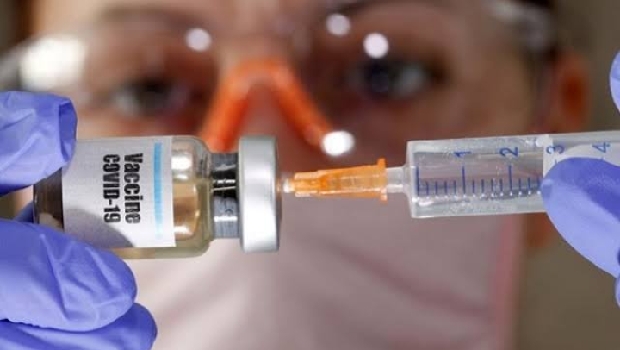
If everything goes as Russia’s expectation, it will be world’s first country to approve a coronavirus vaccine for widespread in the second week of August despite safety and efficacy concerns, according to a report. The adenoviral vector-based vaccine developed by Russian military and government researchers is currently in phase 2 trials.

According to a report from CNN, Russian officials are hoping to get approval for the COVID-19 vaccine developed by the Moscow-based Gamaleya Institute on Agust 10 or even before that. The officials told the outlet that the vaccine will be approved for public use with frontline healthcare workers receiving it first.

“It’s a Sputnik moment,” said Kirill Dmitriev, head of Russia’s sovereign wealth fund, which is financing Russian vaccine research, referring to the successful 1957 launch of the world’s first satellite by the Soviet Union, according to CNN.

“Americans were surprised when they heard Sputnik’s beeping. It’s the same with this vaccine. Russia will have got there first,” he was quoted as saying.

However, Russia is yet to release the scientific data on its coronavirus vaccine trials, hence, questions remain about the safety and efficacy of the vaccine, said the report. The vaccine is in the second phase of testing with developers planning to launch the phase 3 trials sometime after August 3.

Earlier, Interfax reported, citing Health Minister Mikhail Murashko, that the vaccine will be widely used in parallel with phase 3 trials. He said the country plans to vaccinate medics who are at high-risk for COVID-19 next month before clinical trials are completed.

Murashko added that individuals at higher risk of getting infected with the coronavirus such as older people or those with health conditions will also be prioritised for the vaccine, although he did not estimate or reveal when that would happen. The minister added 800 people will be recruited for the phase 3 trials.

Meanwhile, health officials were more cautious considering the fact that human testing of the vaccine is incomplete, and the state registration is expected to begin after August 3, reported The Moscow Times.

On Monday, Moderna and Pfizer announced the commencement of the final phase 3 trials of their candidate vaccines against the SARS-CoV-2 virus, which has so far claimed at least 654,477 lives and infected 16,514,500 people worldwide. 

Researchers will recruit up to 30,000 volunteers in separate trials both backed by the US government. India's first indigenous coronavirus vaccine, COVAXIN, is undergoing phase 1 human clinical trials across the country. More than 150 COVID-19 vaccines are being developed all over the world with at least six candidates already in late-stage clinical trials.

Comments

Add new comment

  • Coastaldigest.com reserves the right to delete or block any comments.
  • Coastaldigset.com is not responsible for its readers’ comments.
  • Comments that are abusive, incendiary or irrelevant are strictly prohibited.
  • Please use a genuine email ID and provide your name to avoid reject.