


Blasts hit churches, hotels across Sri Lanka; Over 200 killed, 500 injured

Agencies
April 21, 2019

Colombo, Apr 21: At least nine foreigners were among over 200 people killed in six near simultaneous and coordinated explosions that rocked three churches and three luxury hotels frequented by tourists in Sri Lanka on Easter Sunday, in one of the deadliest blasts in the country's history, officials said.

The blasts targeted St Anthony's Church in Colombo, St Sebastian's Church in the western coastal town of Negombo and another church in the eastern town of Batticaloa around 8.45 a.m. (local time) as the Easter Sunday mass were in progress, police spokesman Ruwan Gunasekera said.

Three explosions were reported from the five-star hotels - the Shangri-La, the Cinnamon Grand and the Kingsbury in Colombo. Foreigners and locals who were injured in hotel blasts were admitted to the Colombo General Hospital.

Harsha de Silva, Sri Lanka's Minister of Economic Reforms and Public Distribution, said that there have been "many casualties including foreigners."

"45 people died in Colombo where three hotels and a church were hit, while more than 90 were killed in Negombo and 27 in Batticaloa," hospital sources said, adding that more than 450 people were injured in the blasts.

Among the 45 bodies at the Colombo National Hospital there are nine foreigners, they said, adding that Americans and British citizens were among the dead.

The Colombo National Hospital spokesperson, Dr Samindi Samarakoon, said more than 300 people have been admitted with injuries.

Dr Kalanidhi Ganeshalingam, the spokesperson for the Batticaloa hospital, said over 100 have been admitted with injuries from St Michael's Church explosion.

No group has claimed responsibility for Sunday's attacks.

However, most of the deadly attacks in the past in Sri Lanka were carried out by the Liberation Tigers of Tamil Eelam (LTTE) which ran a military campaign for a separate Tamil homeland in the northern and eastern provinces of the island nation for nearly 30 years before its collapse in 2009 after the Sri Lankan Army killed its supreme leader Velupillai Prabhakaran.

President Maithripala Sirisena has appealed for calm.

"I have been shocked by this totally unexpected incidents. The security forces haven been asked to take all action necessary," Sirisena said.

Prime Minister Ranil Wickremesinghe termed the blasts as "cowardly attacks" and said his government was working to "contain the situation."

"I call upon all Sri Lankans during this tragic time to remain united and strong... The government is taking immediate steps to contain this situation," he tweeted.

The Sri Lankan government has summoned an emergency meeting. All necessary emergency steps have been taken by the government, Harsha de Silva said.

"Horrible scenes. I saw many body parts strewn all over. Emergency crews are at all locations in full force. We, at 1990 also have close to 20 units at various locations. We took multiple casualties to hospital. Hopefully saved many lives," he said.

The Indian High Commission in Colombo said that it was closely monitoring the situation in Sri Lanka.

"We are closely monitoring the situation. Indian citizens in need of assistance or help and for seeking clarification may call the following numbers: +94777903082 +94112422788 +94112422789," the High Commission tweeted.

"In addition to the numbers given, Indian citizens in need of assistance or help and for seeking clarification may also call the following numbers +94777902082 +94772234176," it said.

The first blasts were reported at St Anthony's church in Colombo and St Sebastian's Church in Negombo just outside the capital.

"A bomb attack to our church, please come and help if your family members are there," read a post in English on the Facebook page of the St Sebastian's Church.

The blasts were followed by explosions at three hotels in Colombo and the church in Batticaloa.

Images circulated on social media and TV channels showed severely damaged St Sebastian's church building, with a shattered ceiling and blood on the pews.

Heavy security has been deployed at the Bandaranaike International Airport after the multiple explosions in the country. The riot police and the Special Task Force, extra police security has been deployed around the airport, state-run Daily Times reported.

Leave of all police personnel has been cancelled in the wake of blasts.

Doctors, nurses and health officials who were on leave have been asked to report to work, Health Ministry sources said.

The government schools have been closed for Monday and Tuesday.

Former President Mahinda Rajapaksa, under whose leadership the Lankan Army crushed the LTTE, termed the attack as "absolutely barbaric".

"It is absolutely barbaric to see such violent attacks on such a holy day. Whoever is behind these attacks must be dealt with immediately. My thoughts and prayers are with the families that lost loved ones and all of Sri Lanka," he said.

"We will not tolerate such violence, such acts of terrorism, of cowardice within our borders once again. We will stand together and rise up against it as one voice. We will stand united as a nation," he said.

Comments

Althaf
 - 
Sunday, 21 Apr 2019

In india Hindutva Terrorists blast bombs and try to put blame on musims head. Same way In sri lanka Buddists do all these terror work to blame muslims.

Add new comment

  • Coastaldigest.com reserves the right to delete or block any comments.
  • Coastaldigset.com is not responsible for its readers’ comments.
  • Comments that are abusive, incendiary or irrelevant are strictly prohibited.
  • Please use a genuine email ID and provide your name to avoid reject.
News Network
March 16,2020

Mar 16: A fourth batch of 53 Indians returned to India from Iran on Monday, taking the total number of people evacuated from the coronavirus-hit country to 389.

This comes a day after over 230 Indians were brought back from Iran to New Delhi and quarantined at the Indian Army Wellness Centre in Jaisalmer, the third batch to be evacuated from that country.

"Fourth batch of 53 Indians - 52 students and a teacher - has arrived from Tehran and Shiraz, Iran. With this, a total of 389 Indians have returned to India from Iran. Thank the efforts of the team @India_in_Iran and Iranian authorities," Jaishankar tweeted.

The Indians came in a Mahan Air flight that landed at the Delhi airport at around 3 am, officials said, adding that they were later taken to Jaisalmer in an Air India flight for being quarantined.

The first batch of 58 Indian pilgrims were brought back from Iran last Tuesday and the second group of 44 Indian pilgrim arrived from there on Friday.

Iran is one of the worst-affected countries by the coronavirus outbreak and the government has been working to bring back Indians stranded there. Over 700 people have died from the disease in Iran and nearly 14,000 cases have been detected.

Jaishankar had told Rajya Sabha last week that the government was focusing on evacuating Indians stranded in Iran and Italy as these countries are facing an "extreme situation".

Comments

Add new comment

  • Coastaldigest.com reserves the right to delete or block any comments.
  • Coastaldigset.com is not responsible for its readers’ comments.
  • Comments that are abusive, incendiary or irrelevant are strictly prohibited.
  • Please use a genuine email ID and provide your name to avoid reject.
Agencies
July 28,2020

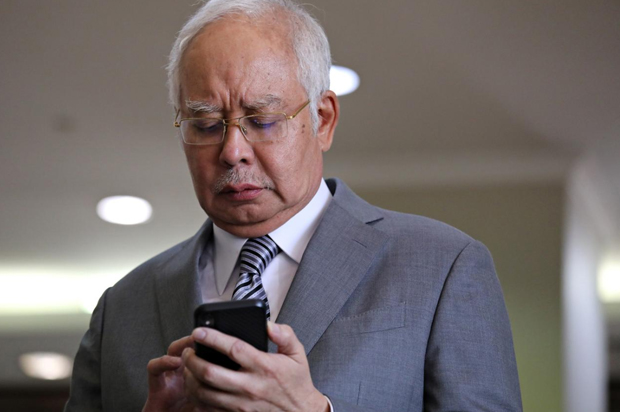
Kuala Lumpur, Jul 28: Malaysia's ex-leader Najib Razak was found guilty Tuesday in his first trial over the multi-billion-dollar 1MDB scandal, two years after the fraud contributed to the downfall of his long-ruling government.

The former prime minister could now face decades in jail after being convicted on all charges in the case related to the looting of sovereign wealth fund 1Malaysia Development Berhad.

Billions of dollars were stolen from the investment vehicle and spent on everything from high-end real estate to pricey art, while investment bank Goldman Sachs also became embroiled in the scandal.

Anger at the looting played a large part in the shock loss of Najib's long-ruling coalition in elections in 2018, and he was arrested and hit with dozens of charges following his defeat.

The verdict was a test of Malaysia's rule of law. It comes about five months after Najib's scandal-plagued party returned to power as part of a coalition, development observers had feared could affect the outcome of the case.

About 16 months after it began, the Kuala Lumpur High Court delivered the verdict in Najib's first trial, which centred on the transfer of 42 million ringgit ($9.9 million) from a former 1MDB unit, SRC International, into his accounts.

Najib had vehemently denied wrongdoing.

But Judge Mohamad Nazlan Mohamad Ghazali took apart all the arguments put forward by his defence, and found him guilty on the seven charges he faced.

"In conclusion, after considering all the evidence in this trial, I find the prosecution has successfully proven the case," the judge told the court.

The charges were one of abuse of power, three of criminal breach of trust and three of money-laundering.

The counts of abuse of power and criminal breach of trust are punishable by up to 20 years in jail each, while the money-laundering charges are punishable by up to 15 years each.

Sentencing was not handed down straight away. The 67-year-old will likely appeal and he may not be sent to jail immediately. If his conviction is upheld, he will also be barred from political office for several years.

Najib had insisted he was ignorant of the transactions.

The defence team portrayed Najib as a victim and instead sought to paint financier Low Taek Jho, a key figure in the scandal who has been charged in the US and Malaysia, as the mastermind.

Low, whose whereabouts are unknown, maintains his innocence.

Prosecutors insisted Najib was in control of the 1MDB unit, SRC International.

The return of Najib's party to power as part of a coalition in March followed the collapse of Mahathir Mohamad's reformist administration.

Since then, 1MDB-linked charges were unexpectedly dropped against the ex-leader's stepson Riza Aziz, a producer of Hollywood movie "The Wolf of Wall Street", in exchange for him agreeing to return assets to Malaysia.

Prosecutors also dropped dozens of charges against Najib ally Musa Aman, the former leader of Sabah state.

The amounts involved in Najib's first case are small compared to those in his second and most significant trial, which centres on allegations he illicitly obtained more than $500 million.

Malaysia had charged Goldman Sachs and some current and former staff, claiming large amounts were stolen when the bank arranged bond issues for 1MDB.

But the two sides agreed to a $3.9 billion settlement last week in exchange for charges being dropped.

Comments

Add new comment

  • Coastaldigest.com reserves the right to delete or block any comments.
  • Coastaldigset.com is not responsible for its readers’ comments.
  • Comments that are abusive, incendiary or irrelevant are strictly prohibited.
  • Please use a genuine email ID and provide your name to avoid reject.
News Network
June 10,2020

Hong Kong, Jun 10: The Hong Kong police on Wednesday said they had arrested 53 people during demonstrations on Tuesday evening which were called to mark the one-year anniversary of the protest against a bill proposing extraditions to mainland China. That protest grew into a pro-democracy movement and sparked seven months of protests against Beijing's rule.

Hundreds of activists took to the streets in Hong Kong yesterday, at times blocking roads in the heart of the city, before police fired pepper spray to disperse crowds, Al Jazeera reported.

The police informed that 36 males and 17 females were arrested for offenses including unlawful assembly and disorderly conduct.

Protesters had defied a ban on gatherings of more than eight people introduced by the Hong Kong government to prevent the spread of the coronavirus.

"Lawful protests are always respected, but unlawful acts are to be rejected. Please stop breaking the law," police said in a tweet.

More protests are being planned in the coming days, with pro-democracy supporters fearing the proposed national security legislation will stifle freedoms in the city.

While details of the security law or how it will operate have yet to be revealed, authorities in Beijing and Hong Kong have said there is no cause for concern and the legislation will target a minority of "troublemakers".

But critics say the law would destroy the civil liberties Hong Kong residents enjoy under the "one country, two systems" agreement put in place when the United Kingdom handed the territory back to China in 1997. The agreement is set to end in 2047.

Japan had already issued a statement independently expressing serious concern about Beijing's move on May 28, the day China approved the decision and called in the Chinese ambassador to convey its view.

The United States, Britain, Australia, and Canada also condemned the move, with Washington saying it would revoke Hong Kong's special trading status granted under a 1992 law on the condition that the city retains key freedoms and autonomy.

China blames the protests in part on foreign intervention and is rushing to enact the national security law aimed at curbing secessionist and subversive activities in Hong Kong.

Comments

Add new comment

  • Coastaldigest.com reserves the right to delete or block any comments.
  • Coastaldigset.com is not responsible for its readers’ comments.
  • Comments that are abusive, incendiary or irrelevant are strictly prohibited.
  • Please use a genuine email ID and provide your name to avoid reject.