Evil power of Opposition causing deaths of BJP leaders: Pragya Singh

Agencies
August 26, 2019

Bhopal, Aug 26: BJP MP Pragya Singh Thakur on Monday said the Opposition is using a 'marak shakti' (killing power) to harm BJP leaders, adding the 'evil power' was behind the recent deaths of former Union ministers Arun Jaitley and Sushma Swaraj.

BJP veteran Arun Jaitley died on August 24 and Swaraj on August 6.

"While I was contesting (Lok Sabha) elections, a Maharaj ji told me that bad times are upon us and Opposition is up to something using some 'marak shakti' against BJP. I later forgot what he said but now when I see our top leaders leaving us one by one, I am forced to think, wasn't Maharaj ji right?" the BJP MP said.

She was addressing a condolence meeting at the state BJP office to pay tributes to Jaitley and former Madhya Pradesh chief minister Babulal Gaur. The latter died on August 20.

Comments

Well Wisher
 - 
Tuesday, 27 Aug 2019

LOL. It is the decision of our creator to give life & death to his creation. I don't how such superstitious, illiterates are becoming the MPs. hihihi

Add new comment

  • Coastaldigest.com reserves the right to delete or block any comments.
  • Coastaldigset.com is not responsible for its readers’ comments.
  • Comments that are abusive, incendiary or irrelevant are strictly prohibited.
  • Please use a genuine email ID and provide your name to avoid reject.
Agencies
August 7,2020

Washington, Aug 7: US President Donald Trump on Thursday (local time) signed executive orders halting all transactions with Chinese applications TikTok and WeChat within 45 days, citing national security concerns, further escalating the tensions between Beijing and Washington.

"WeChat, a messaging, social media, and electronic payment application owned by the Chinese company Tencent Holdings Ltd., reportedly has over one billion users worldwide, including users in the United States. Like TikTok, WeChat automatically captures vast swaths of information from its users. 

This data collection threatens to allow the Chinese Communist Party (CCP) access to Americans' personal and proprietary information," Trump said in a statement.

Citing reasons for the ban on WeChat, the US President said that the application captures the personal and proprietary information of Chinese nationals visiting the US, thereby providing the CCP a mechanism to keep tabs on the Chinese citizens who may be "enjoying the benefits of a free society for the first time in their lives".

"In March 2019, a researcher reportedly discovered a Chinese database containing billions of WeChat messages sent from users in not only China but also the United States, Taiwan, South Korea and Australia. WeChat, like TikTok, also reportedly censors content that the CCP deems politically sensitive and may also be used for disinformation campaigns that benefit the CCP. 

These risks have led other countries, including Australia and India, to begin restricting or banning the use of WeChat. The US must take aggressive action against the owner of WeChat to protect our national security," he added.

Earlier, Trump had issued an order banning TikTok as it "reportedly censors content that the CCP deems politically sensitive, such as content concerning protests in Hong Kong and China's treatment of Uighurs and other Muslim minorities. 

TikTok may also be used for disinformation campaigns that benefit the CCP."
US politicians have repeatedly criticised TikTok, owned by Beijing-based startup ByteDance, of being a threat to national security because of its ties to China.

The development comes as China and the US are at loggerheads on a variety of issues including Hong Kong national security law, the South China Sea, the novel coronavirus and trade.

Comments

Add new comment

  • Coastaldigest.com reserves the right to delete or block any comments.
  • Coastaldigset.com is not responsible for its readers’ comments.
  • Comments that are abusive, incendiary or irrelevant are strictly prohibited.
  • Please use a genuine email ID and provide your name to avoid reject.
Agencies
July 29,2020

New Delhi, Jul 29: The new National Education Policy (NEP) approved by the Union Cabinet on Wednesday is set to usher in a slew of changes with the vision of creating an education system that contributes directly to transforming the country, providing high-quality education to all, and making India a global knowledge superpower.

The draft of the NEP by a panel headed by former Indian Space Research Organisation (ISRO) chief Kasturirangan and submitted to the Union Human Resource Development Minister Ramesh Pokhriyal when he took charge last year. The new NEP replaces the one formulated in 1986.

Some of the key highlights of the New Education Policy are:-

The policy aims to enable an individual to study one or more specialized areas of interest at a deep level, and also develop character, scientific temper, creativity, spirit of service, and 21st century capabilities across a range of disciplines including sciences, social sciences, arts, humanities, among others.

It identified the major problems facing the higher education system in the country and suggested changes such as moving towards multidisciplinary universities and colleges, with more institutions across India that offer medium of instruction in local/Indian languages, a more multidisciplinary undergraduate education, among others. 

The governance of such institutions by independent boards having academic and administrative autonomy has also been suggested.

Under the suggestions for institutional restructuring and consolidation, it has suggested that by 2040, all higher education institutions (HEIs) shall aim to become multidisciplinary institutions, each of which will aim to have 3,000 or more students, and by 2030 each or near every district in the country there will be at least one HEI.

The aim will be to increase the Gross Enrolment Ratio in HEIs including vocational education from 26.3 per cent (2018) to 50 per cent by 2035.

Single-stream HEIs will be phased out over time, and all will move towards becoming vibrant multidisciplinary institutions or parts of vibrant multidisciplinary HEI clusters.

It also pushes for more holistic and multidisciplinary education to be provided to the students.

Comments

Add new comment

  • Coastaldigest.com reserves the right to delete or block any comments.
  • Coastaldigset.com is not responsible for its readers’ comments.
  • Comments that are abusive, incendiary or irrelevant are strictly prohibited.
  • Please use a genuine email ID and provide your name to avoid reject.
News Network
June 13,2020

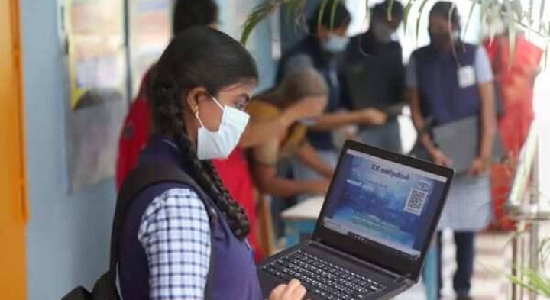
New Delhi, Jun 13: About 56 per cent of children were found to have no access to smartphones which have emerged as essential tools for online learning during the coronavirus-induced lockdown, according to a new study that surveyed 42,831 students at various school levels.

The study ''Scenario amidst COVID 19 - Onground Situations and Possible Solutions'' was conducted by child rights NGO Smile Foundation with an aim of analysing the access to technology.

The findings of the study showed that 43.99 per cent of surveyed children have access to smartphones and another 43.99 per cent of students have access to basic phones while 12.02 per cent do not have access to either smartphones or basic phones.

A total of 56.01 per cent children were found to have no access to smartphones, the study said.

"Concerning television, it was noted that while 68.99 per cent have access to TV, a major chunk of 31.01 per cent does not. Hence suggesting that using smartphone interventions for enhancing learning outcomes is not the only solution," it said.

At the primary level of education (class 1 to 5) 19,576 children were surveyed while at upper primary level (class 6 to 8) 12,277 children were surveyed. At secondary level of education (class 9 to 10) 5,537 children were surveyed and at higher secondary level (class 11 to 12) 3,216 children were surveyed.

The survey based on which the study was conducted used two approaches - over the telephone wherein the NGO reached out to the children whose database it already had -- students enrolled in various education centres of the NGO -- and second was through community mobilization wherein community workers went door to door to get answers.

The survey was conducted in 23 states, including Delhi, Gujarat, Maharashtra, Karnataka, Tamil Nadu, West Bengal, Andhra Pradesh, Telangana, Uttar Pradesh, Haryana, over a period of 12 days from April 16 to April 28.

The lockdown induced by the COVID-19 pandemic in March prompted schools and colleges to move to the virtual world for teaching and learning activities. However, many experts say the digital divide in the country may turn online classes into an operational nightmare.

As per official statistics, there are over 35 crore students in the country. However, it is not clear as to how many of them have access to digital devices and Internet.

Santanu Mishra, co-founder and executive trustee, Smile Foundation, said the findings clearly show that the digital divide is a real challenge, and multiple approaches need to be implemented to cater to all across the nation.

"As an exercise before we start any programme, we do a baseline study to understand the on-ground challenges so that our programmes can bring in real work and real change. With the onset of the pandemic, following indefinite school closures, it is more important than ever to understand the situation and how can we ensure that children are given quality education. Through this, we understand that customized modules need to be built in accordance with the channel of communication," he said.  

Comments

Add new comment

  • Coastaldigest.com reserves the right to delete or block any comments.
  • Coastaldigset.com is not responsible for its readers’ comments.
  • Comments that are abusive, incendiary or irrelevant are strictly prohibited.
  • Please use a genuine email ID and provide your name to avoid reject.