Those not proud of Trump calling Modi father of the nation don’t consider themselves Indians: Jitendra Singh

Agencies
September 25, 2019

New Delhi, Sept 25: Union Minister Jitendra Singh on Wednesday said those who do not feel proud of U.S. President Donald Trump’s comment that Prime Minister Narendra Modi is the father of India, do not consider themselves Indians.

India is being respected in a way which was rare in the past, Mr. Singh said on the sidelines of the launch of CPGRAMS reforms in the Department of Posts.

“People who live abroad are proud today of being Indian. This is happening due to the personality and personal outreach of Prime Minister Modi,” said the Minister of State for Prime Minister’s Office.

When asked to comment on U.S. President Trump’s statement that may be Prime Minister Modi is the father of India, Mr. Singh said that he has never heard anything like this from any American president for an Indian prime minister.

“If an impartial and bold statement comes from America and its President then I feel every Indian should feel proud regardless of his political affiliations with any party or ideolog ... This is the first time that an American president has used this kind of words of praise not for an Indian Prime Minister but for any other world leader and if someone is not proud of this, then maybe he does not consider himself Indian,” Mr. Singh said.

When asked that some Congress leaders have asserted that there could be only one father of the nation, he said for this, the Congress will have to argue with Mr. Trump.

Criticising Pakistan for its role in terrorism, the minister said “as far as terrorism and Pakistan’s role in advancing terrorism is concerned, foreign countries which earlier did not buy India’s narrative of Pakistan’s involvement in terrorism are now accepting it and its credit goes to Prime Minister Modi.”

The U.S. President on Tuesday heaped praise on Mr. Modi in New York.

“I remember India before was very torn. There was a lot of dissension, fighting and he brought it all together. Like a father would. Maybe he is the father of India,” Mr. Trump said.

Comments

Mr Frank
 - 
Thursday, 26 Sep 2019

Modis hug cost Trumps preaching on Indian security concerns.

Well Wisher
 - 
Thursday, 26 Sep 2019

Trumph is pett kammi. What can we expect from a pett kammi then? He may not know the meaning of father. He is a crook.

Bahddoor
 - 
Thursday, 26 Sep 2019

Oh Crazy Leaders of BJP,

Trump is under impeachment today.

Your mentor Modi is another crazy,  


Unfortunately I being an Indian should say most of our citizens are stupids  not to know who is good and bad for the country.


We have one father of the nation who is Mahatma Gandhi, who sacrificed his life for the nation, he is our true father of Nation.


Do you want to call this crazy man as father of nation who killed thousand in Gurjarat and now in India under the pretext  of

  • Mob Lynching
  • Kashmir 370
  • Note bandi
  • Ruining National economy, causing to close all big firms and causing unemployment horror.
  • Playing with the judiciary system, CBI, ED
  • Selling all national companies
  • Exempting tax payers money to Ambani
  • Daringly awarding Raffale deal to Anil Ambani after ignoring country’s firm the HAL.
  • THERE ARE MANY OTHER MORE
  • Selling airports to businessmen


    Wah what a type of supporters. Oh may fellow  citizens, even if he kills you, you will trust him.


    God save us.

Add new comment

  • Coastaldigest.com reserves the right to delete or block any comments.
  • Coastaldigset.com is not responsible for its readers’ comments.
  • Comments that are abusive, incendiary or irrelevant are strictly prohibited.
  • Please use a genuine email ID and provide your name to avoid reject.
News Network
January 13,2020

Jan 13: For the first time in years, the government of India’s Prime Minister Narendra Modi is playing defense. Protests have sprung up across the country against an amendment to India’s laws — which came into effect on Friday — that makes it easier for members of some religions to become citizens of India. The government claims this is simply an attempt to protect religious minorities in the Muslim-majority countries that border India; but protesters see it as the first step toward a formal repudiation of India’s constitutionally guaranteed secularism — and one that must be resisted.

Modi was re-elected prime minister last year with an enhanced majority; his hold over the country’s politics is absolute. The formal opposition is weak, discredited and disorganized. Yet, somehow, the anti-Citizenship Act protests have taken hold. No political party is behind them; they are generally arranged by student unions, neighborhood associations and the like.

Yet this aspect of their character is precisely what will worry Modi and his right-hand man, Home Minister Amit Shah. They know how to mock and delegitimize opposition parties with ruthless efficiency. Yet creating a narrative that paints large, flag-waving crowds as traitors is not quite that easy.

For that is how these protests look: large groups of young people, many carrying witty signs and the national flag. They meet and read the preamble to India’s Constitution, into which the promise of secularism was written in the 1970’s.

They carry photographs of the Constitution’s drafter, the Columbia University-trained economist and lawyer B. R. Ambedkar. These are not the mobs the government wanted. They hoped for angry Muslims rampaging through the streets of India’s cities, whom they could point to and say: “See? We must protect you from them.” But, in spite of sometimes brutal repression, the protests have largely been nonviolent.

One, in Shaheen Bagh in a Muslim-dominated sector of New Delhi, began simply as a set of local women in a square, armed with hot tea and blankets against the chill Delhi winter. It has now become the focal point of a very different sort of resistance than what the government expected. Nothing could cure the delusions of India’s Hindu middle class, trained to see India’s Muslims as dangerous threats, as effectively as a group of otherwise clearly apolitical women sipping sweet tea and sharing their fears and food with anyone who will listen.

Modi was re-elected less than a year ago; what could have changed in India since then? Not much, I suspect, in most places that voted for him and his party — particularly the vast rural hinterland of northern India. But urban India was also possibly never quite as content as electoral results suggested. India’s growth dipped below 5% in recent quarters; demand has crashed, and uncertainty about the future is widespread. Worse, the government’s response to the protests was clearly ill-judged. University campuses were attacked, in one case by the police and later by masked men almost certainly connected to the ruling party.

Protesters were harassed and detained with little cause. The courts seemed uninterested. And, slowly, anger began to grow on social media — not just on Twitter, but also on Instagram, previously the preserve of pretty bowls of salad. Instagram is the one social medium over which Modi’s party does not have a stranglehold; and it is where these protests, with their photogenic signs and flags, have found a natural home. As a result, people across urban India who would never previously have gone to a demonstration or a political rally have been slowly politicized.

India is, in fact, becoming more like a normal democracy. “Normal,” that is, for the 2020’s. Liberal democracies across the world are politically divided, often between more liberal urban centers and coasts, and angrier, “left-behind” hinterlands. Modi’s political secret was that he was that rare populist who could unite both the hopeful cities and the resentful countryside. Yet this once magic formula seems to have become ineffective. Five of India’s six largest cities are not ruled by Modi’s Bharatiya Janata Party in any case — the financial hub of Mumbai changed hands recently. The BJP has set its sights on winning state elections in Delhi in a few weeks. Which way the capital’s voters will go is uncertain. But that itself is revealing — last year, Modi swept all seven parliamentary seats in Delhi.

In the end, the Citizenship Amendment Act is now law, the BJP might manage to win Delhi, and the protests might die down as the days get unmanageably hot and state repression increases. But urban India has put Modi on notice. His days of being India’s unifier are over: From now on, like all the other populists, he will have to keep one eye on the streets of his country’s cities.


Comments

Add new comment

  • Coastaldigest.com reserves the right to delete or block any comments.
  • Coastaldigset.com is not responsible for its readers’ comments.
  • Comments that are abusive, incendiary or irrelevant are strictly prohibited.
  • Please use a genuine email ID and provide your name to avoid reject.
Agencies
July 30,2020

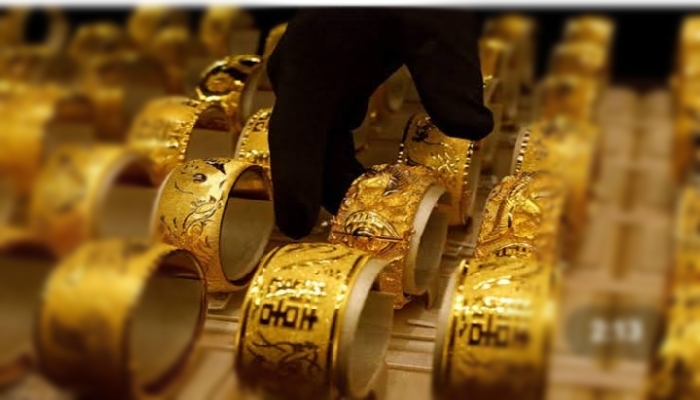
New Delhi, Jul 30: India's gold demand in 2020 is expected to fall to the lowest level in 26 years with domestic bullion prices hitting a record high and as falling disposable incomes could curtail retail purchases, the World Gold Council (WGC) said on Thursday.

Lower demand by the world's second-biggest bullion consumer could limit a rally in global prices, which hit a record high earlier this month, although it could also reduce India's trade deficit and support the ailing rupee.

"Fast rising gold prices could act as headwinds," said Somasundaram PR, the managing director of WGC's Indian operations.

Local gold futures have jumped 35% so far this year after rising a quarter in 2019.

India's gold consumption in the first half of 2020 plunged 56% on-year to 165.6 tonnes. Meanwhile, the coronavirus-triggered lockdown also slashed demand by 70% in the June quarter to 63.7 tonnes, the lowest in more than a decade, the WGC said in a report published on Thursday.

Millions of Indians have lost their jobs or taken a pay cut after the country imposed a lockdown on its 1.3 billion people to curb the spread of the virus that has infected more than 1.5 million Indians.

Consumption is generally high during the June quarter due to weddings and key festivals such as Akshaya Tritiya, but lockdown restrictions kept shoppers indoors this year.

The weak demand in the first half could drag down India's gold consumption in 2020 to the lowest since 1994, when demand stood at 415 tonnes, Somasundaram said, adding that it is still difficult to provide an estimate for full-year demand as the coronavirus crisis is still unfolding.

"Indian demand has previously jumped as much as 300 tonnes in a quarter. Latent demand could come out in the second half," Somasundaram said.

Comments

Add new comment

  • Coastaldigest.com reserves the right to delete or block any comments.
  • Coastaldigset.com is not responsible for its readers’ comments.
  • Comments that are abusive, incendiary or irrelevant are strictly prohibited.
  • Please use a genuine email ID and provide your name to avoid reject.
News Network
July 1,2020

New Delhi, Jul 1: 18,653 COVID-19 cases have been reported in India in the last 24 hours, taking the country's tally of coronavirus cases to 5,85,493, informed the Union Health and Family Welfare Ministry on Wednesday.

As per the Ministry, there are presently 2,20,114 active cases in the country. The number of patients cured/discharged and migrated stands at 3,47,979.

507 deaths due to COVID-19 were reported in the last 24 hours taking the total deaths due to the virus to 17,400.

According to the ministry, Maharashtra is the worst-affected state by the virus with 1,74,761 cases including 7,855 fatalities.

Tamil Nadu is the second worst-hit state with 90,167 cases including 1,201 deaths. Meanwhile, Delhi has a total of 87,360 cases.

The Indian Council of Medical Research said that a total number of 86,26,585 tested up to June 30 of which 2,17,931 samples were tested on Tuesday.

Comments

Add new comment

  • Coastaldigest.com reserves the right to delete or block any comments.
  • Coastaldigset.com is not responsible for its readers’ comments.
  • Comments that are abusive, incendiary or irrelevant are strictly prohibited.
  • Please use a genuine email ID and provide your name to avoid reject.