Setback for Karnataka Congress as senior leader CH Vijayashankar hops back to BJP

News Network
November 6, 2019

Bengaluru, Nov 6: In a setback to the opposition Congress in Karnataka ahead of 15 bye-polls in Karnataka, its senior leader and former lawmaker C.H. Vijayashankar from Mysuru returned to the ruling BJP in Bengaluru, a party official said on Tuesday.

"It was a home-coming for Vijayashankar who returned to the BJP two years after he quit in 2017 and joined the Congress in 2018 before the assembly elections," a party official told news agency.

Vijayashankar contested from the Mysuru Lok Sabha constituency in the 2019 general elections on a Congress ticket and lost to BJP's Pratap Simha.

Party's state unit president Naleen Kumar Kateel and state chief minister B.S. Yediyurappa were among the leaders and cadres who welcomed Vijayashankar back into the party fold.

"I have submitted my resignation from the Congress last week to its party high command and decided to rejoin the BJP for strengthening the party and its government in the state," Vijayashankar said on the occasion.

Vijayashankar's return to the saffron party comes ahead of the bye-elections in the southern state on December 5, including two in the old Mysuru region from where two former JD(S) rebel legislators A.H. Vishwanath and K.C. Narayana Gowda resigned from Hunsuru and K.R. Pet assembly segments, resulting in their disqualification and expulsion from the regional party in July.

"I was involved in party activities and held important positions when I was in the BJP until two years ago. In the Congress, however, no position or responsibilities were given to make best use of my services and political experiences. Hence, I have quit the party and came back to the BJP," Vijayashankar told reporters in Bengaluru.

Vijayashankar was BJP's district president and state unit's vice-president and represented twice the Hunsur assembly seat and the Lok Sabha twice from Mysuru in the past.

As the opposition leader in the assembly and former state chief minister Siddaramaiah, Vijayashankar is a popular Kurba leader in the state's southern region from the shepherd community.

Comments

kumar
 - 
Thursday, 7 Nov 2019

Dear Vijayshanker, please let us know how much you received from bjp to jump back.   This is really a good business to make money.   YOu have awarded the voters for selecting you.   Keep it up.   We need politicians like you.   

Add new comment

  • Coastaldigest.com reserves the right to delete or block any comments.
  • Coastaldigset.com is not responsible for its readers’ comments.
  • Comments that are abusive, incendiary or irrelevant are strictly prohibited.
  • Please use a genuine email ID and provide your name to avoid reject.
News Network
April 7,2020

Bengaluru, April 7: Karnataka government on Monday allowed bakeries and related product food units in the state to open and function with minimum staff amid a coronavirus nation-wide lockdown.

A circular issued by Rajendar Kumar Kataria, Secretary to the government said, "The Central government has permitted the functioning of food units engaged in bakery and biscuit, condiments, confectionery and sweet for manufacturing, supply and operating retail outlets with minimum staff/labour."

The circular said these units shall strictly follow the guidelines issued by the Ministry of Health and Family Welfare and Department of Health and Family Welfare, Karnataka government with regard to the preventive measures to be ensured for combating COVID-19.

"It is stated that all employers shall ensure that these units maintain high standard of health, hygiene, sanitation and social distancing. The units shall not permit serving/dining in the premises and only parcel/takeaways are permitted," the circular added.

Comments

Add new comment

  • Coastaldigest.com reserves the right to delete or block any comments.
  • Coastaldigset.com is not responsible for its readers’ comments.
  • Comments that are abusive, incendiary or irrelevant are strictly prohibited.
  • Please use a genuine email ID and provide your name to avoid reject.
News Network
August 6,2020

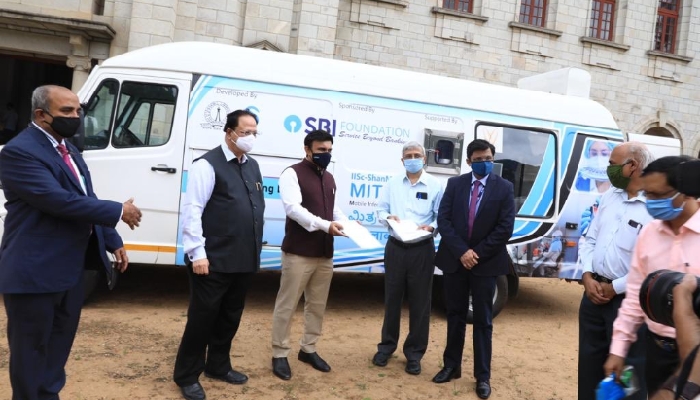
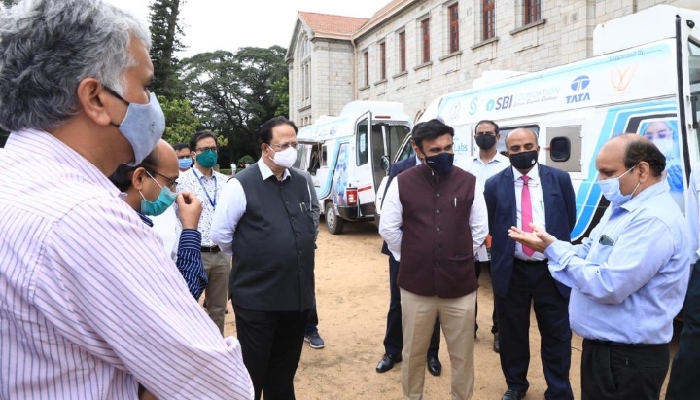
Bengaluru, Aug 5: Touted as a first of its kind in the nation, a mobile Covid-19 lab was inaugurated on Wednesday by the Karnataka Medical Education Minister Dr K Sudhakar.

The lab, approved by the Indian Council of Medical Research (ICMR) can do 9,000 RT-PCR (reverse transcription-polymerase chain reaction) tests per month, an official press release said here. "This is a unique lab having all safety features and capable of producing 100% accurate results within four hours," Dr Sudhakar was quoted as saying in the press release.

The Indian Institute of Science (IISC) had developed the lab and handed it over to the Rajiv Gandhi University of Health Sciences (RGUHS).

The mobile lab can also be used for molecular diagnostic-testing and can be deployed in coronavirus hot spots quickly, the release said adding, apart from Covid-19, the lab can be utilised for testing H1N1, HCV, TB, HPV and HIV among others.

Comments

Add new comment

  • Coastaldigest.com reserves the right to delete or block any comments.
  • Coastaldigset.com is not responsible for its readers’ comments.
  • Comments that are abusive, incendiary or irrelevant are strictly prohibited.
  • Please use a genuine email ID and provide your name to avoid reject.
Agencies
May 8,2020

Washington D.C., May 8: The prime time for brain development in a child's life is the first year, where the infant spends most of the time asleep. It is the time when neural connections form and sensory memories are encoded.

However, when sleep is disrupted, as occurs more often among children with autism, brain development may be affected, too.

New research led by the University of Washington finds that sleep problems in a baby's first 12 months may not only precede an autism diagnosis but also may be associated with altered growth trajectory in a key part of the brain, the hippocampus.

The study, which was published in the American Journal of Psychiatry, researchers report that in a sample of more than 400 taken of 6- to 12-month-old infants, those who were later diagnosed with autism were more likely to have had difficulty falling asleep.

It also states that this sleep difficulty was associated with altered growth trajectories in the hippocampus.

"The hippocampus is critical for learning and memory, and changes in the size of the hippocampus have been associated with poor sleep in adults and older children.

As many as 80 per cent of the children with autism spectrum disorder have sleep problems," said Annette Estes, director of the UW Autism Center and senior author of the study.

"In our clinical experience, parents have a lot of concerns about their children's sleep, and in our work on early autism intervention, we observed that sleep problems were holding children and families back," added Estes, who is also a UW professor of speech and hearing sciences.

"It could be that altered sleep is part-and-parcel of autism for some children. One clue is that behavioural interventions to improve sleep don't work for all children with autism, even when their parents are doing everything just right. This suggests that there may be a biological component to sleep problems for some children with autism," said Estes.

To consider links among sleep, brain development, and autism, researchers at the IBIS Network looked at MRI scans of 432 infants, surveyed parents about sleep patterns, and measured cognitive functioning using a standardized assessment.

At the outset of the study, infants were classified according to their risk for developing autism: Those who were at higher risk of developing autism -- about two-thirds of the study sample -- had an older sibling who had already been diagnosed.

Infant siblings of children with autism have a 20 per cent chance of developing autism spectrum disorder -- a much higher risk than children in the general population.

In the current study, 127 of the 432 infants were identified as "low risk" at the time the MRI scans were taken because they had no family history of autism.

They later evaluated all the participants at 24 months of age to determine whether they had developed autism. Of the roughly 300 children originally considered "high familial risk," 71 were diagnosed with autism spectrum disorder at that age.

Problems with sleep were more common among the infants later diagnosed with an autism spectrum disorder, as were larger hippocampi. No other subcortical brain structures were affected, including the amygdala, which is responsible for certain emotions and aspects of memory, or the thalamus, a signal transmitter from the spinal cord to the cerebral cortex.

The authors note that while parents reported more sleep difficulties among infants who developed autism compared to those who did not, the differences were very subtle and only observed when looking at group averages across hundreds of infants.

Sleep patterns in the first years of life change rapidly as infants transition from sleeping around the clock to a more adult-like sleep/wake cycle. Until further research is completed, Estes said, it is not possible to interpret challenges with sleep as an early sign of increased risk for autism.

Comments

Add new comment

  • Coastaldigest.com reserves the right to delete or block any comments.
  • Coastaldigset.com is not responsible for its readers’ comments.
  • Comments that are abusive, incendiary or irrelevant are strictly prohibited.
  • Please use a genuine email ID and provide your name to avoid reject.