'Anti-CAA protesters are illiterate puncturewalas'

News Network
December 24, 2019

Dec 24: Bengaluru South BJP MP Tejasvi Surya on Sunday came in for criticism for calling the anti- citizenship law protestors 'illiterate puncture walas'.

At a protest rally here, Surya said, "People working in the IT-BT sector and all those contributing to the economy of the country such as lawyers, bank employees and ordinary workers like autorickshaw drivers have gathered here today. They are not those 'illiterate puncture walas."

He went on to say that the crowd at the pro-CAA rally comprised well-educated people, who have understood the Citizenship Amendment Act fully well. As the video of Surya's remarks went viral, Opposition Leader (Congress) and former Chief Minister Siddaramaiah hit out at him saying the statement reflects on his mental status and his attitude towards the poor, down-trodden and labourers.

"Who does he represent? He is an RSS man, grown in ABVP. He represents the system, which took away rights and opportunities of Shudras, Dalits and backward communities. What else can you expect of him?" Siddaramaiah told reporters in Mangaluru on Monday.

Congress leader D K Shivakumar too slammed Surya for his statement. Questioning Surya whether living would be possible without those doing menial jobs, Shivakumar said those fixing a puncture are illiterate because educated people like him (Surya) never came forward to educate them.

Comments

Doddana
 - 
Tuesday, 24 Dec 2019

A sanghi trained EVM elected MP  from Karnataka - comments shows his qualtiy and experience. Fellow forgot


what our constitution says.

Moin
 - 
Tuesday, 24 Dec 2019

When Chaiwala can be a PM & suriya is following....,why not puncture wala can be a protestor for his right with respect for his job.

Salman
 - 
Tuesday, 24 Dec 2019

First of all he is don't have any knowledge He is camcha of RSS . now illiterate people against bill I want to remind you chaddi tejasvi that who supported it chaiwala prime minister masale bechnewali finance minister and tadipar home minister and you are member of goonda party


And don't  say Muslim should go to Pakistan because this is not your and your father country you little who fought freedom fight with British all Muslims our tippu sultan sacrifice life for India your chaddi savarkar lick British dick apologize and get released now see difference beetweenRSS chaddi and Muslim I hope u understand now Muslims contribution to India we don't trust chaddis


Add new comment

  • Coastaldigest.com reserves the right to delete or block any comments.
  • Coastaldigset.com is not responsible for its readers’ comments.
  • Comments that are abusive, incendiary or irrelevant are strictly prohibited.
  • Please use a genuine email ID and provide your name to avoid reject.
Ram Puniyani
January 14,2020

In the beginning of January 2020 two very disturbing events were reported from Pakistan. One was the attack on Nankana Sahib, the holy shrine where Sant Guru Nanak was born. While one report said that the place has been desecrated, the other stated that it was a fight between two Muslim groups. Prime Minister of Pakistan Imran Khan condemned the incident and the main accused Imran Chisti was arrested. The matter related to abduction and conversion of a Sikh girl Jagjit Kaur, daughter of Pathi (One who reads Holy Guru Granth Sahib in Gurudwara) of the Gurudwara. In another incident one Sikh youth Ravinder Singh, who was out on shopping for his marriage, was shot dead in Peshawar.

While these condemnable attacks took place on the Sikh minority in Pakistan, BJP was quick enough to jump to state that it is events like this which justify the Citizenship Amendment Act (CAA). Incidentally CAA is the Act which is discriminatory and relates to citizenship with Religion, which is not as per the norms of Indian constitution. There are constant debates and propaganda that population of Hindus has come down drastically in Pakistan and Bangla Desh. Amit Shah, the Home minister stated that in Pakistan the population of Hindus has come down from 23% at the time of partition to 3.7% at present. And in Bangla Desh it has come down from 22% to present 8%.

While not denying the fact that the religious minorities are getting a rough deal in both these countries, the figures which are presented are totally off the mark. These figures don’t take into consideration the painful migrations, which took place at the time of partition and formation of Bangla Desh later. Pakistan census figures tell a different tale. Their first census was held in 1951. As per this census the overall percentage of Non Muslim in Pakistan (East and West together) was 14.2%, of this in West Pakistan (Now Pakistan) it was 3.44 and in Eat Pakistan it was 23.2. In the census held in Pakistan 1998 it became 3.72%. As far as Bangla Desh is concerned the share of Non Muslims has gone down from 23.2 (1951) to 9.6% in 2011.

The largest minority of Pakistan is Ahmadis, (https://minorityrights.org/country/pakistan/) who are close to 4 Million and are not recognised as Muslims in Pakistan. In Bangla Desh the major migrations of Hindus from Bangla Desh took place in the backdrop of Pakistan army’s atrocities in the then East Pakistan.

As far as UN data on refugees in India it went up by 17% between 2016-2019 and largest numbers were from Tibet and Sri Lanka.  (https://www.un.org/en/development/desa/population/migration/publication…)

The state of minorities is in a way the index of strength of democracy. Most South Asian Countries have not been able to sustain democratic values properly. In Pakistan, the Republic began with Jinnah’s classic speech where secularism was to be central credo of Pakistan. This 11th August speech was in a way what the state policy should be, as per which people of all faiths are free to practice their religion. Soon enough the logic of ‘Two Nation theory” and formation of Pakistan, a separate state for Muslim took over. Army stepped in and dictatorship was to reign there intermittently. Democratic elements were suppressed and the worst came when Zia Ul Haq Islamized the state in collusion with Maulanas. The army was already a strong presence in Pakistan. The popular formulation for Pakistan was that it is ruled by three A’s, Army, America and Allah (Mullah).

Bangla Desh had a different trajectory. Its very formation was a nail in the coffin of ‘two nation theory’; that religion can be the basis of a state. Bangla Desh did begin as a secular republic but communal forces and secular forces kept struggling for their dominance and in 1988 it also became Islamic republic. At another level Myanmar, in the grip of military dictatorship, with democratic elements trying to retain their presence is also seeing a hard battle. Democracy or not, the army and Sanghas (Buddhist Sang has) are strong, in Myanmar as well. The most visible result is persecution of Rohingya Muslims.

Similar phenomenon is dominating in Sri Lanka also where Budhhist Sanghas and army have strong say in the political affairs, irrespective of which Government is ruling. Muslim and Christian minorities are a big victim there, while Tamils (Hindus, Christians etc.) suffered the biggest damage as ethnic and religious minorities. India had the best prospect of democracy, pluralism and secularism flourishing here. The secular constitution, the outcome of India’s freedom struggle, the leadership of Gandhi and Nehru did ensure the rooting of democracy and secularism in a strong way.

India so far had best democratic credentials amongst all the south Asian countries. Despite that though the population of minorities rose mainly due to poverty and illiteracy, their overall marginalisation was order of the day, it went on worsening with the rise of communal forces, with communal forces resorting to identity issues, and indulging in propaganda against minorities.

While other South Asian countries should had followed India to focus more on infrastructure and political culture of liberalism, today India is following the footsteps of Pakistan. The retrograde march of India is most visible in the issues which have dominated the political space during last few years. Issues like Ram Temple, Ghar Wapasi, Love Jihad, Beef-Cow are now finding their peak in CAA.

India’s reversal towards a polity with religion’s identity dominating the political scene was nicely presented by the late Pakistani poetess Fahmida Riaz in her poem, Tum bhi Hum Jaise Nikle (You also turned out to be like us). While trying to resist communal forces has been an arduous task, it is becoming more difficult by the day. This phenomenon has been variously called, Fundamentalism, Communalism or religious nationalism among others. Surely it has nothing to do with the religion as practiced by the great Saint and Sufi traditions of India; it resorts mainly to political mobilization by using religion as a tool.

Comments

Ashi
 - 
Tuesday, 14 Jan 2020

If Malaysia implement similar NRC/CAA, India and China are the loser.

Add new comment

  • Coastaldigest.com reserves the right to delete or block any comments.
  • Coastaldigset.com is not responsible for its readers’ comments.
  • Comments that are abusive, incendiary or irrelevant are strictly prohibited.
  • Please use a genuine email ID and provide your name to avoid reject.
coastaldigest.com news network
August 4,2020

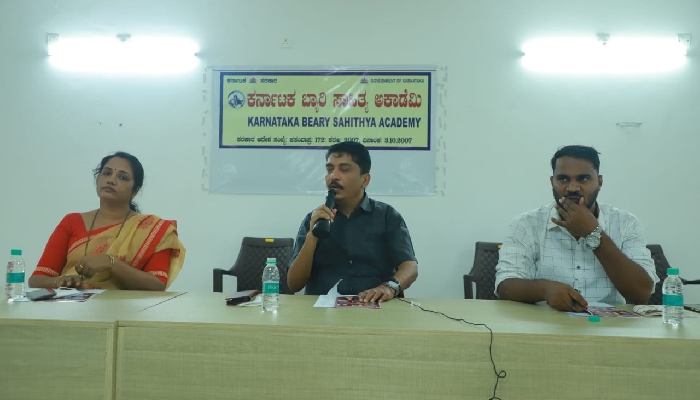
Mangaluru, Aug 4: The Karnataka Beary Sahitya Academy has announced the names of the winners of its annual honorary awards (Gaurava Prashasti and Gaurava Puraskara) for the years 2019 and 2020.

Rahim Uchil, the president of the Academy announced the names at a press conference in the city today. Beary Academy registrar Poornima and member Shamsheer Budoli were also present in the press meet. 

Gaurava Prasasthi-2020 winners are: Basheer Ahmed Kinya (Beary literature), Veena Mangaluru (Beary cinema, drama and art) and Siddique Manjeshwara (Beary organisation and social service) 

Gaurava Puraskara-2020 winners are: Dr Mohammed Ismail (medicine), T A Mohammed Asif (education), Iliyas Mangaluru (social service), Abdul Rasheed aka Rash Beary (Beary organisation) and Safwan Shah Bahrain (young talent). 

Gaurava Prashasti-2019 winners are: Abdul Rehman Kutthethur (Beary literature), Ismail Tannirbhavi (Beary art) and M Ahmed Bava Moidin (Beary organisation and social service).

Gaurava Puraskara-2019 winners are: Abdul Razzak Ananthady (Beary education), T S Hussain (Beary literature), Abdul Majeed Suralpady (General), Asif Karnad (social service) and Ali Kunhi Paare (Beary organisation). 

The Academy’s "Gaurava Prashasti consists of Rs 50,000 cash prize, shawl, garland and citation, while "Gaurava Puraskara" consists of Rs 10,000 cash prize, shawl, garland and citation.

Mr Uchil said that the awards will be conferred in a formal function after discussing the dates with chief minister once the covid-19 situation comes under control. Even though the winners for the year 2018 were announced, they weren’t conferred on the achievers. Hence those awards also will be conferred in the same ceremony, he said.

About the winners:

Basheer Ahmed Kinya: He has been involved with the Beary music sector since the last 21 years in the form of singer, and poet. He has provided lyrics for over 150 Beary audio cassettes and also sang them. His first audio cassette, Maskattoru Kallas' had created a record by getting sold out within four to five days. He has also created several non-stop cassettes and Duf songs. 
 
Veena Mangaluru: She has acted in the first Beary cinema. She has acted in over a thousand plays in different languages. 'Mami Marmolu', Kurfat Katte/Amadakaro Chiri, and Shamimarabal are some of the plays she has acted in. 
 
Siddique Manjeshwar: A social worker and activist. Through social media, he led a blood donation campaign and thereby helped thousands of people.  There are over 10,000 members in his 54 WhatsApp groups who are ready for blood donation. His ‘Blood Donate Mangaluru’ drive has been able to collect over 26,000 units of blood and conducting over 250 blood donation camps so far. He was honoured with a special award of the chief minister of Kerala. 

Dr Muhammed Ismail: Dr Muhammed Ismail completed his medical education in 1989 and has been serving different hospitals since the last 30 years being a highly respected doctor. He also is an honorary medical officer of the Wenlock Hospital Mangaluru. He has served as an office-bearer of Indian Medical Association, Karnataka Medico-legal Society etc.
 
T A Mohammed Asif: He has been providing education to over 360 students from LKG to the eighth standard through Adarsh Group of educational institutions. He is also active in the social sector and has distributed school bags and books to poor students. During the lockdown, he distributed free food items worth about Rs 10 lac.
 
Ilyas Mangaluru: He had fought against the menace of dowry. He has got over 500 girls married through an organization, 'Dowry Free Nikah'. He has also created an app, Free Nikah, which helps boys and girls to find suitable matches. 
 
Rash Beary: Abdul Rasheed aka Rash Beary is known for using social media to help the people. By establishing 'Beary Nikah Helpline' he has helped several poor Beary women to get married. He also provides free counselling services to couples from all religions. With the help of donors, he keeps distributing clothes and food among needy.

Safwan Shah Bahrain: A well-known Beary singer, he has sung several songs in past one decade. He has been organizing various Beary programmes in Bahrain for past eight years. He had undertaken the adventure of jumping from the air from a height of 13,000 feet with the Indian flag in hand. 

Abdul Razack Ananantady: A PU college lecturer by profession, he has conducted over 500 pre-exam training camps and functioned as a resource person in leadership and personality development training. He has been conducting training and lectures for students and their parents on learning nutrition, and life values. His addresses on education and cultural aspects have been aired by Akashvani.

Abdul Rahiman Kuthethur: He was the co-editor or Beary Kannada - English dictionary and editor of the first-ever Beary grammar book released in 2019. He also is a member of the experts' committee on the Beary language textbook. He has translated Panchatantra stories, Sarvajna Vachanas etc into Beary language and published collection of poems.

Ismail Tannirbavi: He is known as a Beary theatre personality, who started acting at the age of 17. He has acted in over 300 plays including Beary, Tulu and Kannada. He has been in the theatre since the last 55 year and his plays have been presented in countries like Muscat and Kuwait. 
 
Ahmed Bawa Moidin: A social worker and member of the Beary Study chair. He also is the life member of Beary Sahitya Parishad and member of Human Ethical Committee of Mangalore University. He was the founder vice president of Mangalore Merchant Associate and member of divisional railway users consultative/committee. He has donated blood 53 times. 

 T S Hussain: Hussain is a veteran Beary writer who has defied blindness. He faced many difficulties and challenges in life and also met with an accident in 2008. Because of this accident, his eyesight had become very weak. He continued with the creation of works with determination in spite of failing eyesight with help from friends. He has authored two works and was appreciated for their content. Thereafter, he authored two more works. In 2018, he wrote another work.
 
Abdul Majeed Suralpady: A social worker and activist, he has served in various organizations. He served as the president of Suralpady government higher primary school for 21 years. He also served as the president of the educational committee of South Karnataka Sunni Centre's Al Ihsan English Medium School and got government recognition for the school. He set up PU college for girls and laid two-way road at Kaikamba besides bus shelter, toilet, drinking water system and building for police check post.
 
Apatbandhava Asif Karnad: He has been serving as an ambulance driver for the last ten years. He readily carries dead bodies and performs funeral. and done so for over a thousand bodies so far. Whenever he comes across mentally unsound people on the road, he gives them a wash and admits them to Ashrams. He has also been maintaining Maimoon Foundation Apatbhandhava Sycho Rehabilitation Centre.
 
Alikunhi Pare: He is the founder president of 'Melthene', a forum of Beary writers and artists. He has also served social, literary, organizational and religious sectors. He has been identified with several organizations including Mangaluru taluk Yuvajana Okkota and Dakshina Kannada and Udupi Muslim Central Committee.

Comments

Add new comment

  • Coastaldigest.com reserves the right to delete or block any comments.
  • Coastaldigset.com is not responsible for its readers’ comments.
  • Comments that are abusive, incendiary or irrelevant are strictly prohibited.
  • Please use a genuine email ID and provide your name to avoid reject.
News Network
April 10,2020

Bengaluru, Apr. 10: Karnataka Congress leader DK Shivakumar on Thursday appealed to party workers to save the lives of people of the state and show solidarity with the people in need amid the coronavirus lockdown.

"Humble appeal to Congress party workers that the time has come to do our best to save the lives of people of Karnataka. Hospitals across Karnataka are running short of blood. This is a call for able-bodied to volunteer & donate blood. Let us show solidarity with people in need," Shivakumar tweeted.

With 16 fresh COVID-19 cases reported in the last 24 hours, the total number of confirmed cases in Karnataka reached 197 on Thursday, according to the state's Health Department.

India's total COVID-19 cases rose to 5,865 on Thursday, with 591 new cases reported in the last 24 hours, according to the Ministry of Health and Family Welfare.

Comments

Add new comment

  • Coastaldigest.com reserves the right to delete or block any comments.
  • Coastaldigset.com is not responsible for its readers’ comments.
  • Comments that are abusive, incendiary or irrelevant are strictly prohibited.
  • Please use a genuine email ID and provide your name to avoid reject.



