After CAA, Centre might bring population control law: Niranjan Jyoti

News Network
March 2, 2020

Mathura, Mar 2: Union Minister of state Sadhvi Niranjan Jyoti on Sunday said after the Citizenship (Amendment) Act (CAA), the Centre might bring a population control law.

Jyoti claimed that she has already spoken to Prime Minister Narendra Modi in this regard.

She said she believes that this issue is under the prime minister's consideration and he himself has discussed the importance of bringing this law.

Jyoti arrived here on Sunday to attend a tribute meeting held at Swami Vamdev Jyotirmath in Chaitanya Vihar. Unnao MP Sakshi Maharaj was also present at the event.

"There was a time when abrogation of Article 370 in Jammu and Kashmir was impossible. It was feared that if such thing happens, there will be bloodbath. No one will be hold the national flag in Kashmir. But this government can bring any law in favour of the nation," Jyoti said.

"Now, everyone believes that if Article 370 can be removed...Prime Minister Narendra Modi can bring any law which is important for the country," she added.

Comments

expat
 - 
Monday, 2 Mar 2020

already people are childless. struggling for IVF treatment. no need of population control. it is automatically getting control byu nature.

Add new comment

  • Coastaldigest.com reserves the right to delete or block any comments.
  • Coastaldigset.com is not responsible for its readers’ comments.
  • Comments that are abusive, incendiary or irrelevant are strictly prohibited.
  • Please use a genuine email ID and provide your name to avoid reject.
News Network
May 23,2020

New Delhi, May 23: India witnessed the biggest ever spike of 6,654 positive cases in the last 24 hours, taking the total number of COVID-19 cases to 1,25,101, according to the Union Ministry of Health and Family Welfare.

As many as 137 deaths have been reported in the last 24 hours, taking the death toll to 3,720.
Out of the total number of cases, 69,597 are active and 51,784 have been cured/discharged or have migrated.

Maharashtra continues to remain the worst-affected state with 44,582 COVID-19 cases. It is followed by Tamil Nadu (14,753), Gujarat (13,268), and Delhi (12,319).

The nationwide lockdown imposed as a precautionary measure to contain the spread of COVID-19 has been extended till May 31.

Comments

Add new comment

  • Coastaldigest.com reserves the right to delete or block any comments.
  • Coastaldigset.com is not responsible for its readers’ comments.
  • Comments that are abusive, incendiary or irrelevant are strictly prohibited.
  • Please use a genuine email ID and provide your name to avoid reject.
Agencies
July 30,2020

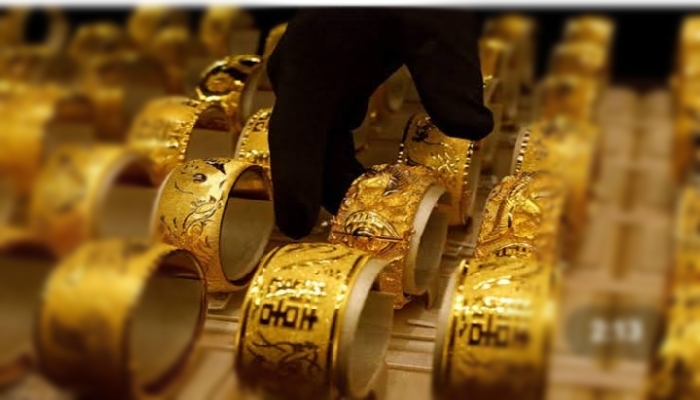
New Delhi, Jul 30: India's gold demand in 2020 is expected to fall to the lowest level in 26 years with domestic bullion prices hitting a record high and as falling disposable incomes could curtail retail purchases, the World Gold Council (WGC) said on Thursday.

Lower demand by the world's second-biggest bullion consumer could limit a rally in global prices, which hit a record high earlier this month, although it could also reduce India's trade deficit and support the ailing rupee.

"Fast rising gold prices could act as headwinds," said Somasundaram PR, the managing director of WGC's Indian operations.

Local gold futures have jumped 35% so far this year after rising a quarter in 2019.

India's gold consumption in the first half of 2020 plunged 56% on-year to 165.6 tonnes. Meanwhile, the coronavirus-triggered lockdown also slashed demand by 70% in the June quarter to 63.7 tonnes, the lowest in more than a decade, the WGC said in a report published on Thursday.

Millions of Indians have lost their jobs or taken a pay cut after the country imposed a lockdown on its 1.3 billion people to curb the spread of the virus that has infected more than 1.5 million Indians.

Consumption is generally high during the June quarter due to weddings and key festivals such as Akshaya Tritiya, but lockdown restrictions kept shoppers indoors this year.

The weak demand in the first half could drag down India's gold consumption in 2020 to the lowest since 1994, when demand stood at 415 tonnes, Somasundaram said, adding that it is still difficult to provide an estimate for full-year demand as the coronavirus crisis is still unfolding.

"Indian demand has previously jumped as much as 300 tonnes in a quarter. Latent demand could come out in the second half," Somasundaram said.

Comments

Add new comment

  • Coastaldigest.com reserves the right to delete or block any comments.
  • Coastaldigset.com is not responsible for its readers’ comments.
  • Comments that are abusive, incendiary or irrelevant are strictly prohibited.
  • Please use a genuine email ID and provide your name to avoid reject.
News Network
June 16,2020

New Delhi, Jun 16: Jet fuel or ATF price on Tuesday was hiked by 16.3 per cent while petrol price was increased by 47 paise per litre and that of diesel by a record 93 paise on the back of firming international oil rates.

Aviation turbine fuel (ATF) price was hiked by ₹5,494.5 per kilolitre (kl), or 16.3 per cent, to ₹39,069.87 per kl in the national capital, according to a price notification by state-owned oil marketing companies.

This is the second straight increase in ATF price this month. Rates were hiked by a record 56.5 per cent (₹12,126.75 per kl) on June 1.

Simultaneously, petrol and diesel prices were hiked for the 10th day in a row.

Petrol price in Delhi was hiked to ₹76.73 per litre from ₹76.26, while diesel rates were increased to ₹75.19 a litre from ₹74.26, the price notification said.

In 10 hikes, petrol price has gone up by ₹5.47 per litre and diesel by Rs 5.8 a litre.

Rates have been increased across the country and vary from state to state depending on the incidence of local sales tax or VAT.

The hike in diesel rates is the highest daily increase since the state-owned fuel retailers started daily revision in rates in May 2017.

Hike for 10th consecutive day

Tuesday’s increase in petrol and diesel price marks the 10th straight day of rise in rates since oil companies on June 7 restarted revising prices in line with costs, after ending an 82-day hiatus.

The freeze in rates was imposed in mid-March soon after the government hiked excise duty on petrol and diesel to shore up additional finances.

Oil PSUs Indian Oil Corp (IOC), Bharat Petroleum Corp Ltd (BPCL) and Hindustan Petroleum Corp Ltd (HPCL) instead of passing on the excise duty hikes to customers adjusted them against the fall in the retail rates that was warranted because of fall in international oil prices.

The June 1 hike in jet fuel price had come after seven consecutive reductions in rates since February. ATF price in Delhi before the reduction cycle began in February was ₹64,323.76 per kilolitre, which got reduced to ₹21,448.62 last month.

Industry officials said the hike was necessitated because benchmark international rates have bounced back from a two-decade low.

While ATF prices are revised on 1st and 16th of every month, petrol and diesel prices are revised on a daily basis.

Oil companies used to revise ATF prices on the first of every month, but adopted fortnightly revisions on March 21 to pass on the benefit of falling international oil prices to airlines.


Comments

Add new comment

  • Coastaldigest.com reserves the right to delete or block any comments.
  • Coastaldigset.com is not responsible for its readers’ comments.
  • Comments that are abusive, incendiary or irrelevant are strictly prohibited.
  • Please use a genuine email ID and provide your name to avoid reject.