PM Modi, Jordan king discuss challenges posed by COVID-19

News Network
April 17, 2020

New Delhi, Apr 17: Prime minister Narendra Modi on Thursday held talks with Jordan King Abdullah II and discussed the challenges posed to the world by the COVID-19 pandemic.

"The two leaders discussed the challenges posed to the world by the COVID-19 pandemic, and the steps being taken in their respective countries to limit its impact," an official statement said.

Prime Minister conveyed his greetings to Abdullah II and the people of Jordan for the upcoming Holy month of Ramadan which commences late next week.

The leaders agreed that their teams would remain in touch on issues related to COVID-19, as well as on other regional and global issues.

Comments

Wellwisher
 - 
Friday, 17 Apr 2020

Fit for only discuss and diya and to lit candles.Rest of world leaders are struggling to save their citizen and Nation from this pandemic. Till when -----?.


For India only the organisation's and social welfare group and well wishers are in the field and helping.

Definitely with the blessings of patriot Indians they will succeed and they all will continue with their noble cause.

Jai Hind


Add new comment

  • Coastaldigest.com reserves the right to delete or block any comments.
  • Coastaldigset.com is not responsible for its readers’ comments.
  • Comments that are abusive, incendiary or irrelevant are strictly prohibited.
  • Please use a genuine email ID and provide your name to avoid reject.
News Network
March 23,2020

Bengaluru, Mar 23: Indian stocks plunged over 9% on Monday, as the rapidly spreading coronavirus pandemic sent major states including the country's capital into a lockdown amid increasing fears that outbreak could bring world economies to a grinding halt.

The NSE Nifty 50 index slipped 9.17% to 7,937.75 by 0408 GMT, while the S&P BSE Sensex was 9.42% lower at 27,093.24.

Over the weekend in India, the virus drove several companies to shut operations and the government sent states into lockdowns, bringing normal life to a grinding halt.

"Panic has gone up domestically because of the lockdown situation," said Vinod Nair, head of research at Geojit Financial Services.

"There is fear that the situation will not be brought under control soon."

The rupee hit a fresh record low of 76.05 against the dollar, as a flight into cash and worries about tightening liquidity boosted demand for the world's reserve currency.

Meanwhile, global markets crumbled, with MSCI's broadest index of Asia-Pacific shares outside Japan sliding nearly 4% as the global death toll climbed to over 14,000, further battering economic activity, and raising fears of a global recession.

After market hours on Friday, the Securities and Exchange Board of India halved position limits for certain stock futures, restricted short-selling of index derivatives and raised margin rates for some shares to curb "abnormally high" volatility amid the pandemic.

In domestic trading, the Nifty PSU Bank Index plunged 8%, while the Nifty bank index crashed nearly 10%.

The Nifty Auto Index slid 9% after several carmakers over the weekend suspended production due to the virus.

Comments

Add new comment

  • Coastaldigest.com reserves the right to delete or block any comments.
  • Coastaldigset.com is not responsible for its readers’ comments.
  • Comments that are abusive, incendiary or irrelevant are strictly prohibited.
  • Please use a genuine email ID and provide your name to avoid reject.
Agencies
July 30,2020

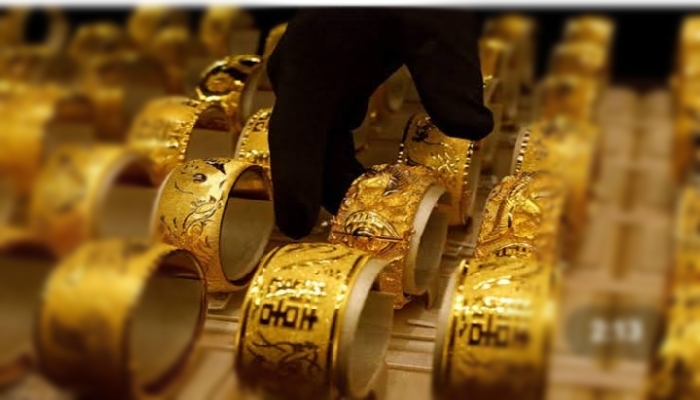
New Delhi, Jul 30: India's gold demand in 2020 is expected to fall to the lowest level in 26 years with domestic bullion prices hitting a record high and as falling disposable incomes could curtail retail purchases, the World Gold Council (WGC) said on Thursday.

Lower demand by the world's second-biggest bullion consumer could limit a rally in global prices, which hit a record high earlier this month, although it could also reduce India's trade deficit and support the ailing rupee.

"Fast rising gold prices could act as headwinds," said Somasundaram PR, the managing director of WGC's Indian operations.

Local gold futures have jumped 35% so far this year after rising a quarter in 2019.

India's gold consumption in the first half of 2020 plunged 56% on-year to 165.6 tonnes. Meanwhile, the coronavirus-triggered lockdown also slashed demand by 70% in the June quarter to 63.7 tonnes, the lowest in more than a decade, the WGC said in a report published on Thursday.

Millions of Indians have lost their jobs or taken a pay cut after the country imposed a lockdown on its 1.3 billion people to curb the spread of the virus that has infected more than 1.5 million Indians.

Consumption is generally high during the June quarter due to weddings and key festivals such as Akshaya Tritiya, but lockdown restrictions kept shoppers indoors this year.

The weak demand in the first half could drag down India's gold consumption in 2020 to the lowest since 1994, when demand stood at 415 tonnes, Somasundaram said, adding that it is still difficult to provide an estimate for full-year demand as the coronavirus crisis is still unfolding.

"Indian demand has previously jumped as much as 300 tonnes in a quarter. Latent demand could come out in the second half," Somasundaram said.

Comments

Add new comment

  • Coastaldigest.com reserves the right to delete or block any comments.
  • Coastaldigset.com is not responsible for its readers’ comments.
  • Comments that are abusive, incendiary or irrelevant are strictly prohibited.
  • Please use a genuine email ID and provide your name to avoid reject.
News Network
February 24,2020

New Delhi, Feb 24: The shared values between India and the US are "discrimination, bigotry, and hostility towards refugees and asylum seekers", Amnesty International USA said in a joint statement with Amnesty International India ahead of US President Donald Trump's visit to India on Monday.

Trump, accompanied by his wife Melania, daughter Ivanka and son-in-law Jared Kushner as well as senior officials of his administration, landed in Ahmedabad on the first leg of his two-day visit to India.

"Anti-Muslim sentiment permeates the policies of both U.S. and Indian leaders. For decades, the U.S.-India relationship was anchored by claims of shared values of human rights and human dignity. Now, those shared values are discrimination, bigotry, and hostility towards refugees and asylum seekers,” Margaret Huang, Amnesty International USA’s executive director, was quoted as saying in the statement.

It was a reference to the anti-CAA protests in India, the internet lockdown in Jammu and Kashmir and the Muslim ban expansion by President Trump affecting Nigeria, Eritrea, Myanmar, Kyrgyzstan, Sudan and Tanzania, the statement said.

It added that Amnesty International USA’s researchers travelled to Lebanon and Jordan to conduct nearly 50 interviews with refugees that as a result of the previous version of the ban have been stranded in countries where they face restrictive policies, increasingly hostile environments, and lack the same rights as permanent residents or citizens.

The statement also came down hard on the Indian government, hitting out at the Citizenship (Amendment) Act (CAA) 2019 and saying it legitimises discrimination based on religious grounds.

It criticised statements such as “identify them (the protestors) by their clothes” or “shoot the traitors” by Prime Minister Modi and his party workers. Such remarks "peddled the narrative of fear and division that has fuelled further violence", it said.

“The internet and political lockdown in Kashmir has lasted for months and the enactment of CAA and the crackdown on protests has shown a leadership that is lacking empathy and a willingness to engage. We call on President Trump and Prime Minister Modi to work with the international community and address our concerns in their bilateral conversations,” Avinash Kumar, executive director, Amnesty International India said in the statement.


Comments

Add new comment

  • Coastaldigest.com reserves the right to delete or block any comments.
  • Coastaldigset.com is not responsible for its readers’ comments.
  • Comments that are abusive, incendiary or irrelevant are strictly prohibited.
  • Please use a genuine email ID and provide your name to avoid reject.