No more than 10K pilgrims for Hajj 2020. Here are the protocols

News Network
June 23, 2020

Riyadh, June 23: Saudi Arabia has decided to go ahead with the Hajj pilgrimage with strict health measures and protocols in an effort to prevent the spread of covid-19.

Minister of Health Dr. Tawfiq Al-Rabiah and Minister of Hajj and Umrah Dr. Muhammad Saleh Benten today addressed a joint virtual press conference today. 

Minister of Hajj expected that number of domestic pilgrims performing the pilgrimage this year will not be more than 10,000. He also confirmed that no pilgrims from outside the Kingdom will be allowed to perform Hajj this year.

Dr. Al-Rabiah said pilgrims should be less than 65 years of age and not suffering from any chronic diseases.

The Hajj pilgrimage, which is one of the five pillars of Islam and a must for able-bodied Muslims at least once in their lifetime, will this year only welcome a “limited number” of people from inside the Kingdom, authorities had said on Monday.

Every year, about 2.5 million pilgrims visit the holiest sites of Islam in Makkah and Madinah, which could make it a possible breeding ground for the disease.

To prevent COVID-19 from spreading among pilgrims, the health ministry, in collaboration with the Ministry of Hajj and Umrah, has developed the plan to ensure the safety of all visitors.

“We have worked with the Ministry of Health to develop preventative and precautionary measures and protocols that are needed to ensure a safe Hajj season,” Benten said.

Protocols:

1. No more than 10,000 people will be allowed to perform the Hajj pilgrimage.

2. All pilgrims will be tested before they reach the holy sites.

3. Only those under the age of 65 will be allowed to perform Hajj this year.

4. All pilgrims will be asked to self-quarantine after they complete the Hajj rituals.

5. All workers and volunteers will be tested before the Hajj pilgrimage begins.

6. The health status of all pilgrims will be monitored daily.

7. A hospital has been prepared for any emergency that occurs during the pilgrimage.

8. Social distancing measures will be enforced.

Comments

SAN
 - 
Tuesday, 23 Jun 2020

Please check its 1000 or 10,000

Add new comment

  • Coastaldigest.com reserves the right to delete or block any comments.
  • Coastaldigset.com is not responsible for its readers’ comments.
  • Comments that are abusive, incendiary or irrelevant are strictly prohibited.
  • Please use a genuine email ID and provide your name to avoid reject.
News Network
July 9,2020

Dubai, Jul 9: The Government of India has announced an additional 104 special repatriation flights from the UAE to India as part of the Vande Bharat Mission, Phase 4 from July 15 - 31.

According to a flight schedule listed on the Ministry of External Affairs (MEA) website, national carriers Air India and Air India Express flights have been scheduled to various cities in 10 Indian states. Each flight has a capacity of 177 passengers.

Vande Bharat Phase 4 officially began on July 3, and in an earlier press briefing Anurag Srivastava, spokesperson of India's Ministry of External Affairs had said 'Phase 4 will focus on repatriation of Gulf-based Indians.

The new additional flights have been organised to cities in Tamil Nadu, Maharashtra, Delhi, Telangana, Punjab, Haryana, Kerala, Uttar Pradesh, Karnataka, and Rajasthan, according to the MEA schedule. To the joy of expats from Maharashtra, at least seven flights have been planned to Mumbai, which has been a less serviced state since the start of the Vande Bharat Mission.

Consul Press, Information, and Culture, Consulate General of India in Dubai Neeraj Agarwal said, "Approximately 100 repatriation flights are planned for the next 23 days, including 50 from Dubai and Sharjah each. If all flights are full, we are looking to evacuate anything between 17,000 to 18,000 passengers in the coming days."

Booking for the newly announced flights will open soon, said Agarwal. "Some of them are already open, and others will be open in the next few days. However, a few flights are subject to slot approvals," he explained.

Commenting on the possibility of flights from India to the UAE, Agarwal said, "We express hope that this too will happen soon."  The flight schedule can be seen here: https://www.mea.gov.in/phase-4.htm

Comments

Hurrah, that's what I was exploring for, what a information! existing here
at this blog, thanks admin of this web site.

Add new comment

  • Coastaldigest.com reserves the right to delete or block any comments.
  • Coastaldigset.com is not responsible for its readers’ comments.
  • Comments that are abusive, incendiary or irrelevant are strictly prohibited.
  • Please use a genuine email ID and provide your name to avoid reject.
News Network
April 13,2020

Dubai, Apr 13: The UAE plans to impose "strict restrictions" on countries reluctant to take back their nationals working in the Gulf country in the wake of the coronavirus outbreak and restructure its cooperation and labour relations with them, a state-run media report said on Sunday.

Indian expatriate community of nearly 33 lakh is the largest ethnic community in UAE constituting roughly about 30 per cent of the country’s population. Among the Indian states, Kerala is the most represented followed by Tamil Nadu and Andhra Pradesh.

The options being considered by the Ministry of Human Resources and Emiratisation include "imposing strict future restrictions on the recruitment" of workers from these countries and activating the "quota" system in recruitment operations, state-run WAM news agency reported, citing an official.

It said the options also include suspending memoranda of understanding signed between the ministry and concerned authorities in these countries.

Citing the unnamed official, it said these options are being considered after many countries did not respond to requests by their nationals to return home following the coronavirus outbreak.

The official made it clear that all countries of foreign workers in the UAE should be responsible for their nationals wishing to return to their countries as part of the humanitarian initiative launched recently by the ministry.

Earlier this month, the ministry launched the initiative to enable residents who work in the UAE and wish to return to their countries to do so during the period of precautionary measures undertaken in the UAE to contain the spread of the coronavirus.

Employees will be asked to submit their annual leave dates or agree with their employers on unpaid leave.

UAE's Ambassador to India Ahmed Abdul Rahman Al Banna has said that the Ministry of Foreign Affairs and International Cooperation (MOFAIC) had sent out a “note verbale” to all the embassies in the UAE, including the Indian mission, during the past couple of weeks on the issue.

“We have sent the note verbale and all the embassies have been informed including the Indian embassy in the UAE and even the Ministry of External Affairs in India,” Al Banna told Gulf News over phone on Saturday.

He said the UAE has offered to test those who want to be evacuated.

“We are assuring everybody that we have the best of the facilities, the best of the testing centres and we have tested more than 500,000 people,” he said.

“We are assuring them also of our cooperation to fly those who got stranded in the UAE for some reasons. Some got stuck because of the lockdown and closure of airports in India. Some were visiting the UAE.”

“We are offering our system and making sure that they are good (to fly) by doing all the tests and transport them according to the request of their own government,” he said.

The envoy said those who test positive for COVID-19 will remain in the UAE. “They will be treated in our home facilities,” he added.

The Kerala High Court on Saturday sought the central government's response to a petition seeking a direction to bring back Indians stranded in the UAE in view of the coronavirus outbreak in the gulf nation.

Considering the plea by Kerala Muslim Cultural Centre (KMCC) in Dubai, the court directed the Centre to file an affidavit on the steps taken by it to ensure the safety of Indians living there and bring back those stuck in the Gulf countries.

In its plea, KMCC, the organisation for non-resident Indians from Kerala, sought directions to the Ministries of External Affairs and Civil Aviation to provide exemptions in the international air travel ban to bring back those Indians stranded in the UAE.

Comments

Add new comment

  • Coastaldigest.com reserves the right to delete or block any comments.
  • Coastaldigset.com is not responsible for its readers’ comments.
  • Comments that are abusive, incendiary or irrelevant are strictly prohibited.
  • Please use a genuine email ID and provide your name to avoid reject.
Agencies
August 2,2020

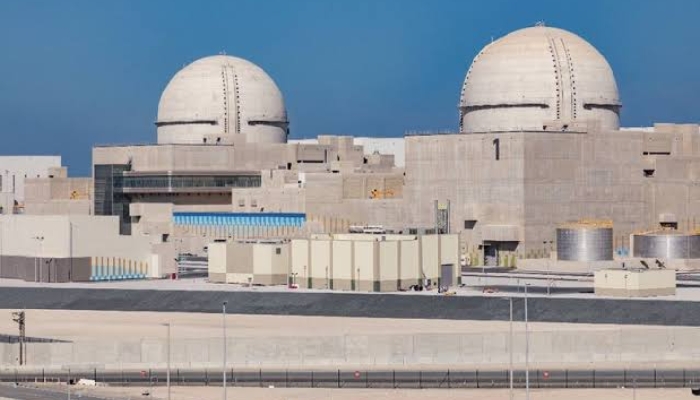
Dubai, Aug 2: The United Arab Emirates (UAE) announced on Saturday that it has started operations in the first of four reactors at the Barakah nuclear power station - the first nuclear power plant in the Arab world.

Emirates Nuclear Energy Corporation (ENEC), which is building and operating the plant with Korea Electric Power Corporation (KEPCO) said in a press release that its subsidiary Nawah Energy Company "has successfully started up Unit 1 of the Barakah Nuclear Energy Plant, located in the Al Dhafrah Region of Abu Dhabi".

That signals that Unit 1, which had fuel rods loaded in March, has achieved "criticality" - a sustained fission chain reaction.

"The start-up of Unit 1 marks the first time that the reactor safely produces heat, which is used to create steam, turning a turbine to generate electricity," said ENEC.

Barakah, which was originally scheduled to open in 2017, has been dogged by delays and is billions of dollars over budget. It has also raised myriad concerns among nuclear energy veterans who are concerned about the potential risks Barakah could visit upon the Arabian Peninsula, from an environmental catastrophe to a nuclear arms race.

Paul Dorfman, an honorary senior research fellow at the Energy Institute, University College London and founder and chair of the Nuclear Consulting Group, has criticised the Barakah reactors' "cheap and cheerful" design that he says cuts corners on safety.

Dorfman authored a report (PDF) last year detailing key safety features Barakah's reactors lack, such as a "core catcher" to literally stop the core of a reactor from breaching the containment building in the event of a meltdown. The reactors are also missing so-called Generation III Defence-In-Depth reinforcements to the containment building to shield against a radiological release resulting from a missile or fighter jet attack.

Both of these engineering features are standard on new reactors built in Europe, says Dorfman.

There have been at least 13 aerial attacks on nuclear facilities in the Middle East - more than any other region on earth.

The vulnerability of critical infrastructure in the Arabian Peninsula was further laid bare last year after Saudi Arabia's oil facilities at Abqaiq and Khurais were attacked by 18 drones and seven cruise missiles - an assault that temporarily knocked out more than half of the kingdom's oil production.

On Saturday, Dorfman reiterated his concern that there is no regional protocol in place to determine liability should an accident or incident at Barakah result in radioactive contamination spreading from the UAE to its neighbours. 

"Given Barakah has started up, because of all the well-rehearsed nuclear safety and security problems, it may be critically important that the Gulf states collectively evolve a Nuclear Accident Liability Convention, so that if anything does go wrong, victim states may have some sort of redress," Dorfman told Al Jazeera. 

The UAE has substantial oil and gas reserves, but it has made huge investments in developing alternative energy sources, including nuclear and solar.

Experts though have questioned why the UAE - which is bathed in sunlight and wind - has pushed ahead with nuclear energy - a far more expensive and riskier option than renewable energy sources.

When the UAE first announced Barakah in 2009, nuclear power was cheaper than solar and wind. But by 2012 - when the Emirates started breaking ground to build the reactors - solar and wind costs had plummeted dramatically.

Between 2009 and 2019, utility-scale average solar photovoltaic costs fell 89 percent and wind fell 43 percent, while nuclear jumped 26 percent, according to an analysis by the financial advisory and asset manager Lazard.

There are also concerns about the potential for Barakah to foment nuclear proliferation in the Middle East - a region rife with geopolitical fault lines and well-documented history of nuclear secrecy.

The UAE has sought to distance itself from the region's bad behaviour by agreeing not to enrich its own uranium or reprocess spent fuel. It has also signed up to the United Nation's nuclear watchdog's Additional Protocol, significantly enhancing inspection capabilities, and secured a 123 Agreement with the United States that allows bilateral civilian nuclear cooperation.


Comments

Add new comment

  • Coastaldigest.com reserves the right to delete or block any comments.
  • Coastaldigset.com is not responsible for its readers’ comments.
  • Comments that are abusive, incendiary or irrelevant are strictly prohibited.
  • Please use a genuine email ID and provide your name to avoid reject.


