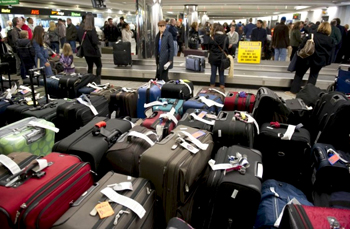
Compensation for air travellers in case of death, injury, lost baggage hiked

March 12, 2016

New Delhi, Mar 12: A Bill providing for enhanced compensation to air travellers in case of death, injury, lost baggage or even inordinate delay in flights, was passed by Parliament on Friday.

baggageThe Carriage by Air (Amendment) Bill was passed in Lok Sabha on December 2015 and by the Rajya Sabha, with certain amendments, on March 2. The Bill, along with the amendments, came back to the Lower House on Friday and was adopted by a voice vote.

Once it gets the nod of the President and becomes an Act, the law would require Indian carriers to pay compensation amount that is equivalent to the rates paid by their global counterparts.

It would allow the government to revise the liability limits of airlines in line with the Montreal Convention, which was acceded to by India in May 2009.

Among others, the compensation for death in an air accident and the amount would be calculated on the basis of SDR (Special Drawing Rights). The Bill intends to raise the liability limit for damage in case of death or bodily injury for each person from 1,00,000 SDR to 1,13,100 SDR.

The currency value of the SDR is based on market exchange rates of a basket of major currencies — US dollar, euro, Japanese yen and pound sterling.

According to the Bill, the liability for delay in carriage for each person was proposed to be raised from 4,150 SDR to 4,694 SDR, while the liability in case of destruction, loss, damage or delay of baggage is proposed to be raised from 1,000 SDR to 1,131 SDR.

The liability in case of destruction, loss or delay in relation to the carriage of cargo has been raised from 17 SDR to 19 SDR.

The liability limits are revised once every five years by the International Civil Aviation Organisation (ICAO) on the basis of a determined inflation factor of 13.1 percent, triggering an adjustment in the limits.

Comments

Wellwicher
 - 
Saturday, 12 Mar 2016

In INDIA it was accepted long back in parliament there was TWO leading MP form MANGALORE was in the panel. Unfortunately they never came to support dirty air INDIA crash victims family. Their appointed commercial mind law firm also not ready to follow MONTREAL CONVENTION or they abide. Most of the compensation they settled in a LOW GRADE policy.
The cause was proven 100% fault by air INDIA and even based on few sound proof which dirty air INDIA management and aviation authority jointly kept under the carpet. From that ONE main evidence raised arguments and fight between on board Pilot and Co-pilot.

Now ONE case seems in supreme court for interpretation of article 13. Subject to supreme courts judgement it will be implemented all over the word. And it is a right step taken by the MANGALORE crash victims association on humanitarian ground.

Hope they will succeed in their rights and take step. Let we all to pray for their success.

Add new comment

  • Coastaldigest.com reserves the right to delete or block any comments.
  • Coastaldigset.com is not responsible for its readers’ comments.
  • Comments that are abusive, incendiary or irrelevant are strictly prohibited.
  • Please use a genuine email ID and provide your name to avoid reject.
News Network
June 20,2020

Bengaluru, Jun 20: The Karnataka Health Department has issued guidelines on the admission of COVID-19 patients in private hospitals after clinical assessment, mandating that the district surveillance officer (DSO) should be first informed to initiate further procedures, an official said on Friday.

"A health team sent by the DSO should visit the home or hospital where the patient is staying. The team should conduct a rapid assessment of his or her health condition," said Karnataka's Additional Chief Secretary Jawaid Akhtar.

In the rapid health condition assessment, the team should first check the patient's body temperature, followed by SpO2 (oxygen saturation) level and confirm if there are any comorbidities such as hypertension, diabetes, tuberculosis, HIV, cancer, stroke etc.

Depending on the health condition of patients, Akhtar said, two categories have been made.

"Those who have body temperature greater than 37.5 degrees Celsius, SpO2 level below 94 percent, elderly (above 60 years) and suffering from known comorbid conditions should be taken to a dedicated Covid hospital (DCH)," he said.

"All other patients, even if older but not suffering from co-morbidities, those below 60 and suffering from co-morbidities and asymptomatic cases should be taken to a dedicated Covid health centre (DCHC) or a private hospital as opted by the patient," he added.

Private hospitals have been asked to pitch in due to the rising number of cases in Karnataka. Currently, there are 2943 active cases in the state after 337 cases were reported on Friday.

"The patients are assessed clinically and evaluated at DCHCs or private hospitals with appropriate diagnostic tests. After evaluation, if the patients are asymptomatic, they are shifted to a COVID Care Centre (CCC) for further management," said Akhtar.

CCCs are expected to be equipped with ventilated rooms, pulse oximeters, handheld thermal scanners and blood pressure apparatus.

A nurse has to be present round the clock for every 50 patients and should visit each patient twice a day for assessment whereas the medical officer has to visit the CCC once a day. He should also be available on call in case of an emergency.

Staff serving food and others should wear personal protective equipment and an N-95 mask. Explaining the procedures at DCHCs, Akhtar said general examinations for medical conditions like body temperature, BP, pulse, oxygen saturation and urine output should be in place.

Investigations such as complete blood count, fasting blood sugar, random blood sugar, liver function tests, renal function tests, ECG and chest X-ray facilities should be available.

"DCHCs should ensure that above examinations are over in an orderly timeline of 24 hours and depending on the examination, the patient is continued to be lodged at the DCHC or sent to DCH or CCC," said the senior officer.

Likewise, the discharge policy should be done as per the protocols issued by the Health Department from time to time.

The Karnataka government is yet to fix an upper limit on the cost of treating COVID-19 patients in private hospitals. While reports indicated that this could be capped at Rs 5200 per day, health officials are yet to specify this is the case. Private hospitals in the state have asked the government to take a collaborative approach in deciding the fixed cap on treatment cost.

Comments

Add new comment

  • Coastaldigest.com reserves the right to delete or block any comments.
  • Coastaldigset.com is not responsible for its readers’ comments.
  • Comments that are abusive, incendiary or irrelevant are strictly prohibited.
  • Please use a genuine email ID and provide your name to avoid reject.
News Network
January 3,2020

Bengaluru, Jan 3: Karnataka Chief Minister BS Yediyurappa on Friday clarified that Prime Minister Narendra Modi has assured him to consider all the demands made by his government.

"Prime Minister spoke to me personally and assured me of all help and suggested that I visit New Delhi and meet the concerned Ministers and apprise them about the state's problems and pending projects. He also directed me to prepare a detail report on this matter," Yediyurappa said in a statement.

He claimed that a section of media has misinterpreted his speech which was plain and honest towards the development of the state.

"A section of media has attached motive to my speech which was plain and honest in its content. Being in federal set up, there is nothing wrong with placing the facts before the Prime Minister and making submissions," the Chief Minister said.

"As a Chief Minister, I placed our state's problems and need for more funds for developmental activities. I pleaded before the Prime Minister for more funds to the relief work, the scientific and remunerative price for the farm produces, and special fund of Rs 50,000 crore for speeding up of on-going irrigation work. As it was farmers' meet, I felt it worthy and timely to plead the Prime Minister for more funds for all the developmental activities in the state," he said.

Asserting that Prime Minister Narendra Modi is a great visionary and his concern for the poor and farmers is unquestionable, he said: "When the whole world is appreciating his statesmanship and visionary zeal, it is in very bad taste for the media to attribute motives to my speech and relate it to the Prime Minister."

Yediyurappa requested media to show support to his government in the interest of the development of the state.

"I humbly request the electronic and print media not to misinterpret but support the government in the interest of the development of the state and interests of the people. I hope the media will respond to my request," he said.

Comments

Add new comment

  • Coastaldigest.com reserves the right to delete or block any comments.
  • Coastaldigset.com is not responsible for its readers’ comments.
  • Comments that are abusive, incendiary or irrelevant are strictly prohibited.
  • Please use a genuine email ID and provide your name to avoid reject.
Agencies
May 8,2020

Washington D.C., May 8: The prime time for brain development in a child's life is the first year, where the infant spends most of the time asleep. It is the time when neural connections form and sensory memories are encoded.

However, when sleep is disrupted, as occurs more often among children with autism, brain development may be affected, too.

New research led by the University of Washington finds that sleep problems in a baby's first 12 months may not only precede an autism diagnosis but also may be associated with altered growth trajectory in a key part of the brain, the hippocampus.

The study, which was published in the American Journal of Psychiatry, researchers report that in a sample of more than 400 taken of 6- to 12-month-old infants, those who were later diagnosed with autism were more likely to have had difficulty falling asleep.

It also states that this sleep difficulty was associated with altered growth trajectories in the hippocampus.

"The hippocampus is critical for learning and memory, and changes in the size of the hippocampus have been associated with poor sleep in adults and older children.

As many as 80 per cent of the children with autism spectrum disorder have sleep problems," said Annette Estes, director of the UW Autism Center and senior author of the study.

"In our clinical experience, parents have a lot of concerns about their children's sleep, and in our work on early autism intervention, we observed that sleep problems were holding children and families back," added Estes, who is also a UW professor of speech and hearing sciences.

"It could be that altered sleep is part-and-parcel of autism for some children. One clue is that behavioural interventions to improve sleep don't work for all children with autism, even when their parents are doing everything just right. This suggests that there may be a biological component to sleep problems for some children with autism," said Estes.

To consider links among sleep, brain development, and autism, researchers at the IBIS Network looked at MRI scans of 432 infants, surveyed parents about sleep patterns, and measured cognitive functioning using a standardized assessment.

At the outset of the study, infants were classified according to their risk for developing autism: Those who were at higher risk of developing autism -- about two-thirds of the study sample -- had an older sibling who had already been diagnosed.

Infant siblings of children with autism have a 20 per cent chance of developing autism spectrum disorder -- a much higher risk than children in the general population.

In the current study, 127 of the 432 infants were identified as "low risk" at the time the MRI scans were taken because they had no family history of autism.

They later evaluated all the participants at 24 months of age to determine whether they had developed autism. Of the roughly 300 children originally considered "high familial risk," 71 were diagnosed with autism spectrum disorder at that age.

Problems with sleep were more common among the infants later diagnosed with an autism spectrum disorder, as were larger hippocampi. No other subcortical brain structures were affected, including the amygdala, which is responsible for certain emotions and aspects of memory, or the thalamus, a signal transmitter from the spinal cord to the cerebral cortex.

The authors note that while parents reported more sleep difficulties among infants who developed autism compared to those who did not, the differences were very subtle and only observed when looking at group averages across hundreds of infants.

Sleep patterns in the first years of life change rapidly as infants transition from sleeping around the clock to a more adult-like sleep/wake cycle. Until further research is completed, Estes said, it is not possible to interpret challenges with sleep as an early sign of increased risk for autism.


Comments

Add new comment

  • Coastaldigest.com reserves the right to delete or block any comments.
  • Coastaldigset.com is not responsible for its readers’ comments.
  • Comments that are abusive, incendiary or irrelevant are strictly prohibited.
  • Please use a genuine email ID and provide your name to avoid reject.