Congress concentrated only on work, no marketing; BJP doing only marketing'

[email protected] (CD Network)
July 16, 2016

Mangaluru, Jul 16: Senior Congress leader Mallikarjun Kharge said the party has failed completely in marketing the achievements of the UPA government.

congress 11

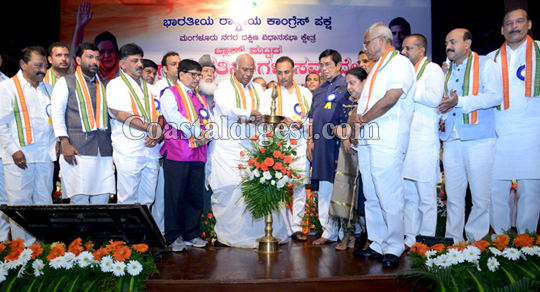
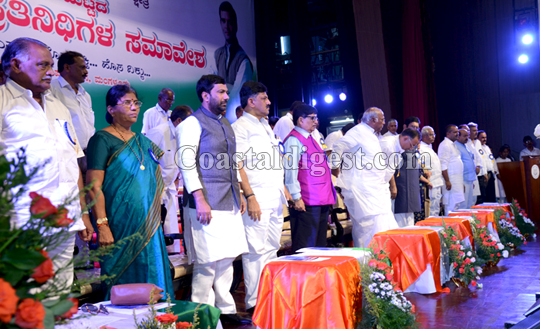
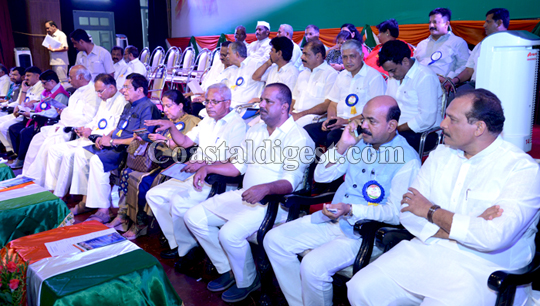
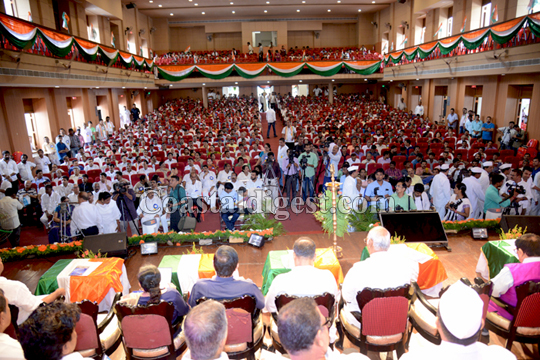
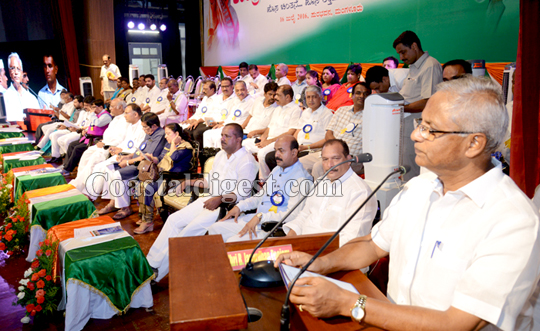
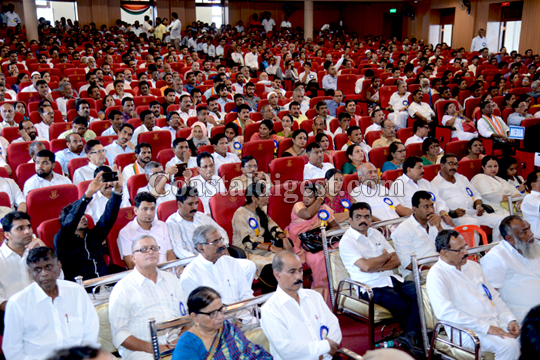
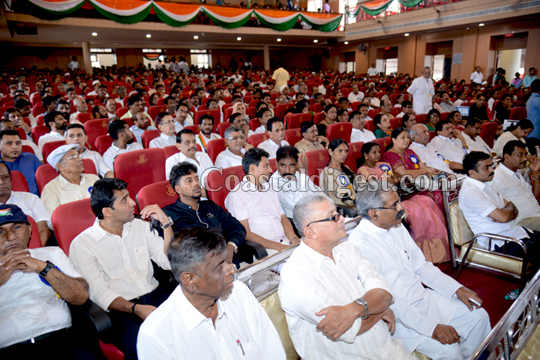
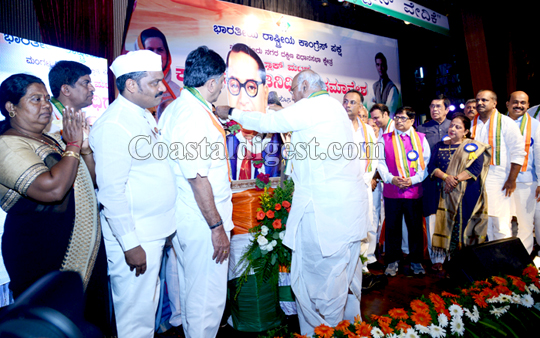
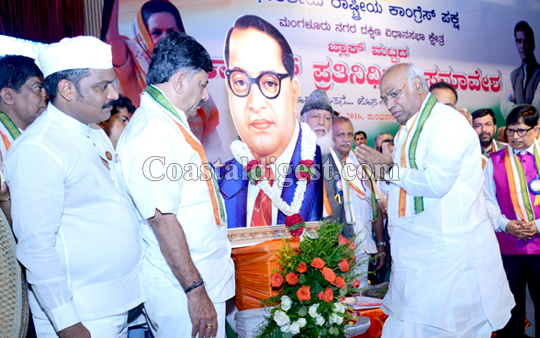
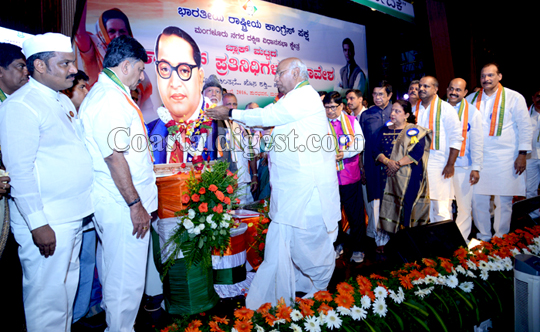
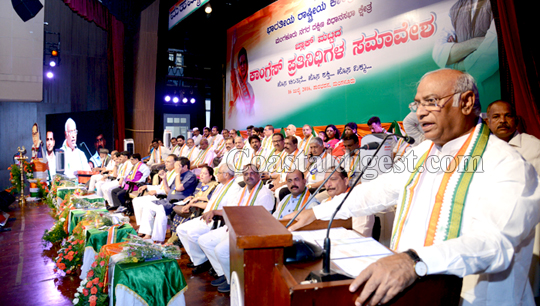
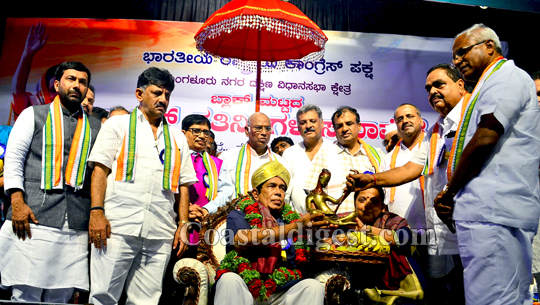
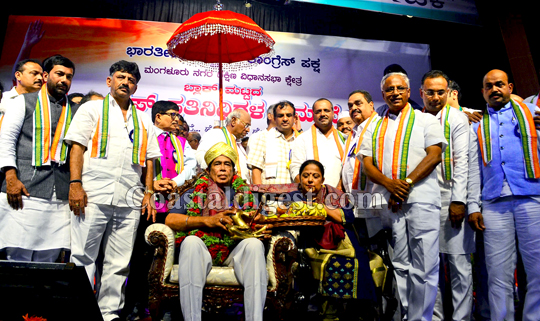
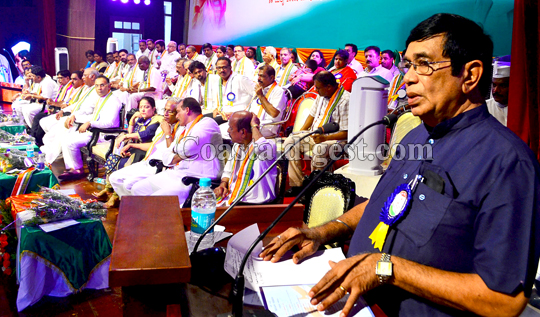
Inaugurating the party convention and Ambedkar Jayanthyutsava organized by Mangaluru South Block Congress Committee here on Saturday, Kharge said that Congress concentrated only on work and silently fulfilling promises whereas BJP concentrated only on marketing.

"We are lagging behind in marketing our party's achievements,” he lamented.

“The Congress has made several noteworthy contributions and led the nation towards development. It is the Congress that is instrumental in development of ports, airports, highways, bridges in the nation. The Congress government introduced several pro-people rules like Food Security Act, MGNREG Act, RTE Act and several other similar initiatives like Mangalyaan, but we have failed to market our achievements in a proper way. Ironically, the BJP does more marketing than the actual progress they record," Kharge said and called upon party workers to join hands in the process of building party at grass root levels.

"RSS, BJP and Sangh Parivar leaders, who never lit lamp during Ambedkar Jayanti and those who do not hoist tricolor, are teaching patriotism to Congress. Modi and the BJP leaders make a loud clamour that Congress destroyed the nation in the past. However, they are shamelessly claiming the credit of development works initiated by the UPA government by just cutting ribbon tapes now," Kharge charged.

Taking a dig at the BJP's pre-election promises, Kharge said, neither black money stashed in Swiss banks has been brought back, nor employment has been provided to unemployed youth.

Hitting at the Prime Minister's frequent foreign tours, Kharge said, "Modi visits foreign countries even without invitation even though we have an external affairs minister. Prime Minister of a nation should visit foreign countries only in case of very important conclaves. Investors will come to India if our foreign policy is attractive," he added.

Kharge said the Karnataka Prevention and Eradication of Human Sacrifice and Other Inhuman Evil and Aghori Practices and Black Magic Bill, 2016 should be passed as a dedication to B R Ambedkar on the occasion of his 125th birth anniversary. "Passing Anti-superstition Bill will be a true tribute to the architect of Indian Constitution. I am sure that BJP leader Jagadish Shettar and JD(S) leader HD Kumaraswamy, who believe in Basavanna's ideology, will not oppose the passage of the bill," Kharge said.

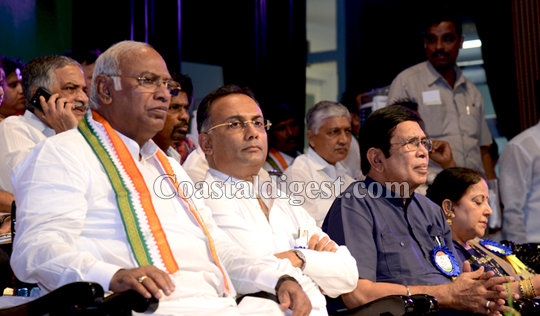
Senior Congress leader Oscar Fernandes, AICC in-charge secretary Shantharam Naik, energy minister DK Shivakumar, food and civil supplies minister UT Khader, KPCC working president Dinesh Gundu Rao and other leaders were present. Mangaluru City South MLA JR Lobo presided.

congress 1

congress 2

congress 3

congress 4

congress 5

congress 6

congress 7

congress 8

congress 9

congress 10

congress 12

cong 1

cong 2

cong 3

Comments

Zahoor Ahmed
 - 
Sunday, 17 Jul 2016

Where are BJP and RR. Oscar birth or wedding anniversary ?

Add new comment

  • Coastaldigest.com reserves the right to delete or block any comments.
  • Coastaldigset.com is not responsible for its readers’ comments.
  • Comments that are abusive, incendiary or irrelevant are strictly prohibited.
  • Please use a genuine email ID and provide your name to avoid reject.
Ram Puniyani
February 10,2020

Noam Chomsky is one of the leading peace workers in the world. In the wake of America’s attack on Vietnam, he brought out his classic formulation, ‘manufacturing consent’. The phrase explains the state manipulating public opinion to have the public approve of it policies—in this case, the attack of the American state on Vietnam, which was then struggling to free itself from French colonial rule.

In India, we are witness to manufactured hate against religious minorities. This hatred serves to enhance polarisation in society, which undermines India’s democracy and Constitution and promotes support for a Hindu nation. Hate is being manufactured through multiple mechanisms. For example, it manifests in violence against religious minorities. Some recent ghastly expressions of this manufactured hate was the massive communal violence witnessed in Mumbai (1992-93), Gujarat (2002), Kandhamal (2008) and Muzaffarnagar (2013). Its other manifestation was in the form of lynching of those accused of having killed a cow or consumed beef. A parallel phenomenon is the brutal flogging, often to death, of Dalits who deal with animal carcasses or leather.

Yet another form of this was seen when Shambhulal Regar, indoctrinated by the propaganda of Hindu nationalists, burned alive Afrazul Khan and shot the video of the heinous act. For his brutality, he was praised by many. Regar was incited into the act by the propaganda around love jihad. Lately, we have the same phenomenon of manufactured hate taking on even more dastardly proportions as youth related to Hindu nationalist organisations have been caught using pistols, while police authorities look on.

Anurag Thakur, a BJP minster in the central government recently incited a crowd in Delhi to complete his chant of what should happen to ‘traitors of the country...” with a “they should be shot”. Just two days later, a youth brought a pistol to the site of a protest at Jamia Millia Islamia university and shouted “take Azaadi!” and fired it. One bullet hit a student of Jamia. This happened on 30 January, the day Nathuram Godse had shot Mahatma Gandhi in 1948. A few days later, another youth fired near the site of protests against the CAA and NRC at Shaheen Bagh. Soon after, he said that in India, “only Hindus will rule”.

What is very obvious is that the shootings by those associated with Hindu nationalist organisations are the culmination of a long campaign of spreading hate against religious minorities in India in general and against Muslims in particular. The present phase is the outcome of a long and sustained hate campaign, the beginning of which lies in nationalism in the name of religion; Muslim nationalism and Hindu nationalism. This sectarian nationalism picked up the communal view of history and the communal historiography which the British introduced in order to pursue their ‘divide and rule’ policy.

In India what became part of “social common sense” was that Muslim kings had destroyed Hindu temples, that Islam was spread by force, and that it is a foreign religion, and so on. Campaigns, such as the one for a temple dedicated to the Hindu god Rama to be built at the site where the Babri masjid once stood, further deepened the idea of a Muslim as a “temple-destroyer”. Aurangzeb, Tipu Sultan and other Muslim kings were tarnished as the ones who spread Islam by force in the subcontinent. The tragic Partition, which was primarily due to British policies, and was well-supported by communal streams also, was entirely attributed to Muslims. The Kashmir conflict, which is the outcome of regional, ethnic and other historical issues, coupled with the American policy of supporting Pakistan’s ambitions of regional hegemony, (which also fostered the birth of Al-Qaeda), was also attributed to the Muslims.

With recurring incidents of communal violence, these falsehoods went on going deeper into the social thinking. Violence itself led to ghettoisation of Muslims and further broke inter-community social bonds. On the one hand, a ghettoised community is cut off from others and on the other hand the victims come to be presented as culprits. The percolation of this hate through word-of-mouth propaganda, media and re-writing of school curricula, had a strong impact on social attitudes towards the minorities.

In the last couple of decades, the process of manufacturing hate has been intensified by the social media platforms which are being cleverly used by the communal forces. Swati Chaturvedi’s book, I Am a Troll: Inside the Secret World of the BJP’s Digital Army, tells us how the BJP used social media to spread hate. Whatapp University became the source of understanding for large sections of society and hate for the ‘Other’, went up by leaps and bounds. To add on to this process, the phenomenon of fake news was shrewdly deployed to intensify divisiveness.

Currently, the Shaheen Bagh movement is a big uniting force for the country; but it is being demonised as a gathering of ‘anti-nationals’. Another BJP leader has said that these protesters will indulge in crimes like rape. This has intensified the prevalent hate.

While there is a general dominance of hate, the likes of Shambhulal Regar and the Jamia shooter do get taken in by the incitement and act out the violence that is constantly hinted at. The deeper issue involved is the prevalence of hate, misconceptions and biases, which have become the part of social thinking.

These misconceptions are undoing the amity between different religious communities which was built during the freedom movement. They are undoing the fraternity which emerged with the process of India as a nation in the making. The processes which brought these communities together broadly drew from Gandhi, Bhagat Singh and Ambedkar. It is these values which need to be rooted again in the society. The communal forces have resorted to false propaganda against the minorities, and that needs to be undone with sincerity.

Combating those foundational misconceptions which create hatred is a massive task which needs to be taken up by the social organisations and political parties which have faith in the Indian Constitution and values of freedom movement. It needs to be done right away as a priority issue in with a focus on cultivating Indian fraternity yet again.


Comments

Add new comment

  • Coastaldigest.com reserves the right to delete or block any comments.
  • Coastaldigset.com is not responsible for its readers’ comments.
  • Comments that are abusive, incendiary or irrelevant are strictly prohibited.
  • Please use a genuine email ID and provide your name to avoid reject.
News Network
February 13,2020

Mangaluru, Feb 13: After pro-Kannada outfits called for a state-wide bandh today, the police are on high-alert to avoid any untoward incidents.

The dawn to dusk bandh was called demanding implementation of Sarojini Mahishi report which recommended certain percentage of jobs to Kannadigas in private & public sector companies.

There is no official holiday declared for schools and colleges. Besides, all government institutions and private establishments are open.

But, in some parts of Karnataka, autorickshaws and taxis, including Ola and Uber stayed off the roads.

Even though the bandh is unlikely to hit normal life in coastal Karnataka, stones were pelted on a Tirupati-Mangaluru bus in Farangipet.

Comments

Add new comment

  • Coastaldigest.com reserves the right to delete or block any comments.
  • Coastaldigset.com is not responsible for its readers’ comments.
  • Comments that are abusive, incendiary or irrelevant are strictly prohibited.
  • Please use a genuine email ID and provide your name to avoid reject.
Media Release
March 10,2020

Mangaluru, Mar 10:  Country’s economic condition is not permanent. All young entrepreneurs can be forward looking persons, because all bad times are followed by good times. In fact, it is good time to start your own industry, said Nitte Deemed to be University Chancellor Dr. N Vinaya Hegde. 

Addressing the gathering after inaugurating a three-day entrepreneurship symposium organized by Mangalore University and Department of M. Com and MBA, University Evening College at University College Mangalore here on Monday, he said that entrepreneurship is something you enjoy. You should belief that there is something in you to achieve your area of choice. You should get pleasure out of it. 

Ex-MLC Capt. Ganesh Karnik believed that our population is definitely a resource, but symposiums are needed to convert ideas to implementation. Coastal Karnataka is best example for successful entrepreneurship in health, education sector, he added. 

Presiding over the function, Mangalore University Vice Chancellor Prof. P Subrahmanya Yadapadithaya said that students should be universally compassionate before being an entrepreneur. There will be challenges, failures in entrepreneurship. One should trust himself, and should have courage and confidence to be innovative. One should have aspiration and passion for excellence, he added.

Young scientist, international awardee Swasthik Padma was felicitated on the occasion. Evening college Principal Dr. Ramakrishna B M, Coordinator  Dr. Yathish Kumar were present among others. Kavya P Hegde mastered the ceremony, Venkatesh Nayak presented vote of thanks.

Comments

Add new comment

  • Coastaldigest.com reserves the right to delete or block any comments.
  • Coastaldigset.com is not responsible for its readers’ comments.
  • Comments that are abusive, incendiary or irrelevant are strictly prohibited.
  • Please use a genuine email ID and provide your name to avoid reject.